
Browse "Nature & Geography"
-
Article
Monarch Butterfly
The monarch (Danaus plexippus) is a species of butterfly best known for its migratory habits. Sometimes called the wanderer butterfly, its annual migration is unlike that of any other insect found in North America. During Canadian summers, the monarch butterfly is normally found in every province except Newfoundland and Labrador, and is abundant wherever its host plant milkweed grows. Due to a decline in milkweed among other factors, the monarch butterfly is an endangered species. Still, its large size, orange-and-black colouration, and slow, sailing flight make it a familiar sight across most of Canada.
"https://d3d0lqu00lnqvz.cloudfront.net/Monarch/MonarchMilkweed.jpg" // resources/views/front/categories/view.blade.php
https://d3d0lqu00lnqvz.cloudfront.net/Monarch/MonarchMilkweed.jpg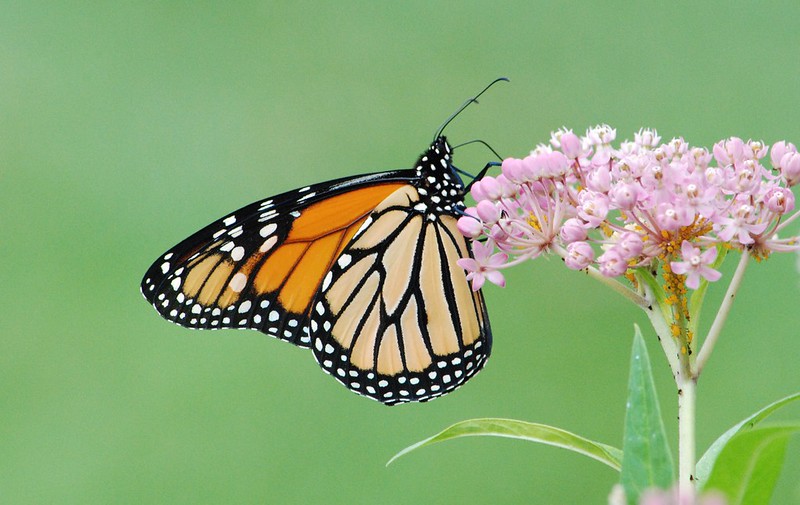
-
Article
Morning Glory
The morning glory family, containing 1200 species of herbaceous plants, is represented in Canada by cultivated common morning glory and 3 related species; 11 species of climbing, parasitic dodders; and 5 species of bindweed.
"https://thecanadianencyclopedia.ca/images/tce_placeholder.jpg?v=e9dca980c9bdb3aa11e832e7ea94f5d9" // resources/views/front/categories/view.blade.php
https://thecanadianencyclopedia.ca/images/tce_placeholder.jpg?v=e9dca980c9bdb3aa11e832e7ea94f5d9
-
Article
Mosquito
The mosquito (Spanish for "little fly") is a fragile, long-legged fly of the order Diptera, family Culicidae. Over 3,500 species are known worldwide and at least 82 are found in Canada. Often considered a nuisance to humans because of their itchy bites, it is the females that feed on the blood of other animals. Both sexes feed on plant fluids such as nectar. Most of the woodland species with which Canadians are familiar belong to the genus Aedes. These species are found throughout Canada and are recognizable by their alternating white and black colour, and slender, pointed abdomens. They are present in large numbers soon after winter’s end and on spring and summer evenings. The comparatively small northern house mosquito (Culex pipiens) is commonly found indoors in early spring and late fall, and is distinguished by its size and its blunt-tipped abdomen. Canada boasts the second oldest fossilized mosquito ever found. It is preserved in 76.5–79.5 million-year-old amber from southern Alberta.
"https://d3d0lqu00lnqvz.cloudfront.net/mosquito/mosquito1.jpg" // resources/views/front/categories/view.blade.php
https://d3d0lqu00lnqvz.cloudfront.net/mosquito/mosquito1.jpg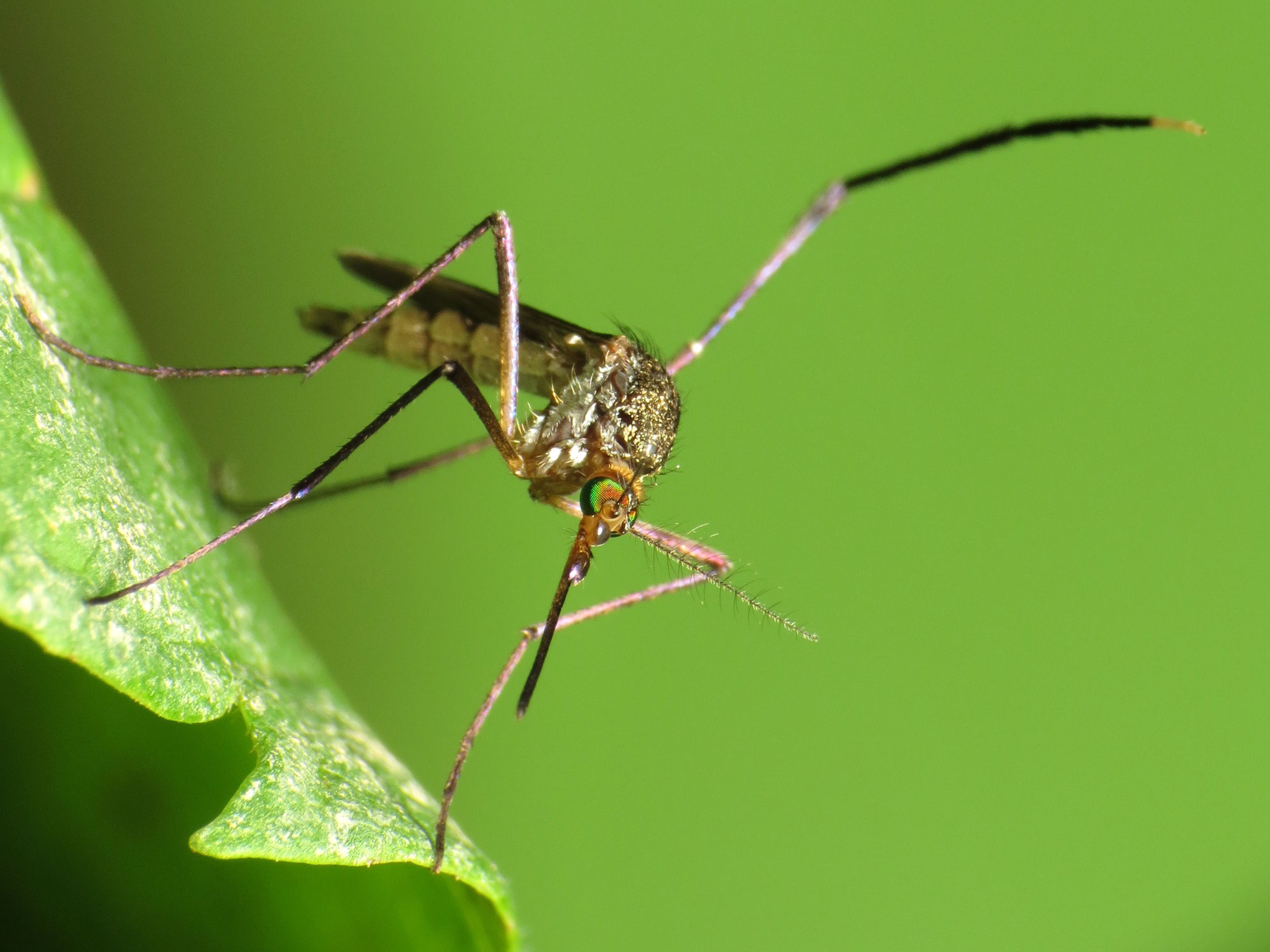
-
Article
Moth
Moths are distinguished from butterflies by having threadlike or feathery antennae. Most are nocturnal. They vary in size from adults of some leaf miners with wings spreading little more than 3 mm to the Asian atlas moth, spreading 20 cm.
"https://d3d0lqu00lnqvz.cloudfront.net/media/media/380673b7-8db1-4be5-b284-6764c9a0030d.jpg" // resources/views/front/categories/view.blade.php
https://d3d0lqu00lnqvz.cloudfront.net/media/media/380673b7-8db1-4be5-b284-6764c9a0030d.jpg
-
Article
Mountain Ash
Mountain Ash (Sorbus) are a genus of small trees or shrubs of the rose family (Rosaceae), consisting of perhaps 100 species distributed in temperate Eurasia and North America.
"https://thecanadianencyclopedia.ca/images/tce_placeholder.jpg?v=e9dca980c9bdb3aa11e832e7ea94f5d9" // resources/views/front/categories/view.blade.php
https://thecanadianencyclopedia.ca/images/tce_placeholder.jpg?v=e9dca980c9bdb3aa11e832e7ea94f5d9
-
Article
Mountain Goat
The mountain goat (Oreamnos americanus) is an even-toed, hoofed mammal of the cattle family (Bovidae), derived during the ice ages from the primitive Asiatic goat-antelopes.
"https://d3d0lqu00lnqvz.cloudfront.net/media/media/5ca6cc93-bd85-45b3-9e91-65f7b54979bc.jpg" // resources/views/front/categories/view.blade.php
https://d3d0lqu00lnqvz.cloudfront.net/media/media/5ca6cc93-bd85-45b3-9e91-65f7b54979bc.jpg
-
Article
Mountain Sheep
The mountain sheep is a highly successful, medium-sized, even-toed mammal (see Artiodactyla) of the cattle family (Bovidae), genus Ovis. It comprises some 37 subspecies in Eurasia and southern North America. Sheep colonized North America during the last Ice Age but remained rare until after the extinction of many large American mammals, about 11,000 years ago. The bighorn sheep is the provincial mammal of Alberta.
"https://d3d0lqu00lnqvz.cloudfront.net/media/media/e8973dae-460f-48da-8503-429c57a626f2.jpg" // resources/views/front/categories/view.blade.php
https://d3d0lqu00lnqvz.cloudfront.net/media/media/e8973dae-460f-48da-8503-429c57a626f2.jpg
-
Memory Project Archive
Alan Henry Sunley (Primary Source)
Alan Henry Sunley served in the Royal Canadian Air Force during the Second World War. Read and listen to Alan Henry Sunley's testimony below. Please be advised that Memory Project primary sources may deal with personal testimony that reflect the speaker’s recollections and interpretations of events. Individual testimony does not necessarily reflect the views of the Memory Project and Historica Canada.
"https://d3d0lqu00lnqvz.cloudfront.net/The-Memory-Project/image/2828_original.jpg" // resources/views/front/categories/view.blade.php
https://d3d0lqu00lnqvz.cloudfront.net/The-Memory-Project/image/2828_original.jpg
-
Memory Project Archive
Bert A. Sharp (Primary Source)
Bert A. Sharp served in the Royal Canadian Air Force during the Second World War. Read and listen to his testimony below. Please be advised that Memory Project primary sources may deal with personal testimony that reflect the speaker’s recollections and interpretations of events. Individual testimony does not necessarily reflect the views of the Memory Project and Historica Canada.
"https://d3d0lqu00lnqvz.cloudfront.net/The-Memory-Project/image/7115_original.jpg" // resources/views/front/categories/view.blade.php
https://d3d0lqu00lnqvz.cloudfront.net/The-Memory-Project/image/7115_original.jpg
-
Memory Project Archive
Roy Hall (Primary Source)
Roy Hall enlisted in the Royal Canadian Navy in 1948. He served on five other ships before assignment to HMCS Iroquois and overseas service in Korea in 1952. During the Korean War, HMCS Iroquois participated in shore bombardments, dropped off South Korean guerrillas for raids behind enemy lines, and patrolled the waters around the Korean peninsula. On 2 October 1952 HMCS Iroquois was hit by a shell, the only time during the war a Canadian warship was hit by enemy fire.Please be advised that Memory Project primary sources may deal with personal testimony that reflect the speaker’s recollections and interpretations of events. Individual testimony does not necessarily reflect the views of the Memory Project and Historica Canada.
"https://d3d0lqu00lnqvz.cloudfront.net/The-Memory-Project/image/13457_original.jpg" // resources/views/front/categories/view.blade.php
https://d3d0lqu00lnqvz.cloudfront.net/The-Memory-Project/image/13457_original.jpg
-
Article
Muskrat
Muskrat (Ondatra zibethicus), fairly large rodent common throughout much of North America
"https://d3d0lqu00lnqvz.cloudfront.net/media/media/32e05840-f732-477f-a6ac-fb872c43589a.jpg" // resources/views/front/categories/view.blade.php
https://d3d0lqu00lnqvz.cloudfront.net/media/media/32e05840-f732-477f-a6ac-fb872c43589a.jpg
-
Article
Mussel
The mussel is a bivalve (hinged shell) mollusc of either the marine order Mytiloida or the freshwater superfamily Unionacea.
"https://d3d0lqu00lnqvz.cloudfront.net/media/media/7f00d523-6521-4a0d-bc8b-6d4f3971d383.jpg" // resources/views/front/categories/view.blade.php
https://d3d0lqu00lnqvz.cloudfront.net/media/media/7f00d523-6521-4a0d-bc8b-6d4f3971d383.jpg
-
Macleans
Natural Environment
This article was originally published in Maclean’s magazine on June 2, 2003. Partner content is not updated. THIS IS MY medicine cabinet," says Karl Schibli, his ice-blue eyes widening with the excitement of someone about to let a neophyte in on what he already knows. The object of Schibli's focused attention is a red Coleman picnic cooler on a shelf in his barn near Waterford, Ont.
"https://thecanadianencyclopedia.ca/images/tce_placeholder.jpg?v=e9dca980c9bdb3aa11e832e7ea94f5d9" // resources/views/front/categories/view.blade.php
https://thecanadianencyclopedia.ca/images/tce_placeholder.jpg?v=e9dca980c9bdb3aa11e832e7ea94f5d9
-
Article
Natural Gas in Canada
Natural gas ranks among the fastest-growing energy sources in Canada and is seen by many in the energy industry as a game-changer, a comparatively clean, low-cost and versatile fuel. It can directly generate power and heat and can be chemically altered to produce a wide range of useful commodity chemicals. It burns cleaner and more efficiently than other fossil fuels, releasing significantly fewer harmful pollutants into the atmosphere. Natural gas is colorless, odourless, shapeless, lighter than air and contains a mixture of several hydrocarbon gases, which are organic compounds consisting of some combination of hydrogen and carbon molecules. The primary consumers of natural gas are the industrial (54.1 per cent), residential (26.6 per cent) and commercial sectors (19.3 per cent). Canada is the fifth largest natural gas producer after the United States, Russia, Iran and Qatar. Currently, all of Canada’s natural gas exports go to the United States through a network of pipelines, making Canada the largest foreign source of US natural gas imports. At the end of 2016, Canada had 76.7 trillion cubic feet of proven natural gas reserves and had produced 152 billion cubic metres of natural gas that year. It is forecasted that global natural gas consumption will double by 2035.
"https://d3d0lqu00lnqvz.cloudfront.net/media/new_article_images/NaturalGas/Fig 1.jpg" // resources/views/front/categories/view.blade.php
https://d3d0lqu00lnqvz.cloudfront.net/media/new_article_images/NaturalGas/Fig 1.jpg
-
Article
Natural Resources in Alberta
Canada is a resource rich country and different natural resources are found across the provinces and territories. Alberta’s natural resources include mountains, lakes, rivers, fossil fuels, forests and agricultural land. These natural resources contribute towards the economies of Alberta and Canada, but there are environmental and health concerns regarding fossil fuel extraction in the province. (See also Oil Sands.)
"https://d3d0lqu00lnqvz.cloudfront.net/media/media/be7a97e5-19d2-4df5-b348-a549dd5b3fe7.jpg" // resources/views/front/categories/view.blade.php
https://d3d0lqu00lnqvz.cloudfront.net/media/media/be7a97e5-19d2-4df5-b348-a549dd5b3fe7.jpg