
Browse "Nature & Geography"
-
Article
Metamorphic Rock
Metamorphic rock is one of the 3 major classes of rock comprising the Earth's crust, the others being SEDIMENTARY and IGNEOUS ROCKS. Metamorphic rock has been transformed, while in the solid state, by pressure, temperature and deformation.
"https://d3d0lqu00lnqvz.cloudfront.net/media/media/e0a546d9-bcaf-41e5-a7d4-076b178b5592.jpg" // resources/views/front/categories/view.blade.php
https://d3d0lqu00lnqvz.cloudfront.net/media/media/e0a546d9-bcaf-41e5-a7d4-076b178b5592.jpg
-
Article
Mica
Phlogopite can be found in metamorphosed LIMESTONES, dolomites, serpentines and IGNEOUS ROCKS. It is light to dark brown and has properties and uses similar to muscovite.
"https://d3d0lqu00lnqvz.cloudfront.net/media/media/c877e97e-4b7c-48c5-b937-a17b8f6fde9b.jpg" // resources/views/front/categories/view.blade.php
https://d3d0lqu00lnqvz.cloudfront.net/media/media/c877e97e-4b7c-48c5-b937-a17b8f6fde9b.jpg
-
Article
Midge
Midges are small, slender-bodied flies with long antennae, belonging to various families. Three families are especially important: non-biting midges (Chironomidae), biting midges (Ceratopogonidae, also called no-see-ums), and gall midges (Cecidomyiidae). In Canada, there are more than 1,300 named species of midges from these groups, and scientists expect at least as many more live here. The larvae of most non-biting and biting midges are aquatic, while most larval gall midges live and feed inside of growths on plant tissues. Midges are found all across Canada and in a variety of habitats.
"https://d3d0lqu00lnqvz.cloudfront.net/media/new_article_images/Midge/NonBitingMidge.jpg" // resources/views/front/categories/view.blade.php
https://d3d0lqu00lnqvz.cloudfront.net/media/new_article_images/Midge/NonBitingMidge.jpg
-
"https://d3d0lqu00lnqvz.cloudfront.net/media/media/thumbnails/37ff4532-aeeb-4483-bbe6-25ba2fe6c99d.jpg" // resources/views/front/categories/view.blade.php
https://d3d0lqu00lnqvz.cloudfront.net/media/media/thumbnails/37ff4532-aeeb-4483-bbe6-25ba2fe6c99d.jpg
-
Article
Miguasha Fossils
In addition to fishes, a few INVERTEBRATES, such as small CRUSTACEANS, worms and eurypterids, which are giant cousins of land scorpions, lived at the bottom of the estuary.
"https://thecanadianencyclopedia.ca/images/tce_placeholder.jpg?v=e9dca980c9bdb3aa11e832e7ea94f5d9" // resources/views/front/categories/view.blade.php
https://thecanadianencyclopedia.ca/images/tce_placeholder.jpg?v=e9dca980c9bdb3aa11e832e7ea94f5d9
-
Article
Milkweed
Milkweed is the common name for perennial, herbaceous plants of genus Asclepias, family Asclepiadaceae (from Greek physician Asclepius).
"https://thecanadianencyclopedia.ca/images/tce_placeholder.jpg?v=e9dca980c9bdb3aa11e832e7ea94f5d9" // resources/views/front/categories/view.blade.php
https://thecanadianencyclopedia.ca/images/tce_placeholder.jpg?v=e9dca980c9bdb3aa11e832e7ea94f5d9
-
Article
Millet
Millets are various, usually annual, grass (family Poaceae) crops that are often grown as cereals (ie, the seeds are harvested as grain for human consumption).
"https://d3d0lqu00lnqvz.cloudfront.net/media/media/551430a6-8d74-48fd-9f95-c75d3111ef4d.jpg" // resources/views/front/categories/view.blade.php
https://d3d0lqu00lnqvz.cloudfront.net/media/media/551430a6-8d74-48fd-9f95-c75d3111ef4d.jpg
-
Article
Millipede
Millipede (class Diplopoda), terrestrial, usually elongate arthropod with a small head and short antennae.
"https://thecanadianencyclopedia.ca/images/tce_placeholder.jpg?v=e9dca980c9bdb3aa11e832e7ea94f5d9" // resources/views/front/categories/view.blade.php
https://thecanadianencyclopedia.ca/images/tce_placeholder.jpg?v=e9dca980c9bdb3aa11e832e7ea94f5d9
-
Article
Minnow
Many people refer wrongly to any small fish as a minnow. Properly, minnows are small to large freshwater fish of class Actinopterygii, order Cypriniformes, family Cyprinidae. The largest fish family, with over 1500 species (including carp, squawfish, dace, bream, etc), it is found worldwide, excluding South America, Australia and the far north. Fifty-three species occur in Canada. Some have restricted ranges (eg, redside dace, Clinostomus elongatus, of Lake Ontario drainages); others are found coast to coast. Carp (Cyprinus carpio) and goldfish (Carassius auratus) are familiar Asian minnows that have been introduced and become established in several provinces. Minnows inhabit waters from bogs to large lakes and rivers throughout Canada, except insular Newfoundland, and are often the most numerous fishes, both as species and individuals.
"https://d3d0lqu00lnqvz.cloudfront.net/media/media/310caf5d-4a5d-4276-b439-7f6aa2a2cfe0.jpg" // resources/views/front/categories/view.blade.php
https://d3d0lqu00lnqvz.cloudfront.net/media/media/310caf5d-4a5d-4276-b439-7f6aa2a2cfe0.jpg
-
Article
Mint
Mint belongs to the mint family (Lamiaceae, also called Labiatae), a large plant family that also includes several aromatic and ornamental plants like basil, rosemary, oregano, thyme, coleus and sage.
"https://d3d0lqu00lnqvz.cloudfront.net/media/media/5e03b322-b373-4caa-af8c-7bc6cde241d4.jpg" // resources/views/front/categories/view.blade.php
https://d3d0lqu00lnqvz.cloudfront.net/media/media/5e03b322-b373-4caa-af8c-7bc6cde241d4.jpg
-
Article
Mistletoe
Mistletoe family, Loranthaceae, includes about 30 genera and over 1000 species. It is predominantly tropical but has members in temperate regions.
"https://thecanadianencyclopedia.ca/images/tce_placeholder.jpg?v=e9dca980c9bdb3aa11e832e7ea94f5d9" // resources/views/front/categories/view.blade.php
https://thecanadianencyclopedia.ca/images/tce_placeholder.jpg?v=e9dca980c9bdb3aa11e832e7ea94f5d9
-
Article
Mite
Mite is a common name for most members of the subclass Acari, a large, diverse group of tiny arachnids that also includes ticks.
"https://d3d0lqu00lnqvz.cloudfront.net/media/media/8eb04cf7-636d-460f-a5d4-bedd5bf6298d.jpg" // resources/views/front/categories/view.blade.php
https://d3d0lqu00lnqvz.cloudfront.net/media/media/8eb04cf7-636d-460f-a5d4-bedd5bf6298d.jpg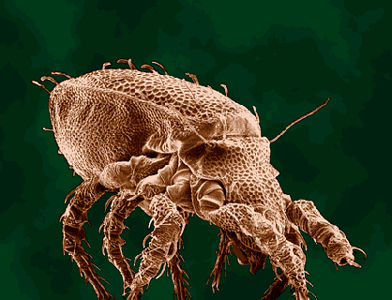
-
"https://thecanadianencyclopedia.ca/images/tce_placeholder.jpg?v=e9dca980c9bdb3aa11e832e7ea94f5d9" // resources/views/front/categories/view.blade.php
https://thecanadianencyclopedia.ca/images/tce_placeholder.jpg?v=e9dca980c9bdb3aa11e832e7ea94f5d9
-
Article
Mollusc
The mollusc is a soft-bodied, usually shelled invertebrate belonging to one of the largest animal phyla (Mollusca) with some 100 000 living and about 35 000 fossil species.
"https://d3d0lqu00lnqvz.cloudfront.net/media/media/06525077-c3d6-4a56-a096-d0a611b208be.jpg" // resources/views/front/categories/view.blade.php
https://d3d0lqu00lnqvz.cloudfront.net/media/media/06525077-c3d6-4a56-a096-d0a611b208be.jpg
-
Article
Molluscan Resources
Although Canada's coastline is extensive and contains many diverse molluscan species, the resource is economically relatively small. In 1995 nearly 200 000 t valued at $114.5 million were taken.
"https://d3d0lqu00lnqvz.cloudfront.net/media/media/75b80a2e-5358-4b29-877d-cf3ed69aa9f5.jpg" // resources/views/front/categories/view.blade.php
https://d3d0lqu00lnqvz.cloudfront.net/media/media/75b80a2e-5358-4b29-877d-cf3ed69aa9f5.jpg