
Browse "Nature & Geography"
-
Macleans
Inside the Kyoto Deal
Albertas energy minister, Steve West, spent much of last week wearing a tight smile, his clenched jaw and square shoulders set as firmly as his conviction that people who blame the oilpatch for the next centurys foul weather have lost their heads.This article was originally published in Maclean's Magazine on December 22, 1997
"https://thecanadianencyclopedia.ca/images/tce_placeholder.jpg?v=e9dca980c9bdb3aa11e832e7ea94f5d9" // resources/views/front/categories/view.blade.php
https://thecanadianencyclopedia.ca/images/tce_placeholder.jpg?v=e9dca980c9bdb3aa11e832e7ea94f5d9
-
Article
Invertebrate
Invertebrates are animals without a vertebral column (backbone). As a group, invertebrates are extremely diverse.
"https://d3d0lqu00lnqvz.cloudfront.net/media/media/4815042e-4596-4981-bf6f-7f7c000bdc53.jpg" // resources/views/front/categories/view.blade.php
https://d3d0lqu00lnqvz.cloudfront.net/media/media/4815042e-4596-4981-bf6f-7f7c000bdc53.jpg
-
Article
Irish Moss
Irish moss is a type of seaweed that is commercially harvested in Canada’s Maritime provinces. It is mainly composed of carrageenan, a gelatinous substance. Carrageenan extracted from Irish moss is used as a thickening and gelling agent in foods and other products. It is also used to clarify beverages such as beer.
"https://d3d0lqu00lnqvz.cloudfront.net/media/new_article_images/IrishMoss/Irish_moss.jpg" // resources/views/front/categories/view.blade.php
https://d3d0lqu00lnqvz.cloudfront.net/media/new_article_images/IrishMoss/Irish_moss.jpg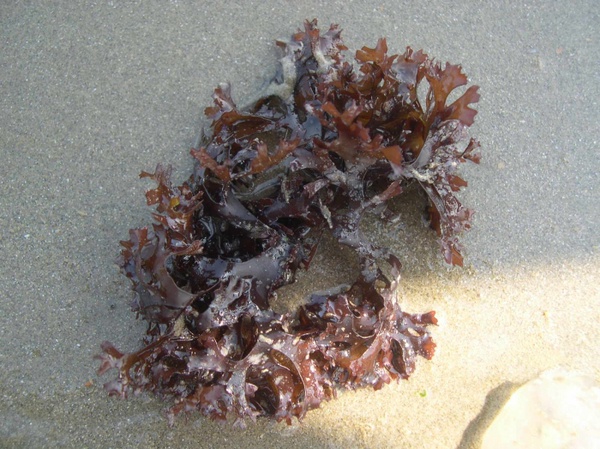
-
Article
Iron Ore
Its most important mineral forms are magnetite (Fe3O4, 72.4% Fe), hematite (Fe2O3, 69.9% Fe) and siderite (FeCO3, 48.29% Fe). In Brazil, some ore that contains practically no other minerals can grade as high as 68% Fe, but the crude ore mined in Canada grades between 30 and 44% Fe.
"https://d3d0lqu00lnqvz.cloudfront.net/media/media/0fa44cb9-3338-463a-ad5c-498dbf2d0950.jpg" // resources/views/front/categories/view.blade.php
https://d3d0lqu00lnqvz.cloudfront.net/media/media/0fa44cb9-3338-463a-ad5c-498dbf2d0950.jpg
-
Article
Jaeger
The Jaeger is any of 3 species of rapacious, gull-like seabirds of genus Stercorarius.
"https://d3d0lqu00lnqvz.cloudfront.net/media/media/73d9fe46-92e3-4d9f-878b-578201e0447d.jpg" // resources/views/front/categories/view.blade.php
https://d3d0lqu00lnqvz.cloudfront.net/media/media/73d9fe46-92e3-4d9f-878b-578201e0447d.jpg
-
Article
James Bay and Northern Quebec Agreement
The James Bay and Northern Quebec Agreement (JBNQA) is a legal agreement signed on 11 November 1975 by the government of Quebec, the government of Canada, Hydro-Québec and two of its subsidiaries, the Grand Council of the Crees of Quebec and the Northern Quebec Inuit Association. Described by many as the “first modern treaty,” the JBNQA redefined and framed land management as well as the relationship between the Quebecois state and the Indigenous peoples of the James Bay and Northern Quebec region (see James Bay Project, Treaties with Indigenous Peoples in Canada).
"https://thecanadianencyclopedia.ca/images/tce_placeholder.jpg?v=e9dca980c9bdb3aa11e832e7ea94f5d9" // resources/views/front/categories/view.blade.php
https://thecanadianencyclopedia.ca/images/tce_placeholder.jpg?v=e9dca980c9bdb3aa11e832e7ea94f5d9
-
Article
James Bay Project
In 1971, Hydro-Québec and the government of Quebec initiated the James Bay Project, a monumental hydroelectric-power development on the east coast of James Bay. ( See also Hydroelectricity in Canada.) Over the course of two phases, a total of eight generating stations were built, allowing for the pollution-free production of a significant portion of Quebec’s electricity. However, the project also profoundly disrupted the environment and the Indigenous communities living in the region, the effects of which are still being felt today.
"https://d3d0lqu00lnqvz.cloudfront.net/media/media/33649494-8426-4ec2-8001-9f2613ea3d08.jpg" // resources/views/front/categories/view.blade.php
https://d3d0lqu00lnqvz.cloudfront.net/media/media/33649494-8426-4ec2-8001-9f2613ea3d08.jpg
-
Article
January Thaw
January thaw, or bonspiel thaw as it is called on the Prairies, is a climatic phenomenon of unseasonably warm weather that tends to occur at about the same time every year, usually within about 10 days after the middle of January.
"https://thecanadianencyclopedia.ca/images/tce_placeholder.jpg?v=e9dca980c9bdb3aa11e832e7ea94f5d9" // resources/views/front/categories/view.blade.php
https://thecanadianencyclopedia.ca/images/tce_placeholder.jpg?v=e9dca980c9bdb3aa11e832e7ea94f5d9
-
Article
Jefferson Salamander
The Jefferson salamander (Ambystoma jeffersonianum) is a forest-dwelling salamander native to northeastern North America. Within Canada, it is only found in Southern Ontario. They are a member of the Ambystomatidae family, also known as “mole salamanders,” because they spend much of their lives underground. In Canada, the Jefferson salamander faces a severity of threats and is declining across much of its range, and it is listed as an endangered species under the Canadian Species at Risk Act.
"https://d3d0lqu00lnqvz.cloudfront.net/jeffersonsalamander/Jefferson-Salamander-Adult.jpg" // resources/views/front/categories/view.blade.php
https://d3d0lqu00lnqvz.cloudfront.net/jeffersonsalamander/Jefferson-Salamander-Adult.jpg
-
Article
Juniper
Junipers are evergreen conifers and comprise the genus Juniperus of the cypress family (Cupressaceae).
"https://d3d0lqu00lnqvz.cloudfront.net/media/media/7bbff51e-00db-4a27-a593-6e46f7362107.jpg" // resources/views/front/categories/view.blade.php
https://d3d0lqu00lnqvz.cloudfront.net/media/media/7bbff51e-00db-4a27-a593-6e46f7362107.jpg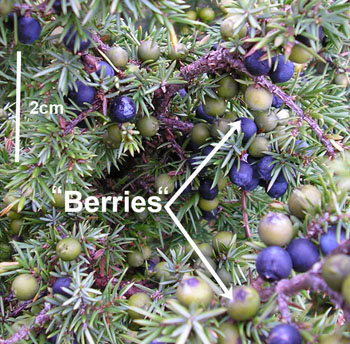
-
Article
Kale
Kale (Brassica oleracea, Acephala Group), cole crop (like cabbage, cauliflower, etc), belonging to the Cruciferae family.
"https://d3d0lqu00lnqvz.cloudfront.net/media/media/97699743-eed8-4d0a-8a03-2c0ed68541b1.jpg" // resources/views/front/categories/view.blade.php
https://d3d0lqu00lnqvz.cloudfront.net/media/media/97699743-eed8-4d0a-8a03-2c0ed68541b1.jpg
-
Article
Karst Landform
A karst landform is a geological feature created on the Earth's surface by the drainage of water into the ground. Typical karst forms include sinkholes, caves, natural bridges and sinking streams. They were first studied in detail in Kras, Slovenia, hence the name karst. There are 1.2 million km2 of karst rock outcroppings in Canada, found in all geological regions except the Canadian Shield.
"https://d3d0lqu00lnqvz.cloudfront.net/media/media/da6ae2ec-e05e-46fd-916c-6185a6a86215.jpg" // resources/views/front/categories/view.blade.php
https://d3d0lqu00lnqvz.cloudfront.net/media/media/da6ae2ec-e05e-46fd-916c-6185a6a86215.jpg
-
Macleans
Kelowna Residents Respond to Disaster
At times last week, the sky on Kelowna's southern flank seemed possessed by a malevolent force, as though the B.C. city were living under a volcano. Winds would fan the Okanagan Mountain Provincial Park fire, sending unsettling plumes of smoke high into the air.This article was originally published in Maclean's Magazine on September 8, 2003
"https://thecanadianencyclopedia.ca/images/tce_placeholder.jpg?v=e9dca980c9bdb3aa11e832e7ea94f5d9" // resources/views/front/categories/view.blade.php
https://thecanadianencyclopedia.ca/images/tce_placeholder.jpg?v=e9dca980c9bdb3aa11e832e7ea94f5d9
-
Article
Keystone XL Pipeline
Keystone XL was a proposed 1,947 km long pipeline project that would have carried crude oil from Alberta to Nebraska. It was owned by Calgary-based TC Energy Corporation. The pipeline was named XL for “export limited.” First proposed in July 2008, it was the prospective fourth phase of TC Energy’s existing Keystone Pipeline system. In Canada, Keystone XL had the support of both the federal and Alberta governments. However, the project faced significant opposition and legal challenges on environmental grounds. In January 2021, United States president Joe Biden cancelled its permit on his first day in office. On 9 June 2021, TC Energy and the Alberta government announced the termination of the Keystone XL pipeline.
"https://d3d0lqu00lnqvz.cloudfront.net/media/media/d0e10ee5-e27a-45c8-b079-981a892292b5.jpg" // resources/views/front/categories/view.blade.php
https://d3d0lqu00lnqvz.cloudfront.net/media/media/d0e10ee5-e27a-45c8-b079-981a892292b5.jpg
-
Article
Killer Whales
Three ecologically distinct types of killer whales have been identified in British Columbia: residents, transients and offshores. These three populations have overlapping ranges, but appear to be socially and reproductively isolated.
"https://d3d0lqu00lnqvz.cloudfront.net/media/media/900d8b8e-83f6-4d08-bc13-c3e062543b84.jpg" // resources/views/front/categories/view.blade.php
https://d3d0lqu00lnqvz.cloudfront.net/media/media/900d8b8e-83f6-4d08-bc13-c3e062543b84.jpg