
Browse "Military"
-
Article
USS Chesapeake
During the NAPOLEONIC WARS, Britain insisted on the right to search neutral ships on the high seas for Royal Navy deserters. On 22 June 1807 HMS Leopard forcibly took 4 seamen from the American frigate Chesapeake.
"https://thecanadianencyclopedia.ca/images/tce_placeholder.jpg?v=e9dca980c9bdb3aa11e832e7ea94f5d9" // resources/views/front/categories/view.blade.php
https://thecanadianencyclopedia.ca/images/tce_placeholder.jpg?v=e9dca980c9bdb3aa11e832e7ea94f5d9
-
Editorial
Vancouver Feature: Japanese-Canadians Held at Hastings Park
The following article is a feature from our Vancouver Feature series. Past features are not updated. For a century the Pacific National Exhibition has entertained families each summer with a mix of hair-raising Midway rides, live music and agricultural exhibits. But in 1942 the fun fair was a prison camp for thousands of displaced Japanese-Canadians
"https://d3d0lqu00lnqvz.cloudfront.net/media/media/0bec6156-0467-4a97-909f-da599383381d.jpg" // resources/views/front/categories/view.blade.php
https://d3d0lqu00lnqvz.cloudfront.net/media/media/0bec6156-0467-4a97-909f-da599383381d.jpg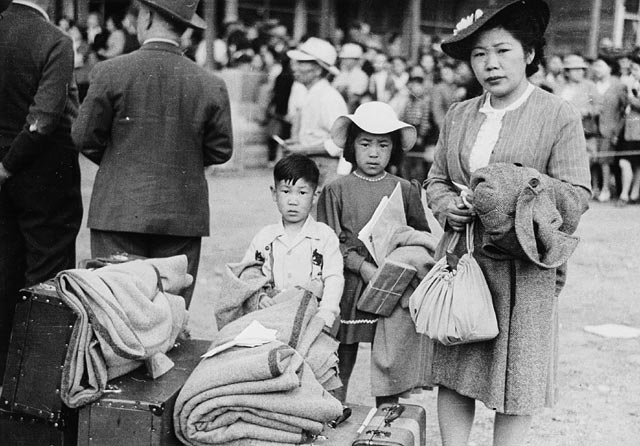
-
Article
Veronica Foster
Veronica Foster Guerrette, Second World War icon, model, vocalist (born 2 January 1922 in Montreal, Quebec; died 4 May 2000 in Toronto, Ontario). Foster worked for the John Inglis Company assembling Bren light machine guns during the Second World War. She was featured on propaganda posters that encouraged women to serve Canada by working in munitions factories. Foster became a Canadian icon representing female workers in the manufacturing industry. After the war, she was lead singer with the dance band Mart Kenney and His Western Gentlemen.
"https://d3d0lqu00lnqvz.cloudfront.net/media/new_article_images/VeronicaFoster/Veronica Foster_Bren Gun.jpg" // resources/views/front/categories/view.blade.php
https://d3d0lqu00lnqvz.cloudfront.net/media/new_article_images/VeronicaFoster/Veronica Foster_Bren Gun.jpg
-
Article
Second World War Veterans
When the Second World War ended, more than a million Canadian men and women, serving in uniform, were set to return to their homes. A driving question for the country was: What was owed to the veterans?
"https://d3d0lqu00lnqvz.cloudfront.net/media/media/5400b0fb-f0c7-418f-b2ae-ea899466560f.jpg" // resources/views/front/categories/view.blade.php
https://d3d0lqu00lnqvz.cloudfront.net/media/media/5400b0fb-f0c7-418f-b2ae-ea899466560f.jpg
-
Article
Victoria Rifles of Halifax
The Victoria Rifles of Halifax was a Black volunteer militia unit of about 70 men in Nova Scotia in the 1860s. The unit participated in anniversary celebrations of the founding of Halifax and in a parade honouring the Prince of Wales, who visited Nova Scotia in 1860. Despite their dedication and skill — and the support of some white Haligonians — the “Victorias” were subjected to anti-Black racism both within and outside the militia. The unit disbanded after approximately four years.
"https://d3d0lqu00lnqvz.cloudfront.net/TCE_placeholder.png" // resources/views/front/categories/view.blade.php
https://d3d0lqu00lnqvz.cloudfront.net/TCE_placeholder.png
-
Article
Vietnam War
The Vietnam War was a Cold War-era conflict between communist Northern Vietnamese forces and United States-backed Southern Vietnamese forces. Canada officially played the role of neutral peacemaker, but secretly backed the American effort in Vietnam.
"https://d3d0lqu00lnqvz.cloudfront.net/media/media/2dafdb1b-4b70-4fdb-8cd4-a7ea969412c3.jpg" // resources/views/front/categories/view.blade.php
https://d3d0lqu00lnqvz.cloudfront.net/media/media/2dafdb1b-4b70-4fdb-8cd4-a7ea969412c3.jpg
-
Editorial
HMCS Ville de Quebec in the Battle of the Atlantic
The following article is an editorial written by The Canadian Encyclopedia staff. Editorials are not usually updated.
"https://d3d0lqu00lnqvz.cloudfront.net/media/media/0427395c-3c01-4d33-9e61-08cb7eef24e1.jpg" // resources/views/front/categories/view.blade.php
https://d3d0lqu00lnqvz.cloudfront.net/media/media/0427395c-3c01-4d33-9e61-08cb7eef24e1.jpg
-
Article
Battle of Vimy Ridge
The Battle of Vimy Ridge was fought during the First World War from 9 to 12 April 1917. It is Canada’s most celebrated military victory — an often mythologized symbol of the birth of Canadian national pride and awareness. The battle took place on the Western Front, in northern France. The four divisions of the Canadian Corps, fighting together for the first time, attacked the ridge from 9 to 12 April 1917 and captured it from the German army. It was the largest territorial advance of any Allied force to that point in the war — but it would mean little to the outcome of the conflict. More than 10,600 Canadians were killed and wounded in the assault. Today an iconic memorial atop the ridge honours the 11,285 Canadians killed in France throughout the war who have no known graves. This is the full-length entry about the Battle of Vimy Ridge. For a plain-language summary, please see Battle of Vimy Ridge (Plain-Language Summary).
"https://d3d0lqu00lnqvz.cloudfront.net/media/media/a9aa6aaf-406d-4a4d-89a3-95d86d7359ca.jpg" // resources/views/front/categories/view.blade.php
https://d3d0lqu00lnqvz.cloudfront.net/media/media/a9aa6aaf-406d-4a4d-89a3-95d86d7359ca.jpg
-
Article
Vimy Ridge
Among Canada’s defining events, the Battle of Vimy Ridge in the First World War ranks high. It was a triumph — a major victory for the Allied side after a long, bloody stalemate — and a tragedy. In the four-day battle, 3,598 Canadians died and another 7,004 were wounded. In the century since it ended, on 12 April 1917, it has become something else: an event bordering on myth. “In those few minutes,” said Canadian Brigadier-General A.E. Ross of the victory, “I witnessed the birth of a nation.”
"https://d3d0lqu00lnqvz.cloudfront.net/media/media/16f32862-4f2b-488d-935e-7b4fcf5a5d64.jpg" // resources/views/front/categories/view.blade.php
https://d3d0lqu00lnqvz.cloudfront.net/media/media/16f32862-4f2b-488d-935e-7b4fcf5a5d64.jpg
-
Editorial
Vimy Ridge: Bloody Easter
The following article is an editorial written by The Canadian Encyclopedia staff. Editorials are not usually updated.
"https://thecanadianencyclopedia.ca/images/tce_placeholder.jpg?v=e9dca980c9bdb3aa11e832e7ea94f5d9" // resources/views/front/categories/view.blade.php
https://thecanadianencyclopedia.ca/images/tce_placeholder.jpg?v=e9dca980c9bdb3aa11e832e7ea94f5d9
-
Article
Voltigeurs de Québec Armoury
The Québec City Armoury, in Place Georges V, dates back to 1884 when architect Eugène-Étienne Taché drew up the building plans alternately with those for the Québec National Assembly and the old Palais de justice.
"https://d3d0lqu00lnqvz.cloudfront.net/media/media/60f3bef8-e5e4-4a32-81f7-311fa72662ab.jpg" // resources/views/front/categories/view.blade.php
https://d3d0lqu00lnqvz.cloudfront.net/media/media/60f3bef8-e5e4-4a32-81f7-311fa72662ab.jpg
-
Article
Canadian War Art Programs
Since the First World War, there have been four major initiatives to allow Canadian artists to document Canadian Armed Forces at war. Canada’s first official war art program, the Canadian War Memorials Fund (1916–19), was one of the first government-sponsored programs of its kind. It was followed by the Canadian War Art Program (1943–46) during the Second World War. The Canadian Armed Forces Civilian Artists Program (1968–95) and the Canadian Forces Artists Program (2001–present) were established to send civilian artists to combat and peacekeeping zones. Notable Canadian war artists have included A.Y. Jackson, F.H. Varley, Lawren Harris, Alex Colville, Molly Lamb Bobak and Mary Riter Hamilton.
"https://d3d0lqu00lnqvz.cloudfront.net/media/media/4bad248a-8c22-4488-9cc9-172fcd16be88.jpg" // resources/views/front/categories/view.blade.php
https://d3d0lqu00lnqvz.cloudfront.net/media/media/4bad248a-8c22-4488-9cc9-172fcd16be88.jpg
-
Article
War Measures Act
The War Measures Act was a federal law adopted by Parliament on 22 August 1914, after the beginning of the First World War. It gave broad powers to the Canadian government to maintain security and order during “war, invasion or insurrection.” It was used, controversially, to suspend the civil liberties of people in Canada who were considered “enemy aliens” during both world wars. This led to mass arrests and detentions without charges or trials. The War Measures Act was also invoked in Quebec during the 1970 October Crisis. The Act was repealed and replaced by the more limited Emergencies Act in 1988.
"https://d3d0lqu00lnqvz.cloudfront.net/media/media/c8a1d56b-60f5-40b0-86e2-3ce31bc3e7b0.jpg" // resources/views/front/categories/view.blade.php
https://d3d0lqu00lnqvz.cloudfront.net/media/media/c8a1d56b-60f5-40b0-86e2-3ce31bc3e7b0.jpg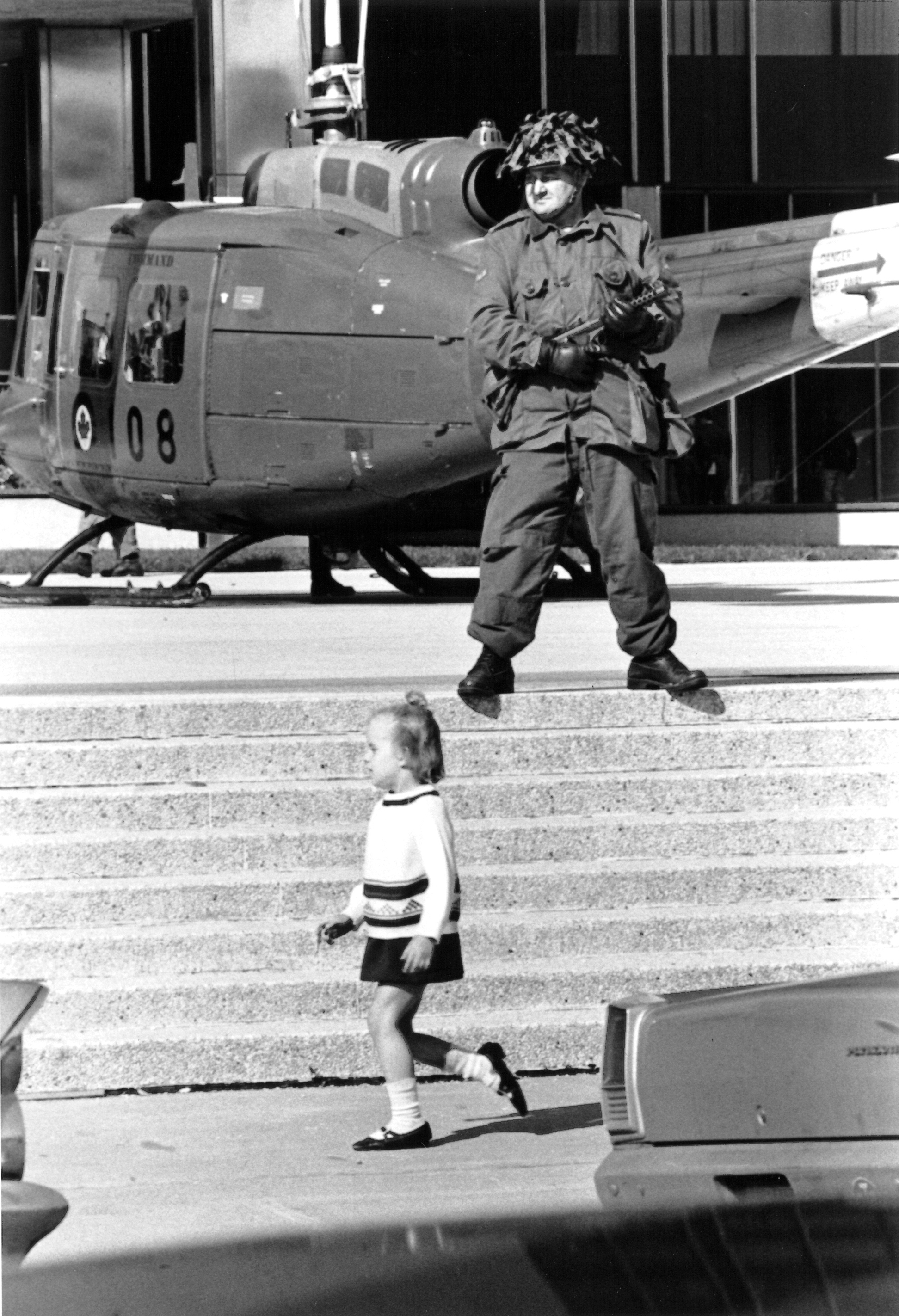
-
Article
War of 1812
The War of 1812 (which lasted from 1812 to 1814) was a military conflict between the United States and Great Britain. As a colony of Great Britain, Canada was swept up in the War of 1812 and was invaded several times by the Americans. The war was fought in Upper Canada, Lower Canada, on the Great Lakes and the Atlantic, and in the United States. The peace treaty of Ghent (1814), which ended the war, largely returned the status quo. However, in Canada, the war contributed to a growing sense of national identity, including the idea that civilian soldiers were largely responsible for repelling the American invaders. In contrast, the First Nations allies of the British and Canadian cause suffered much because of the war; not only had they lost many warriors (including the great Tecumseh), they also lost any hope of halting American expansion in the west, and their contributions were quickly forgotten by their British and Canadian allies. (See also First Nations and Métis Peoples in the War of 1812.) This article focuses primarily on land campaigns; for more detailed discussion of naval campaigns, see Atlantic Campaign of the War of 1812 and War on the Lakes in the War of 1812. Additionally, this article is a full-length entry about the War of 1812. For a plain-language summary, please see War of 1812 (Plain-Language Summary).
"https://d3d0lqu00lnqvz.cloudfront.net/media/media/56567521-2ca2-4ae0-bceb-b259db0aca8e.jpg" // resources/views/front/categories/view.blade.php
https://d3d0lqu00lnqvz.cloudfront.net/media/media/56567521-2ca2-4ae0-bceb-b259db0aca8e.jpg
-
Collection
War of 1812
The War of 1812 (which lasted from 1812 to 1814) was a military conflict between the United States and Great Britain. As a colony of Great Britain, Canada was swept up in the War of 1812 and was invaded a number of times by the Americans. The war was fought in Upper Canada, Lower Canada, on the Great Lakes and the Atlantic, and in the United States. The peace treaty of Ghent, which ended the...
"https://d3d0lqu00lnqvz.cloudfront.net/media/media/d60240b0-5df1-48c0-bd0f-e3c0fbc67705.jpg" // resources/views/front/categories/view.blade.php
https://d3d0lqu00lnqvz.cloudfront.net/media/media/d60240b0-5df1-48c0-bd0f-e3c0fbc67705.jpg