
Browse "Military"
-
Article
Shattered
Eric Walters’s young adult novel Shattered (2006) tells the story of Ian Blackburn. He is shaken out of his privileged life when he meets Jack, a homeless veteran of the Canadian Armed Forces. A member of the failed United Nations peacekeeping mission to Rwanda, Jack introduces Ian to some of humanity’s darkest moments. Shattered received the 2007 Ontario Library Association’s White Pine Award for best Canadian children’s book and the 2007 National Chapter of Canada International Order of the Daughters of Empire Violet Downey Book Award.
"https://d3d0lqu00lnqvz.cloudfront.net/media/home-page-images/Peacekeepers-in-Rwanda.jpg" // resources/views/front/categories/view.blade.php
https://d3d0lqu00lnqvz.cloudfront.net/media/home-page-images/Peacekeepers-in-Rwanda.jpg
-
Article
Ships of the War of 1812
The war on the water was an essential, if not the most important, aspect of the WAR OF 1812. Great Britain was obviously at a disadvantage geographically when trying to defend its colony Canada in a conflict with the United States.
"https://thecanadianencyclopedia.ca/images/tce_placeholder.jpg?v=e9dca980c9bdb3aa11e832e7ea94f5d9" // resources/views/front/categories/view.blade.php
https://thecanadianencyclopedia.ca/images/tce_placeholder.jpg?v=e9dca980c9bdb3aa11e832e7ea94f5d9
-
Article
Siege of Fort Erie, War of 1812
The siege of Fort Erie was a British blockade of their own fort located at the entrance to the Niagara River opposite Buffalo, New York, which the Americans had captured on 3 July 1814.
"https://thecanadianencyclopedia.ca/images/tce_placeholder.jpg?v=e9dca980c9bdb3aa11e832e7ea94f5d9" // resources/views/front/categories/view.blade.php
https://thecanadianencyclopedia.ca/images/tce_placeholder.jpg?v=e9dca980c9bdb3aa11e832e7ea94f5d9
-
Article
Sinking of HMHS Llandovery Castle
On the evening of 27 June 1918, while sailing from Halifax, Nova Scotia, to Liverpool, England, the Canadian hospital ship Llandovery Castle was torpedoed and sunk by a German U-boat (U-86). Of the 258 crew and passengers, only 24 survived. Almost all the Canadian Army Medical Corps personnel were killed: six male officers, 64 enlisted men and 14 nursing sisters. Only one lifeboat escaped; the rest were either sucked under as the ship sank or attacked by the U-boat. The submarine’s officers were later charged with committing a war crime.
"https://d3d0lqu00lnqvz.cloudfront.net/ASW/VictoryBondsPosterLlandoveryCastle1918.jpg" // resources/views/front/categories/view.blade.php
https://d3d0lqu00lnqvz.cloudfront.net/ASW/VictoryBondsPosterLlandoveryCastle1918.jpg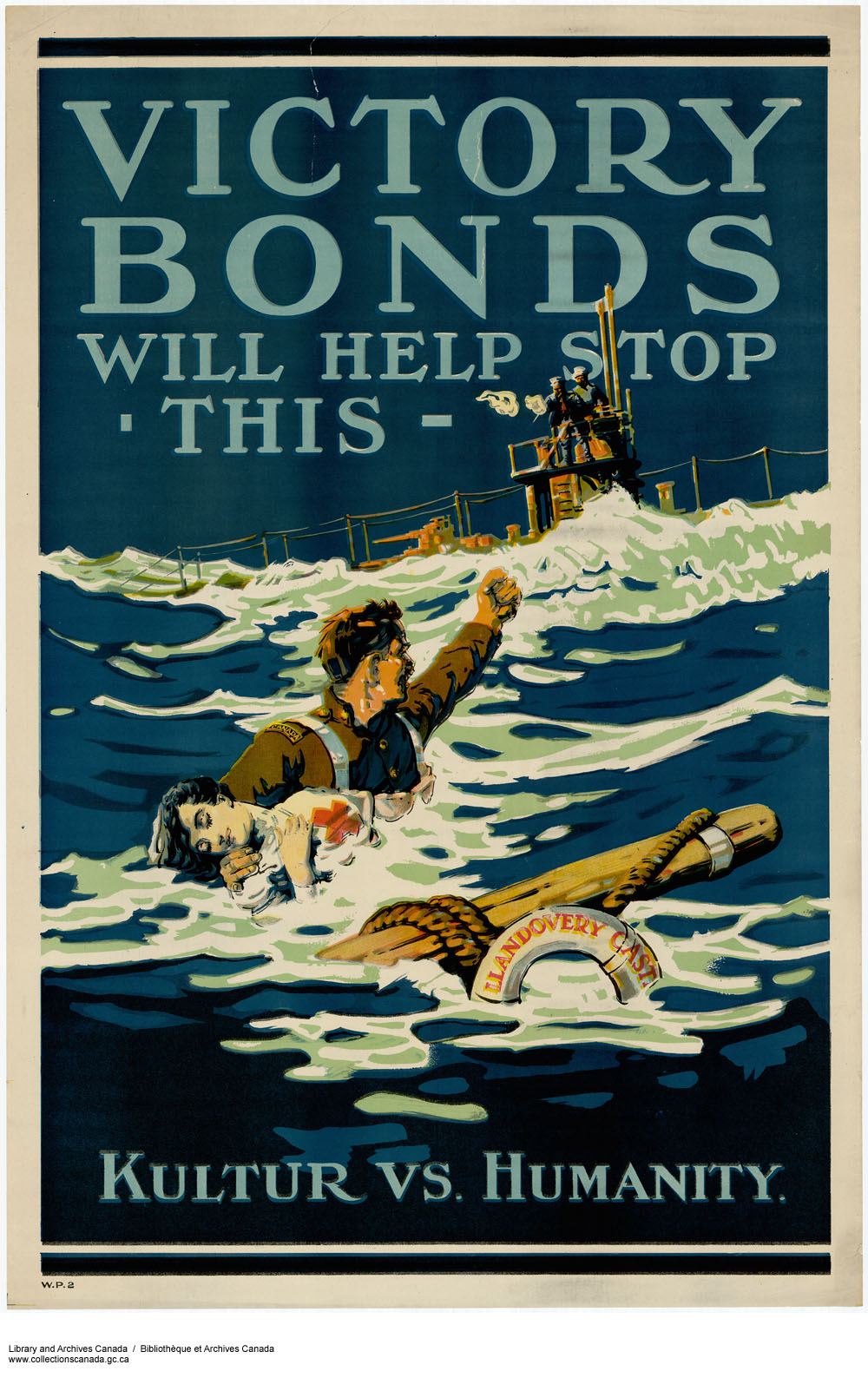
-
Article
Sinking of the SS Caribou
The SS Caribou was a passenger and train ferry that operated in the Cabot Strait between Port aux Basques, Newfoundland and North Sydney, Nova Scotia. On 14 October 1942, the German submarine U-69 sank the vessel, causing the worst loss of life in Canadian waters during the Second World War.
"https://d3d0lqu00lnqvz.cloudfront.net/media/new_article_images/Caribou/ss-caribou-1920-1940.jpg" // resources/views/front/categories/view.blade.php
https://d3d0lqu00lnqvz.cloudfront.net/media/new_article_images/Caribou/ss-caribou-1920-1940.jpg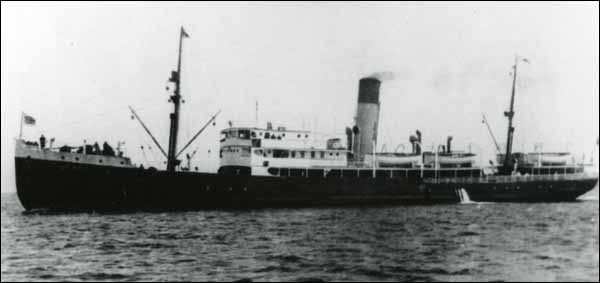
-
Editorial
Sixty Years On, Korean War Still Echoes
When is a war not a war? For the Korean War, the answer is not always clear. This year, 2013, marks the 60th anniversary of the ceasefire of a war that not everyone describes that way. It had ambiguous beginnings, more than 20 participating countries, and still no formal end. But some things are evident. This year, Historica Canada is commemorating this sometimes-forgotten but still-resonant period of our recent history, and Canada’s role therein. Our country sent more than 26,000 members of our military to the Korean “theatre.” More than 500 Canadians died, and another 1,000 were wounded; 32 became prisoners of war.
"https://thecanadianencyclopedia.ca/images/tce_placeholder.jpg?v=e9dca980c9bdb3aa11e832e7ea94f5d9" // resources/views/front/categories/view.blade.php
https://thecanadianencyclopedia.ca/images/tce_placeholder.jpg?v=e9dca980c9bdb3aa11e832e7ea94f5d9
-
Article
Snowbirds
The Canadian Forces Snowbirds are a military aerobatics team. They are officially known as "431 Air Demonstration Squadron." Since 1971, the team has performed across North America before millions of people. The Snowbirds have been recognized as among the best in the world at precision formation aerobatics and stunning solo crosses with minimum separation between the aircraft.
"https://d3d0lqu00lnqvz.cloudfront.net/media/media/3d26459f-4f24-4f5c-a33b-b6d9ac0f4515.jpg" // resources/views/front/categories/view.blade.php
https://d3d0lqu00lnqvz.cloudfront.net/media/media/3d26459f-4f24-4f5c-a33b-b6d9ac0f4515.jpg
-
Article
Somalia Affair
In 1992–93, Canada contributed military forces to UNITAF, a United Nations–backed humanitarian mission in the African nation of Somalia. In 1993, Canadian soldiers from the now-defunct Airborne Regiment tortured and killed a Somali teenager named Shidane Arone. These and other violent abuses during the mission shocked Canadians and damaged the country’s international reputation. They also led to a public inquiry that revealed serious failures of leadership at the highest levels of the Canadian Armed Forces, kick-starting reforms aimed a professionalizing the officer corps. This article contains sensitive material that may not be suitable for all audiences.
"https://d3d0lqu00lnqvz.cloudfront.net/media/new_article_images/e002280232.jpg" // resources/views/front/categories/view.blade.php
https://d3d0lqu00lnqvz.cloudfront.net/media/new_article_images/e002280232.jpg
-
Macleans
Somalia Affair: Chronology
This article was originally published in Maclean’s magazine on April 15, 1996. Partner content is not updated. What began as a humanitarian mission quickly unravelled into one of the darkest chapters in Canadian military history (see Somalia Affair).
"https://thecanadianencyclopedia.ca/images/tce_placeholder.jpg?v=e9dca980c9bdb3aa11e832e7ea94f5d9" // resources/views/front/categories/view.blade.php
https://thecanadianencyclopedia.ca/images/tce_placeholder.jpg?v=e9dca980c9bdb3aa11e832e7ea94f5d9
-
Macleans
Somalia Inquiry's Damning Report
This article was originally published in Maclean’s magazine on July 14, 1997. Partner content is not updated. Hindsight is a wonderful thing. If only Prime Minister Brian Mulroney had not jumped at U.S. President George Bushs request to send Canadian troops to Somalia in 1992.
"https://thecanadianencyclopedia.ca/images/tce_placeholder.jpg?v=e9dca980c9bdb3aa11e832e7ea94f5d9" // resources/views/front/categories/view.blade.php
https://thecanadianencyclopedia.ca/images/tce_placeholder.jpg?v=e9dca980c9bdb3aa11e832e7ea94f5d9
-
Article
Spanish-American War
Spanish-American War, the 1898 conflict between the US and Spain, during which the US removed Cuba, Puerto Rico, Guam and the Philippines from Spain, annexing the last 3.
"https://thecanadianencyclopedia.ca/images/tce_placeholder.jpg?v=e9dca980c9bdb3aa11e832e7ea94f5d9" // resources/views/front/categories/view.blade.php
https://thecanadianencyclopedia.ca/images/tce_placeholder.jpg?v=e9dca980c9bdb3aa11e832e7ea94f5d9
-
Article
St Albans Raid
In the third year of the American Civil War, around 20 Confederate agents raided the town of St. Albans, Vermont. The raid was planned by Confederate spymasters based in St. Catharines and Montreal. On 19 October 1864, the men robbed the town’s three banks and killed a man, before crossing the border into Canada. Fourteen of the raiders were soon arrested. They were brought to trial three times and released each time by Canadian judges. The raid and court decisions worsened relations between Canada and the US, which were already strained.
"https://d3d0lqu00lnqvz.cloudfront.net/Capt-Young.jpg" // resources/views/front/categories/view.blade.php
https://d3d0lqu00lnqvz.cloudfront.net/Capt-Young.jpg
-
Article
Steele Narrows Battle
Steele Narrows Battle, at Loon Lake, 95 km north-east of Lloydminster, scene of the last shots fired in the North-West Resistance on 3 June 1885.
"https://d3d0lqu00lnqvz.cloudfront.net/media/media/a64c2753-6c2c-4abe-a75b-d9e9202495e4.jpg" // resources/views/front/categories/view.blade.php
https://d3d0lqu00lnqvz.cloudfront.net/media/media/a64c2753-6c2c-4abe-a75b-d9e9202495e4.jpg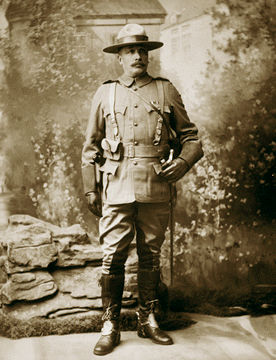
-
Article
The Great War in the Air
Airplanes became an important part of modern warfare during the First World War (1914–18). Aircraft technology developed rapidly and by war’s end, airplanes were involved in reconnaissance, artillery spotting, air-to-air combat, strafing ground targets, anti-submarine warfare, tactical and strategic bombing and home defence. More than 20,000 Canadians served in British flying services (Royal Flying Corps, Royal Naval Air Service and Royal Air Force) during the war. Approximately 1,400 were killed or died from wounds or accidents. Canada did not have an air force during the First World War; a single-plane Canadian Aviation Corps was established in 1914, but never saw service and soon disbanded. Later, on 5 August 1918, two Canadian Air Force squadrons were formed in Britain, but were disbanded the next year when the British cut off funding. The Royal Canadian Naval Air Service was formed in September 1918 but lasted only three months before the war ended. Canada would not have a permanent air force until 1924 (see Royal Canadian Air Force).
"https://d3d0lqu00lnqvz.cloudfront.net/media/media/f864cf51-65b5-4803-85a1-a7908ffdc0aa.jpg" // resources/views/front/categories/view.blade.php
https://d3d0lqu00lnqvz.cloudfront.net/media/media/f864cf51-65b5-4803-85a1-a7908ffdc0aa.jpg
-
Article
The Army Show
The Army Show. At first a musical revue produced during World War II for the Canadian army, and later the operational name for entertainment units serving with the army.
"https://thecanadianencyclopedia.ca/images/tce_placeholder.jpg?v=e9dca980c9bdb3aa11e832e7ea94f5d9" // resources/views/front/categories/view.blade.php
https://thecanadianencyclopedia.ca/images/tce_placeholder.jpg?v=e9dca980c9bdb3aa11e832e7ea94f5d9