
Browse "Military"
-
Article
Navy League of Canada
The Navy League of Canada is a volunteer organization founded in 1918 under federal charter, but tracing its origins to branches of the British Empire Navy League established in Canada from 1895.
"https://thecanadianencyclopedia.ca/images/tce_placeholder.jpg?v=e9dca980c9bdb3aa11e832e7ea94f5d9" // resources/views/front/categories/view.blade.php
https://thecanadianencyclopedia.ca/images/tce_placeholder.jpg?v=e9dca980c9bdb3aa11e832e7ea94f5d9
-
Article
Niobe Day
Since 2014, Niobe Day has been celebrated every year on 21 October by the Royal Canadian Navy. It commemorates the entrance of HMCS Niobe, one of Canada’s first two warships, into Halifax Harbour on 21 October 1910. Niobe, which had been purchased from Britain, was the first Canadian warship to enter Canadian territorial waters. Before 2014, the Canadian navy marked Trafalgar Day every 21 October in commemoration of the British victory at the Battle of Trafalgar (1805).
"https://d3d0lqu00lnqvz.cloudfront.net/HMCSNiobe/HMCS Niobe entering Halifax on Trafalgar Day 1910.jpg" // resources/views/front/categories/view.blade.php
https://d3d0lqu00lnqvz.cloudfront.net/HMCSNiobe/HMCS Niobe entering Halifax on Trafalgar Day 1910.jpg
-
Article
No. 8 Company – Canadian Forestry Corps
No. 8 Company, Canadian Forestry Corps (CFC) was the second Black unit formed in the First World War, after No. 2 Construction Battalion. From November 1918 to March 1919, No. 8 Company improved and repaired airfields and roads in northern Belgium and Germany, providing valuable support to the Royal Air Force (RAF).
"https://d3d0lqu00lnqvz.cloudfront.net/No8CompanyCFC/No8-Co-CFC_WarDiary_Dec1918.jpg" // resources/views/front/categories/view.blade.php
https://d3d0lqu00lnqvz.cloudfront.net/No8CompanyCFC/No8-Co-CFC_WarDiary_Dec1918.jpg
-
Article
NORAD
The North American Aerospace Defense Command (NORAD) was a pact made in 1957, at the height of the Cold War. It placed under joint command the air forces of Canada and the United States. Its name was changed in 1981 to the North American Aerospace Defense Command, but it kept the NORAD acronym. Canada and the US renewed NORAD in 2006, making the arrangement permanent. It is subject to review every four years, or at the request of either country. NORAD’s mission was also expanded into maritime warnings. The naval forces of the two countries remain under separate commands.
"https://d3d0lqu00lnqvz.cloudfront.net/media/media/efca000f-abb8-4a6f-881e-e39e4ee2882f.jpg" // resources/views/front/categories/view.blade.php
https://d3d0lqu00lnqvz.cloudfront.net/media/media/efca000f-abb8-4a6f-881e-e39e4ee2882f.jpg
-
Article
Normandy Massacres
One of the worst war crimes in Canadian history occurred in June, 1944, during the Battle of Normandy, following the D-Day landings of the Second World War. As many as 156 Canadian soldiers, taken prisoner by German forces, were executed by their captors during various incidents in the Normandy countryside.
"https://d3d0lqu00lnqvz.cloudfront.net/media/media/f6f8902f-029b-4666-8ab3-5ccd0711dda3.jpg" // resources/views/front/categories/view.blade.php
https://d3d0lqu00lnqvz.cloudfront.net/media/media/f6f8902f-029b-4666-8ab3-5ccd0711dda3.jpg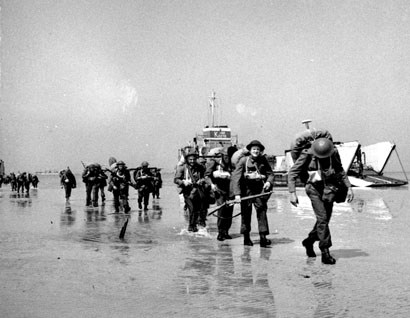
-
Article
Kanesatake Resistance (Oka Crisis)
The Kanesatake Resistance, also known as the Oka Crisis or the Mohawk Resistance at Kanesatake, was a 78-day standoff (11 July–26 September 1990) between Kanyen'kehà:ka (Mohawk) protesters, Quebec police, the RCMP and the Canadian Army. It took place in the community of Kanesatake, near the Town of Oka, on the north shore of Montreal. Related protests and violence occurred in the Kahnawá:ke reserve, to the south of Montreal. The crisis was sparked by the proposed expansion of a golf course and the development of townhouses on disputed land in Kanesatake that included a Kanyen'kehà:ka burial ground. Tensions were high, particularly after the death of Corporal Marcel Lemay, a Sûreté du Québec police officer. Eventually, the army was called in and the protest ended. The golf course expansion was cancelled, and the land was purchased by the federal government. However, it did not establish the land as a reserve, and there has since been no organized transfer of the land to the Mohawks of Kanesatake. This article is a full-length entry about the Kanesatake Resistance (Oka Crisis). For a plain-language summary, please see Kanesatake Resistance (Oka Crisis) (Plain-Language Summary).
"https://d3d0lqu00lnqvz.cloudfront.net/media/new_article_images/OkaCrisis/1990_C_35_7 (003).jpg" // resources/views/front/categories/view.blade.php
https://d3d0lqu00lnqvz.cloudfront.net/media/new_article_images/OkaCrisis/1990_C_35_7 (003).jpg.jpg)
-
Editorial
Canadian Soldiers and the Battle of Ortona
The following article is an editorial written by The Canadian Encyclopedia staff. Editorials are not usually updated.
"https://d3d0lqu00lnqvz.cloudfront.net/media/media/599599a1-a339-4bd7-84d5-6bf2c1238122.jpg" // resources/views/front/categories/view.blade.php
https://d3d0lqu00lnqvz.cloudfront.net/media/media/599599a1-a339-4bd7-84d5-6bf2c1238122.jpg
-
Macleans
Ottawa Purchases New Helicopters
Cpl. Mark Gibeault missed the big news conference. Many of his colleagues gathered around TVs last week at the Comox, B.C., armed forces base to applaud Defence Minister Arthur Eggleton's long-awaited announcement that Canada would buy 15 new search-and-rescue helicopters.This article was originally published in Maclean's Magazine on January 19, 1998
"https://thecanadianencyclopedia.ca/images/tce_placeholder.jpg?v=e9dca980c9bdb3aa11e832e7ea94f5d9" // resources/views/front/categories/view.blade.php
https://thecanadianencyclopedia.ca/images/tce_placeholder.jpg?v=e9dca980c9bdb3aa11e832e7ea94f5d9
-
Editorial
Passchendaele: Remembrance of Things Past
The following article is an editorial written by The Canadian Encyclopedia staff. Editorials are not usually updated. How does memory speak to us? Each November, over 13 million poppies blossom on the jackets, dresses and hats of Canadians.
"https://d3d0lqu00lnqvz.cloudfront.net/media/media/e180a291-7739-4324-9d95-27e1fe6439b0.jpg" // resources/views/front/categories/view.blade.php
https://d3d0lqu00lnqvz.cloudfront.net/media/media/e180a291-7739-4324-9d95-27e1fe6439b0.jpg
-
Macleans
Patrol with Canadian Troops Outside Kabul
FROM HIS hilltop perch overlooking the fertile Lalandar Valley, Shaheen is prepared for war. Or perhaps, in his mind, the conflicts that have swept through the mountains around Kabul have not ended.This article was originally published in Maclean's Magazine on October 20, 2003
"https://thecanadianencyclopedia.ca/images/tce_placeholder.jpg?v=e9dca980c9bdb3aa11e832e7ea94f5d9" // resources/views/front/categories/view.blade.php
https://thecanadianencyclopedia.ca/images/tce_placeholder.jpg?v=e9dca980c9bdb3aa11e832e7ea94f5d9
-
Article
Great Peace of Montreal, 1701
On 4 August 1701, the French concluded a peace agreement with the Five Nations Haudenosaunee (Iroquois). This brought to an end almost a century of hostilities marked by atrocities on both sides. The Haudenosaunee were permitted to trade freely and to obtain goods from the French at a reduced cost. In exchange, they pledged to allow French settlement at Detroit and to remain neutral in the event of a war between England and France. The accord assured New France superiority in dealing with issues related to the region’s First Nations. It also gave the French the freedom to expand militarily over the next half century.
"https://d3d0lqu00lnqvz.cloudfront.net/media/new_article_images/GreatPeaceOfMontreal/640px-Grande_Paix_Montreal.jpg" // resources/views/front/categories/view.blade.php
https://d3d0lqu00lnqvz.cloudfront.net/media/new_article_images/GreatPeaceOfMontreal/640px-Grande_Paix_Montreal.jpg
-
Macleans
Peacekeepers Leave East Timor
The job holds less significance to the mandarins in Ottawa. Tremblay and his fellow soldiers from the Royal 22nd Regiment in Valcartier, Que., wound up five months of operations at the end of last week and began preparing to return home.This article was originally published in Maclean's Magazine on March 20, 2000
"https://d3d0lqu00lnqvz.cloudfront.net/media/media/1db7b7a1-dbc0-4403-be0f-8bbfebb8765f.jpg" // resources/views/front/categories/view.blade.php
https://d3d0lqu00lnqvz.cloudfront.net/media/media/1db7b7a1-dbc0-4403-be0f-8bbfebb8765f.jpg
-
Article
Permanent Joint Board on Defence
The Permanent Joint Board on Defence is a Canadian-American advisory body established at Ogdensburg, NY, 18 August 1940, by PM Mackenzie King and US President F.D. Roosevelt.
"https://thecanadianencyclopedia.ca/images/tce_placeholder.jpg?v=e9dca980c9bdb3aa11e832e7ea94f5d9" // resources/views/front/categories/view.blade.php
https://thecanadianencyclopedia.ca/images/tce_placeholder.jpg?v=e9dca980c9bdb3aa11e832e7ea94f5d9
-
Article
Persian Gulf War, 1990-91
In 1991, Canada joined an international military coalition to confront Iraq following its invasion of Kuwait. Canada contributed warships and fighter aircraft to the successful campaign to liberate Kuwait. It was the first time Canada sent women to war in combat roles, and it was the first time in decades that Canadian air and naval forces supported each other in a war zone. More than 5,100 Canadian military personnel served in the war, with a peak of about 2,700 in the region at one time. No members of the Canadian armed forces died during the conflict.
"https://d3d0lqu00lnqvz.cloudfront.net/media/media/6d7d5d34-f0d2-4f3b-9f9b-997d3b6ec7a8.jpg" // resources/views/front/categories/view.blade.php
https://d3d0lqu00lnqvz.cloudfront.net/media/media/6d7d5d34-f0d2-4f3b-9f9b-997d3b6ec7a8.jpg
-
Article
Pinky Schooner
A Pinky Schooner was an ancient type of vessel adapted to a primitive sloop or schooner rig in the British North American colonies and widely used in the Maritime provinces until the early 1900s. Often less than 14 m long, they were cheap to build and ideally suited for fishing.
"https://thecanadianencyclopedia.ca/images/tce_placeholder.jpg?v=e9dca980c9bdb3aa11e832e7ea94f5d9" // resources/views/front/categories/view.blade.php
https://thecanadianencyclopedia.ca/images/tce_placeholder.jpg?v=e9dca980c9bdb3aa11e832e7ea94f5d9