
Browse "Military"
-
Article
Hindenburg Line
Hindenburg Line (Siegfried-Stellung), a system of fortified and entrenched reserve positions stretching 80 km southeast from Arras to Soissons, France, built by the Germans in the winter of 1916-17.
"https://thecanadianencyclopedia.ca/images/tce_placeholder.jpg?v=e9dca980c9bdb3aa11e832e7ea94f5d9" // resources/views/front/categories/view.blade.php
https://thecanadianencyclopedia.ca/images/tce_placeholder.jpg?v=e9dca980c9bdb3aa11e832e7ea94f5d9
-
Article
History of the Armed Forces in Canada
The armed forces are the land, naval and air forces commanded by the federal government for the purpose of defending Canada's security, protecting its citizens, and promoting its strategic interests at home or abroad. The armed forces have evolved since colonial times from small, local militia units to the modern professional military forces of today.
"https://d3d0lqu00lnqvz.cloudfront.net/media/media/27bfbefd-a613-47df-bd35-5e01ef6511ae.jpg" // resources/views/front/categories/view.blade.php
https://d3d0lqu00lnqvz.cloudfront.net/media/media/27bfbefd-a613-47df-bd35-5e01ef6511ae.jpg
-
Article
HMCS Conestoga
HMCS Conestoga was a basic training establishment for the Women’s Royal Canadian Naval Service (WRCNS) during the Second World War. Located in Galt, Ontario, it operated from 1942 to 1945. Of nearly 6,800 women who served in the WRCNS, most trained at Conestoga.
"https://d3d0lqu00lnqvz.cloudfront.net/media/new_article_images/IsabelMacneill/WRCNS at Conestoga.jpg" // resources/views/front/categories/view.blade.php
https://d3d0lqu00lnqvz.cloudfront.net/media/new_article_images/IsabelMacneill/WRCNS at Conestoga.jpg
-
Article
HMCS Kootenay Disaster
HMCS Kootenay was a destroyer in the Canadian Navy. In 1969, an accident at sea killed 9 sailors and injured 53 others. It was the worst peacetime disaster in the history of the navy.
"https://d3d0lqu00lnqvz.cloudfront.net/media/media/ced5f338-fcf3-463a-9627-1da6d7794b5e.jpg" // resources/views/front/categories/view.blade.php
https://d3d0lqu00lnqvz.cloudfront.net/media/media/ced5f338-fcf3-463a-9627-1da6d7794b5e.jpg
-
Article
HMS Shannon
HMS Shannon was a fully-rigged, 38-gun Leda-class frigate, one of the largest frigates built for the Napoleonic Wars. It had two decks, with the main armaments on the upper deck, and could take on a complement of 330 men.
"https://d3d0lqu00lnqvz.cloudfront.net/media/media/f5005028-c1cf-45af-89ab-badff7bc77bd.jpg" // resources/views/front/categories/view.blade.php
https://d3d0lqu00lnqvz.cloudfront.net/media/media/f5005028-c1cf-45af-89ab-badff7bc77bd.jpg
-
Article
HMS Shannon versus USS Chesapeake, War of 1812
HMS Shannon and the USS Chesapeake fought one of the most celebrated naval battles of the WAR OF 1812. On 1 June 1813, the two ships met 20 nautical miles (37 km) east of Boston lighthouse, between Cape Ann and Cape Cod.
"https://thecanadianencyclopedia.ca/images/tce_placeholder.jpg?v=e9dca980c9bdb3aa11e832e7ea94f5d9" // resources/views/front/categories/view.blade.php
https://thecanadianencyclopedia.ca/images/tce_placeholder.jpg?v=e9dca980c9bdb3aa11e832e7ea94f5d9
-
Article
HMS St Lawrence (British Warship of the War of 1812)
The HMS St Lawrence was the largest warship ever built on the Great Lakes during the age of sail. During the War of 1812, supply, reinforcement and the movement of troops for attack all depended on the naval control of the lakes.
"https://thecanadianencyclopedia.ca/images/tce_placeholder.jpg?v=e9dca980c9bdb3aa11e832e7ea94f5d9" // resources/views/front/categories/view.blade.php
https://thecanadianencyclopedia.ca/images/tce_placeholder.jpg?v=e9dca980c9bdb3aa11e832e7ea94f5d9
-
Editorial
Editorial: Igor Gouzenko Defects to Canada
The following article is an editorial written by The Canadian Encyclopedia staff. Editorials are not usually updated. A knock on the apartment door froze him in his steps. Another knock, louder, more insistent. The knocking turned to pounding. A voice called his name several times. Finally, the pounding stopped, and he heard footsteps going down the stairs. He knew he needed help.
"https://d3d0lqu00lnqvz.cloudfront.net/media/media/ef877228-646a-42e0-8096-b939feb24100.jpg" // resources/views/front/categories/view.blade.php
https://d3d0lqu00lnqvz.cloudfront.net/media/media/ef877228-646a-42e0-8096-b939feb24100.jpg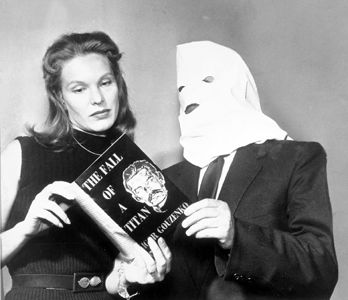
-
Article
Imperial Munitions Board
Imperial Munitions Board, established November 1915 in Canada by the British Ministry of Munitions, with Canadian government approval. Headed by J.W. Flavelle, a prominent Toronto businessman, the board was responsible for letting contracts on behalf of the British government for the construction of war materials in Canada.
"https://d3d0lqu00lnqvz.cloudfront.net/media/media/6d4e231e-f064-4897-b648-57e415ca7a8c.jpg" // resources/views/front/categories/view.blade.php
https://d3d0lqu00lnqvz.cloudfront.net/media/media/6d4e231e-f064-4897-b648-57e415ca7a8c.jpg
-
Article
Indigenous Peoples and the World Wars
Thousands of Indigenous peoples served in the Canadian military forces in the First World War and Second World War; most were volunteers. On the home front, most Indigenous communities participated in the national war effort in diverse ways. The world wars were dramatic events for Indigenous peoples in Canada (see Indigenous Peoples and the First World War and Indigenous Peoples and the Second World War). Conflict offered these marginalized populations opportunities to renew warrior cultural traditions, reaffirm sacred treaties, prove their worth to indifferent non-Indigenous Canadians, break down social barriers and find good jobs.
"https://d3d0lqu00lnqvz.cloudfront.net/media/media/807e5d85-0d60-4180-8400-b1badabf3486.jpg" // resources/views/front/categories/view.blade.php
https://d3d0lqu00lnqvz.cloudfront.net/media/media/807e5d85-0d60-4180-8400-b1badabf3486.jpg
-
Article
Indigenous Veterans Day
Indigenous Veterans Day is observed in Canada on 8 November. The day recognizes the contributions of First Nations, Inuit and Métis veterans of the Canadian armed forces.
"https://d3d0lqu00lnqvz.cloudfront.net/National-Aboriginal_Veterans-Monument.jpg" // resources/views/front/categories/view.blade.php
https://d3d0lqu00lnqvz.cloudfront.net/National-Aboriginal_Veterans-Monument.jpg
-
Article
Infantry
Known as the “Queen of Battle,” the infantry is the branch of the army that provides its primary fighters. The main responsibility of infantry soldiers is to “close with and destroy the enemy.” Although they are trained, armed and equipped to fight on foot, infantry soldiers are usually transported to the battlefield by other means. Infantry soldiers can also specialize as light, mechanized, airmobile, airborne and other types. The characteristics of infantry are mobility, firepower, flexibility, communications and vulnerability (to enemy action). Infantry soldiers are trained in a wide range of individual and crew-served weapons and work with the all-arms team of reconnaissance, armour, artillery, air defence, engineers, tactical aviation and other combat specialists. Except for a brief time during the feudal period (when cavalry dominated), the infantry has been the largest single component of armies since ancient times. In Canada, the infantry has always been the army’s largest element.
"https://d3d0lqu00lnqvz.cloudfront.net/Infantry/InfantryCorpsBadge.jpg" // resources/views/front/categories/view.blade.php
https://d3d0lqu00lnqvz.cloudfront.net/Infantry/InfantryCorpsBadge.jpg
-
Article
John Norton and the War of 1812
Canada is a country so vast that too often, it seems, its history is lost inside its geography. A striking example is the history of Indigenous peoples, whose long, rich narrative is well-preserved by them, but seldom gets the same attention on a broader scale — even when their stories affect us all.
"https://d3d0lqu00lnqvz.cloudfront.net/media/media/41ca7dbe-20b9-4db4-b6f0-911988594c22.jpg" // resources/views/front/categories/view.blade.php
https://d3d0lqu00lnqvz.cloudfront.net/media/media/41ca7dbe-20b9-4db4-b6f0-911988594c22.jpg
-
Article
Khaki University
Khaki University (initially Khaki College), an educational institution set up and managed by the Canadian Army in Britain, 1917-19 and 1945-46. The program was rooted in the study groups of the Canadian YMCA and the chaplain services of the Canadian Army.
"https://thecanadianencyclopedia.ca/images/tce_placeholder.jpg?v=e9dca980c9bdb3aa11e832e7ea94f5d9" // resources/views/front/categories/view.blade.php
https://thecanadianencyclopedia.ca/images/tce_placeholder.jpg?v=e9dca980c9bdb3aa11e832e7ea94f5d9
-
Article
Koje-Do
Koje-Do (now Geojedo), is an island 40 kilometers southwest of Busan, South Korea, where the United States operated a prisoner of war (POW) camp during the Korean War. North Korean and Chinese prisoners rebelled and seized the camp.
"https://thecanadianencyclopedia.ca/images/tce_placeholder.jpg?v=e9dca980c9bdb3aa11e832e7ea94f5d9" // resources/views/front/categories/view.blade.php
https://thecanadianencyclopedia.ca/images/tce_placeholder.jpg?v=e9dca980c9bdb3aa11e832e7ea94f5d9