Browse "History"
-
Article
Christmas in Canada
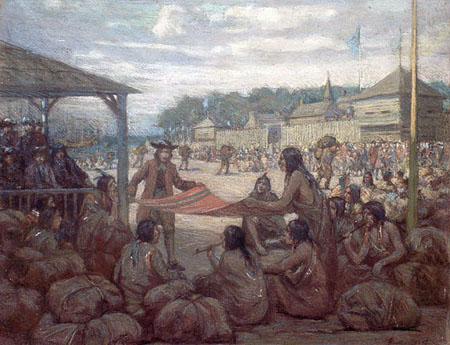
Christmas is celebrated in various ways in contemporary Canada. In particular, it draws form the French, British and American traditions. Since the beginning of the 20th century, it had become the biggest annual celebration and had begun to take on the form that we recognize today.
"https://d3d0lqu00lnqvz.cloudfront.net/media/media/a8ac9316-d4be-451e-9801-1c4f6a329d71.jpg" // resources/views/front/categories/view.blade.php
https://d3d0lqu00lnqvz.cloudfront.net/media/media/a8ac9316-d4be-451e-9801-1c4f6a329d71.jpg
-
Editorial
The First Christmas Tree in North America
The following article is an editorial written by The Canadian Encyclopedia staff. Editorials are not usually updated.
"https://d3d0lqu00lnqvz.cloudfront.net/media/media/b7110cb5-bfa8-4f96-803e-418fb5b41091.jpg" // resources/views/front/categories/view.blade.php
https://d3d0lqu00lnqvz.cloudfront.net/media/media/b7110cb5-bfa8-4f96-803e-418fb5b41091.jpg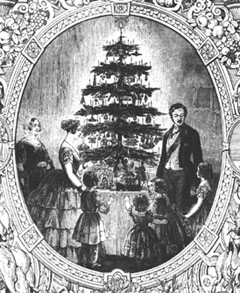
-
Article
Clergy Reserves
Clergy Reserves, one-seventh of the public lands of Upper and Lower Canada, reserved by the 1791 Constitutional Act for the maintenance of a "Protestant clergy," a phrase intended to apply to the Church of England alone.
"https://d3d0lqu00lnqvz.cloudfront.net/media/media/693e886b-aefa-4d54-b3e0-c1695d334bb0.jpg" // resources/views/front/categories/view.blade.php
https://d3d0lqu00lnqvz.cloudfront.net/media/media/693e886b-aefa-4d54-b3e0-c1695d334bb0.jpg
-
Article
Clocks and Watches
The manufacture of clocks and watches in Canada may have begun as early as 1700; however, practising watch and clockmakers through the 18th and much of the 19th centuries did not make the movements.
"https://thecanadianencyclopedia.ca/images/tce_placeholder.jpg?v=e9dca980c9bdb3aa11e832e7ea94f5d9" // resources/views/front/categories/view.blade.php
https://thecanadianencyclopedia.ca/images/tce_placeholder.jpg?v=e9dca980c9bdb3aa11e832e7ea94f5d9
-
Article
Co-operative Commonwealth Federation (CCF)
The Co-operative Commonwealth Federation (CCF) was founded in Calgary in 1932. It was a political coalition of progressive, socialist and labour groups. It sought economic reform to help Canadians affected by the Great Depression. The party governed Saskatchewan under Premier Tommy Douglas, who went on to be the first leader of the federal New Democratic Party (NDP). The CCF merged with the Canadian Labour Congress (CLC) to form the NDP in 1961. Although the CCF never held power nationally, the adoption of many of its ideas by ruling parties contributed greatly to the development of the Canadian welfare state.
"https://d3d0lqu00lnqvz.cloudfront.net/media/media/d27e812a-e155-4b23-94b4-55060feada96.jpg" // resources/views/front/categories/view.blade.php
https://d3d0lqu00lnqvz.cloudfront.net/media/media/d27e812a-e155-4b23-94b4-55060feada96.jpg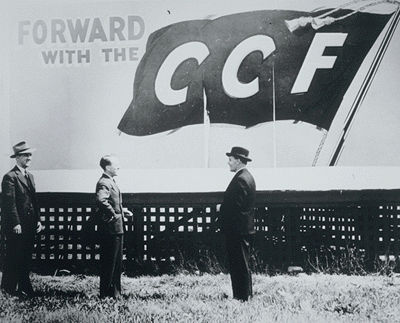
-
Article
Coal Mining
A carbonaceous fossil fuel, coal has a long history as the key energy source in the transition to industrialization, beginning in 17th-century Europe.
"https://d3d0lqu00lnqvz.cloudfront.net/media/media/0b6c36b6-4c5a-4a08-b2dd-78723d6b2e54.jpg" // resources/views/front/categories/view.blade.php
https://d3d0lqu00lnqvz.cloudfront.net/media/media/0b6c36b6-4c5a-4a08-b2dd-78723d6b2e54.jpg
-
Article
Coal Mining Disasters
Coal mining involves deep workings, soft rock, dust, poisonous and flammable gases, explosives, machinery, transport and ventilation systems, and, in early times, open-flame lamps. Each has been a factor in the many Canadian coal mine tragedies, the worst of which are detailed here.
"https://d3d0lqu00lnqvz.cloudfront.net/media/media/10dac7dd-3569-432a-8cb3-c5ad5f082f3f.jpg" // resources/views/front/categories/view.blade.php
https://d3d0lqu00lnqvz.cloudfront.net/media/media/10dac7dd-3569-432a-8cb3-c5ad5f082f3f.jpg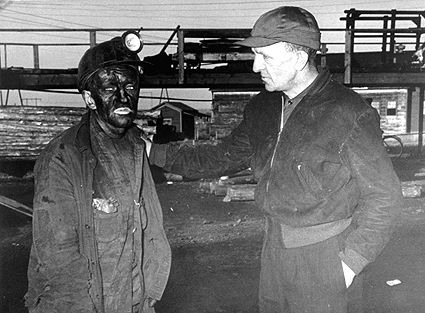
-
Article
Cod Moratorium of 1992
On 2 July 1992, the federal government banned cod fishing along Canada’s east coast. This moratorium ended nearly five centuries of cod fishing in Newfoundland and Labrador. Cod had played a central role in the province’s economy and culture. The aim of the policy was to help restore cod stocks that had been depleted due to overfishing. (See also Fisheries.) Click here for definitions of key terms used in this article.
"https://d3d0lqu00lnqvz.cloudfront.net/media/new_article_images/CodMoratoriumof1992/Harbour_Grace_Douglas_Sprott_flickr.jpg" // resources/views/front/categories/view.blade.php
https://d3d0lqu00lnqvz.cloudfront.net/media/new_article_images/CodMoratoriumof1992/Harbour_Grace_Douglas_Sprott_flickr.jpg
-
Article
Collapse of the Peace River Bridge
The spectacular suspension bridge across the Peace River south of Fort St. John, British Columbia, was opened in the summer of 1943, replacing a ferry crossing on the Alaska Highway.
"https://thecanadianencyclopedia.ca/images/tce_placeholder.jpg?v=e9dca980c9bdb3aa11e832e7ea94f5d9" // resources/views/front/categories/view.blade.php
https://thecanadianencyclopedia.ca/images/tce_placeholder.jpg?v=e9dca980c9bdb3aa11e832e7ea94f5d9
-
Article
Colonial Office
Colonial Office, a department established by the British government to administer its colonial possessions, including British North America.
"https://thecanadianencyclopedia.ca/images/tce_placeholder.jpg?v=e9dca980c9bdb3aa11e832e7ea94f5d9" // resources/views/front/categories/view.blade.php
https://thecanadianencyclopedia.ca/images/tce_placeholder.jpg?v=e9dca980c9bdb3aa11e832e7ea94f5d9
-
Article
Colored Hockey League of the Maritimes
The Colored Hockey League of the Maritimes (CHL) was an all-Black men’s hockey league. Organized by Black Baptists and Black intellectuals, it was founded in Halifax, Nova Scotia, in 1895. It was defunct during and after the First World War, reformed in 1921 and then fell apart during the Depression in the 1930s. Play was known to be fast, physical and innovative. The league was designed to attract young Black men to Sunday worship with the promise of a hockey game between rival churches after the services. Later, with the influence of the Black Nationalism Movement and rising interest in the sport of hockey, the league came to be seen as a potential driving force for the equality of Black Canadians. Canada Post issued a commemorative stamp in honour of the league in 2020. In 2024, the league was declared an event of national historic significance by Parks Canada.
"https://d3d0lqu00lnqvz.cloudfront.net/Coloured Hockey League.jpg" // resources/views/front/categories/view.blade.php
https://d3d0lqu00lnqvz.cloudfront.net/Coloured Hockey League.jpg
-
Article
Communauté des biens
Communauté des biens (community of property), term used in the legal codes of NEW FRANCE and Québec to describe the pooled assets of husband and wife. It began as part of the Coutume de Paris, introduced about 1640 and the sole legal code of the colony after 1664.
"https://thecanadianencyclopedia.ca/images/tce_placeholder.jpg?v=e9dca980c9bdb3aa11e832e7ea94f5d9" // resources/views/front/categories/view.blade.php
https://thecanadianencyclopedia.ca/images/tce_placeholder.jpg?v=e9dca980c9bdb3aa11e832e7ea94f5d9
-
Article
Communauté des habitants
Communauté des habitants (Compagnie des habitants), colonial merchants who held the fur trade monopoly in New France 1645-63.
"https://thecanadianencyclopedia.ca/images/tce_placeholder.jpg?v=e9dca980c9bdb3aa11e832e7ea94f5d9" // resources/views/front/categories/view.blade.php
https://thecanadianencyclopedia.ca/images/tce_placeholder.jpg?v=e9dca980c9bdb3aa11e832e7ea94f5d9
-
Article
Compact Theory of Confederation
Compact Theory of Confederation, see CONSTITUTIONAL HISTORY.
"https://thecanadianencyclopedia.ca/images/tce_placeholder.jpg?v=e9dca980c9bdb3aa11e832e7ea94f5d9" // resources/views/front/categories/view.blade.php
https://thecanadianencyclopedia.ca/images/tce_placeholder.jpg?v=e9dca980c9bdb3aa11e832e7ea94f5d9
-
Article
Company of One Hundred Associates
The Company of New France, or Company of One Hundred Associates (Compagnie des Cent-Associés) as it was more commonly known, was formed in France in 1627. Its purpose was to increase New France’s population while enjoying a monopoly on almost all colonial trade. It took bold steps but suffered many setbacks. The company folded in 1663. It earned little return on its investment, though it helped establish New France as a viable colony.
"https://d3d0lqu00lnqvz.cloudfront.net/media/media/e4ec1e55-01c2-4b77-a220-f05a84fd4c9c.jpg" // resources/views/front/categories/view.blade.php
https://d3d0lqu00lnqvz.cloudfront.net/media/media/e4ec1e55-01c2-4b77-a220-f05a84fd4c9c.jpg