
Browse "History"
-
Article
Wacousta; Or, The Prophecy: A Tale of the Canadas
Wacousta; Or, The Prophecy: A Tale of the Canadas, novel by John Richardson, was published in London and Edinburgh in 1832; and in Montréal in 1868, as Wacousta; Or the Prophecy.
"https://thecanadianencyclopedia.ca/images/tce_placeholder.jpg?v=e9dca980c9bdb3aa11e832e7ea94f5d9" // resources/views/front/categories/view.blade.php
https://thecanadianencyclopedia.ca/images/tce_placeholder.jpg?v=e9dca980c9bdb3aa11e832e7ea94f5d9
-
Macleans
Walesa Defeated
The vote was close, nail-bitingly close. Last week, Polish voters narrowly elected a smooth-faced, smooth-talking former Communist to the presidency of Poland, ousting Nobel Peace Prize winner Lech Walesa and ending an era in Polish politics.This article was originally published in Maclean's Magazine on December 4, 1995
"https://thecanadianencyclopedia.ca/images/tce_placeholder.jpg?v=e9dca980c9bdb3aa11e832e7ea94f5d9" // resources/views/front/categories/view.blade.php
https://thecanadianencyclopedia.ca/images/tce_placeholder.jpg?v=e9dca980c9bdb3aa11e832e7ea94f5d9
-
Article
Wampum
Wampum are tubular purple and white beads made from shells. Wampum are used primarily by Indigenous peoples of the Eastern Woodlands for ornamental, ceremonial, diplomatic and commercial purposes. Belts made of wampum were used to mark agreements between peoples. (See also Covenant Chain and Treaties with Indigenous Peoples in Canada.)
"https://d3d0lqu00lnqvz.cloudfront.net/media/media/122dc04b-d0a1-4551-a912-1bee8991746b.jpg" // resources/views/front/categories/view.blade.php
https://d3d0lqu00lnqvz.cloudfront.net/media/media/122dc04b-d0a1-4551-a912-1bee8991746b.jpg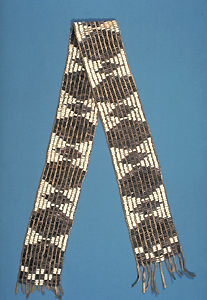
-
Article
Wanipigow Lake Archaeological Site
Wanipigow Lake is a narrow, shallow widening of the river of the same name that flows in a northwesterly direction across the Canadian Canadian Shield and into Lake Winnipeg.
"https://d3d0lqu00lnqvz.cloudfront.net/media/media/e5091b2b-bb00-4462-aac4-82e75631762a.jpg" // resources/views/front/categories/view.blade.php
https://d3d0lqu00lnqvz.cloudfront.net/media/media/e5091b2b-bb00-4462-aac4-82e75631762a.jpg
-
Article
Canadian War Art Programs
Since the First World War, there have been four major initiatives to allow Canadian artists to document Canadian Armed Forces at war. Canada’s first official war art program, the Canadian War Memorials Fund (1916–19), was one of the first government-sponsored programs of its kind. It was followed by the Canadian War Art Program (1943–46) during the Second World War. The Canadian Armed Forces Civilian Artists Program (1968–95) and the Canadian Forces Artists Program (2001–present) were established to send civilian artists to combat and peacekeeping zones. Notable Canadian war artists have included A.Y. Jackson, F.H. Varley, Lawren Harris, Alex Colville, Molly Lamb Bobak and Mary Riter Hamilton.
"https://d3d0lqu00lnqvz.cloudfront.net/media/media/4bad248a-8c22-4488-9cc9-172fcd16be88.jpg" // resources/views/front/categories/view.blade.php
https://d3d0lqu00lnqvz.cloudfront.net/media/media/4bad248a-8c22-4488-9cc9-172fcd16be88.jpg
-
Macleans
War Crimes Trials Begin
This article was originally published in Maclean's Magazine on May 20, 1996. Partner content is not updated.Childhood friends say they could always identify Dusan Tadic by his walk. The short but fit "Dule" or "Dusko" Tadic, as he was also known in his northwest Bosnian home town of Kozarac, had a distinctive swagger that advertised his black belt expertise in karate.
"https://thecanadianencyclopedia.ca/images/tce_placeholder.jpg?v=e9dca980c9bdb3aa11e832e7ea94f5d9" // resources/views/front/categories/view.blade.php
https://thecanadianencyclopedia.ca/images/tce_placeholder.jpg?v=e9dca980c9bdb3aa11e832e7ea94f5d9
-
Article
War Measures Act
The War Measures Act was a federal law adopted by Parliament on 22 August 1914, after the beginning of the First World War. It gave broad powers to the Canadian government to maintain security and order during “war, invasion or insurrection.” It was used, controversially, to suspend the civil liberties of people in Canada who were considered “enemy aliens” during both world wars. This led to mass arrests and detentions without charges or trials. The War Measures Act was also invoked in Quebec during the 1970 October Crisis. The Act was repealed and replaced by the more limited Emergencies Act in 1988.
"https://d3d0lqu00lnqvz.cloudfront.net/media/media/c8a1d56b-60f5-40b0-86e2-3ce31bc3e7b0.jpg" // resources/views/front/categories/view.blade.php
https://d3d0lqu00lnqvz.cloudfront.net/media/media/c8a1d56b-60f5-40b0-86e2-3ce31bc3e7b0.jpg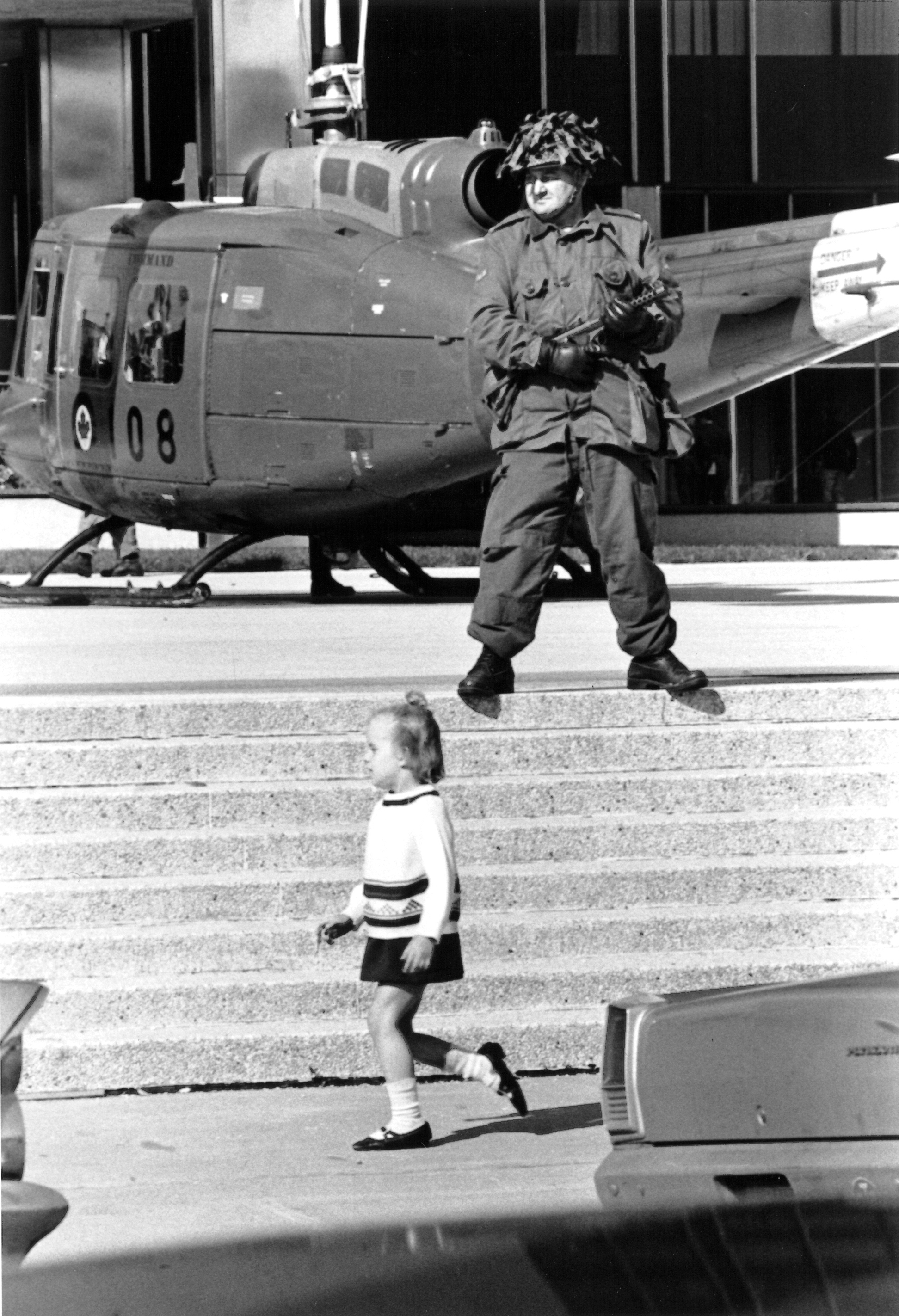
-
Article
War of the Austrian Succession
The War of the Austrian Succession (1740–48) included conflict in Europe, North America and India. The military operations in North America are known as King George's War (1744–48).
"https://d3d0lqu00lnqvz.cloudfront.net/media/media/5a0c0b6b-1a28-4955-ac10-111582958476.jpg" // resources/views/front/categories/view.blade.php
https://d3d0lqu00lnqvz.cloudfront.net/media/media/5a0c0b6b-1a28-4955-ac10-111582958476.jpg
-
Article
War of the Spanish Succession
The War of the Spanish Succession, 1701–1714 (also known as Queen Anne's War), was a general European war that spread around the globe to include the colonies of the major powers — including French and English colonies in North America.
"https://thecanadianencyclopedia.ca/images/tce_placeholder.jpg?v=e9dca980c9bdb3aa11e832e7ea94f5d9" // resources/views/front/categories/view.blade.php
https://thecanadianencyclopedia.ca/images/tce_placeholder.jpg?v=e9dca980c9bdb3aa11e832e7ea94f5d9
-
Article
War on the Lakes in the War of 1812
The North American heartland, linked by rivers running from the north, west, and south and flowing eastwards via the St Lawrence River, saw intense fighting during the War of 1812.
"https://thecanadianencyclopedia.ca/images/tce_placeholder.jpg?v=e9dca980c9bdb3aa11e832e7ea94f5d9" // resources/views/front/categories/view.blade.php
https://thecanadianencyclopedia.ca/images/tce_placeholder.jpg?v=e9dca980c9bdb3aa11e832e7ea94f5d9
-
Article
Wartime Elections Act
The Wartime Elections Act of 1917 gave the vote to female relatives of Canadian soldiers serving overseas in the First World War. It also took the vote away from many Canadians who had immigrated from “enemy” countries. The Act was passed by Prime Minister Robert Borden’s Conservative government in an attempt to gain votes in the 1917 election. It ended up costing the Conservatives support among certain groups for years to come. The Act has a contentious legacy. It granted many women the right to vote, but it also legitimized in law many anti-immigrant sentiments.
"https://d3d0lqu00lnqvz.cloudfront.net/media/media/6e19f5db-f5f6-4776-baf8-40a98b38b97d.jpg" // resources/views/front/categories/view.blade.php
https://d3d0lqu00lnqvz.cloudfront.net/media/media/6e19f5db-f5f6-4776-baf8-40a98b38b97d.jpg
-
Article
Wartime Home Front
The two world wars of the 20th century were total wars that involved the whole nation, and the "home front" became a critical part of Canada’s effort.
"https://thecanadianencyclopedia.ca/images/tce_placeholder.jpg?v=e9dca980c9bdb3aa11e832e7ea94f5d9" // resources/views/front/categories/view.blade.php
https://thecanadianencyclopedia.ca/images/tce_placeholder.jpg?v=e9dca980c9bdb3aa11e832e7ea94f5d9
-
Article
Wartime Information Board
Wartime Information Board, est 9 Sept 1942, succeeded the Bureau of Public Information, which had been formed early in WWII to issue certain information on the course of the war to the public. By 1942 the government believed that its troubles over CONSCRIPTION derived from inadequate publicity.
"https://d3d0lqu00lnqvz.cloudfront.net/media/media/74f42cfb-9915-4a55-b62d-28b95a2c107f.jpg" // resources/views/front/categories/view.blade.php
https://d3d0lqu00lnqvz.cloudfront.net/media/media/74f42cfb-9915-4a55-b62d-28b95a2c107f.jpg
-
Article
Wartime Prices and Trade Board
Wartime Prices and Trade Board, est 3 Sept 1939 by the Canadian government immediately before the onset of WORLD WAR II, and initially responsible to the Dept of Labour. Its creation reflected the government's concern that WWI conditions of inflation and social unrest should not return.
"https://thecanadianencyclopedia.ca/images/tce_placeholder.jpg?v=e9dca980c9bdb3aa11e832e7ea94f5d9" // resources/views/front/categories/view.blade.php
https://thecanadianencyclopedia.ca/images/tce_placeholder.jpg?v=e9dca980c9bdb3aa11e832e7ea94f5d9
-
Article
Webster-Ashburton Treaty
The Webster-Ashburton Treaty, signed 9 August 1842, was negotiated by US Secretary of State Daniel Webster and Alexander Baring, First Lord Ashburton, for Britain.
"https://d3d0lqu00lnqvz.cloudfront.net/media/media/823298cc-03a3-4150-8566-09f8b73cf2a2.jpg" // resources/views/front/categories/view.blade.php
https://d3d0lqu00lnqvz.cloudfront.net/media/media/823298cc-03a3-4150-8566-09f8b73cf2a2.jpg