Browse "History"
-
Editorial
Vancouver Feature: Japanese-Canadians Held at Hastings Park
The following article is a feature from our Vancouver Feature series. Past features are not updated. For a century the Pacific National Exhibition has entertained families each summer with a mix of hair-raising Midway rides, live music and agricultural exhibits. But in 1942 the fun fair was a prison camp for thousands of displaced Japanese-Canadians
"https://d3d0lqu00lnqvz.cloudfront.net/media/media/0bec6156-0467-4a97-909f-da599383381d.jpg" // resources/views/front/categories/view.blade.php
https://d3d0lqu00lnqvz.cloudfront.net/media/media/0bec6156-0467-4a97-909f-da599383381d.jpg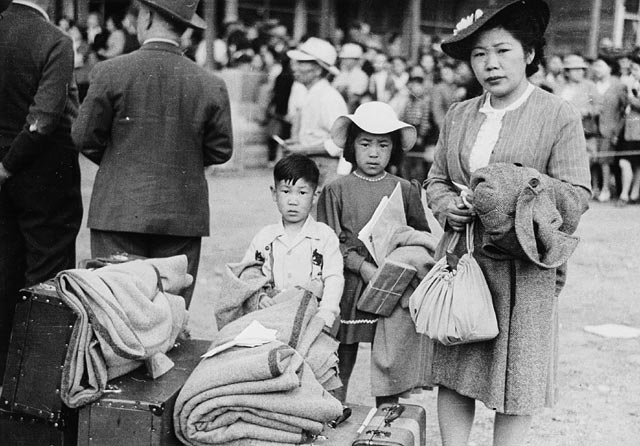
-
Editorial
Vancouver Feature: Mob Storms Chinatown and Japantown
The following article is a feature from our Vancouver Feature series. Past features are not updated. The events of September 7, 1907 began with an evening parade down Hastings Street. 5,000 men, white badges fluttering from their buttonholes, marched and listened to fiery speeches on the perils of Asian immigration. Then someone shouted “On to Chinatown!” and all hell broke loose.
"https://thecanadianencyclopedia.ca/images/tce_placeholder.jpg?v=e9dca980c9bdb3aa11e832e7ea94f5d9" // resources/views/front/categories/view.blade.php
https://thecanadianencyclopedia.ca/images/tce_placeholder.jpg?v=e9dca980c9bdb3aa11e832e7ea94f5d9
-
Article
Vancouver Feature: The Bay’s Days
The following article is a feature from our Vancouver Feature series. Past features are not updated. The Hudson’s Bay Company staked its claim to the northeast corner of Georgia and Granville in 1893. Through changes in fashion, technology and politics — as well as some architectural refinements — it has remained there ever since.
"https://d3d0lqu00lnqvz.cloudfront.net/media/media/9d1ba55e-3a43-4dcb-a21e-e9ce5caadafd.jpg" // resources/views/front/categories/view.blade.php
https://d3d0lqu00lnqvz.cloudfront.net/media/media/9d1ba55e-3a43-4dcb-a21e-e9ce5caadafd.jpg
-
Editorial
Victory in Europe (VE-Day) Remembered
The following article is an editorial written by The Canadian Encyclopedia staff. Editorials are not usually updated.
"https://d3d0lqu00lnqvz.cloudfront.net/media/media/3cd095ed-500b-41e3-a205-cfbe69084e62.jpg" // resources/views/front/categories/view.blade.php
https://d3d0lqu00lnqvz.cloudfront.net/media/media/3cd095ed-500b-41e3-a205-cfbe69084e62.jpg
-
Article
VE-Day Riots
On 7 and 8 May 1945, riots broke out after poorly coordinated Victory in Europe celebrations fell apart in Halifax and Dartmouth, Nova Scotia. Several thousand servicemen (predominantly naval), merchant seamen and civilians drank, vandalized and looted.
"https://d3d0lqu00lnqvz.cloudfront.net/media/media/bd2fa613-245a-4693-b2ad-58a799dff603.jpg" // resources/views/front/categories/view.blade.php
https://d3d0lqu00lnqvz.cloudfront.net/media/media/bd2fa613-245a-4693-b2ad-58a799dff603.jpg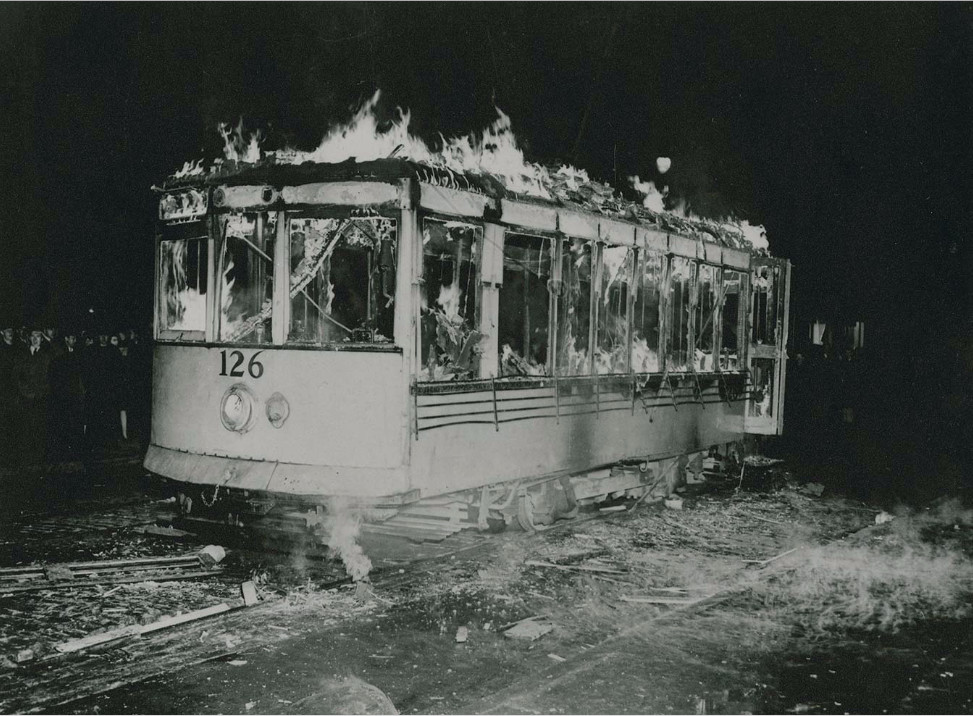
-
Article
VE-Day (Victory in Europe)
Victory in Europe — the official end of the fighting in Europe in the Second World War — was celebrated on 8 May 1945, after Germany's unconditional surrender. In cities and towns across Canada, a war-weary nation expressed its joy and relief at the news. In Halifax, the celebrations erupted into looting and rioting. The war was not over, as conflict with Japan continued.
"https://d3d0lqu00lnqvz.cloudfront.net/media/media/c47165ef-d768-482e-85f2-f40b0232c8fc.jpg" // resources/views/front/categories/view.blade.php
https://d3d0lqu00lnqvz.cloudfront.net/media/media/c47165ef-d768-482e-85f2-f40b0232c8fc.jpg
-
Article
Second World War Veterans
When the Second World War ended, more than a million Canadian men and women, serving in uniform, were set to return to their homes. A driving question for the country was: What was owed to the veterans?
"https://d3d0lqu00lnqvz.cloudfront.net/media/media/5400b0fb-f0c7-418f-b2ae-ea899466560f.jpg" // resources/views/front/categories/view.blade.php
https://d3d0lqu00lnqvz.cloudfront.net/media/media/5400b0fb-f0c7-418f-b2ae-ea899466560f.jpg
-
Article
Victoria Day
Victoria Day is a statutory holiday remembered informally as "the twenty-fourth of May,” or “May Two-Four.” Originally a celebration of Queen Victoria's birthday, the holiday now marks Queen Elizabeth II's birthday as well. Victoria Day was established as a holiday in the Province of Canada in 1845 and as a national holiday in 1901. It is observed on the first Monday before 25 May.
"https://d3d0lqu00lnqvz.cloudfront.net/media/media/2f53ca71-4455-46ff-a3aa-7c119c9c67f7.jpg" // resources/views/front/categories/view.blade.php
https://d3d0lqu00lnqvz.cloudfront.net/media/media/2f53ca71-4455-46ff-a3aa-7c119c9c67f7.jpg
-
Article
Vietnam War
The Vietnam War was a Cold War-era conflict between communist Northern Vietnamese forces and United States-backed Southern Vietnamese forces. Canada officially played the role of neutral peacemaker, but secretly backed the American effort in Vietnam.
"https://d3d0lqu00lnqvz.cloudfront.net/media/media/2dafdb1b-4b70-4fdb-8cd4-a7ea969412c3.jpg" // resources/views/front/categories/view.blade.php
https://d3d0lqu00lnqvz.cloudfront.net/media/media/2dafdb1b-4b70-4fdb-8cd4-a7ea969412c3.jpg
-
Article
Ville-Marie (Colony)
Ville-Marie was a French colony founded on 17 May 1642 on the Island of Montreal by the Société Notre-Dame de Montréal to bring Christianity to local Indigenous peoples. The colony was located in a key region for the development of agriculture and the fur trade. The colony became the modern-day city of Montreal.
"https://thecanadianencyclopedia.ca/images/tce_placeholder.jpg?v=e9dca980c9bdb3aa11e832e7ea94f5d9" // resources/views/front/categories/view.blade.php
https://thecanadianencyclopedia.ca/images/tce_placeholder.jpg?v=e9dca980c9bdb3aa11e832e7ea94f5d9
-
Article
Vimy Ridge
Among Canada’s defining events, the Battle of Vimy Ridge in the First World War ranks high. It was a triumph — a major victory for the Allied side after a long, bloody stalemate — and a tragedy. In the four-day battle, 3,598 Canadians died and another 7,004 were wounded. In the century since it ended, on 12 April 1917, it has become something else: an event bordering on myth. “In those few minutes,” said Canadian Brigadier-General A.E. Ross of the victory, “I witnessed the birth of a nation.”
"https://d3d0lqu00lnqvz.cloudfront.net/media/media/16f32862-4f2b-488d-935e-7b4fcf5a5d64.jpg" // resources/views/front/categories/view.blade.php
https://d3d0lqu00lnqvz.cloudfront.net/media/media/16f32862-4f2b-488d-935e-7b4fcf5a5d64.jpg
-
Article
VJ-Day (Victory over Japan)
Victory over Japan Day, or VJ-Day, on 15 August 1945, marked the end of the war in the Pacific and the end of the Second World War. The surrender of Japan was observed across Canada with joy, and in some cases street riots.
"https://d3d0lqu00lnqvz.cloudfront.net/media/media/a152103-v6.jpg" // resources/views/front/categories/view.blade.php
https://d3d0lqu00lnqvz.cloudfront.net/media/media/a152103-v6.jpg
-
Editorial
Voting in Early Canada
The following article is an editorial written by The Canadian Encyclopedia staff. Editorials are not usually updated. Before Confederation, the right to vote in elections was restricted to a small, wealthy, property-owning elite. Because votes were declared publicly, elections were rowdy, highly competitive and even violent. Voting by secret ballot was first introduced in New Brunswick in 1855 and federally in 1874.
"https://d3d0lqu00lnqvz.cloudfront.net/media/media/1e88decf-02d6-4b89-b522-383f360ecac4.jpg" // resources/views/front/categories/view.blade.php
https://d3d0lqu00lnqvz.cloudfront.net/media/media/1e88decf-02d6-4b89-b522-383f360ecac4.jpg
-
Editorial
Voyage of the Nonsuch: A Turning Point in the Fur Trade
The following article is an editorial written by The Canadian Encyclopedia staff. Editorials are not usually updated.At some point in the 1650s, two adventurers from New France embarked on a journey that eventually revolutionized the fur trade and changed the course of Canadian history.
"https://thecanadianencyclopedia.ca/images/tce_placeholder.jpg?v=e9dca980c9bdb3aa11e832e7ea94f5d9" // resources/views/front/categories/view.blade.php
https://thecanadianencyclopedia.ca/images/tce_placeholder.jpg?v=e9dca980c9bdb3aa11e832e7ea94f5d9
-
Article
Voyageurs
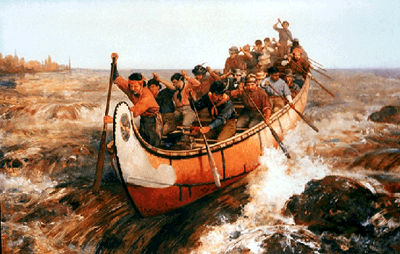
Voyageurs were independent contractors, workers or minor partners in companies involved in the fur trade. They were licensed to transport goods to trading posts and were usually forbidden to do any trading of their own. The fur trade changed over the years, as did the groups of men working in it. In the 17th century, voyageurs were often coureurs des bois — unlicensed traders responsible for delivering trade goods from suppliers to Indigenous peoples. The implementation of the trading licence system in 1681 set voyageurs apart from coureurs des bois, who were then considered outlaws of sorts. Today, the word voyageur, like the term coureur des bois, evokes the romantic image of men canoeing across the continent in search of furs. Their life was full of perilous adventure, gruelling work and cheerful camaraderie.
"https://d3d0lqu00lnqvz.cloudfront.net/media/media/50d0c290-345d-4655-b501-3cfa471dfdb7.jpg" // resources/views/front/categories/view.blade.php
https://d3d0lqu00lnqvz.cloudfront.net/media/media/50d0c290-345d-4655-b501-3cfa471dfdb7.jpg