
Browse "History"
-
Article
Political History
Political history is the study of the processes, activities and institutions of governments, the influences on them and the individuals involved with them.
"https://thecanadianencyclopedia.ca/images/tce_placeholder.jpg?v=e9dca980c9bdb3aa11e832e7ea94f5d9" // resources/views/front/categories/view.blade.php
https://thecanadianencyclopedia.ca/images/tce_placeholder.jpg?v=e9dca980c9bdb3aa11e832e7ea94f5d9
-
Article
Prairie Dry Belt Disaster
Five major investigations were commissioned, but to little avail. Between 1921 and 1926, 138 townships in southern Alberta, comprising nearly 3.2 million acres (1.3 million ha), lost at least 55% of their population; by 1926 80% of the Tilley-East country was permanently evacuated.
"https://d3d0lqu00lnqvz.cloudfront.net/media/media/ea2328a1-2ce9-4f2e-be69-d92cbfb2ae7a.jpg" // resources/views/front/categories/view.blade.php
https://d3d0lqu00lnqvz.cloudfront.net/media/media/ea2328a1-2ce9-4f2e-be69-d92cbfb2ae7a.jpg
-
Article
History of Settlement in the Canadian Prairies
The Canadian Prairies were peopled in six great waves of migration, spanning from prehistory to the present. The migration from Asia, about 13,300 years ago, produced an Indigenous population of 20,000 to 50,000 by about 1640. Between 1640 and 1840, several thousand European and Canadian fur traders arrived, followed by several hundred British immigrants. They created dozens of small outposts and a settlement in the Red River Colony, where the Métis became the largest part of the population. The third wave, from the 1840s to the 1890s, consisted mainly but not solely of Canadians of British heritage. The fourth and by far the largest wave was drawn from many nations, mostly European. It occurred from 1897 to 1929, with a pause (1914–22) during and after the First World War. The fifth wave, drawn from other Canadian provinces and from Europe and elsewhere, commenced in the late 1940s. It lasted through the 1960s. The sixth wave, beginning in the 1970s, drew especially upon peoples of the southern hemisphere. It has continued, with fluctuations, to the present. Throughout the last century, the region has also steadily lost residents, as a result of migration to other parts of Canada, to the United States, and elsewhere.
"https://d3d0lqu00lnqvz.cloudfront.net/media/media/e1c671ab-3dcf-459c-b108-0bc6e4a86b99.jpg" // resources/views/front/categories/view.blade.php
https://d3d0lqu00lnqvz.cloudfront.net/media/media/e1c671ab-3dcf-459c-b108-0bc6e4a86b99.jpg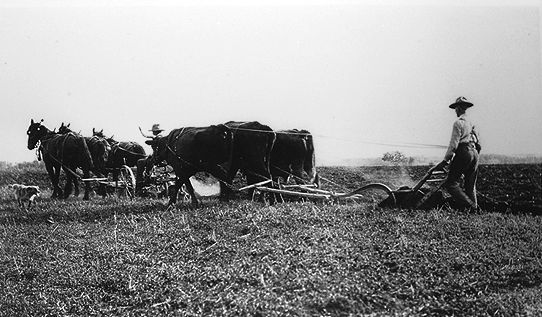
-
Macleans
Preserving St. Roch
A small horde of second- and third-graders swarms down onto the blood-red deck like so many giggling pirates. But the "blood" on the deck is really red-oxide paint. And the children - from Parkcrest Elementary School in Burnaby, B.C.This article was originally published in Maclean's Magazine on May 11, 1998
"https://thecanadianencyclopedia.ca/images/tce_placeholder.jpg?v=e9dca980c9bdb3aa11e832e7ea94f5d9" // resources/views/front/categories/view.blade.php
https://thecanadianencyclopedia.ca/images/tce_placeholder.jpg?v=e9dca980c9bdb3aa11e832e7ea94f5d9
-
Article
Prince Edward Island and Confederation
Despite hosting talks about Confederation, Prince Edward Island did not join the Dominion of Canada until 1873, when a crippling debt forced it into the national fold as the country's seventh province.
"https://d3d0lqu00lnqvz.cloudfront.net/media/media/9a650dcd-e8ad-4685-8baf-c4bba9cae8e7.jpg" // resources/views/front/categories/view.blade.php
https://d3d0lqu00lnqvz.cloudfront.net/media/media/9a650dcd-e8ad-4685-8baf-c4bba9cae8e7.jpg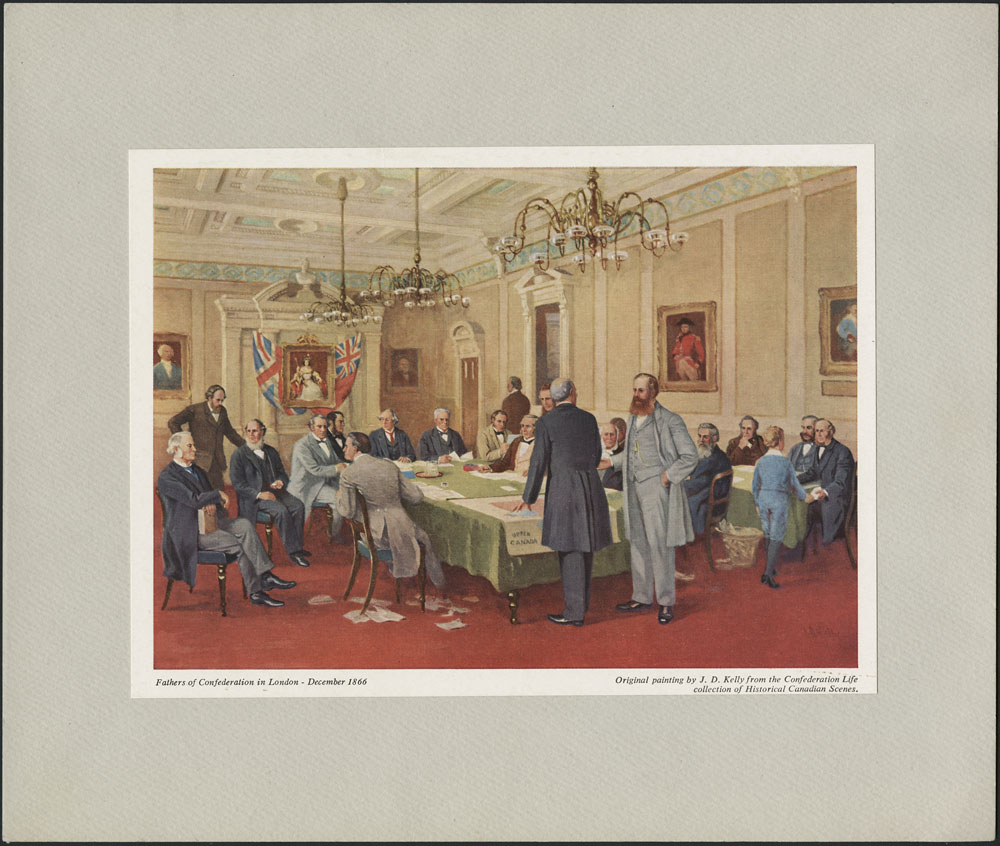
-
Article
Prince Edward Island Railway
The Prince Edward Island Railway was constructed between 1871 and 1875. The railway’s financial difficulties persuaded Prince Edward Island to join Confederation in 1873 (see Prince Edward Island and Confederation). By 1919 the Prince Edward Island Railway was transferred to the Canadian National Railways. The Island’s railway ceased operations in 1989, and its roadbed became part of the Confederation Trail. Parks Canada designated the construction of the Prince Edward Island Railway as a national historic event in 2018. This article was created in collaboration with Parks Canada. It is drawn from report number 2017-21, which was prepared to support the construction of the Prince Edward Island Railway as a national historic event.
"https://d3d0lqu00lnqvz.cloudfront.net/princeedwardislandrailway/sourisstation.jpg" // resources/views/front/categories/view.blade.php
https://d3d0lqu00lnqvz.cloudfront.net/princeedwardislandrailway/sourisstation.jpg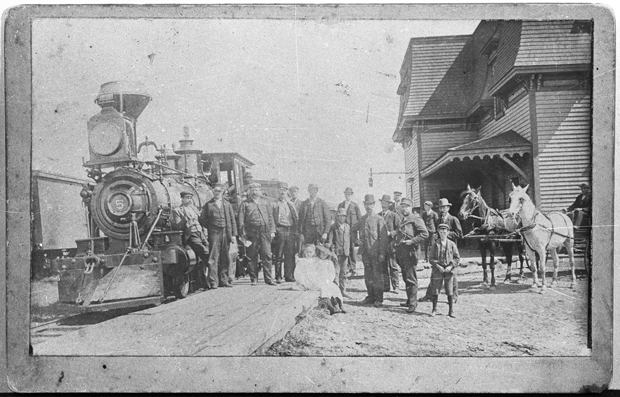
-
Article
Sheila Na Geira
According to legend, Sheila Na Geira (also spelled NaGeira and Nagira) was an Irish aristocrat or princess who, 300 or 400 years ago, while travelling between France and Ireland, was captured by a Dutch warship and then rescued by British privateers. She fell in love and was married to one of the privateers, Lieutenant Gilbert Pike. They settled at western Conception Bay. By the early 20th century, the legend was being told as part of Newfoundland’s oral tradition, and has since been popularized by poems, novels, scholarly articles and several plays.
"https://d3d0lqu00lnqvz.cloudfront.net/dreamstime_resize_33120989-2.jpg" // resources/views/front/categories/view.blade.php
https://d3d0lqu00lnqvz.cloudfront.net/dreamstime_resize_33120989-2.jpg
-
Article
Prison Ships in Canada: A Little-Known Story
On 15 July 1940, an unusual vessel docked at the Port of Québec, and a crowd gathered to greet the new arrival. The small craft used for patrolling and transportation on the St. Lawrence River at Québec City, the Jeffy Jan II — rechristened HMC Harbour Craft 54 by the young Canadian Navy during the war — was sent to surveil the ship and its sensitive cargo and passengers. The vessel in question was the prison ship MS Sobieski.
"https://d3d0lqu00lnqvz.cloudfront.net/media/media/05a335d9-a323-47e8-8090-059e81d8b8a4.jpg" // resources/views/front/categories/view.blade.php
https://d3d0lqu00lnqvz.cloudfront.net/media/media/05a335d9-a323-47e8-8090-059e81d8b8a4.jpg
-
Article
Prisoner of War Camps in Canada
Canada operated prison camps for interned civilians during the First and Second World Wars, and for 34,000 combatant German prisoners of war (POWs) during the Second World War.
"https://d3d0lqu00lnqvz.cloudfront.net/media/media/cde937a6-33ac-4af0-87d7-4a9323820e13.jpg" // resources/views/front/categories/view.blade.php
https://d3d0lqu00lnqvz.cloudfront.net/media/media/cde937a6-33ac-4af0-87d7-4a9323820e13.jpg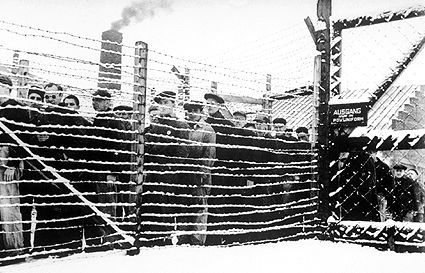
-
Article
Promyshlennik
A Promyshlennik is a Russian (chiefly Cossack) free-lance exploiter of natural resources, notably furs. Like the coureurs de bois, promyshlenniki had a sure instinct for rivers, forests and terrain.
"https://thecanadianencyclopedia.ca/images/tce_placeholder.jpg?v=e9dca980c9bdb3aa11e832e7ea94f5d9" // resources/views/front/categories/view.blade.php
https://thecanadianencyclopedia.ca/images/tce_placeholder.jpg?v=e9dca980c9bdb3aa11e832e7ea94f5d9
-
Article
Province of Quebec 1763-91
At the end of the Seven Years’ War (1756–63), Great Britain set out to organize the North American territories surrendered by France in the Treaty of Paris, 1763. By the Royal Proclamation of 1763, the Province of Quebec was created out of the inhabited portion of New France. The boundaries took on a rectangular shape on each side of the St. Lawrence River, and stretching from Lake Nipissing and the 45th parallel to the Saint John River and Ile d'Anticosti. These boundaries were modified by the Quebec Act of 1774 to include the fishing zone off Labrador and the Lower North Shore, and the fur trade area between the Ohio and Mississippi rivers and the Great Lakes. The Treaty of Paris, 1783 pushed the boundary farther north. With the Constitutional Act, 1791, Britain divided the Province of Quebec into Upper Canada (the predecessor of modern-day Ontario) and Lower Canada (whose geographical boundaries comprised the southern portion of present-day Quebec).
"https://d3d0lqu00lnqvz.cloudfront.net/media/new_article_images/PoliticsInOntario/Map_Province_of_QC_1763.jpg" // resources/views/front/categories/view.blade.php
https://d3d0lqu00lnqvz.cloudfront.net/media/new_article_images/PoliticsInOntario/Map_Province_of_QC_1763.jpg
-
Article
Quebec Act, 1774
The Quebec Act received royal assent on 22 June 1774. It revoked provisions in the Royal Proclamation of 1763 that had aimed to assimilate the French-Canadian population under English rule. The Quebec Act was put into effect on 1 May 1775. It was passed to gain the loyalty of the French-speaking majority of the Province of Quebec. Based on recommendations from Governors James Murray and Guy Carleton, the Act guaranteed the freedom of worship and restored French property rights. However, the Act was unpopular in the Thirteen American Colonies and was one of the causes of the American Revolutionary War (1775–83). It was followed by the Constitutional Act in 1791. This is the full-length entry about the Quebec Act of 1774. For a plain language summary, please see The Quebec Act, 1774 (Plain-Language Summary).
"https://d3d0lqu00lnqvz.cloudfront.net/media/media/bcf0dcc3-ce34-4098-8543-00bcccbaabe0.jpg" // resources/views/front/categories/view.blade.php
https://d3d0lqu00lnqvz.cloudfront.net/media/media/bcf0dcc3-ce34-4098-8543-00bcccbaabe0.jpg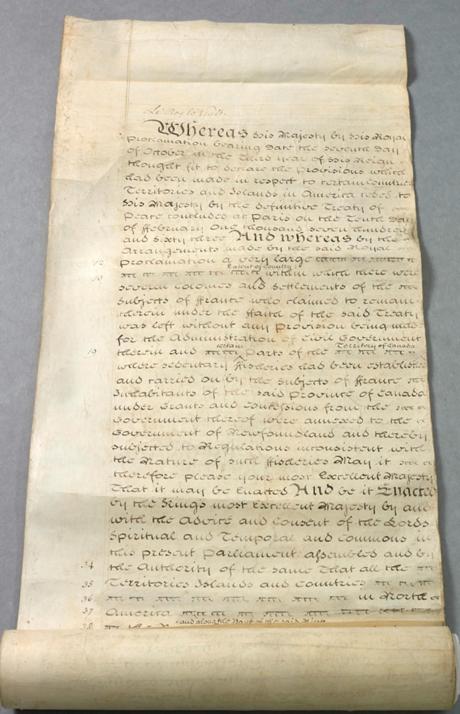
-
Article
Quebec Act 1774 Document
Selected text of the Quebec Act:An Act for making more effectual Provision for the Government of the Province of Quebec in North America.
"https://d3d0lqu00lnqvz.cloudfront.net/media/media/bcf0dcc3-ce34-4098-8543-00bcccbaabe0.jpg" // resources/views/front/categories/view.blade.php
https://d3d0lqu00lnqvz.cloudfront.net/media/media/bcf0dcc3-ce34-4098-8543-00bcccbaabe0.jpg
-
Article
Québec and Confederation
Québec became one of the founding members of the Dominion of Canada on 1 July 1867 when it joined New Brunswick, Nova Scotia and Ontario in Confederation .
"https://d3d0lqu00lnqvz.cloudfront.net/media/media/98975740-c322-469b-9fe0-d603876f072d.png" // resources/views/front/categories/view.blade.php
https://d3d0lqu00lnqvz.cloudfront.net/media/media/98975740-c322-469b-9fe0-d603876f072d.png
-
Editorial
Quebec Bridge Disaster
The following article is an editorial written by The Canadian Encyclopedia staff. Editorials are not usually updated. High above the St. Lawrence River, on a hot August day in 1907, a worker named Beauvais was driving rivets into the great southern span of the Quebec Bridge. Near the end of a long day, he noticed that a rivet that he had driven no more than an hour before had snapped clean in two. Just as he called out to his foreman to report the disquieting news, the scream of twisting metal pierced the air. The giant cantilever dropped out from under them, crashing into the river with such force that people in the city of Quebec, 10 km away, believed that an earthquake had struck.
"https://d3d0lqu00lnqvz.cloudfront.net/media/media/fbaea59f-792e-4866-9bbf-05641728ca4f.jpg" // resources/views/front/categories/view.blade.php
https://d3d0lqu00lnqvz.cloudfront.net/media/media/fbaea59f-792e-4866-9bbf-05641728ca4f.jpg