
Browse "Communities & Sociology"
-
Article
The Memory Project
The Memory Project is a bilingual program whose mandate is to record and share the stories of veterans and currently serving Canadian Forces members. The Memory Project has two branches: a speakers bureau and an archive. The program aims to preserve Canada’s military history through the voices of those who serve. In addition to the speakers bureau and archive, the Memory Project creates free, bilingual educational materials, including videos, podcasts, and learning tools for classroom use, using oral testimony. The Memory Project is an initiative of the not-for-profit organization Historica Canada (publisher of The Canadian Encyclopedia and maker of the Heritage Minutes) and made possible with funding from the Government of Canada through the departments of Canadian Heritage and Veterans Affairs.
"https://d3d0lqu00lnqvz.cloudfront.net/media/media/b5d10d9d-bc08-4d55-969d-32c81691fbeb.jpg" // resources/views/front/categories/view.blade.php
https://d3d0lqu00lnqvz.cloudfront.net/media/media/b5d10d9d-bc08-4d55-969d-32c81691fbeb.jpg
-
Article
The New Canadian
The New Canadian (1938–2001) was an English-language newspaper published by and for the Japanese Canadian community. Initially, the newspaper was founded as a forum for second-generation Japanese Canadians to express and foster their identity as English-speaking Canadians and to support a mission of “cultural, economic, and political assimilation.” (See also Canadian English; Languages in use in Canada.) The newspaper became the primary source of both English- and Japanese-language news for Japanese Canadians during their forced uprooting from the west coast in the 1940s (see Internment of Japanese Canadians). It continued to be published in the postwar years, with its English-language content shifting towards social and community news while its Japanese-language section grew in importance for pre-war and postwar Japanese immigrants. The newspaper was sold to Japan Communications in 1990 and its final edition was published in 2001.
"https://d3d0lqu00lnqvz.cloudfront.net/thenewcanadian/thenewcanadian.jpg" // resources/views/front/categories/view.blade.php
https://d3d0lqu00lnqvz.cloudfront.net/thenewcanadian/thenewcanadian.jpg
-
Editorial
The "Other" Métis
In the interest of promoting a better understanding of the complex issue of Métis identity and how it is defined, The Canadian Encyclopedia has commissioned two opinion pieces exploring different perspectives on the topic. This article explores Métis identity from the perspective of Métis who do not have ancestral ties to the Red River Settlement. For another perspective on Métis identity, see Métis Are a People, Not a Historical Process.
"https://d3d0lqu00lnqvz.cloudfront.net/media/media/d5acb8a6-e170-4297-9cbf-a570c7237db3.jpg" // resources/views/front/categories/view.blade.php
https://d3d0lqu00lnqvz.cloudfront.net/media/media/d5acb8a6-e170-4297-9cbf-a570c7237db3.jpg
-
Article
The Quebec Act, 1774 (Plain-Language Summary)
In 1759, the British defeated the French on the Plains of Abraham. Soon after, the British took control of Quebec (see also The Conquest of New France.) The Quebec Act of 1774 was passed to gain the loyalty of the French who lived in the Province of Quebec. The Act had serious consequences for Britain’s North American empire. The Quebec Act was one of the direct causes of the American Revolution. (This article is a plain-language summary of The Quebec Act, 1774. If you are interested in reading about this topic in more depth, please see our full-length entry on The Quebec Act, 1774.)
"https://d3d0lqu00lnqvz.cloudfront.net/media/media/bcf0dcc3-ce34-4098-8543-00bcccbaabe0.jpg" // resources/views/front/categories/view.blade.php
https://d3d0lqu00lnqvz.cloudfront.net/media/media/bcf0dcc3-ce34-4098-8543-00bcccbaabe0.jpg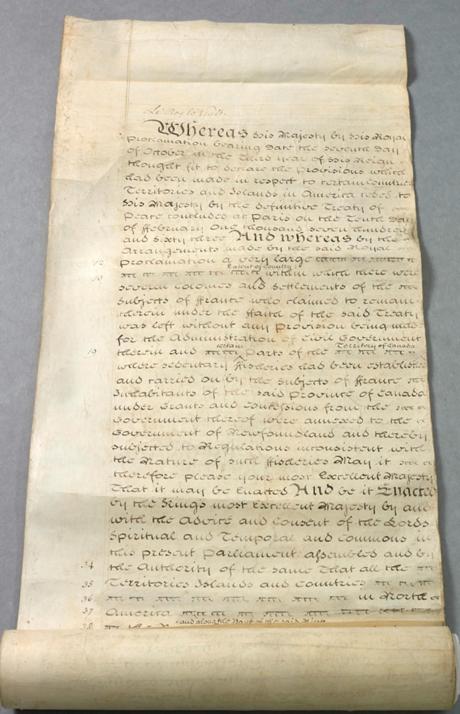
-
Editorial
The Road to Inclusion: Transgender Health Care in Canada
The following article is an editorial written by The Canadian Encyclopedia staff. Editorials are not usually updated.
"https://d3d0lqu00lnqvz.cloudfront.net/media/media/24478bd6-f253-477b-9a25-5061605c986c.jpg" // resources/views/front/categories/view.blade.php
https://d3d0lqu00lnqvz.cloudfront.net/media/media/24478bd6-f253-477b-9a25-5061605c986c.jpg
-
Article
Shelburne Race Riots
On 26 July 1784, a mob of Loyalist settlers stormed the home of a Black preacher in Shelburne, Nova Scotia. They were armed with hooks and chains seized from ships in the harbour. The confrontation ignited a wave of violence in Shelburne County that lasted approximately 10 days. The majority of the attacks targeted the county’s free Black population. The Shelburne Riot has been described as the first race riot in North America. (See also British North America.)
"https://d3d0lqu00lnqvz.cloudfront.net/media/media/be13527b-b76d-408a-afca-30acbd4f7bfc.png" // resources/views/front/categories/view.blade.php
https://d3d0lqu00lnqvz.cloudfront.net/media/media/be13527b-b76d-408a-afca-30acbd4f7bfc.png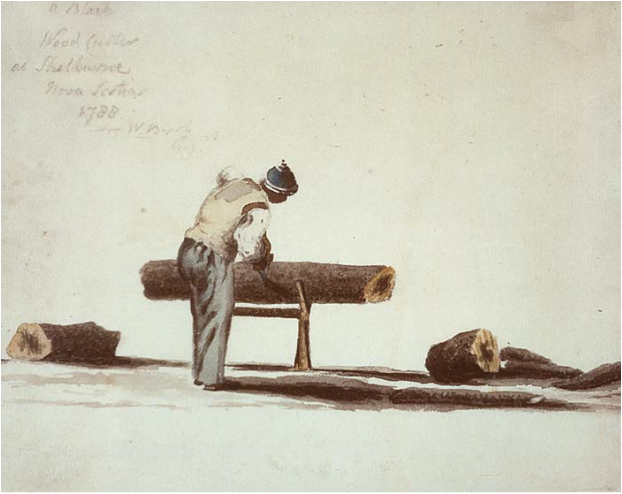
-
Article
Editorial: The Stanley Flag and the “Distinctive Canadian Symbol”
The following article is an editorial written by The Canadian Encyclopedia staff. Editorials are not usually updated. Prime Minister Lester Pearson and John Matheson, one of his Liberal Members of Parliament, are widely considered the fathers of the Canadian flag. Their names were front and centre in 2015 during the tributes and celebrations to mark the 50th anniversary of the flag’s creation. But the role played by George Stanley is often lost in the story of how this iconic symbol came to be.
"https://d3d0lqu00lnqvz.cloudfront.net/media/media/a9adffc5-8796-4968-ac52-ab33df0fe6eb.jpg" // resources/views/front/categories/view.blade.php
https://d3d0lqu00lnqvz.cloudfront.net/media/media/a9adffc5-8796-4968-ac52-ab33df0fe6eb.jpg
-
Article
Toronto and French Place Names
Streets, avenues, roads and parks are named according to criteria set by the municipal council concerned.
"https://d3d0lqu00lnqvz.cloudfront.net/media/media/b8905984-938b-4199-bf9f-f2357238baa9.jpg" // resources/views/front/categories/view.blade.php
https://d3d0lqu00lnqvz.cloudfront.net/media/media/b8905984-938b-4199-bf9f-f2357238baa9.jpg
-
Article
Toronto Feature: Huron-Wendat Village
This article is from our Toronto Feature series. Features from past programs are not updated.
"https://d3d0lqu00lnqvz.cloudfront.net/media/media/b26f0658-9c91-4722-b371-4bbe28799d26.jpg" // resources/views/front/categories/view.blade.php
https://d3d0lqu00lnqvz.cloudfront.net/media/media/b26f0658-9c91-4722-b371-4bbe28799d26.jpg
-
Article
Toronto Feature: Junction Shul
This article is from our Toronto Feature series. Features from past programs are not updated.
"https://d3d0lqu00lnqvz.cloudfront.net/media/media/eb6c492c-f87b-4684-bc04-04206d289ff1.jpg" // resources/views/front/categories/view.blade.php
https://d3d0lqu00lnqvz.cloudfront.net/media/media/eb6c492c-f87b-4684-bc04-04206d289ff1.jpg
-
Article
Toronto Feature: Little Italy
This article is from our Toronto Feature series. Features from past programs are not updated.
"https://thecanadianencyclopedia.ca/images/tce_placeholder.jpg?v=e9dca980c9bdb3aa11e832e7ea94f5d9" // resources/views/front/categories/view.blade.php
https://thecanadianencyclopedia.ca/images/tce_placeholder.jpg?v=e9dca980c9bdb3aa11e832e7ea94f5d9
-
Article
Toronto Feature: Little Malta
This article is from our Toronto Feature series. Features from past programs are not updated.
"https://d3d0lqu00lnqvz.cloudfront.net/media/media/3a340382-6002-4010-854c-44f2d39d9d8a.jpg" // resources/views/front/categories/view.blade.php
https://d3d0lqu00lnqvz.cloudfront.net/media/media/3a340382-6002-4010-854c-44f2d39d9d8a.jpg
-
Article
Totem Pole
The totem pole (also known as a monumental pole) is a tall structure carved out of cedar wood, created by Northwest Coast Indigenous peoples to serve variously as a signboard, genealogical record and memorial. Some well-known carvers include Mungo Martin, Charles Edenshaw, Henry Hunt, Richard Hunt and Stanley Hunt.
"https://d3d0lqu00lnqvz.cloudfront.net/media/media/8b29d9a8-a120-4ff7-a2d4-a7d7c0040923.jpg" // resources/views/front/categories/view.blade.php
https://d3d0lqu00lnqvz.cloudfront.net/media/media/8b29d9a8-a120-4ff7-a2d4-a7d7c0040923.jpg
-
Article
Trades and Labor Congress of Canada
Founded in 1883, the Trades and Labor Congress of Canada (TLC) was the first union central to take lasting root in Canada. Principally bringing together craft unions, the TLC was the largest workers’ organization in Canada at the turn of the 20th century. The TLC saw its membership fluctuate in the 20th century because of the fierce competition between national and international unions and the rise of industrial unionism. In 1956, the organization merged with the Canadian Congress of Labour to become the Canadian Labour Congress.
"https://d3d0lqu00lnqvz.cloudfront.net/media/media/deaaaf0f-2d04-4ae8-8391-d6255fe2a78a.jpg" // resources/views/front/categories/view.blade.php
https://d3d0lqu00lnqvz.cloudfront.net/media/media/deaaaf0f-2d04-4ae8-8391-d6255fe2a78a.jpg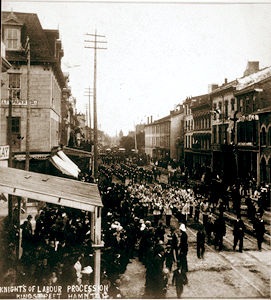
-
Article
Transgender Archives at the University of Victoria
The Transgender Archives at the University of Victoria is believed to be the largest collection of historical documents and materials related to transgender research and activism in the world (see Historical Sources). Aaron Devor, chair of Transgender Studies at the University of Victoria, is the founder and subject matter expert of the archives, which officially opened in 2011. The archives aim to preserve the history and research of transgender people and other gender-diverse peoples. (See also 2SLGBTQ+ Rights in Canada; Two-Spirit; Queer Culture.)
"https://d3d0lqu00lnqvz.cloudfront.net/media/media/6483ddf2-6bee-4d0b-a2b1-142ae795176c.jpg" // resources/views/front/categories/view.blade.php
https://d3d0lqu00lnqvz.cloudfront.net/media/media/6483ddf2-6bee-4d0b-a2b1-142ae795176c.jpg