Browse "Communities & Sociology"
-
Article
St-Jean-Baptiste celebrations
St-Jean-Baptiste celebrations. Popular annual celebrations in French Canada on 24 June (the feast day of St John the Baptist) or on the days before or after this date.
"https://thecanadianencyclopedia.ca/images/tce_placeholder.jpg?v=e9dca980c9bdb3aa11e832e7ea94f5d9" // resources/views/front/categories/view.blade.php
https://thecanadianencyclopedia.ca/images/tce_placeholder.jpg?v=e9dca980c9bdb3aa11e832e7ea94f5d9
-
Article
St. John’s Election Riot of 1861
On 13 May 1861, 2,000 protesters gathered outside the Colonial Building in St. John’s, Newfoundland. They objected to actions taken by the colony’s governor, Sir Alexander Bannerman, during the recent, highly contentious election; he had defied responsible government and install a new, Conservative government. The protest turned into a riot that damaged property and resulted in the deaths of three people. It took months to settle the political stalemate. The Conservatives won by-elections in disputed ridings and remained in power. The riot led to new laws that protected polling stations, saw police officers keep the peace instead of soldiers, and discouraged events and practices that could lead to violence.
"https://d3d0lqu00lnqvz.cloudfront.net/media/new_article_images/StJohnsRiots/Stamp_Newfoundland_1928_20c_Colonial_Building.jpg" // resources/views/front/categories/view.blade.php
https://d3d0lqu00lnqvz.cloudfront.net/media/new_article_images/StJohnsRiots/Stamp_Newfoundland_1928_20c_Colonial_Building.jpg
-
Article
St Mary's Church
The interior explains the unfamiliar shape; the entrance wall spirals inward past a circular baptistery to shield a broad, shadowed sanctuary under the downward billowing concrete vault. Two concrete cylinders descend from the vault to shed natural light on the altar and tabernacle areas.
"https://d3d0lqu00lnqvz.cloudfront.net/media/media/e5b0f56d-8a6a-41f4-bfb5-f912de0996e6.jpg" // resources/views/front/categories/view.blade.php
https://d3d0lqu00lnqvz.cloudfront.net/media/media/e5b0f56d-8a6a-41f4-bfb5-f912de0996e6.jpg
-
Article
Sterilization of Indigenous Women in Canada
The practice of sterilization arose out of the eugenics movement and has a long, often hidden history in Canada. Sterilization legislation in Alberta (1928–72) and British Columbia (1933–73) attempted to limit the reproduction of “unfit” persons, and increasingly targeted Indigenous women. Coerced sterilization of Indigenous women took place both within and outside existing legislation, and in federally operated Indian hospitals. The practice has continued into the 21st century. Approximately 100 Indigenous women have alleged that they were pressured to consent to sterilization between the 1970s and 2018, often while in the vulnerable state of pregnancy or childbirth.
"https://d3d0lqu00lnqvz.cloudfront.net/Nikawiy Nitanis.png" // resources/views/front/categories/view.blade.php
https://d3d0lqu00lnqvz.cloudfront.net/Nikawiy Nitanis.png
-
Macleans
Straight Edge Kids
It's Saturday night in a downtown Toronto club. The music is throbbing, cigarette smoke fills the air, drinks are being served as quickly as the waitresses can deliver, and singles scan the room for company. In other words, it's another night of sex, drugs and rock 'n' roll. But there's a twist.This article was originally published in Maclean's Magazine on May 17, 1999
"https://thecanadianencyclopedia.ca/images/tce_placeholder.jpg?v=e9dca980c9bdb3aa11e832e7ea94f5d9" // resources/views/front/categories/view.blade.php
https://thecanadianencyclopedia.ca/images/tce_placeholder.jpg?v=e9dca980c9bdb3aa11e832e7ea94f5d9
-
Article
Suicide in Canada
This article contains sensitive material that may not be suitable for all audiences. To reach the Canada Suicide Prevention Service, contact 1-833-456-4566. Suicide is the act of taking one’s own life voluntarily and intentionally. Suicide was decriminalized in Canada in 1972. Physician-assisted suicide was decriminalized in 2015. Suicide is among the leading causes of death in Canada, particularly among men. On average, approximately 4,000 Canadians die by suicide every year — about 11 suicides per 100,000 people in Canada. This rate is higher for men and among Indigenous communities. Suicide is usually the result of a combination of factors; these can include addiction and mental illness (especially depression), physical deterioration, financial difficulties, marriage breakdown and lack of social and medical support.
"https://d3d0lqu00lnqvz.cloudfront.net/media/Twitter_Cards/Suicide rate in Canada.png" // resources/views/front/categories/view.blade.php
https://d3d0lqu00lnqvz.cloudfront.net/media/Twitter_Cards/Suicide rate in Canada.png
-
Article
Suicide among Indigenous Peoples in Canada
This article contains sensitive material that may not be suitable for all audiences. To reach the Canada Suicide Prevention Service, contact 1-833-456-4566. Suicide rates among First Nations, Métis and Inuit are consistently and significantly higher than the rate among non-Indigenous people in Canada. Suicide in these cases has multiple social and individual causes. Historical factors, including the effects of colonization and polices of assimilation, also affect rates of suicide among Indigenous peoples in Canada. Various Indigenous organizations aim to integrate Indigenous knowledge with evidence-informed approaches to prevent suicide.
"https://d3d0lqu00lnqvz.cloudfront.net/media/Twitter_Cards/Suicide Indigenous.jpg" // resources/views/front/categories/view.blade.php
https://d3d0lqu00lnqvz.cloudfront.net/media/Twitter_Cards/Suicide Indigenous.jpg
-
Article
Sulpicians
Sulpicians, society of diocesan priests founded in Paris in 1641 by Jean-Jacques Olier de Verneuil to put into practice the decisions of the Council of Trent (1545-1563) concerning the formation of diocesan clergy.
"https://d3d0lqu00lnqvz.cloudfront.net/media/media/527550b3-ca52-4894-b607-e161360c35fb.jpg" // resources/views/front/categories/view.blade.php
https://d3d0lqu00lnqvz.cloudfront.net/media/media/527550b3-ca52-4894-b607-e161360c35fb.jpg
-
Article
Sun Dance
The Sun Dance (also Sundance) is an annual sacred ceremony performed by several First Nations in the Prairies. (See also Plains Indigenous Peoples in Canada.) The Sun Dance reaffirms spiritual beliefs about the universe. The Sun Dance was forbidden under the Indian Act of 1895, but this ban was generally ignored and dropped from the Act in 1951. Some communities continue to celebrate the ceremony today. (See also Religion and Spirituality of Indigenous Peoples in Canada.)
"https://d3d0lqu00lnqvz.cloudfront.net/media/media/bf293608-bfac-415a-be8f-332bcddffe1c.jpg" // resources/views/front/categories/view.blade.php
https://d3d0lqu00lnqvz.cloudfront.net/media/media/bf293608-bfac-415a-be8f-332bcddffe1c.jpg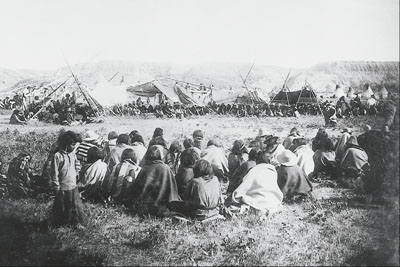
-
Macleans
Swissair 111 Aftermath
This article was originally published in Maclean’s magazine on September 21, 1998. Partner content is not updated. Dear Sir: This little stuffed toy whose label identified it as a Lion King was retrieved Friday, Sept. 4. It was carefully washed with the hope that it may provide some family member with solace as a tangible connection with the child to whom it belonged.
"https://thecanadianencyclopedia.ca/images/tce_placeholder.jpg?v=e9dca980c9bdb3aa11e832e7ea94f5d9" // resources/views/front/categories/view.blade.php
https://thecanadianencyclopedia.ca/images/tce_placeholder.jpg?v=e9dca980c9bdb3aa11e832e7ea94f5d9
-
Macleans
Swissair 111 Tragedy
This article was originally published in Maclean’s magazine on September 14, 1998. Partner content is not updated. The 60 residents of Peggy's Cove, N.S., have few lessons to learn when it comes to either nature's beauty - or its sometimes terrible power.
"https://thecanadianencyclopedia.ca/images/tce_placeholder.jpg?v=e9dca980c9bdb3aa11e832e7ea94f5d9" // resources/views/front/categories/view.blade.php
https://thecanadianencyclopedia.ca/images/tce_placeholder.jpg?v=e9dca980c9bdb3aa11e832e7ea94f5d9
-
Article
Swissair Flight 111
Swissair Flight 111 crashed in the sea off Peggy’s Cove, NS on 2 September 1998, while on a scheduled flight from New York to Geneva, Switzerland. All 229 passengers and crew were killed. It was the second-deadliest air accident to occur in Canada. An investigation by Canada’s Transportation Safety Board determined that a fire, sparked by arcing in the MD-11 aircraft’s electrical system, resulted in a catastrophic failure of the plane’s main operating systems.
"https://d3d0lqu00lnqvz.cloudfront.net/media/media/8122a415-1cbe-4b48-bc05-965d8805ee42.jpg" // resources/views/front/categories/view.blade.php
https://d3d0lqu00lnqvz.cloudfront.net/media/media/8122a415-1cbe-4b48-bc05-965d8805ee42.jpg
-
Article
Sylliboy Case
Mi’kmaq Grand Chief Gabriel Sylliboy is believed to be the first to use the 1752 Peace and Friendship Treaty to fight for Canada’s recognition of treaty rights. In his court case, R. v. Sylliboy (1928), he argued that the 1752 treaty protected his rights to hunt and fish, but he lost the case and was subsequently convicted. In 1985, when the Supreme Court of Canada ruled in R. v. Simon — another case concerning Mi’kmaq hunting rights — it found that the 1752 treaty did in fact give Mi’kmaq people the right to hunt on traditional territories. This judgment vindicated both Sylliboy and James Simon of the 1985 case. In 2017, almost 90 years after his conviction, Sylliboy received a posthumous pardon and apology from the Government of Nova Scotia.
"https://d3d0lqu00lnqvz.cloudfront.net/media/media/47dd689f-e49f-4d3f-830c-ad60dbca0a48.jpg" // resources/views/front/categories/view.blade.php
https://d3d0lqu00lnqvz.cloudfront.net/media/media/47dd689f-e49f-4d3f-830c-ad60dbca0a48.jpg
-
Article
Synagogues
According to Jewish law, a synagogue is defined as any place where 10 men can gather for worship and study. Tradition holds that the synagogue was established to provide an alternative for those who were unable to travel to the temple in Jerusalem.
"https://d3d0lqu00lnqvz.cloudfront.net/media/media/3cdd3a26-f43a-47c9-a723-6bb582abdab7.jpg" // resources/views/front/categories/view.blade.php
https://d3d0lqu00lnqvz.cloudfront.net/media/media/3cdd3a26-f43a-47c9-a723-6bb582abdab7.jpg
-
Article
Temperance Movement in Canada
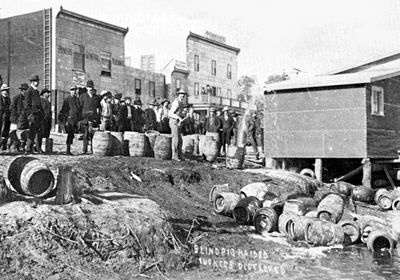
The temperance movement was an international social and political campaign of the 19th and early 20th centuries. It was based on the belief that drinking was responsible for many of society’s ills. It called for moderation or total abstinence from alcohol. This led to the legal prohibition of alcohol in many parts of Canada. The Canada Temperance Act (Scott Act) of 1878 gave local governments the “local option” to ban the sale of alcohol. In 1915 and 1916, all provinces but Quebec prohibited the sale of alcohol as a patriotic measure during the First World War. Most provincial laws were repealed in the 1920s in favour of allowing governments to control alcohol sales. Temperance societies were later criticized for distorting economic activity, and for encouraging drinking and organized crime.
"https://d3d0lqu00lnqvz.cloudfront.net/media/media/c0f20001-e566-4ebf-9c88-f1a5ae278291.jpg" // resources/views/front/categories/view.blade.php
https://d3d0lqu00lnqvz.cloudfront.net/media/media/c0f20001-e566-4ebf-9c88-f1a5ae278291.jpg