
Browse "Communities & Sociology"
-
Article
Sleeping Car Porters in Canada
Sleeping car porters were railway employees who attended to passengers aboard sleeping cars. Porters were responsible for passengers’ needs throughout a train trip, including carrying luggage, setting up beds, pressing clothes and shining shoes, and serving food and beverages, among other services. The vast majority of sleeping car porters were Black men and the position was one of only a few job opportunities available to Black men in Canada. While the position carried respect and prestige for Black men in their communities, the work demanded long hours for little pay. Porters could be fired suddenly and were often subjected to racist treatment. Black Canadian porters formed the first Black railway union in North America (1917) and became members of the larger Brotherhood of Sleeping Car Porters in 1939. Both unions combatted racism and the many challenges that porters experienced on the job.
"https://d3d0lqu00lnqvz.cloudfront.net/media/new_article_images/SleepingCarPorters/L3D211046.jpg" // resources/views/front/categories/view.blade.php
https://d3d0lqu00lnqvz.cloudfront.net/media/new_article_images/SleepingCarPorters/L3D211046.jpg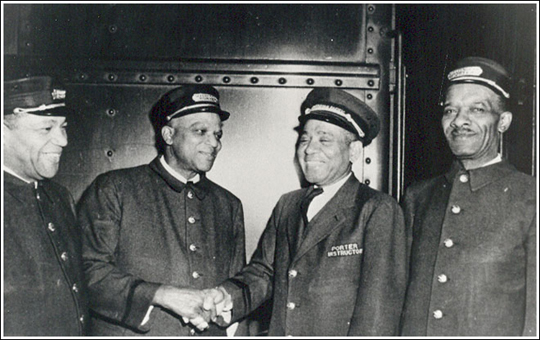
-
Article
Smallpox in Canada
Smallpox is an infectious disease caused by the variola virus. The disease arrived in what is now Canada with French settlers in the early 17th century. Indigenous peoples had no immunity to smallpox, resulting in devastating infection and death rates. In 1768, arm-to-arm inoculation became more widely practised in North America. By 1800, advances in vaccination helped control the spread of smallpox. Public health efforts also reduced rates of infection. In the 20th century, Canadian scientists helped the World Health Organization eradicate smallpox. Eradication was achieved in 1979, but virus stocks still exist for research and safety reasons. Click here for definitions of key terms used in this article.
"https://d3d0lqu00lnqvz.cloudfront.net/media/new_article_images/Smallpox/Smallpox_victim.jpg" // resources/views/front/categories/view.blade.php
https://d3d0lqu00lnqvz.cloudfront.net/media/new_article_images/Smallpox/Smallpox_victim.jpg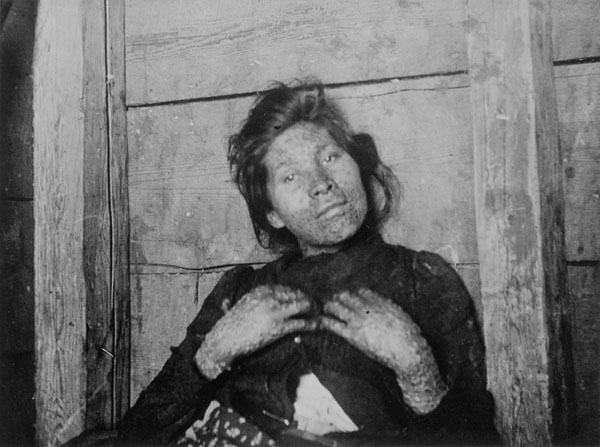
-
Article
Social Doctrine of the Roman Catholic Church
The social doctrine of the Roman Catholic church was defined particularly in two papal encyclicals: Rerum Novarum, by Leo XIII (1891), and Quadragesimo Anno, by Pius XI (1931). The church wished to show its preoccupation with the fate of the working classes, often victims of unbridled capitalism. Both documents preached a Christian humanism, decried the insufficiencies of capitalism, and warned against the evils inherent in socialism and in the doctrine of class struggle. The church clarified its teachings concerning employers' responsibilities and workers' rights, as well as related duties of the state. Leo XIII wrote that workers had a right to fair wages and that they could form Catholic unions whose existence should be protected by governments.
"https://thecanadianencyclopedia.ca/images/tce_placeholder.jpg?v=e9dca980c9bdb3aa11e832e7ea94f5d9" // resources/views/front/categories/view.blade.php
https://thecanadianencyclopedia.ca/images/tce_placeholder.jpg?v=e9dca980c9bdb3aa11e832e7ea94f5d9
-
Article
Social Gospel
The Social Gospel is an attempt to apply Christianity to the collective ills of an industrializing society, and was a major force in Canadian religious, social and political life from the 1890s through the 1930s.
"https://d3d0lqu00lnqvz.cloudfront.net/media/media/d27e812a-e155-4b23-94b4-55060feada96.jpg" // resources/views/front/categories/view.blade.php
https://d3d0lqu00lnqvz.cloudfront.net/media/media/d27e812a-e155-4b23-94b4-55060feada96.jpg
-
Article
Social History
Social history is a way of looking at how a society organizes itself and how this changes over time. The elements that make up Canada’s social history include climate and geography, as well as the transition to industrialization and urbanization.
"https://d3d0lqu00lnqvz.cloudfront.net/media/media/deaaaf0f-2d04-4ae8-8391-d6255fe2a78a.jpg" // resources/views/front/categories/view.blade.php
https://d3d0lqu00lnqvz.cloudfront.net/media/media/deaaaf0f-2d04-4ae8-8391-d6255fe2a78a.jpg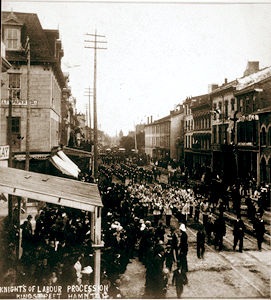
-
Article
Social Science Federation of Canada
The Social Science Federation of Canada (SSFC) was established in 1940 as the Social Science Research Council of Canada. It and the Canadian Federation of the Humanities (CFH) were amalgamated into a new body, the HUMANITIES AND SOCIAL SCIENCE FEDERATION OF CANADA (HSSFC), in 1996.
"https://thecanadianencyclopedia.ca/images/tce_placeholder.jpg?v=e9dca980c9bdb3aa11e832e7ea94f5d9" // resources/views/front/categories/view.blade.php
https://thecanadianencyclopedia.ca/images/tce_placeholder.jpg?v=e9dca980c9bdb3aa11e832e7ea94f5d9
-
Article
Socialism
Socialism is a political doctrine that criticizes the existence of social, economic and political inequality in society. Seeking to lessen class inequality, socialists call for a redistribution of power from the affluent owners to the working class.
"https://thecanadianencyclopedia.ca/images/tce_placeholder.jpg?v=e9dca980c9bdb3aa11e832e7ea94f5d9" // resources/views/front/categories/view.blade.php
https://thecanadianencyclopedia.ca/images/tce_placeholder.jpg?v=e9dca980c9bdb3aa11e832e7ea94f5d9
-
"https://thecanadianencyclopedia.ca/images/tce_placeholder.jpg?v=e9dca980c9bdb3aa11e832e7ea94f5d9" // resources/views/front/categories/view.blade.php
https://thecanadianencyclopedia.ca/images/tce_placeholder.jpg?v=e9dca980c9bdb3aa11e832e7ea94f5d9
-
Article
Société de Saint-Vincent de Paul
Société de Saint-Vincent de Paul, Catholic organization dedicated to works of charity. It was founded in 1833 by Frederic Ozanam, a 20-year-old Sorbonne student in Paris.
"https://thecanadianencyclopedia.ca/images/tce_placeholder.jpg?v=e9dca980c9bdb3aa11e832e7ea94f5d9" // resources/views/front/categories/view.blade.php
https://thecanadianencyclopedia.ca/images/tce_placeholder.jpg?v=e9dca980c9bdb3aa11e832e7ea94f5d9
-
Article
Sociology
Sociology is the study of human relationships, the rules and norms that guide them, and the development of institutions and movements that conserve and change society.
"https://thecanadianencyclopedia.ca/images/tce_placeholder.jpg?v=e9dca980c9bdb3aa11e832e7ea94f5d9" // resources/views/front/categories/view.blade.php
https://thecanadianencyclopedia.ca/images/tce_placeholder.jpg?v=e9dca980c9bdb3aa11e832e7ea94f5d9
-
Article
South Asian Canadians
South Asians trace their origins to South Asia or the Indian subcontinent, which can include India, Pakistan, Bangladesh, Afghanistan, Nepal, Bhutan, Sri Lanka and the Maldives. Most South Asian Canadians are immigrants or descendants of immigrants from these countries, but immigrants from South Asian communities established during British colonial times also include those from East and South Africa, Guyana, Trinidad and Tobago, Fiji and Mauritius. Others come from Britain, the US and Europe. In the 2021 census, 2.6 million Canadians (7.1 per cent) identified as being South Asian.
"https://d3d0lqu00lnqvz.cloudfront.net/South_Asia_non_political-_with_rivers.jpg" // resources/views/front/categories/view.blade.php
https://d3d0lqu00lnqvz.cloudfront.net/South_Asia_non_political-_with_rivers.jpg
-
Article
Sovereignty
Sovereignty is an abstract legal concept. It also has political, social and economic implications. In strictly legal terms, sovereignty describes the power of a state to govern itself and its subjects. In this sense, sovereignty is the highest source of the law. With Confederation and the passage of the British North America Act, 1867, Canada’s Parliament was still legally under the authority of the British Parliament. By 1949, Canada had become fully sovereign in relation to Great Britain. This was due to landmark legislation such as the Statute of Westminster (1931). The Constitution Act, 1982 swept away Britain’s leftover authority. Questions of sovereignty have also been raised by Indigenous peoples in Canada and by separatists in Quebec. The latter, for a time, championed the concept of sovereignty-association.
"https://d3d0lqu00lnqvz.cloudfront.net/media/media/39b78f3a-b1bb-47ec-aa0b-d4f5de005157.jpg" // resources/views/front/categories/view.blade.php
https://d3d0lqu00lnqvz.cloudfront.net/media/media/39b78f3a-b1bb-47ec-aa0b-d4f5de005157.jpg
-
Article
St. Andrew’s Societies in Canada
Throughout the diaspora, the Scots have been enthusiastic organizers, forming various types of ethnic or national societies in their places of settlement. These associations were bulwarks in the preservation of identity, culture and class for their group. The creation of St. Andrew’s Societies as with those of Highland, Caledonian and Burns clubs followed specific patterns, and served specific cultural and social needs. With the exception of the early Highland Societies, which were allied with the Highland Society of London, these associations were organized independently of one another and usually remained that way through their existence, although many created and maintained informal links which were stressed at key celebrational events. From the first society founded in Saint John in 1798, St. Andrew’s Societies have been an important part of Scottish associational life in Canada.
"https://d3d0lqu00lnqvz.cloudfront.net/media/media/2464927e-390e-4c26-9746-62b329cf5fc5.jpg" // resources/views/front/categories/view.blade.php
https://d3d0lqu00lnqvz.cloudfront.net/media/media/2464927e-390e-4c26-9746-62b329cf5fc5.jpg
-
Article
St. Anne's Anglican Church
St. Anne's Anglican Church was located on Gladstone Avenue in the Brockville residential neighbourhood of Toronto, Ontario (near Dufferin and Dundas Streets). (See also Anglicanism in Canada.) Built in 1907-08 in the Byzantine Revival style, St. Anne's Anglican Church contained a remarkable collection of paintings by prominent Canadian artists, including three members of the Group of Seven. (See also J.E.H. MacDonald Frederick Horsman Varley; Franklin Carmichael.) The church was designated a National Historic Site of Canada in 1996. On 9 June 2024, the church was destroyed by a four-alarm fire.
"https://d3d0lqu00lnqvz.cloudfront.net/stannesanglicanchurch/interiorstannesanglicanchurch.jpg" // resources/views/front/categories/view.blade.php
https://d3d0lqu00lnqvz.cloudfront.net/stannesanglicanchurch/interiorstannesanglicanchurch.jpg
-
Article
St. George's Society of Toronto
Founded in 1834, the St. George's Society of Toronto is one of Canada's oldest philanthropic organizations.
"https://thecanadianencyclopedia.ca/images/tce_placeholder.jpg?v=e9dca980c9bdb3aa11e832e7ea94f5d9" // resources/views/front/categories/view.blade.php
https://thecanadianencyclopedia.ca/images/tce_placeholder.jpg?v=e9dca980c9bdb3aa11e832e7ea94f5d9