
Browse "Communities & Sociology"
-
Article
Journée nationale des patriotes
The holiday which takes place on the first Monday immediately preceding 25 May has had several names: Victoria Day, the Queen’s Birthday, Empire Day, Commonwealth Day, fête de Dollard, fête de Dollard et de Chénier and Journée nationale des patriotes. This day is at the heart of a conflict between representations and memories. For most people, it represents the arrival of sunny days. (See also National Holidays.)
"https://d3d0lqu00lnqvz.cloudfront.net/media/new_article_images/JourneeDesPatriotes/360px-Flag_of_the_Patriote_movement_(Lower_Canada).svg.png" // resources/views/front/categories/view.blade.php
https://d3d0lqu00lnqvz.cloudfront.net/media/new_article_images/JourneeDesPatriotes/360px-Flag_of_the_Patriote_movement_(Lower_Canada).svg.png
-
Article
Francophone Nationalism in Québec
Francophone nationalism in Québec or Québec nationalism is the result of the evolution of French-Canadian nationalism.
"https://d3d0lqu00lnqvz.cloudfront.net/media/media/69946f3c-6a50-4516-a665-8c412faf420d.jpg" // resources/views/front/categories/view.blade.php
https://d3d0lqu00lnqvz.cloudfront.net/media/media/69946f3c-6a50-4516-a665-8c412faf420d.jpg
-
Article
Native Women’s Association of Canada
Founded in 1974, the Native Women’s Association of Canada (NWAC) is an organization that supports the socio-economic, political and cultural well-being of Indigenous women in Canada. Dedicated to the principles of humanitarianism, NWAC challenges the inequalities and discrimination that Indigenous women face by remaining politically engaged in causes such as education, housing, child welfare and more.
"https://d3d0lqu00lnqvz.cloudfront.net/media/media/936c2b99-17d5-42ab-84f2-a309bc3022c9.jpg" // resources/views/front/categories/view.blade.php
https://d3d0lqu00lnqvz.cloudfront.net/media/media/936c2b99-17d5-42ab-84f2-a309bc3022c9.jpg
-
Article
New Brunswick Schools Question
In May 1871, the government of New Brunswick, under George Luther Hatheway, passed the Common Schools Act. This statute provided for free standardized education throughout the province, the establishment of new school districts, the construction of schools, and stricter requirements regarding teaching certificates. This law also made all schools non-denominational, so that the teaching of the Roman Catholic catechism was prohibited.
"https://d3d0lqu00lnqvz.cloudfront.net/media/media/d005fd0d-1dd4-4978-ae03-8c60a004c777.JPG" // resources/views/front/categories/view.blade.php
https://d3d0lqu00lnqvz.cloudfront.net/media/media/d005fd0d-1dd4-4978-ae03-8c60a004c777.JPG
-
Article
New Religious Movements
New Religious MovementsCults or New ReligionsThe complexity of the subject has led scholars to abandon the popular term "cult" - which became associated with the 1978 People's Temple mass suicide/murders in Jonestown, Guyana; the Waco tragedy; the Solar Temple murders in Québec and Switzerland; and similar events worldwide - in favour of the more neutral term "New Religious Movements." In the sociology of religion terms like "church," "sect," "denomination," and "cult" have specialized meanings identifying...
"https://thecanadianencyclopedia.ca/images/tce_placeholder.jpg?v=e9dca980c9bdb3aa11e832e7ea94f5d9" // resources/views/front/categories/view.blade.php
https://thecanadianencyclopedia.ca/images/tce_placeholder.jpg?v=e9dca980c9bdb3aa11e832e7ea94f5d9
-
Macleans
Newfoundland Votes Down Church Schools
This article was originally published in Maclean’s magazine on September 18, 1995. Partner content is not updated.
"https://thecanadianencyclopedia.ca/images/tce_placeholder.jpg?v=e9dca980c9bdb3aa11e832e7ea94f5d9" // resources/views/front/categories/view.blade.php
https://thecanadianencyclopedia.ca/images/tce_placeholder.jpg?v=e9dca980c9bdb3aa11e832e7ea94f5d9
-
Article
Nine Hour Movement
The Nine Hour Movement was an international phenomenon, taking place in Canada between January and June 1872. The movement’s goal was to standardize shorter working days. Though this particular mandate was unsuccessful, the movement did have an impact, including setting the foundation for the Canadian Labor Union.
"https://d3d0lqu00lnqvz.cloudfront.net/media/media/74917b1f-8a36-49c3-99fd-4cf328a0bfa3.jpg" // resources/views/front/categories/view.blade.php
https://d3d0lqu00lnqvz.cloudfront.net/media/media/74917b1f-8a36-49c3-99fd-4cf328a0bfa3.jpg
-
Article
Office québécois de la langue française
Created in 1961, the Office québécois de la langue française is a Québec public institution responsible for linguistic officialization, terminological recommendations and the francization of the language of work in both the public and the private sectors. Since 1977, it has been responsible for ensuring that the Charte de la langue française is complied with in Québec, and for monitoring the province’s language situation.
"https://d3d0lqu00lnqvz.cloudfront.net/media/media/f1415842-0d04-4cea-b4a4-e8f7820fc5a9.jpg" // resources/views/front/categories/view.blade.php
https://d3d0lqu00lnqvz.cloudfront.net/media/media/f1415842-0d04-4cea-b4a4-e8f7820fc5a9.jpg
-
Article
Official Language Act (New Brunswick)
New Brunswick, the province with the highest level of linguistic duality in Canada, adopted the Official Languages of New Brunswick Act (OLNBA) in 1969, a few months before the federal government enacted its own Official Languages Act. New Brunswick’s recognition of two linguistic communities (1981), mechanisms for enforcement of the law and redress for infractions (2002), and regulations on bilingual commercial signage (2009) have been the boldest measures in support of bilingualism of any province in the country. Francophones in New Brunswick represented 32.4 per cent of the population in 2016.
"https://d3d0lqu00lnqvz.cloudfront.net/media/media/f2da98cd-44e1-4a6f-85b5-0fc3c66f8ebe.jpg" // resources/views/front/categories/view.blade.php
https://d3d0lqu00lnqvz.cloudfront.net/media/media/f2da98cd-44e1-4a6f-85b5-0fc3c66f8ebe.jpg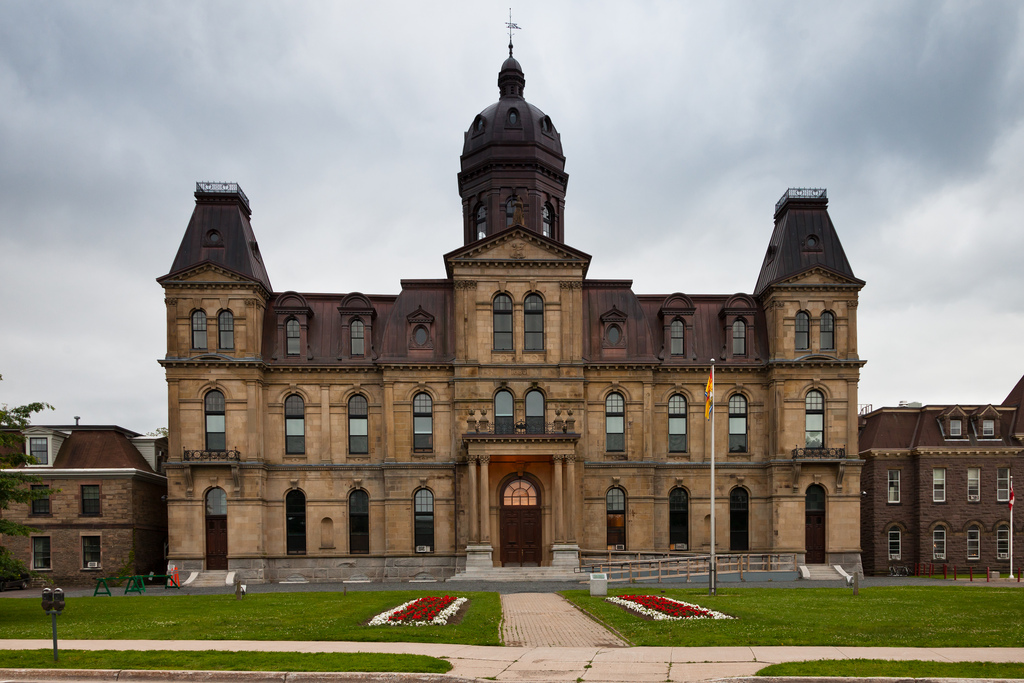
-
Article
Official Languages Act (1969)
The Official Languages Act (1969) is the federal statute that made English and French the official languages of Canada. It requires all federal institutions to provide services in English or French on request. The Act was passed on the recommendation of the Royal Commission on Bilingualism and Biculturalism (established by Prime Minister Lester B. Pearson) and came into force on 7 September 1969. It created the Office of the Commissioner of Official Languages, which oversees its implementation.
"https://d3d0lqu00lnqvz.cloudfront.net/media/Twitter_Cards/OLA 1.png" // resources/views/front/categories/view.blade.php
https://d3d0lqu00lnqvz.cloudfront.net/media/Twitter_Cards/OLA 1.png
-
Article
Official Languages Act (1988)
The Official Languages Act (1988) consolidates all of the changes made to the Official Languages Act of 1969, providing more detail and making them clearer within a new legislative framework. This version highlights the responsibilities of federal institutions with respect to the official languages (see also Language Policy in Canada). This is the full-length entry about the Official Languages Act of 1988. For a plain language summary, please see The Official Languages Act (1988) (Plain Language Summary).
"https://thecanadianencyclopedia.ca/images/tce_placeholder.jpg?v=e9dca980c9bdb3aa11e832e7ea94f5d9" // resources/views/front/categories/view.blade.php
https://thecanadianencyclopedia.ca/images/tce_placeholder.jpg?v=e9dca980c9bdb3aa11e832e7ea94f5d9
-
Article
Official Secrets Act
Official Secrets Act, the most important statute relating to national security, is designed to prohibit and control access to and the disclosure of sensitive government information; offences cover espionage and leakage of government information.
"https://d3d0lqu00lnqvz.cloudfront.net/media/media/ef877228-646a-42e0-8096-b939feb24100.jpg" // resources/views/front/categories/view.blade.php
https://d3d0lqu00lnqvz.cloudfront.net/media/media/ef877228-646a-42e0-8096-b939feb24100.jpg
-
Article
Ontario Schools Question
The Ontario schools question was the first major schools issue to focus on language rather than religion. In Ontario, French or French-language education remained a contentious issue for nearly a century, from 1890 to 1980, with English-speaking Catholics and Protestants aligned against French-speaking Catholics.
"https://d3d0lqu00lnqvz.cloudfront.net/media/media/0bbc7423-f097-4fac-8e20-9663a9419422.jpg" // resources/views/front/categories/view.blade.php
https://d3d0lqu00lnqvz.cloudfront.net/media/media/0bbc7423-f097-4fac-8e20-9663a9419422.jpg
-
Article
Opus Dei
Opus Dei is an institution of the Roman Catholic Church. It was founded in 1928 by the Spanish priest Josemaria Escrivcriva, who preached that lay people can and should seek holiness in their work and everyday lives.
"https://thecanadianencyclopedia.ca/images/tce_placeholder.jpg?v=e9dca980c9bdb3aa11e832e7ea94f5d9" // resources/views/front/categories/view.blade.php
https://thecanadianencyclopedia.ca/images/tce_placeholder.jpg?v=e9dca980c9bdb3aa11e832e7ea94f5d9
-
Article
Orange Order in Canada
The Orange Order was a political and religious fraternal society in Canada. From the early 19th century, members proudly defended Protestantism and the British connection while providing mutual aid. The Order had a strong influence in politics, particularly through patronage at the municipal level, and developed a reputation for sectarianism and rioting.
"https://d3d0lqu00lnqvz.cloudfront.net/media/media/d5c87930-81f5-4775-8e06-bdef546856e2.jpg" // resources/views/front/categories/view.blade.php
https://d3d0lqu00lnqvz.cloudfront.net/media/media/d5c87930-81f5-4775-8e06-bdef546856e2.jpg