
Browse "Communities & Sociology"
-
Article
Moncton Police Killings
On 4 June 2014, the city of Moncton, New Brunswick, was the scene of one of the worst police killings in Canadian history.
"https://d3d0lqu00lnqvz.cloudfront.net/media/media/155beb79-28b9-422c-aae9-537fe07552be.jpg" // resources/views/front/categories/view.blade.php
https://d3d0lqu00lnqvz.cloudfront.net/media/media/155beb79-28b9-422c-aae9-537fe07552be.jpg
-
"https://thecanadianencyclopedia.ca/images/tce_placeholder.jpg?v=e9dca980c9bdb3aa11e832e7ea94f5d9" // resources/views/front/categories/view.blade.php
https://thecanadianencyclopedia.ca/images/tce_placeholder.jpg?v=e9dca980c9bdb3aa11e832e7ea94f5d9
-
Macleans
Montreal Police Convicted
This article was originally published in Maclean’s magazine on July 10, 1995. Partner content is not updated.
"https://thecanadianencyclopedia.ca/images/tce_placeholder.jpg?v=e9dca980c9bdb3aa11e832e7ea94f5d9" // resources/views/front/categories/view.blade.php
https://thecanadianencyclopedia.ca/images/tce_placeholder.jpg?v=e9dca980c9bdb3aa11e832e7ea94f5d9
-
Article
Montréal Riots
In February and March 1849 when the LaFontaine-Baldwin ministry passed the Rebellion Losses Bill, the opposition violently denounced the Act.
"https://thecanadianencyclopedia.ca/images/tce_placeholder.jpg?v=e9dca980c9bdb3aa11e832e7ea94f5d9" // resources/views/front/categories/view.blade.php
https://thecanadianencyclopedia.ca/images/tce_placeholder.jpg?v=e9dca980c9bdb3aa11e832e7ea94f5d9
-
Article
Moravian Missions in Labrador
In 1771, Moravian missionaries were the first Europeans to settle in Labrador. Over a 133-year period, they established a series of eight missions along the coast which became the focus of religious, social and economic activities for the Inuit who gradually came to settle near the communities. Moravians had a huge impact on the life and culture of Labrador Inuit. What emerged was a unique culture rooted in Inuit traditions with indigenized European practices. The last Moravian missionary left Labrador in 2005, but the Moravian church, its customs and traditions are still very much alive in Labrador.
"https://d3d0lqu00lnqvz.cloudfront.net/media/new_article_images/MoravianMissionsinCanada/Eine-Schulergrupper-in-Nain-Resized.jpg" // resources/views/front/categories/view.blade.php
https://d3d0lqu00lnqvz.cloudfront.net/media/new_article_images/MoravianMissionsinCanada/Eine-Schulergrupper-in-Nain-Resized.jpg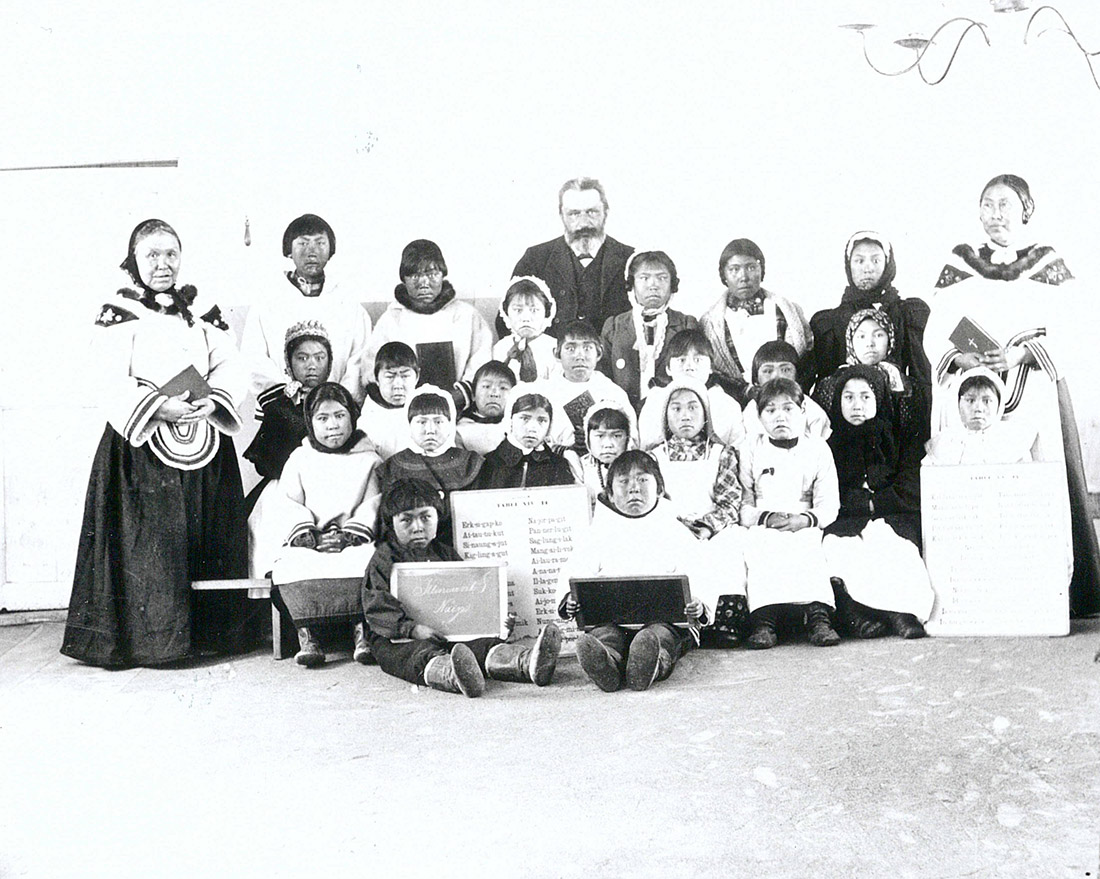
-
Article
Mormon Church
The Mormon Church was founded in 1830 in upstate New York. The Church of Jesus Christ of Latter-day Saints, by far the largest Mormon denomination, is the only one of significance in Canada. There are currently eight Mormon temples in Canada.
"https://d3d0lqu00lnqvz.cloudfront.net/media/Cardston_Temple.jpg" // resources/views/front/categories/view.blade.php
https://d3d0lqu00lnqvz.cloudfront.net/media/Cardston_Temple.jpg
-
Article
Murdochville Strike
On 10 March 1957, the 1,000 workers of Gaspé Copper Mines in Murdochville, Québec, struck for the right to unionize. The conflict lasted 7 months and ended in defeat for the miners. Moreover, a 15-year judicial battle finally awarded the company $1.5 million in damages from the United Steelworkers of America ("Métallos" in Québec).
"https://d3d0lqu00lnqvz.cloudfront.net/media/media/aee50531-a98b-429d-b2c6-3dd787abde3f.jpg" // resources/views/front/categories/view.blade.php
https://d3d0lqu00lnqvz.cloudfront.net/media/media/aee50531-a98b-429d-b2c6-3dd787abde3f.jpg
-
Article
Muscular Dystrophy Canada
Muscular Dystrophy Canada (MDC) was founded in 1954 by a group of parents who had children with Duchenne muscular dystrophy. Now a national voluntary health organization with offices across Canada, MDC is dedicated to fighting over 40 different neuromuscular disorders.
"https://thecanadianencyclopedia.ca/images/tce_placeholder.jpg?v=e9dca980c9bdb3aa11e832e7ea94f5d9" // resources/views/front/categories/view.blade.php
https://thecanadianencyclopedia.ca/images/tce_placeholder.jpg?v=e9dca980c9bdb3aa11e832e7ea94f5d9
-
Article
Music at The Stratford Festival
The Stratford Festival (named the Stratford Shakespearean Festival, 1953–57; Stratford Festival, 1957–99; Stratford Festival of Canada, 2000–08; Stratford Shakespeare Festival, 2008–12) is an annual repertory theatre festival.
"https://d3d0lqu00lnqvz.cloudfront.net/media/media/7a68957a-5d7c-4d18-8a4b-9aac395d8a53.jpg" // resources/views/front/categories/view.blade.php
https://d3d0lqu00lnqvz.cloudfront.net/media/media/7a68957a-5d7c-4d18-8a4b-9aac395d8a53.jpg
-
Article
Musique populaire francophone
This article is currently being translated. It will be available shortly. Please check back at a later date or add it to your saved articles.
"https://thecanadianencyclopedia.ca/images/tce_placeholder.jpg?v=e9dca980c9bdb3aa11e832e7ea94f5d9" // resources/views/front/categories/view.blade.php
https://thecanadianencyclopedia.ca/images/tce_placeholder.jpg?v=e9dca980c9bdb3aa11e832e7ea94f5d9
-
Article
Names
Personal names carry history, traditions, identity, spiritual meaning and hopes. The history of Canada includes both developments and controversy in naming. Naming has been an issue for many aboriginal communities. The use of European-origin names instead of traditional names is one example.
"https://thecanadianencyclopedia.ca/images/tce_placeholder.jpg?v=e9dca980c9bdb3aa11e832e7ea94f5d9" // resources/views/front/categories/view.blade.php
https://thecanadianencyclopedia.ca/images/tce_placeholder.jpg?v=e9dca980c9bdb3aa11e832e7ea94f5d9
-
Article
National Indigenous Peoples Day
Celebrated in Canada every 21 June, National Indigenous Peoples Day is an official day of celebration to recognize and honour the heritage, cultures and valuable contributions to society by First Nations, Inuit and Métis peoples. National Indigenous Peoples Day is the same day as the summer solstice (the longest day of the year) and was chosen for its important symbolism to many Indigenous peoples (see Religion and Spirituality of Indigenous Peoples in Canada.) This day has been celebrated as a statutory territorial holiday in the Northwest Territories since 2001 and in the Yukon since 2017.
"https://d3d0lqu00lnqvz.cloudfront.net/media/media/877d8ab1-84a9-4ecd-8703-50661feef4e9.jpg" // resources/views/front/categories/view.blade.php
https://d3d0lqu00lnqvz.cloudfront.net/media/media/877d8ab1-84a9-4ecd-8703-50661feef4e9.jpg
-
Article
National Action Committee on the Status of Women
The National Action Committee on the Status of Women (NAC) is a feminist, activist organization that was founded in 1971 to pressure the Canadian government to implement the recommendations of the Report of the Royal Commission on the Status of Women in Canada. The NAC ceased active operations in the late 2000s.
"https://d3d0lqu00lnqvz.cloudfront.net/media/media/be832524-f521-4200-b242-3c702ae0f3c4.jpg" // resources/views/front/categories/view.blade.php
https://d3d0lqu00lnqvz.cloudfront.net/media/media/be832524-f521-4200-b242-3c702ae0f3c4.jpg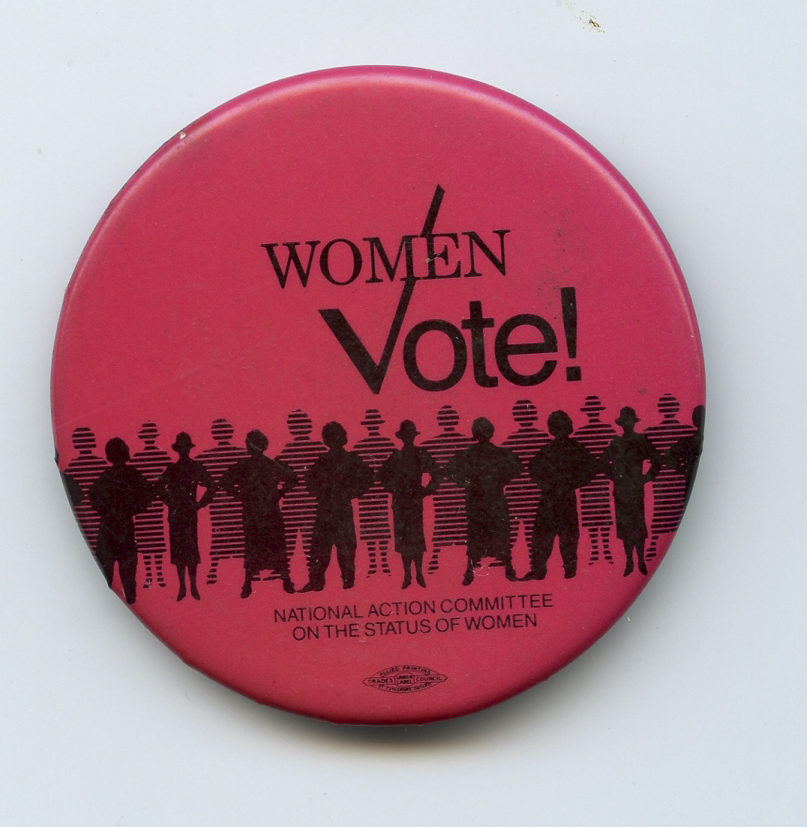
-
Editorial
Flag of Canada: Alternate Designs
The following article is an editorial written by The Canadian Encyclopedia staff. Editorials are not usually updated. A national flag is a simple, effective way of identifying a country and expressing its collective will and sovereignty. Its symbolism should be expansive, representing perspectives from across the country. But it should also be singular, offering a picture of unity. For almost a century, Canada did not fly a flag of its own. There were instead the Union Jack and the Canadian Red Ensign. They took turns flying above Parliament. But neither was distinctly Canadian, nor permanent. The issue of a new flag was raised in Parliament in 1925 and again in 1945. It was dropped both times due to a lack of consent. Some clung to tradition, and none could agree on a unifying symbol. When Prime Minister Lester B. Pearson re-opened the debate in 1964, he offered Canadians the chance to “say proudly to the world and to the future: ‘I stand for Canada.’” A joint committee of the Senate and House of Commons was assembled to decide on a suitable design. After months of vigorous debate, the final design was unfurled at Parliament Hill on 15 February 1965. The design process was open to the public. Thousands of suggestions were submitted. This article looks at 12 of those designs. It includes explanations for the symbols found in each. The designs express a vision for Canada, still young and still finding its mode of self-expression.
"https://d3d0lqu00lnqvz.cloudfront.net/media/media/1a5937f7-ad68-4cb9-8abf-ab518775c641.jpg" // resources/views/front/categories/view.blade.php
https://d3d0lqu00lnqvz.cloudfront.net/media/media/1a5937f7-ad68-4cb9-8abf-ab518775c641.jpg
-
Article
National Order of Québec (Ordre national du Québec)
The National Order of Québec (Ordre national du Québec) was instituted 20 June 1984.
"https://thecanadianencyclopedia.ca/images/tce_placeholder.jpg?v=e9dca980c9bdb3aa11e832e7ea94f5d9" // resources/views/front/categories/view.blade.php
https://thecanadianencyclopedia.ca/images/tce_placeholder.jpg?v=e9dca980c9bdb3aa11e832e7ea94f5d9