Browse "Communities & Sociology"
-
Article
Economic Immigration to Canada
Canada’s current and future prosperity depends on recruiting immigrants. Newcomers fill gaps in the Canadian workforce, build or start businesses and invest in the Canadian economy. Economic immigrants include employees as well as employers. They mostly become permanent residents when they immigrate to Canada. Not included in this class are the many temporary foreign workers who contribute to Canada’s economy. (See also Immigration to Canada.) Economic immigrants bring talent, innovation, family members and financial investments to Canada. They also enrich the country’s culture, heritage and opportunities. Technological progress, productivity and economic growth all benefit from these newcomers. Studies show that they have little to no negative impacts on wages for other workers in the country. According to the 2021 census, 1.3 million immigrants settled in Canada between 2016 and 2021. The census identified 748,120 of the total 1.3 million living in Canada as economic immigrants.
"https://d3d0lqu00lnqvz.cloudfront.net/media/new_article_images/EconomicImmigration/permanent_residence.jpg" // resources/views/front/categories/view.blade.php
https://d3d0lqu00lnqvz.cloudfront.net/media/new_article_images/EconomicImmigration/permanent_residence.jpg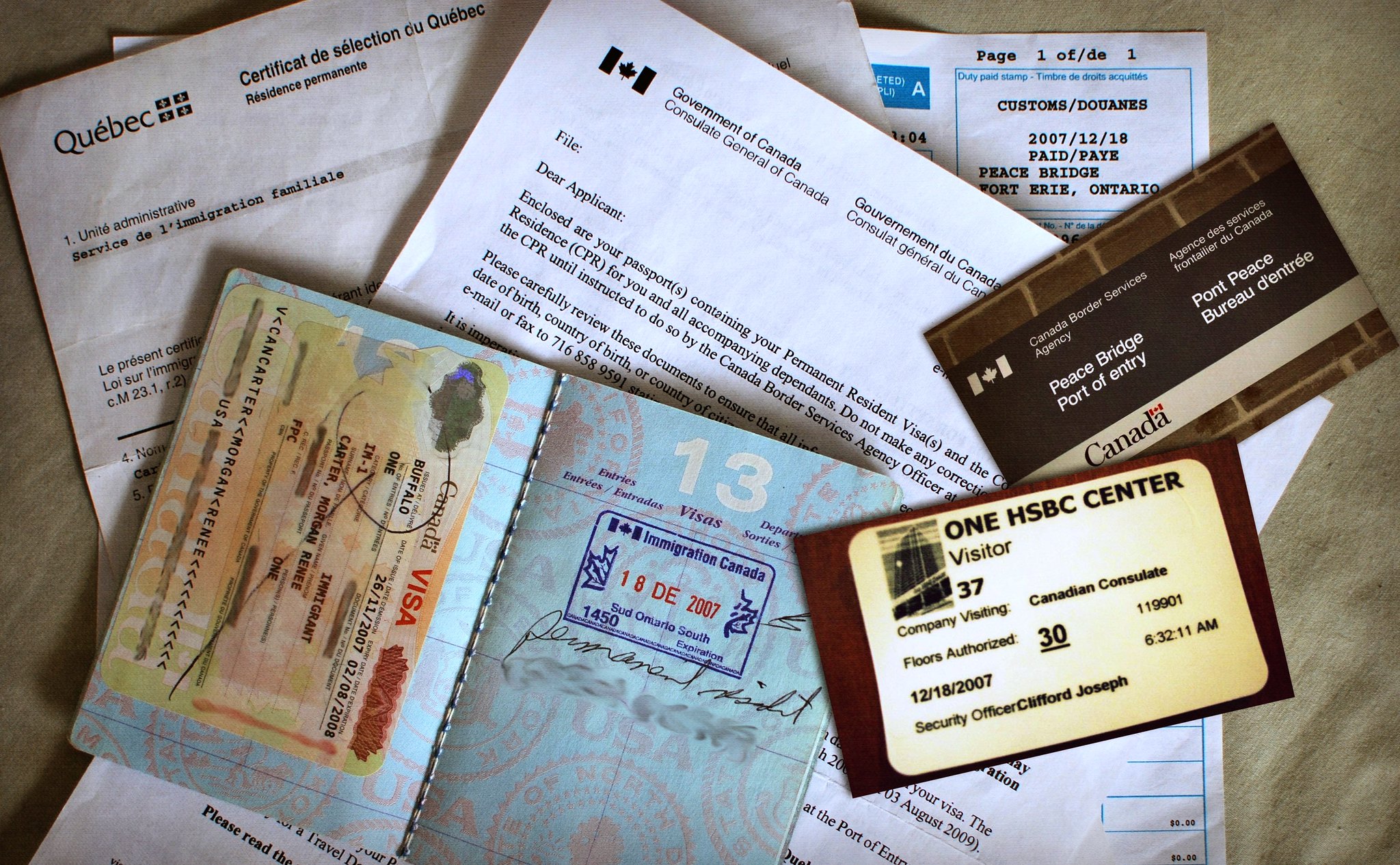
-
Article
Impaired Driving
Impaired driving, also known as drunken driving, driving while impaired (DWI) and driving under the influence (DUI), has been a serious social problem as far back as the beginning of this century, when social scientists took note of the often deadly combination of alcohol and motor vehicles.
"https://thecanadianencyclopedia.ca/images/tce_placeholder.jpg?v=e9dca980c9bdb3aa11e832e7ea94f5d9" // resources/views/front/categories/view.blade.php
https://thecanadianencyclopedia.ca/images/tce_placeholder.jpg?v=e9dca980c9bdb3aa11e832e7ea94f5d9
-
Article
IODE (Imperial Order Daughters of the Empire)
The IODE is a national women’s charitable organization in Canada. Founded in 1900, the organization’s original intent was to support and promote patriotism to the British Empire. (See Imperialism.) The IODE contributed to the construction of an Anglo-Canadian identity in the image of Britain. Throughout this time, the IODE improved the lives of some women in Canada, and championed various causes, such as improving health care and producing strong Canadian citizens. However, the organization was, at times, complicit in racism and oppression. Increasingly aware of this problem, the organization changed its name to IODE in 1978-9 and became more Canada-centric. Today, IODE focuses on the welfare of children, education and community service.
"https://d3d0lqu00lnqvz.cloudfront.net/IODE-1.jpg" // resources/views/front/categories/view.blade.php
https://d3d0lqu00lnqvz.cloudfront.net/IODE-1.jpg
-
Article
Indian Boarding Homes Program in Canada
The Indian Boarding Homes Program was established by the Canadian federal government and operated from the early 1950s to the early 1990s. Its purpose was to relocate Indigenous children into non-Indigenous homes while they attended elementary and high schools, often far from their home communities. Relocation was compulsory; refusal was not permitted. The host families with whom they were placed were paid to provide care. Many children in this situation faced physical, sexual, verbal and psychological abuse (see also Child Abuse). The program was designed to assimilate Indigenous children into the mainstream Canadian society. As a result, children were often forbidden from speaking their native language or engaging in practices of their culture. This led, inevitably, to significant consequences that included loss of cultural identity and connection to their communities for the approximately 40,000 First Nations and Inuit children who were forced to relocate.
"https://d3d0lqu00lnqvz.cloudfront.net/TCE_placeholder.png" // resources/views/front/categories/view.blade.php
https://d3d0lqu00lnqvz.cloudfront.net/TCE_placeholder.png
-
Article
Indian Food in Canada
Indian food is a more recent addition to the culinary scene in Canada, having gained prominence primarily in the post-1960s era of immigration. It is characterized mainly by the Northern Indian approach to cuisine, which features breads and warm curries and the use of yogurt and cream in meat-based dishes. But it also bears the influence of South Indian cooking, which frequently plays with the combination of sour and spicy and the use of tamarind and chilies. However, many typical Indo-Canadian dishes, such as kedgeree and some chutneys, are a product of Anglo-Indian cuisine stemming from Britain’s colonial rule of the Indian subcontinent.See also Popular Indian Dishes in Canada.
"https://d3d0lqu00lnqvz.cloudfront.net/media/media/76374c18-1a40-49ff-938a-c8dab85dacec.jpg" // resources/views/front/categories/view.blade.php
https://d3d0lqu00lnqvz.cloudfront.net/media/media/76374c18-1a40-49ff-938a-c8dab85dacec.jpg
-
Article
Trade Goods of the Fur Trade
During the fur trade in Canada, items of European manufacture (historically referred to in the literature as Indian trade goods) were traded with Indigenous peoples for furs. These items include, for example, metal objects, weapons and glass beads. (See also Trade Silver.) In various ways, however, cultural exchanges went both ways. Some Europeans, namely the voyageurs, adopted various Indigenous technologies and clothing during the fur trade, including the use of moccasins, buckskin pants and hats, and snowshoes.
"https://d3d0lqu00lnqvz.cloudfront.net/media/media/e4ec1e55-01c2-4b77-a220-f05a84fd4c9c.jpg" // resources/views/front/categories/view.blade.php
https://d3d0lqu00lnqvz.cloudfront.net/media/media/e4ec1e55-01c2-4b77-a220-f05a84fd4c9c.jpg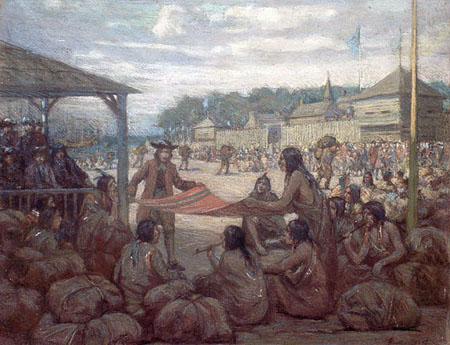
-
Article
Trade Silver
Gifts of silver were presented and traded to Indigenous peoples in Canada by European fur traders. Trade silver was made by silversmiths in Quebec City, Montreal, London and various American cities, including New York, Philadelphia and Detroit. (See also Fur Trade in Canada and Trade Goods of the Fur Trade.)
"https://d3d0lqu00lnqvz.cloudfront.net/TradeSilverHBC.jpg" // resources/views/front/categories/view.blade.php
https://d3d0lqu00lnqvz.cloudfront.net/TradeSilverHBC.jpg
-
Article
Industrial Relations
The phrase "industrial relations" became widely used during WWII, for two main reasons: the major growth of the numerous war-time industries and, even more, the adoption of PC 1003 by the federal Cabinet on 17 February 1944.
"https://thecanadianencyclopedia.ca/images/tce_placeholder.jpg?v=e9dca980c9bdb3aa11e832e7ea94f5d9" // resources/views/front/categories/view.blade.php
https://thecanadianencyclopedia.ca/images/tce_placeholder.jpg?v=e9dca980c9bdb3aa11e832e7ea94f5d9
-
Article
Industrial Unionism
The first significant attempt to organize on an industrial basis was undertaken in the 1880s by the KNIGHTS OF LABOR, which advocated unity of the producing classes and opposed employer blacklists and discrimination.
"https://d3d0lqu00lnqvz.cloudfront.net/media/media/13cef129-bb89-4686-97b1-a512f5d675f1.jpg" // resources/views/front/categories/view.blade.php
https://d3d0lqu00lnqvz.cloudfront.net/media/media/13cef129-bb89-4686-97b1-a512f5d675f1.jpg
-
Article
Industrial Workers of the World
IWW propaganda was disseminated primarily in street meetings. In 1912, when Vancouver authorities tried to ban street demonstrations, the Wobblies started and won a spectacular free-speech fight.
"https://d3d0lqu00lnqvz.cloudfront.net/media/media/85c764cc-4b3c-42f9-9953-5f1f2c40cbde.jpg" // resources/views/front/categories/view.blade.php
https://d3d0lqu00lnqvz.cloudfront.net/media/media/85c764cc-4b3c-42f9-9953-5f1f2c40cbde.jpg
-
Article
Innu Nikamu
Innu Nikamu is an annual festival of traditional and contemporary Indigenous music featuring hunters and musicians from Quebec. Innu Nikamu takes place in the Maliotenam (Mani-Utenam) reserve, located near Sept-Îles in Quebec’s Côte-Nord administrative region.
"https://d3d0lqu00lnqvz.cloudfront.net/49293624953_12db918e57_k.jpg" // resources/views/front/categories/view.blade.php
https://d3d0lqu00lnqvz.cloudfront.net/49293624953_12db918e57_k.jpg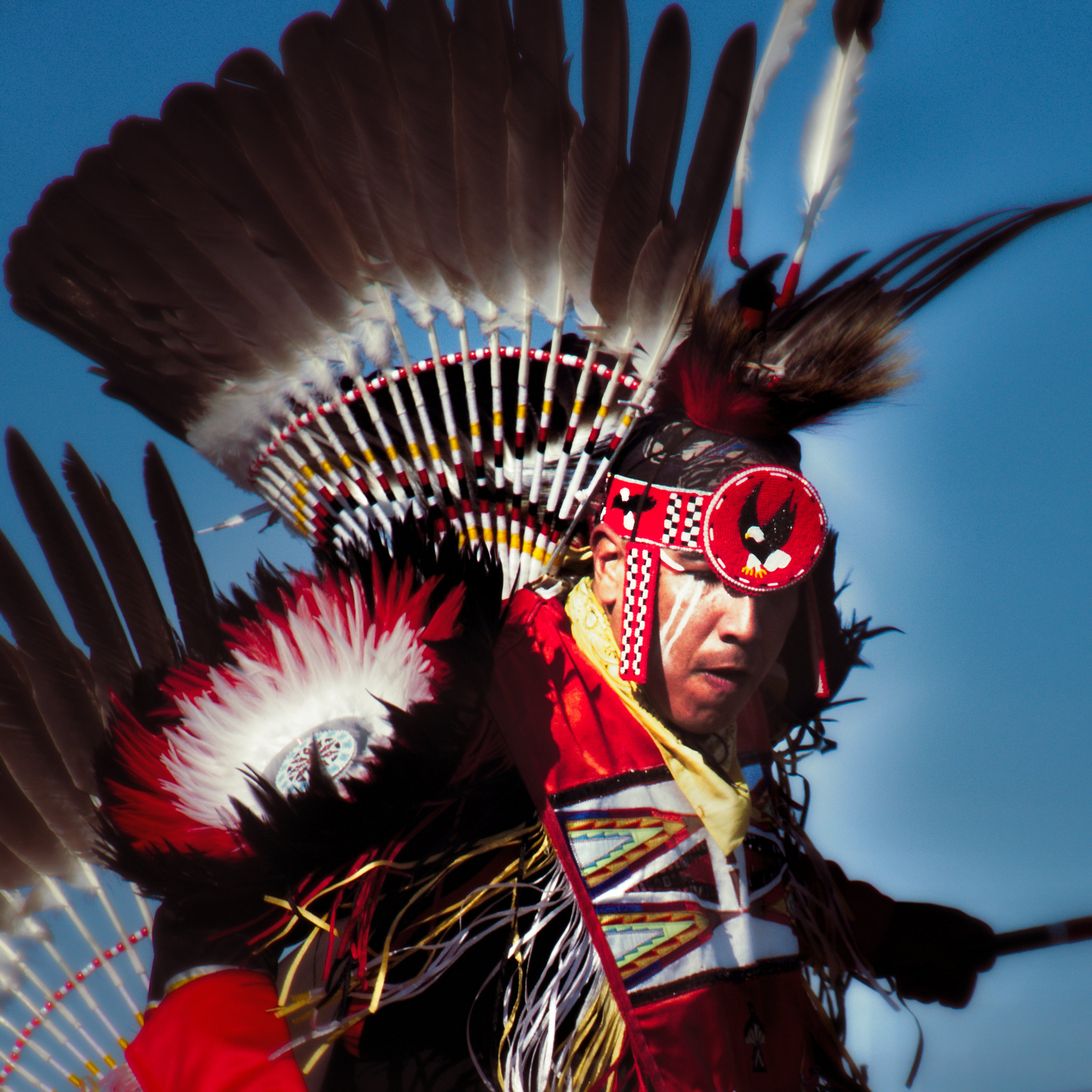
-
Article
Intergenerational Trauma and Residential Schools
Historical trauma occurs when trauma caused by historical oppression is passed down through generations. For more than 100 years, the Canadian government supported residential school programs that isolated Indigenous children from their families and communities (see Residential Schools in Canada). Under the guise of educating and preparing Indigenous children for their participation in Canadian society, the federal government and other administrators of the residential school system committed what has since been described as an act of cultural genocide. As generations of students left these institutions, they returned to their home communities without the knowledge, skills or tools to cope in either world. The impacts of their institutionalization in residential school continue to be felt by subsequent generations. This is called intergenerational trauma. This is the full-length entry about Intergenerational Trauma and Residential Schools. For a plain-language summary, please see Intergenerational Trauma and Residential Schools (Plain-Language Summary).
"https://thecanadianencyclopedia.ca/images/tce_placeholder.jpg?v=e9dca980c9bdb3aa11e832e7ea94f5d9" // resources/views/front/categories/view.blade.php
https://thecanadianencyclopedia.ca/images/tce_placeholder.jpg?v=e9dca980c9bdb3aa11e832e7ea94f5d9
-
Article
Intergenerational Trauma and Residential Schools (Plain-Language Summary)
Trauma refers to a very serious negative experience. Intergenerational means something occurring across generations. Intergenerational trauma is when trauma is passed down through families. This article is a plain-language summary of Intergenerational Trauma and Residential Schools. If you are interested in reading about this topic in more depth, please see our full-length entry, Intergenerational Trauma and Residential Schools.
"https://thecanadianencyclopedia.ca/images/tce_placeholder.jpg?v=e9dca980c9bdb3aa11e832e7ea94f5d9" // resources/views/front/categories/view.blade.php
https://thecanadianencyclopedia.ca/images/tce_placeholder.jpg?v=e9dca980c9bdb3aa11e832e7ea94f5d9
-
Article
Internment in Canada
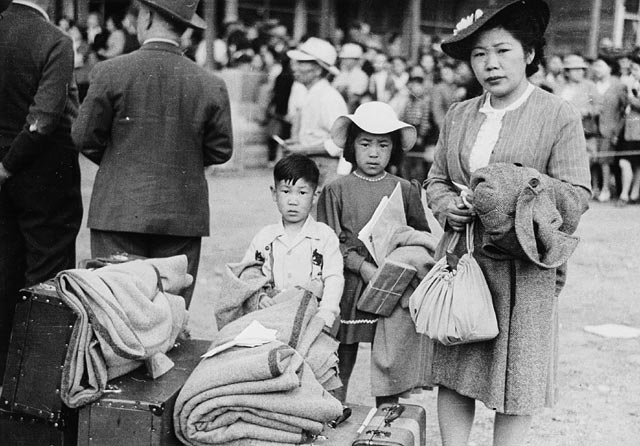
Internment is the forcible confinement or detention of a person during wartime. Large-scale internment operations were carried out by the Canadian government during the First World War and the Second World War. In both cases, the War Measures Act was invoked. This gave the government the authority to deny people’s civil liberties, notably habeas corpus (the right to a fair trial before detention). People were held in camps across the country. More than 8,500 people were interned during the First World War and as many as 24,000 during the Second World War — including some 21,000–22,000 Japanese Canadians.
"https://d3d0lqu00lnqvz.cloudfront.net/media/media/2913948d-0dc6-4142-807e-5206fce81700.jpg" // resources/views/front/categories/view.blade.php
https://d3d0lqu00lnqvz.cloudfront.net/media/media/2913948d-0dc6-4142-807e-5206fce81700.jpg
-
Article
Internment of Japanese Canadians
The forcible expulsion and confinement of Japanese Canadians during the Second World War is one of the most tragic sets of events in Canada’s history. Some 21,000–22,000 Japanese Canadians were taken from their homes on Canada’s West Coast, without any charge or due process. Beginning 24 February 1942, they were exiled to remote areas of British Columbia and elsewhere. The federal government stripped them of their property and pressured many of them to accept mass deportation after the war. Those who remained were not allowed to return to the West Coast until 1 April 1949. In 1988, the federal government officially apologized for its treatment of Japanese Canadians. A redress payment of $21,000 was made to each survivor, and more than $12 million was allocated to a community fund and human rights projects. This article is the full-length text on Japanese Internment in Canada. For a plain-language summary, see Internment of Japanese Canadians (Plain-Language Summary).
"https://d3d0lqu00lnqvz.cloudfront.net/media/media/0bec6156-0467-4a97-909f-da599383381d.jpg" // resources/views/front/categories/view.blade.php
https://d3d0lqu00lnqvz.cloudfront.net/media/media/0bec6156-0467-4a97-909f-da599383381d.jpg