
Browse "Places"
-
Article
The 519
The 519 — formerly called The 519 Church Street Community Centre — is located at 519 Church Street in Toronto’s gay village. It has evolved from a neighbourhood-led preservation effort into one of Canada’s most significant 2SLGBTQ+ community centres. Community-controlled from its founding in 1975, it quickly grew into a major hub for social services, activism and grassroots organizing after opening its doors in 1976. The 519 helped to establish Toronto’s Church and Wellesley neighbourhood as a centre of 2SLGBTQ+ community life. It is one of four 2SLGBTQ+ spaces featured in Canada Post's 2026 Places of Pride stamp collection, issued on 9 June 2026.
"https://d3d0lqu00lnqvz.cloudfront.net/The519ChurchStreetCommunityCentre.jpg" // resources/views/front/categories/view.blade.php
https://d3d0lqu00lnqvz.cloudfront.net/The519ChurchStreetCommunityCentre.jpg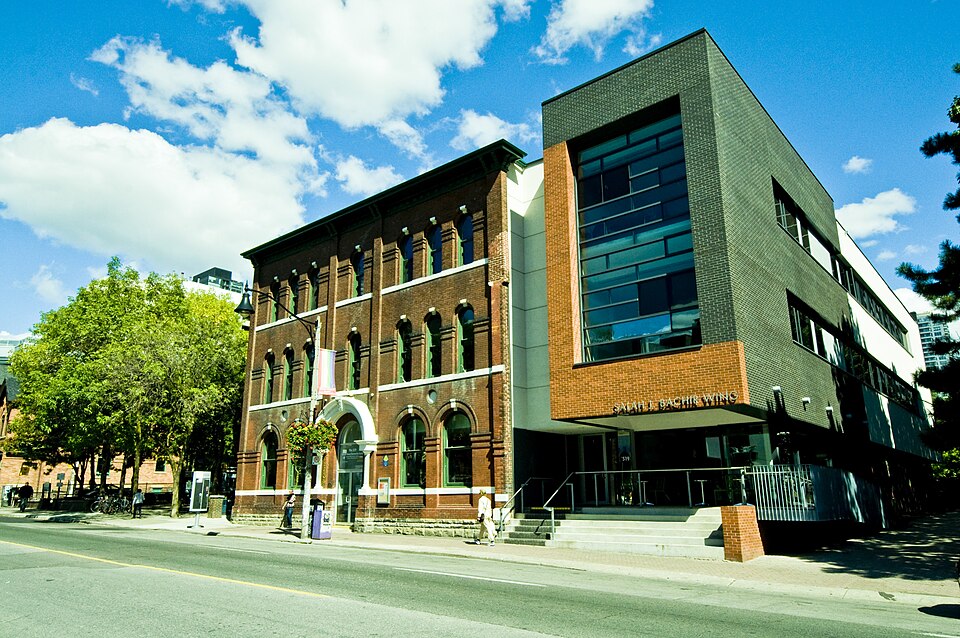
-
Article
The Bog
The Bog was Charlottetown, Prince Edward Island’s historically Black neighbourhood. For over 200 years, Black residents have lived on the island in small communities, but from about 1810 to 1900, Black people were concentrated in this small district. The Bog was located in the town’s west end on marshy, undesirable land. It ran from Government Pond and Black Sam’s Bridge in the northwest to Richmond and Rochford streets in the southeast. Black, white and mixed-race people lived there. At its peak, approximately 100 Black Islanders called it home. Today, there is no trace of the neighbourhood as modern government buildings stand where the historic neighbourhood once stood. However, descendants of the Bog still live on the island and many people are pushing for the neighbourhood’s history to be officially commemorated.
"https://d3d0lqu00lnqvz.cloudfront.net/TheBog/TheBogSchoolResized.jpg" // resources/views/front/categories/view.blade.php
https://d3d0lqu00lnqvz.cloudfront.net/TheBog/TheBogSchoolResized.jpg
-
Article
The Carlu
The Carlu (Eaton Auditorium 1931-76). Concert hall and special events facility located on the top (seventh) floor of the former Eaton's College Street store in Toronto.
"https://thecanadianencyclopedia.ca/images/tce_placeholder.jpg?v=e9dca980c9bdb3aa11e832e7ea94f5d9" // resources/views/front/categories/view.blade.php
https://thecanadianencyclopedia.ca/images/tce_placeholder.jpg?v=e9dca980c9bdb3aa11e832e7ea94f5d9
-
Article
The Crest Theatre
The Crest Theatre was founded in 1953 by Donald and Murray DAVIS with the support of their sister, Barbara CHILCOTT. As students, in the late 1940s, Donald and Murray had studied theatre under Robert Gill at the University of Toronto's Hart House Theatre.
"https://thecanadianencyclopedia.ca/images/tce_placeholder.jpg?v=e9dca980c9bdb3aa11e832e7ea94f5d9" // resources/views/front/categories/view.blade.php
https://thecanadianencyclopedia.ca/images/tce_placeholder.jpg?v=e9dca980c9bdb3aa11e832e7ea94f5d9
-
Article
The Ed Mirvish Theatre
The Toronto theatre at 244 Victoria Street was renamed The Ed Mirvish Theatre in December 2011.
"https://thecanadianencyclopedia.ca/images/tce_placeholder.jpg?v=e9dca980c9bdb3aa11e832e7ea94f5d9" // resources/views/front/categories/view.blade.php
https://thecanadianencyclopedia.ca/images/tce_placeholder.jpg?v=e9dca980c9bdb3aa11e832e7ea94f5d9
-
Article
The Forks
The Forks is a public space where the Red and Assiniboine rivers meet in the heart of what is now the city of Winnipeg, Manitoba. It occupies the waterfront zone east of Main Street and south of the CN mainline rail bridge. The Forks has played a complex role in the history of the region and of Canada as a whole. It has been a traditional gathering place for thousands of years and was an important hub of the fur trade in the 18th and 19th centuries. In the late 19th and early 20th centuries, many immigrants stopped at the Forks on their journey west. It was designated a National Historic Site of Canada in 1974 and is home to other sites of historical and archeological significance, as well as museums, monuments, parks and theatres.
"https://d3d0lqu00lnqvz.cloudfront.net/media/media/f41c3a13-720f-45c4-ac85-d43341093acf.jpg" // resources/views/front/categories/view.blade.php
https://d3d0lqu00lnqvz.cloudfront.net/media/media/f41c3a13-720f-45c4-ac85-d43341093acf.jpg
-
Article
The Grange
Grange, The Throughout its history this elegant brick building, constructed about 1817 on a 40 ha property stretching from Queen to Bloor streets, has been linked to the social, intellectual and political life of Toronto. Built
"https://d3d0lqu00lnqvz.cloudfront.net/media/media/9878b39f-4c3f-4d77-b188-ac1726650546.jpg" // resources/views/front/categories/view.blade.php
https://d3d0lqu00lnqvz.cloudfront.net/media/media/9878b39f-4c3f-4d77-b188-ac1726650546.jpg
-
Article
The Hermitage/L'Ermitage
Ermitage. Hall located in a Collège de Montréal building at the corner of Côte-des-Neiges and Docteur-Penfield Ave. Built by architect Joseph Alfred-Hector Lapierre (1859-1932) between 1911 and 1913 to provide needed space for the college, it was first used for student productions and recreation.
"https://thecanadianencyclopedia.ca/images/tce_placeholder.jpg?v=e9dca980c9bdb3aa11e832e7ea94f5d9" // resources/views/front/categories/view.blade.php
https://thecanadianencyclopedia.ca/images/tce_placeholder.jpg?v=e9dca980c9bdb3aa11e832e7ea94f5d9
-
Article
The Huron-Wendat Museum
Located in the heart of Québec City on the Wendake Reserve along the Akiawenrahk (Saint-Charles) River, the Huron-Wendat Museum highlights the history and culture of the Huron-Wendat nation.
"https://d3d0lqu00lnqvz.cloudfront.net/media/new_article_images/HuronWendatMuseum/Tsawenhohi House, Huron-Wendat Museum photo.png" // resources/views/front/categories/view.blade.php
https://d3d0lqu00lnqvz.cloudfront.net/media/new_article_images/HuronWendatMuseum/Tsawenhohi House, Huron-Wendat Museum photo.png
-
Article
The Last Spike
The Last Spike was the final and ceremonial railway spike driven into the Canadian Pacific Railway (CPR) track by company director Donald Smith on the morning of 7 November 1885. The ceremony marked the completion of the transcontinental CPR and was a muted affair at which a group of company officials and labourers gathered at Craigellachie near Eagle Pass in the interior of British Columbia. One of about 30 million iron spikes used in the construction of the line, the Last Spike came to symbolize more than the completion of a railway. Contemporaries and historians have viewed the Last Spike — as well as the iconic photographs of the event — as a moment when national unity was realized.
"https://d3d0lqu00lnqvz.cloudfront.net/media/media/1f3712f0-f1ac-4fba-a093-ff4c7cfec856.jpg" // resources/views/front/categories/view.blade.php
https://d3d0lqu00lnqvz.cloudfront.net/media/media/1f3712f0-f1ac-4fba-a093-ff4c7cfec856.jpg
-
Article
The Lost Villages
The Lost Villages are nine Canadian communities that were destroyed through the unprecedented land expropriation and construction of the St. Lawrence Seaway and Power Project in the 1950s.
"https://d3d0lqu00lnqvz.cloudfront.net/media/media/1c940fd1-3163-44f3-b0d8-4320c8b71fb7.jpg" // resources/views/front/categories/view.blade.php
https://d3d0lqu00lnqvz.cloudfront.net/media/media/1c940fd1-3163-44f3-b0d8-4320c8b71fb7.jpg
-
Article
The Marché Bonsecours
In the spring of 1844, architect William Footner won a MONTRÉAL competition that enabled him to design the new Marché Bonsecours building.
"https://d3d0lqu00lnqvz.cloudfront.net/media/media/c8c41565-7486-4403-bd8e-94f576a06dc3.jpg" // resources/views/front/categories/view.blade.php
https://d3d0lqu00lnqvz.cloudfront.net/media/media/c8c41565-7486-4403-bd8e-94f576a06dc3.jpg
-
Article
The Marine Building
The Marine Building has dominated its location in Vancouver's business core since it opened. The tower of the 21-storey building rises above a 4-storey podium with a narrow setback on the Hastings Street side and a 10-storey wing along Burrard Street.
"https://d3d0lqu00lnqvz.cloudfront.net/media/media/1b2668c4-c4f8-44ff-a643-ac13d92c27e7.jpg" // resources/views/front/categories/view.blade.php
https://d3d0lqu00lnqvz.cloudfront.net/media/media/1b2668c4-c4f8-44ff-a643-ac13d92c27e7.jpg
-
Article
Montréal Biodôme
Opened in 1992 and located in the former Olympic velodrome, the Montréal Biodôme is part of the “Space for Life” network, which includes Montréal’s Insectarium, Planetarium and Botanical Garden.
"https://d3d0lqu00lnqvz.cloudfront.net/media/media/602331f5-435c-42b0-848e-0be2945dce57.jpg" // resources/views/front/categories/view.blade.php
https://d3d0lqu00lnqvz.cloudfront.net/media/media/602331f5-435c-42b0-848e-0be2945dce57.jpg
-
Article
Montréal Insectarium
Opened on 7 February 1990, the Montréal Insectarium is part of the “Space for Life” network, which includes Montréal’s Biodome, Planetarium and Botanical Garden.
"https://d3d0lqu00lnqvz.cloudfront.net/media/media/34dcd770-a882-419d-91b2-c4ca29f2fbdd.jpg" // resources/views/front/categories/view.blade.php
https://d3d0lqu00lnqvz.cloudfront.net/media/media/34dcd770-a882-419d-91b2-c4ca29f2fbdd.jpg