
Browse "History/Historical Figures"
-
Article
Paul de Chomedey, Sieur de Maisonneuve
Paul de Chomedey, Sieur de Maisonneuve, French governor, military officer (born 13 February 1612 in Neuville-sur-Vanne, France; died 9 September 1676 in Paris). Along with Jeanne Mance, he is considered the co-founder of Ville-Marie, the French colonial outpost that grew to become Montreal. Maisonneuve was also the first Governor of Montreal.
"https://d3d0lqu00lnqvz.cloudfront.net/Maisonneuve_Place_darmes.jpg" // resources/views/front/categories/view.blade.php
https://d3d0lqu00lnqvz.cloudfront.net/Maisonneuve_Place_darmes.jpg
-
Article
Paul Mascarene
Paul Mascarene, born Jean-Paul, military officer, colonial administrator (b in Languedoc, France 1684/85; d at Boston, Mass 22 Jan 1760). A Huguenot émigré, Mascarene served throughout New England and Atlantic Canada 1710-40 as a military engineer and fluent negotiator with the Acadians and Indians.
"https://thecanadianencyclopedia.ca/images/tce_placeholder.jpg?v=e9dca980c9bdb3aa11e832e7ea94f5d9" // resources/views/front/categories/view.blade.php
https://thecanadianencyclopedia.ca/images/tce_placeholder.jpg?v=e9dca980c9bdb3aa11e832e7ea94f5d9
-
Article
Pauline Johnson (Tekahionwake)
Emily Pauline Johnson (a.k.a. Tekahionwake, “double wampum”) poet, writer, artist, performer (born 10 March 1861 on the Six Nations Reserve, Canada West; died 7 March 1913 in Vancouver, BC). Pauline Johnson was one of North America’s most notable entertainers of the late 19th century. A mixed-race woman of Mohawk and European descent, she was a gifted writer and poised orator. She toured extensively, captivating audiences with her flair for the dramatic arts. Johnson made important contributions to Indigenous and Canadian oral and written culture. She is listed as a Person of National Historic Significance and her childhood home is a National Historic Site and museum. A monument in Vancouver’s Stanley Park commemorates her work and legacy. In 2016, she was one of 12 Canadian women in consideration to appear on a banknote. (See Women on Canadian Banknotes.)
"https://d3d0lqu00lnqvz.cloudfront.net/media/media/4c5ce9f8-0ef1-4a75-aa7a-f2f892483bde.jpg" // resources/views/front/categories/view.blade.php
https://d3d0lqu00lnqvz.cloudfront.net/media/media/4c5ce9f8-0ef1-4a75-aa7a-f2f892483bde.jpg
-
Excerpt
People on the Margins of the Halifax Explosion
In the early 20th Century, most North End residents of Halifax perceived themselves as being collectively disadvantaged, compared to wealthier South End residents. However, within the North End certain groups — notably racial minorities, the elderly, non-British immigrants, members of the military, and unmarried women with children — stood out as being particularly vulnerable. They were among the hardest-hit in the aftermath of the Halifax Explosion of 1917.
"https://d3d0lqu00lnqvz.cloudfront.net/media/media/aa48ac21-9af9-44b9-b9de-8e6234022abd.jpg" // resources/views/front/categories/view.blade.php
https://d3d0lqu00lnqvz.cloudfront.net/media/media/aa48ac21-9af9-44b9-b9de-8e6234022abd.jpg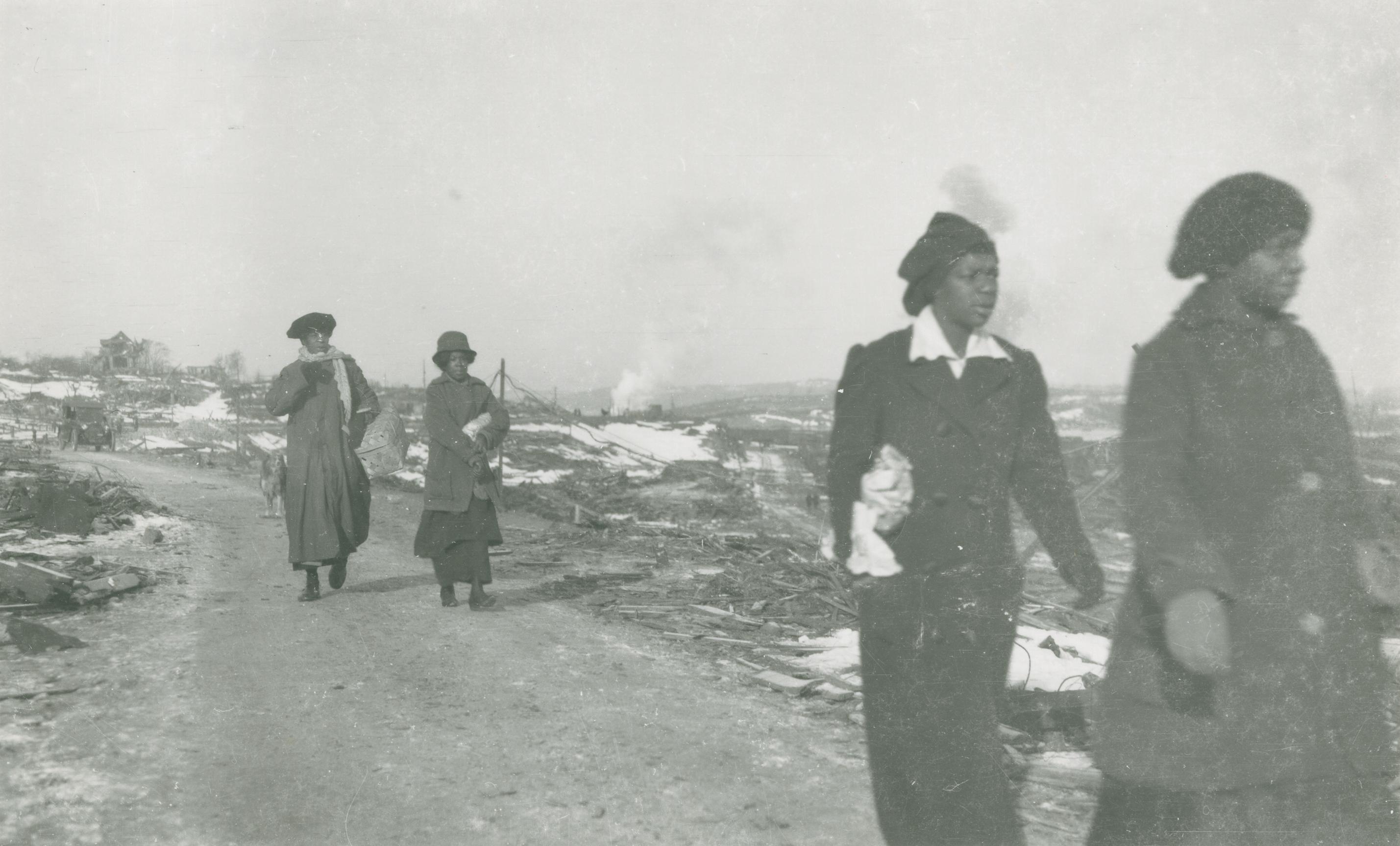
-
Article
Peter Easton
Peter Easton, privateer, pirate (born c. 1570 in England; died c. 1620). Easton visited Newfoundland in 1602, a year before becoming a pirate. He returned to Newfoundland in 1612 and built a fort at Harbour Grace. Easton plundered Basque, Spanish, English, French and Portuguese ships on the Newfoundland coast, in Puerto Rico and at the Azores islands. When pardoned by the English King James I, Easton purchased a castle in Savoy where he lived a life of leisure.
"https://d3d0lqu00lnqvz.cloudfront.net/PeterEaston/CROPTrinityPeterEaston_dreamstime_resize_120577719.jpg" // resources/views/front/categories/view.blade.php
https://d3d0lqu00lnqvz.cloudfront.net/PeterEaston/CROPTrinityPeterEaston_dreamstime_resize_120577719.jpg
-
Article
Peter Fidler
Peter Fidler, fur trader, mapmaker, explorer (b at Bolsover, Eng 16 Aug 1769; d at Fort Dauphin [Man] 17 Dec 1822).
"https://thecanadianencyclopedia.ca/images/tce_placeholder.jpg?v=e9dca980c9bdb3aa11e832e7ea94f5d9" // resources/views/front/categories/view.blade.php
https://thecanadianencyclopedia.ca/images/tce_placeholder.jpg?v=e9dca980c9bdb3aa11e832e7ea94f5d9
-
Article
Peter Matthews
Peter Matthews, farmer, rebel (b in Marysburgh or Sidney Twp, Qué [later UC] 1789 or 1790; d at Toronto 12 Apr 1838). The son of Loyalists, Matthews was a prosperous farmer and leading figure in Pickering Township.
"https://thecanadianencyclopedia.ca/images/tce_placeholder.jpg?v=e9dca980c9bdb3aa11e832e7ea94f5d9" // resources/views/front/categories/view.blade.php
https://thecanadianencyclopedia.ca/images/tce_placeholder.jpg?v=e9dca980c9bdb3aa11e832e7ea94f5d9
-
Article
Peter Pond
Peter Pond, fur trader (born 18 January 1739 or 1740 in Milford, Connecticut; died there in 1807).
"https://d3d0lqu00lnqvz.cloudfront.net/media/media/PeterPondFurTradeMap.jpg" // resources/views/front/categories/view.blade.php
https://d3d0lqu00lnqvz.cloudfront.net/media/media/PeterPondFurTradeMap.jpg
-
Article
Peter Tomkins
Peter Tomkins Jr., Métis leader, political organizer, blacksmith (born 1 January 1899 in Poundmaker Reserve, SK; died June 1970 in High Prairie, AB). In the 1930s, he worked with Jim Brady and Malcolm Norris to build the Métis Association of Alberta (founded 1932, now the Métis Nation of Alberta) and the Indian Association of Alberta (1939). From health care to his work with the Métis settlements, Tomkins promoted improved living conditions for the Métis of Alberta and Saskatchewan. His diplomacy, lobbying and negotiating skills helped get the first Métis-specific legislation passed in Canada in 1938.
"https://thecanadianencyclopedia.ca/images/tce_placeholder.jpg?v=e9dca980c9bdb3aa11e832e7ea94f5d9" // resources/views/front/categories/view.blade.php
https://thecanadianencyclopedia.ca/images/tce_placeholder.jpg?v=e9dca980c9bdb3aa11e832e7ea94f5d9
-
Article
Peter Warren Dease
Peter Warren Dease, fur trader, arctic explorer (b at Mackinac I, Mich 1 Jan 1788; d at Montréal 17 Jan 1863). From age 13 he was engaged in the FUR TRADE, first with the XY Co, then the NORTH WEST CO and finally the HUDSON'S BAY CO.
"https://thecanadianencyclopedia.ca/images/tce_placeholder.jpg?v=e9dca980c9bdb3aa11e832e7ea94f5d9" // resources/views/front/categories/view.blade.php
https://thecanadianencyclopedia.ca/images/tce_placeholder.jpg?v=e9dca980c9bdb3aa11e832e7ea94f5d9
-
Article
Population Settlement of New France
Throughout the history of New France, soldiers and hired labourers (“engagés”) who crossed the Atlantic were the primary settlers in Canada. Those young servicemen and artisans, as well as the immigrant women who wished to get married, mainly hailed from the coastal and urban regions of France. Most of the colonists arrived before 1670 during the migratory flow which varied in times of war and prosperity. Afterwards, the population grew through Canadian births. On average, Canadian families had seven or eight children in the 17th century, and four to six children in the 18th century. As a result, the population of New France was 70,000 strong by the end of the French regime.
"https://d3d0lqu00lnqvz.cloudfront.net/media/media/d698c031-e790-4c17-906a-5b880e71e24d.jpg" // resources/views/front/categories/view.blade.php
https://d3d0lqu00lnqvz.cloudfront.net/media/media/d698c031-e790-4c17-906a-5b880e71e24d.jpg
-
Article
Philemon Wright
Philemon Wright, colonizer, farmer, businessman (born 3 September 1760 in Woburn, Massachusetts; died 3 June 1839 in Hull, QC).
"https://d3d0lqu00lnqvz.cloudfront.net/media/media/02aa03b0-397d-4b7b-8f7e-d40dda8f660d.jpg" // resources/views/front/categories/view.blade.php
https://d3d0lqu00lnqvz.cloudfront.net/media/media/02aa03b0-397d-4b7b-8f7e-d40dda8f660d.jpg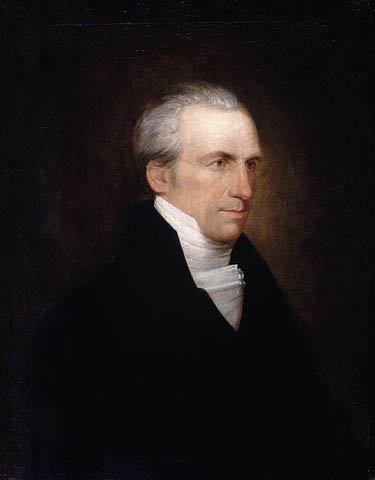
-
Article
Philip Turnor
Philip Turnor, surveyor, fur trader (b in Eng c 1751; d at London, Eng 1799 or 1800).
"https://thecanadianencyclopedia.ca/images/tce_placeholder.jpg?v=e9dca980c9bdb3aa11e832e7ea94f5d9" // resources/views/front/categories/view.blade.php
https://thecanadianencyclopedia.ca/images/tce_placeholder.jpg?v=e9dca980c9bdb3aa11e832e7ea94f5d9
-
Article
Philippe de Rigaud de Vaudreuil, Marquis de Vaudreuil
Philippe de Rigaud de Vaudreuil, Marquis de Vaudreuil, governor general of New France 1703-25 (b probably near Revel, France c 1643; d at Québec C 10 Oct 1725). Vaudreuil served in the French army with the Mousquetaires from 1672 and distinguished himself in campaigns in Flanders.
"https://thecanadianencyclopedia.ca/images/tce_placeholder.jpg?v=e9dca980c9bdb3aa11e832e7ea94f5d9" // resources/views/front/categories/view.blade.php
https://thecanadianencyclopedia.ca/images/tce_placeholder.jpg?v=e9dca980c9bdb3aa11e832e7ea94f5d9
-
Article
Phineas Riall
Riall arrived in UPPER CANADA in August 1813 and was placed in command of the Right Division, a geographic entity in the NIAGARA PENINSULA.
"https://d3d0lqu00lnqvz.cloudfront.net/media/media/f9b156d0-574f-4ba2-94ae-1c4e1895a1fb.jpg" // resources/views/front/categories/view.blade.php
https://d3d0lqu00lnqvz.cloudfront.net/media/media/f9b156d0-574f-4ba2-94ae-1c4e1895a1fb.jpg