
Browse "History/Historical Figures"
-
Memory Project Archive
Jim Kingsley (Primary Source)
Jim Kingsley originally enlisted with the Royal Canadian Corps of Signals, however, decided to transfer to 1st Canadian Parachute Battalion. He went into action in Belgium during the Battle of the Bulge where he and his sergeant captured a German soldier. He then went to the Netherlands, and was responsible for guarding the bridge in the town to Nunhem. He was badly injured in a training jump and thus did not participate in the battalion’s jump over the Rhine River.Please be advised that Memory Project primary sources may deal with personal testimony that reflect the speaker’s recollections and interpretations of events. Individual testimony does not necessarily reflect the views of the Memory Project and Historica Canada.
"https://thecanadianencyclopedia.ca/images/tce_placeholder.jpg?v=e9dca980c9bdb3aa11e832e7ea94f5d9" // resources/views/front/categories/view.blade.php
https://thecanadianencyclopedia.ca/images/tce_placeholder.jpg?v=e9dca980c9bdb3aa11e832e7ea94f5d9
-
Memory Project Archive
Lionel Bourboing (Primary Source)
Please be advised that Memory Project primary sources may deal with personal testimony that reflect the speaker’s recollections and interpretations of events. Individual testimony does not necessarily reflect the views of the Memory Project and Historica Canada.
"https://d3d0lqu00lnqvz.cloudfront.net/MemoryProject/LionelBourboing/9673_original.jpg" // resources/views/front/categories/view.blade.php
https://d3d0lqu00lnqvz.cloudfront.net/MemoryProject/LionelBourboing/9673_original.jpg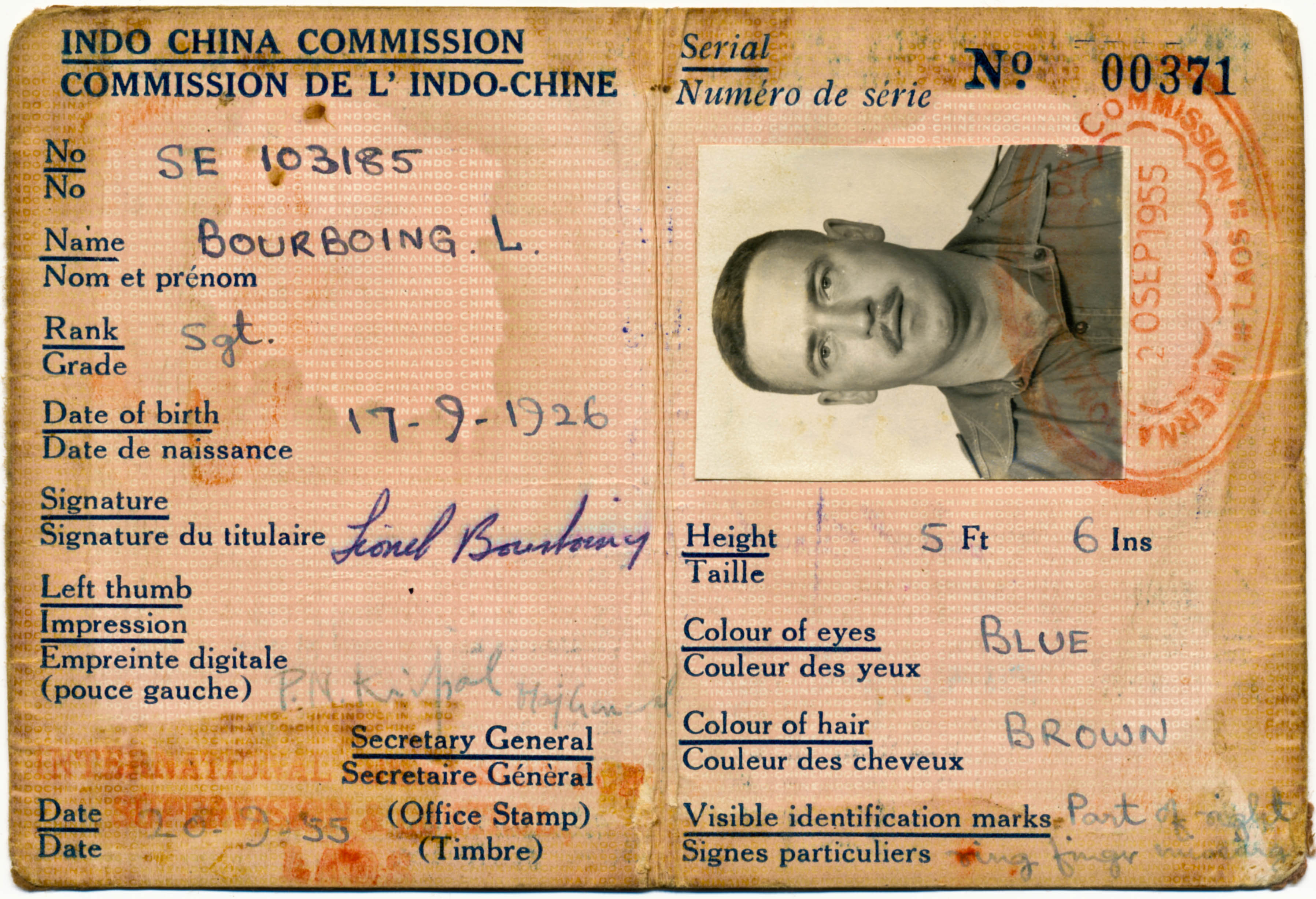
-
Article
Muriel Kitagawa
Tsukiye Muriel Kitagawa (née Fujiwara), writer, political activist, (born 3 April 1912 in Vancouver, BC; died 27 March 1974 in Toronto, ON). In the 1930s and 1940s, Kitagawa was variously an editor or regular contributor to The New Age, The New Canadian, and Nisei Affairs, publications founded with her fellow second-generation Japanese Canadians to advocate for the political rights of Canadians of Japanese ancestry. She is most well known for her 1941-42 letters to her brother, Mitsumori Wesley “Wes” Fujiwara, which contained her firsthand accounts of the Japanese Canadian community in Vancouver in the months following Japan’s attack on Pearl Harbor (December 1941) and as the Canadian government gradually implemented orders for the community’s forced removal from the coast (see War Measures Act; Internment of Japanese Canadians). Her letters were published posthumously in 1985 as This is My Own: Letters to Wes & Other Writings on Japanese Canadians, 1941-1948. Kitagawa’s writings were an important source for the Japanese Canadian Redress movement.
"https://d3d0lqu00lnqvz.cloudfront.net/murielkitagawa/murielkitagawanikkeimuseum.jpg" // resources/views/front/categories/view.blade.php
https://d3d0lqu00lnqvz.cloudfront.net/murielkitagawa/murielkitagawanikkeimuseum.jpg
-
Article
Nebenaigoching
Nebenaigoching (also spelled Nebenaigooching, Unbenegooching, or Nabunagoging), or Joseph Sayers, Anishinaabeg Ogima or leader (born c. 1808 at Leech Island, Lake Superior, Upper Canada [ON]; died 1899 at Garden River First Nation, ON). Son of Ogima Waubejechauk (Wabechechacke) and Julia Sayer, Nebenaigoching was a hereditary Crane Clan chief, defender of Anishinaabeg (see Ojibwe) rights, and signatory to the 1850 Robinson-Huron Treaty (see Treaties with Indigenous Peoples in Canada).
"https://d3d0lqu00lnqvz.cloudfront.net/media/new_article_images/Nebenaigoching/Chippewa_Indian_Chiefs_At_Montreal_1849_image.jpg" // resources/views/front/categories/view.blade.php
https://d3d0lqu00lnqvz.cloudfront.net/media/new_article_images/Nebenaigoching/Chippewa_Indian_Chiefs_At_Montreal_1849_image.jpg
-
Article
Nicolas Denys
Nicolas Denys, trader, colonial promoter (b at Tours, France 1598; d 1688). A young La Rochelle merchant, Denys sailed for Acadia in 1632 with Isaac de RAZILLY, and spent the next 40 years trying to develop the colony.
"https://thecanadianencyclopedia.ca/images/tce_placeholder.jpg?v=e9dca980c9bdb3aa11e832e7ea94f5d9" // resources/views/front/categories/view.blade.php
https://thecanadianencyclopedia.ca/images/tce_placeholder.jpg?v=e9dca980c9bdb3aa11e832e7ea94f5d9
-
Article
Norman Ryan
Norman Ryan, "Red," bandit (b at Toronto July 1895, d at Sarnia, Ont 25 May 1936). Nicknamed "Canada's Jesse James," Ryan committed numerous robberies in Ontario, Québec and the US, deserted the Canadian Army in WWI, and once made a spectacular escape from Kingston Penitentiary.
"https://thecanadianencyclopedia.ca/images/tce_placeholder.jpg?v=e9dca980c9bdb3aa11e832e7ea94f5d9" // resources/views/front/categories/view.blade.php
https://thecanadianencyclopedia.ca/images/tce_placeholder.jpg?v=e9dca980c9bdb3aa11e832e7ea94f5d9
-
Article
Nursing Sisters and the Costs of War on Women
We celebrate the heroism and mourn the sacrifices of our military through two world wars, and assorted other foreign conflicts and peacekeeping missions. Yet less attention has been paid to the related efforts of women — in particular, the nurses who have built their own proud tradition of service and sacrifice.
"https://d3d0lqu00lnqvz.cloudfront.net/media/media/6c14215f-fcdf-40f6-8934-c77072c307ec.jpg" // resources/views/front/categories/view.blade.php
https://d3d0lqu00lnqvz.cloudfront.net/media/media/6c14215f-fcdf-40f6-8934-c77072c307ec.jpg
-
Article
Oliver Hazard Perry
Oliver Hazard Perry, American naval officer, known as the hero of Lake Erie (b at South Kingston, Rhode Island, 23 Aug 1785; d at sea near Trinidad and Tabago, 23 Aug 1819).
"https://d3d0lqu00lnqvz.cloudfront.net/media/media/3560172b-cdd9-4501-9ff1-bf1f12b05bd2.jpg" // resources/views/front/categories/view.blade.php
https://d3d0lqu00lnqvz.cloudfront.net/media/media/3560172b-cdd9-4501-9ff1-bf1f12b05bd2.jpg
-
Article
Olivier Le Jeune
We may never know the exact number of British ships that carried enslaved people from the continent of Africa to the New World (see Black Enslavement in Canada). However, the earliest record of enslaved Black Africans in New France is the sale of a boy from either Madagascar or Guinea. In 1629, the child, believed to have been around six years old, was brought to New France aboard a British ship as the chattel slave of Sir David Kirke, a trader and privateer for England’s King Charles I. The boy was later sold to a French clerk named Olivier Le Baillif, and then transferred to Guillaume Couillard. In 1633, the enslaved boy was baptized and given the name Olivier Le Jeune. Le Jeune remained in the colony of New France for the rest of his life until he died on 10 May 1654.
"https://d3d0lqu00lnqvz.cloudfront.net/media/media/10e1983c-bdbe-4650-9121-50dd7f143f28.jpg" // resources/views/front/categories/view.blade.php
https://d3d0lqu00lnqvz.cloudfront.net/media/media/10e1983c-bdbe-4650-9121-50dd7f143f28.jpg
-
Article
Ounanguissé
Ounanguissé (“Shimmering Light of the Sun,” also spelled Onangizes, Onanguisset and Onanguicé) was wkama (leader) of the Potawatomi ca. 1660s–1701. He was an important figure in the alliance between the French and Indigenous people of the Great Lakes region during the late 17th and early 18th centuries. He is most well known for a speech he gave regarding this alliance during a meeting he had with the governor general of New France, Louis de Buade de Frontenac in 1697. He also made an important contribution to the establishment of the Great Peace of Montreal in 1701.
"https://thecanadianencyclopedia.ca/images/tce_placeholder.jpg?v=e9dca980c9bdb3aa11e832e7ea94f5d9" // resources/views/front/categories/view.blade.php
https://thecanadianencyclopedia.ca/images/tce_placeholder.jpg?v=e9dca980c9bdb3aa11e832e7ea94f5d9
-
Article
Overlanders of 1862
The Overlanders of 1862 were a group of some 150 settlers who travelled from Fort Garry (now Winnipeg, Manitoba) to the interior of British Columbia, following the Cariboo Gold Rush. They were led by Thomas McMicking of Stamford Township, Welland County, Canada West [Ontario].
"https://d3d0lqu00lnqvz.cloudfront.net/media/new_article_images/CatherineSchubert/Tales_Campfire_Hind.jpg" // resources/views/front/categories/view.blade.php
https://d3d0lqu00lnqvz.cloudfront.net/media/new_article_images/CatherineSchubert/Tales_Campfire_Hind.jpg
-
Article
Culture of Early Indigenous Peoples in Canada
The arrival of early Indigenous peoples in Canada has varying explanations both outside of and within the field of archaeology (see History of Early Indigenous Peoples in Canada). Many Indigenous Oral Traditions state that Indigenous peoples have been on the land that is now known as North America since time immemorial. There is a debate within the field of archaeology on the first arrival of early Indigenous peoples, with dates ranging from as recently as 12,000 years ago to as long ago as 130,000 years ago.
"https://d3d0lqu00lnqvz.cloudfront.net/media/media/f28e80bc-14da-4c69-b71c-6e16f91ed72d.jpg" // resources/views/front/categories/view.blade.php
https://d3d0lqu00lnqvz.cloudfront.net/media/media/f28e80bc-14da-4c69-b71c-6e16f91ed72d.jpg
-
Article
Patriation of the Constitution
In 1982, Canada “patriated” its Constitution. It transferred the country’s highest law, the British North America Act (which was renamed the Constitution Act, 1867), from the authority of the British Parliament to Canada’s federal and provincial legislatures. The Constitution was also updated with a new amending formula and a Charter of Rights and Freedoms. These changes occurred after a fierce, 18-month political and legal struggle that dominated headlines and the agendas of every government in the country.
"https://thecanadianencyclopedia.ca/images/tce_placeholder.jpg?v=e9dca980c9bdb3aa11e832e7ea94f5d9" // resources/views/front/categories/view.blade.php
https://thecanadianencyclopedia.ca/images/tce_placeholder.jpg?v=e9dca980c9bdb3aa11e832e7ea94f5d9
-
Article
Patrick James Whelan
Patrick James Whelan, convicted murderer, tailor (born c. 1840 near Dublin, Ireland; died 11 February 1869 in Ottawa, ON). Whelan was arrested for the April 1868 assassination of Member of Parliament and Father of Confederation Thomas D’Arcy McGee. He was convicted in September 1868 and sentenced to death. The authorities suspected that Whelan carried out a Fenian conspiracy to murder McGee and promptly arrested him within 24 hours of the murder; however, it was never fully proved that Whelan was acting as a Fenian sympathizer. Whelan maintained his innocence throughout his trial and until he was hanged publicly in Ottawa in early 1869. There is room for reasonable doubt as to whether Whelan did in fact murder McGee or was simply part of a group of people who did. McGee was the only federal politician to be assassinated, and Whelan one of the last people to be hanged publicly in Canada.
"https://d3d0lqu00lnqvz.cloudfront.net/media/media/a5d0c40e-d494-415c-b5da-bfbd93c55c5c.jpg" // resources/views/front/categories/view.blade.php
https://d3d0lqu00lnqvz.cloudfront.net/media/media/a5d0c40e-d494-415c-b5da-bfbd93c55c5c.jpg
-
Article
Patriotes
The Patriotes was the name given after 1826 to the Parti canadien and to the popular movement that contributed to the Rebellions of 1837-38 in Lower Canada.
"https://d3d0lqu00lnqvz.cloudfront.net/media/media/24c5665d-60e0-424c-86f4-96cf5b7d75c1.jpg" // resources/views/front/categories/view.blade.php
https://d3d0lqu00lnqvz.cloudfront.net/media/media/24c5665d-60e0-424c-86f4-96cf5b7d75c1.jpg