Browse "Communities & Sociology"
-
Article
Canada and the Holocaust
The Holocaust is defined as the systematic persecution and murder of 6 million Jews and 5 million non-Jews, including Roma and Sinti, Poles, political opponents, LGBTQ people and Soviet prisoners of war (POWs), by Nazi Germany from 1933 to 1945. Jews were the only group targeted for complete destruction. Nazi racial ideology considered them subhuman. Though Jewish Canadians did not experience the Holocaust directly, the majority endured anti-Semitism in Canada. Jewish Canadians were only one generation removed from lands under German occupation from 1933 to 1945. They maintained close ties to Jewish relatives in those lands. These ties affected the community’s response to the Holocaust. There was, for instance, a disproportionate representation of Jews in the Canadian armed forces. Jewish Canadians were also heavily involved in postwar relief efforts for displaced persons and Holocaust survivors in Europe.
"https://d3d0lqu00lnqvz.cloudfront.net/media/media/57bd8748-3caa-48d0-8d34-2eb38b8b0f92.jpg" // resources/views/front/categories/view.blade.php
https://d3d0lqu00lnqvz.cloudfront.net/media/media/57bd8748-3caa-48d0-8d34-2eb38b8b0f92.jpg
-
Article
Homosexuality
Homosexuality can be characterized as sexual attraction or "sexual orientation" towards others of one's own sex. Homosexuals may be male ("gay") or female ("lesbian"). Like heterosexual behaviour, homosexual behaviour ranges from anonymous sex, promiscuity and prostitution to romantic affairs and lifelong faithful relationships.
"https://d3d0lqu00lnqvz.cloudfront.net/media/media/6483ddf2-6bee-4d0b-a2b1-142ae795176c.jpg" // resources/views/front/categories/view.blade.php
https://d3d0lqu00lnqvz.cloudfront.net/media/media/6483ddf2-6bee-4d0b-a2b1-142ae795176c.jpg
-
Article
Horace Llewellyn Seymour
Horace Llewellyn Seymour, urban planner (b at Burford, Ont 1882; d at Ottawa 21 Apr 1940). One of the founders of modern Canadian URBAN AND REGIONAL PLANNING, Seymour was a leading exponent of the scientific approach to planning and of zoning as the best means of achieving efficient cities.
"https://thecanadianencyclopedia.ca/images/tce_placeholder.jpg?v=e9dca980c9bdb3aa11e832e7ea94f5d9" // resources/views/front/categories/view.blade.php
https://thecanadianencyclopedia.ca/images/tce_placeholder.jpg?v=e9dca980c9bdb3aa11e832e7ea94f5d9
-
Article
Howard Engel
Howard Engel, novelist, cartoonist (under the pen name “Foo”), story writer, poet (born 2 April 1931 in Toronto, ON; died 16 July 2019 in Toronto). Howard Engel was raised in St. Catharines, Ontario, and educated at McMaster University and the Ontario College of Education. During his career as a producer of literary and cultural programs at the CBC, Engel published a few stories and poems, but he did not begin to write seriously until he became interested in detective fiction.
"https://thecanadianencyclopedia.ca/images/tce_placeholder.jpg?v=e9dca980c9bdb3aa11e832e7ea94f5d9" // resources/views/front/categories/view.blade.php
https://thecanadianencyclopedia.ca/images/tce_placeholder.jpg?v=e9dca980c9bdb3aa11e832e7ea94f5d9
-
Article
Hugh Burnett
Hugh Burnett, civil rights activist, carpenter (born 14 July 1918 in Dresden, ON; died 29 September 1991 in London, ON). Burnett was a key figure in the fight for anti-discrimination legislation in Ontario. Through the 1940s and early 1950s, he organized tirelessly against racial discrimination in public service in his hometown of Dresden, Ontario, rising to prominence as a leader and organizer of the National Unity Association (NUA), a coalition of Black community members pushing for equal rights in Dresden and the surrounding area. He was instrumental to in bringing about legislative and legal victories for civil rights at the provincial level related to the 1954 Fair Accommodation Practices Act, an early anti-discrimination law in Ontario.
"https://d3d0lqu00lnqvz.cloudfront.net/media/media/32bb14c4-dbb3-42cc-9e51-84520bb7fe69.jpg" // resources/views/front/categories/view.blade.php
https://d3d0lqu00lnqvz.cloudfront.net/media/media/32bb14c4-dbb3-42cc-9e51-84520bb7fe69.jpg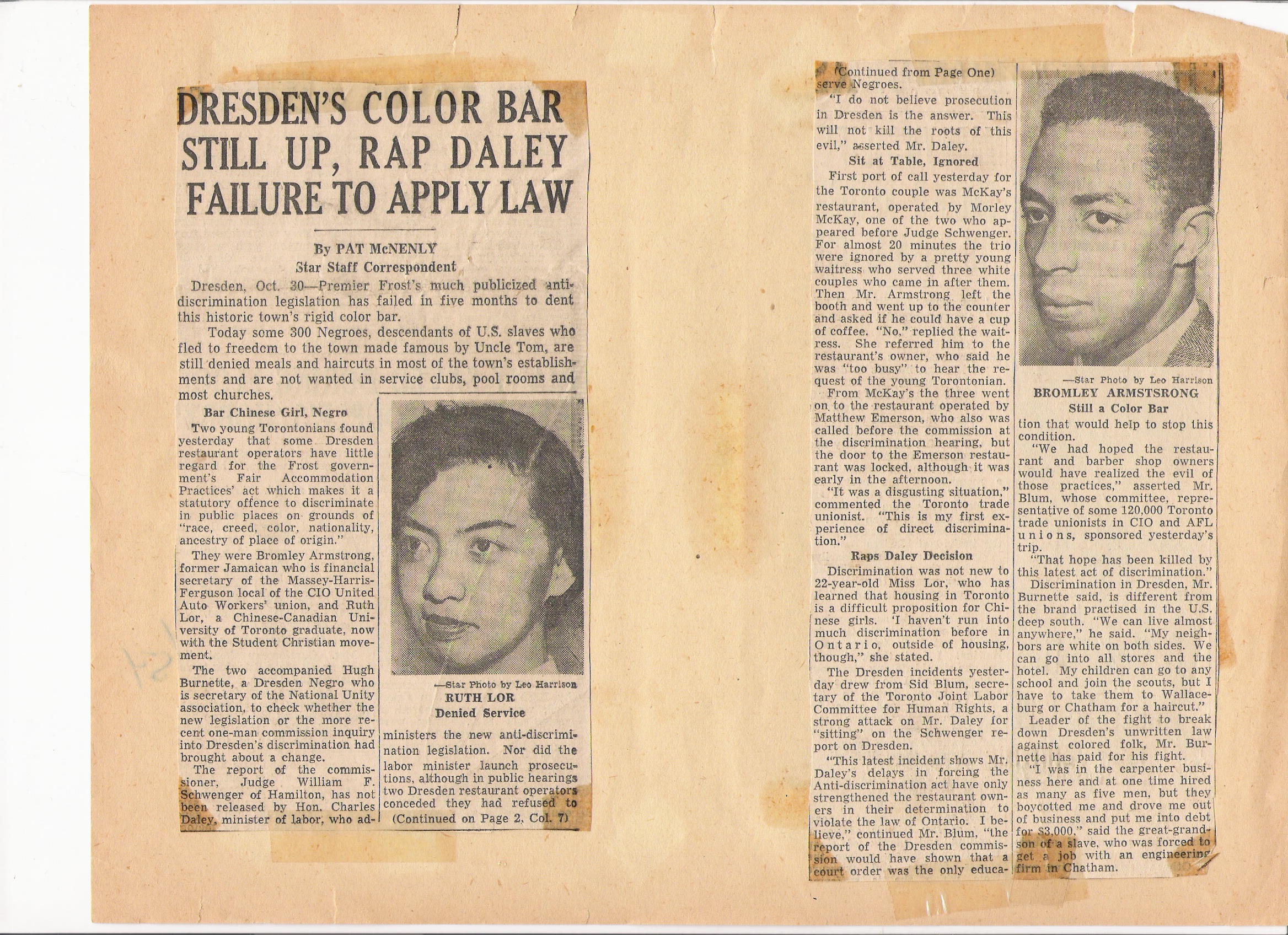
-
Article
Huguenots
Huguenots, a popular term used since 1560 to designate French Protestants, some of whom became involved in the Newfoundland fishery and Canadian fur trade, and in abortive colonization attempts in Canada (1541-42), Brazil (1555) and the Carolinas (1562-64).
"https://thecanadianencyclopedia.ca/images/tce_placeholder.jpg?v=e9dca980c9bdb3aa11e832e7ea94f5d9" // resources/views/front/categories/view.blade.php
https://thecanadianencyclopedia.ca/images/tce_placeholder.jpg?v=e9dca980c9bdb3aa11e832e7ea94f5d9
-
Article
Francophone Comedians
French-language comedy has evolved considerably following the success of burlesques and cabarets during the first half of the 20th century.
"https://d3d0lqu00lnqvz.cloudfront.net/media/media/4d00156e-4b02-4425-b9c4-4f1dd7e649a5.jpg" // resources/views/front/categories/view.blade.php
https://d3d0lqu00lnqvz.cloudfront.net/media/media/4d00156e-4b02-4425-b9c4-4f1dd7e649a5.jpg
-
Article
Hungarian Canadians
Present day Hungary is a landlocked country in central Europe. It is bordered by Slovakia, Austria, Slovenia, Croatia, Serbia, Romania and Ukraine. Hungarian immigrants to the United States began migrating to Canada in the 1880s. The 2016 census reported 348, 085 Canadians of Hungarian origin (83, 400 single and 264, 685 multiple responses).
"https://d3d0lqu00lnqvz.cloudfront.net/media/media/19010781-237b-4709-8f12-9e17e6d269a4.jpg" // resources/views/front/categories/view.blade.php
https://d3d0lqu00lnqvz.cloudfront.net/media/media/19010781-237b-4709-8f12-9e17e6d269a4.jpg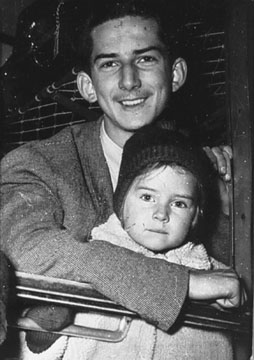
-
Article
Hutterites in Canada
Hutterites are one of three major Christian Anabaptist sectarian groups (the others are the Mennonites and the Amish) surviving today. They are the only group to strongly insist on the communal form of existence. The 2016 census recorded 370 Hutterite colonies in Canada. The total population living in Hutterite colonies was 35,010 people, with the majority located in Alberta (16, 935), Manitoba (11, 275), and Saskatchewan (6250).
"https://d3d0lqu00lnqvz.cloudfront.net/media/media/d75614d3-b77f-42d1-b586-92c91c939838.jpg" // resources/views/front/categories/view.blade.php
https://d3d0lqu00lnqvz.cloudfront.net/media/media/d75614d3-b77f-42d1-b586-92c91c939838.jpg
-
Article
Huu-ay-aht
The Huu-ay-aht First Nation, located along the west coast of Vancouver Island, British Columbia, numbers 730 registered members, as of February 2026. The Huu-ay-aht are a Nuu-chah-nulth nation and are self-governing under the Maa-nulth Treaty.
"https://d3d0lqu00lnqvz.cloudfront.net/media/media/4013e0fd-5d11-404f-9758-747fc9757c55.jpg" // resources/views/front/categories/view.blade.php
https://d3d0lqu00lnqvz.cloudfront.net/media/media/4013e0fd-5d11-404f-9758-747fc9757c55.jpg
-
Article
Icelandic Canadians
Icelanders, coming by way of Greenland, were the first European visitors to what is now Canada. The 2016 Canadian census reported 101,795 people with Icelandic ethnic origins, and 1440 people whose mother tongue was Icelandic.
"https://d3d0lqu00lnqvz.cloudfront.net/media/media/e5306bc4-eda1-4f7a-84ff-f5f82f681784.jpg" // resources/views/front/categories/view.blade.php
https://d3d0lqu00lnqvz.cloudfront.net/media/media/e5306bc4-eda1-4f7a-84ff-f5f82f681784.jpg
-
Article
Idle No More
With roots in the Indigenous community, Idle No More began in November 2012 as a protest against the introduction of Bill C-45 by Stephen Harper’s Conservative government. Formally known as the Jobs and Growth Act, this omnibus legislation affected over 60 acts, including the Indian Act, Navigable Waters Protection Act and Environmental Assessment Act. Idle No More activists argued that the Act’s changes diminished the rights and authority of Indigenous communities while making it easier for governments and businesses to push through projects without strict environmental assessment. The movement quickly gained supporters from across Canada (and abroad), and grew to encompass environmental concerns and Indigenous rights more generally. This article is a full-length entry about Idle No More. For a plain-language summary, please see Idle No More (Plain-Language Summary).
"https://d3d0lqu00lnqvz.cloudfront.net/media/media/00339332-5ac9-4b3b-8578-b7200b7db6fc.jpg" // resources/views/front/categories/view.blade.php
https://d3d0lqu00lnqvz.cloudfront.net/media/media/00339332-5ac9-4b3b-8578-b7200b7db6fc.jpg
-
Article
Idle No More (Plain-Language Summary)
Idle No More is a protest movement that started in November 2012. It started as a protest against Bill C-45. This Bill covered many things. The activists argued that the Bill was bad for Indigenous communities and the environment. The movement quickly gained many supporters. This article is a plain-language summary of Idle No More. If you are interested in reading about this topic more in depth, please see our full-length entry, Idle No More.
"https://d3d0lqu00lnqvz.cloudfront.net/media/media/00339332-5ac9-4b3b-8578-b7200b7db6fc.jpg" // resources/views/front/categories/view.blade.php
https://d3d0lqu00lnqvz.cloudfront.net/media/media/00339332-5ac9-4b3b-8578-b7200b7db6fc.jpg
-
Article
Ignace Bourget
Lartigue recommended Bourget to Rome and on 25 July 1837 Bourget was installed as his coadjutor with right of succession, which took effect at Lartigue's death on 19 April 1840.
"https://thecanadianencyclopedia.ca/images/tce_placeholder.jpg?v=e9dca980c9bdb3aa11e832e7ea94f5d9" // resources/views/front/categories/view.blade.php
https://thecanadianencyclopedia.ca/images/tce_placeholder.jpg?v=e9dca980c9bdb3aa11e832e7ea94f5d9
-
Article
Economic Immigration to Canada
Canada’s current and future prosperity depends on recruiting immigrants. Newcomers fill gaps in the Canadian workforce, build or start businesses and invest in the Canadian economy. Economic immigrants include employees as well as employers. They mostly become permanent residents when they immigrate to Canada. Not included in this class are the many temporary foreign workers who contribute to Canada’s economy. (See also Immigration to Canada.) Economic immigrants bring talent, innovation, family members and financial investments to Canada. They also enrich the country’s culture, heritage and opportunities. Technological progress, productivity and economic growth all benefit from these newcomers. Studies show that they have little to no negative impacts on wages for other workers in the country. According to the 2021 census, 1.3 million immigrants settled in Canada between 2016 and 2021. The census identified 748,120 of the total 1.3 million living in Canada as economic immigrants.
"https://d3d0lqu00lnqvz.cloudfront.net/media/new_article_images/EconomicImmigration/permanent_residence.jpg" // resources/views/front/categories/view.blade.php
https://d3d0lqu00lnqvz.cloudfront.net/media/new_article_images/EconomicImmigration/permanent_residence.jpg