Browse "Communities & Sociology"
-
Article
Harold Cardinal
Harold Cardinal, Cree chief, lawyer, author (born on 27 January 1945 in High Prairie, AB; died on 3 June 2005 in Edmonton, AB). An Indigenous rights activist, Cardinal was a leader in the movement against the 1969 White Paper, which sought to do away with Indian Status and treaty rights. Cardinal was actively involved in Indigenous politics for much of his life and is remembered as a strong and inspirational leader.
"https://d3d0lqu00lnqvz.cloudfront.net/media/media/e9e4a925-a033-404d-9819-a3bb46fe9c8e.jpg" // resources/views/front/categories/view.blade.php
https://d3d0lqu00lnqvz.cloudfront.net/media/media/e9e4a925-a033-404d-9819-a3bb46fe9c8e.jpg
-
Article
Harold Spence-Sales
Harold Spence-Sales, urban planner (born 22 October 1907 in Lahore, India; died 12 March 2004 in Montréal, QC).
"https://thecanadianencyclopedia.ca/images/tce_placeholder.jpg?v=e9dca980c9bdb3aa11e832e7ea94f5d9" // resources/views/front/categories/view.blade.php
https://thecanadianencyclopedia.ca/images/tce_placeholder.jpg?v=e9dca980c9bdb3aa11e832e7ea94f5d9
-
Article
Helen Gregory MacGill
Helen Gregory MacGill, judge, journalist, musician (born 7 January 1864 in Hamilton, Canada West; died 27 February 1947 in Chicago, Illinois). Helen Gregory MacGill was a pioneering journalist, feminist and judge. She was the first woman to graduate from Trinity College (now the University of Toronto), as well as the first woman judge in British Columbia, where she served on the juvenile court for 23 years. Her daughter, Elsie MacGill, became the world’s first female aeronautical engineer and aircraft designer.
"https://d3d0lqu00lnqvz.cloudfront.net/media/media/8997be51-6630-42e3-85ff-0e5272e2eec9.jpg" // resources/views/front/categories/view.blade.php
https://d3d0lqu00lnqvz.cloudfront.net/media/media/8997be51-6630-42e3-85ff-0e5272e2eec9.jpg
-
Article
Helen (Ma) Armstrong
Helen (Ma) Armstrong (née Jury), labour activist, women’s rights activist (born 17 June 1875 in Toronto, Ontario; died 17 April 1947 in Los Angeles, California). Helen Armstrong was a labour activist who fought for the rights of working-class women throughout her life. She was the leader of the Winnipeg Women’s Labor League and a central figure in the 1919 Winnipeg General Strike. She campaigned for unions, a minimum wage and social security, and against conscription. Armstrong was arrested for her activism at least three times, including twice during the Winnipeg General Strike. Historian Esyllt Jones described Helen Armstrong as “the exception in a male-dominated labour movement.”
"https://d3d0lqu00lnqvz.cloudfront.net/media/new_article_images/HelenArmstrong/Helen_Armstrong_SIS_P7199_12-resize.jpg" // resources/views/front/categories/view.blade.php
https://d3d0lqu00lnqvz.cloudfront.net/media/new_article_images/HelenArmstrong/Helen_Armstrong_SIS_P7199_12-resize.jpg
-
Article
Helen Mamayaok Maksagak
Helen Mamayaok Maksagak, CM, politician, public servant, community leader (born 15 April 1931 in Bernard Harbour, NT [NU]; died 23 January 2009 in Cambridge Bay, NU). Maksagak was the first woman and Inuk to serve as the commissioner of the Northwest Territories. A vocal and engaged advocate for Inuit affairs, she contributed to efforts to establish Nunavut as Canada’s third territory in the 1990s. In March of 1999, she was chosen as the first commissioner of the newly created Nunavut territory; her term lasted until March 2000. Maksagak returned to a formal political role in November 2005, when she was appointed deputy commissioner of Nunavut. In addition to her political career, Maksagak performed advocacy work, focusing on Inuit and, more broadly, Indigenous initiatives, such as improving access to social services.
"https://d3d0lqu00lnqvz.cloudfront.net/media/media/4fc58d24-f4e6-464b-92bf-c9647246118f.jpg" // resources/views/front/categories/view.blade.php
https://d3d0lqu00lnqvz.cloudfront.net/media/media/4fc58d24-f4e6-464b-92bf-c9647246118f.jpg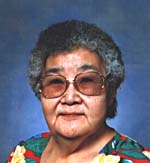
-
Article
Hénoc Muamba
Hénoc Muamba, football player (born 23 February 1989 in Kinshasa, Congo). Defensive lineman Hénoc Muamba was named the best defensive player in Canadian university football in 2010. Selected first overall in the 2011 Canadian Football League (CFL) draft, Muamba has played for the Winnipeg Blue Bombers (2011–13), the Montreal Alouettes (2015, 2018–19), the Saskatchewan Roughriders (2016–17) and the Toronto Argonauts (2021–present). A two-time CFL All-Star and the 2019 Most Outstanding Canadian, Muamba was named both Most Valuable Canadian and Most Valuable Player at the 2022 Grey Cup. He is only the second player in CFL history (after Andrew Harris in 2019) to earn the double honour.
"https://d3d0lqu00lnqvz.cloudfront.net/2022-_10-_Henoc_Muamba_2.jpg" // resources/views/front/categories/view.blade.php
https://d3d0lqu00lnqvz.cloudfront.net/2022-_10-_Henoc_Muamba_2.jpg
-
Article
Henri Garrouteigt
(Jean-Joseph) Henri Garrouteigt. Gregorianist, b Paris 28 or 29 Oct 1875, d Montreal 28 Aug 1965. He joined the Sulpicians in 1893 in Issy and was ordained a priest in 1898 in Paris. He held a degree in philosophy and a doctorate in theology.
"https://thecanadianencyclopedia.ca/images/tce_placeholder.jpg?v=e9dca980c9bdb3aa11e832e7ea94f5d9" // resources/views/front/categories/view.blade.php
https://thecanadianencyclopedia.ca/images/tce_placeholder.jpg?v=e9dca980c9bdb3aa11e832e7ea94f5d9
-
Article
Henrietta Muir Edwards
Henrietta Louise Edwards (née Muir), women’s rights activist, reformer, artist (born 18 December 1849 in Montreal, Canada East; died 9 November 1931 in Fort Macleod, AB). Henrietta Edwards fought from a young age for women’s rights and education, as well as women’s work and health. She helped establish many movements, societies and organizations aimed at improving the lives of women, and was instrumental in passing Alberta’s Dower Act in 1917. She was also one of the Famous Five behind the Persons Case, the successful campaign to have women declared persons in the eyes of British law. However, her views on immigration and eugenics have been criticized as racist and elitist. She was named a Person of National Historic Significance in 1962 and an honorary senator in 2009.
"https://d3d0lqu00lnqvz.cloudfront.net/s003703k.jpg" // resources/views/front/categories/view.blade.php
https://d3d0lqu00lnqvz.cloudfront.net/s003703k.jpg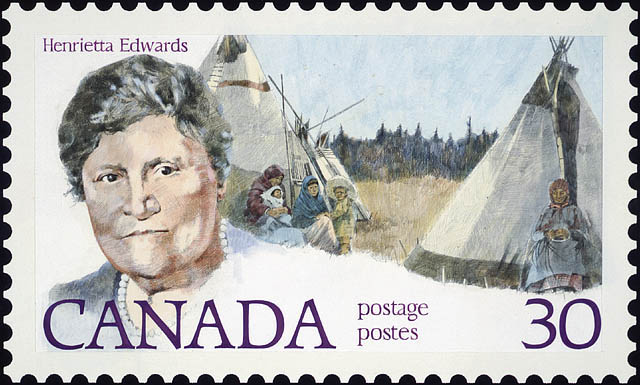
-
Article
Henry Alline
Henry Alline, evangelist, hymnist, theologian (b at Newport, Rhode I 14 June 1748; d at N Hampton, NH 2 Feb 1784). An itinerant evangelical preacher in the Maritimes, Alline wrote hymns, religious tracts and a Life and Journal.
"https://thecanadianencyclopedia.ca/images/tce_placeholder.jpg?v=e9dca980c9bdb3aa11e832e7ea94f5d9" // resources/views/front/categories/view.blade.php
https://thecanadianencyclopedia.ca/images/tce_placeholder.jpg?v=e9dca980c9bdb3aa11e832e7ea94f5d9
-
Article
Henry John Cody
Henry John Cody, clergyman, educator (b at Embro, Ont 6 Dec 1868; d at Toronto 27 Apr 1951). Educated at U of T, he was ordained a Church of England priest in 1894. He served at St Paul's Church, Toronto, for 40 years, the last 25 as rector.
"https://thecanadianencyclopedia.ca/images/tce_placeholder.jpg?v=e9dca980c9bdb3aa11e832e7ea94f5d9" // resources/views/front/categories/view.blade.php
https://thecanadianencyclopedia.ca/images/tce_placeholder.jpg?v=e9dca980c9bdb3aa11e832e7ea94f5d9
-
Article
Henry Morgentaler
Henekh (Henry) Morgentaler, CM, abortion advocate, physician (born 19 March 1923 in Lodz, Poland; died 29 May 2013 in Toronto, ON. Morgentaler spent much of his life advocating for women’s reproductive rights at a time when they could not legally obtain abortions. He established illegal abortion clinics across Canada, challenging the federal and provincial governments to repeal their abortion laws. As a result of his campaign (and the work of organizations such as the Canadian Abortion Rights Action League (CARAL)), the Supreme Court struck down federal abortion law as unconstitutional in 1988, thereby decriminalizing the procedure. Morgentaler was also the first to use the vacuum aspiration method in Canada, a safer procedure for women than previous methods.
"https://d3d0lqu00lnqvz.cloudfront.net/media/media/ffed93ed-6e85-442c-8316-619f423fa8cd.jpg" // resources/views/front/categories/view.blade.php
https://d3d0lqu00lnqvz.cloudfront.net/media/media/ffed93ed-6e85-442c-8316-619f423fa8cd.jpg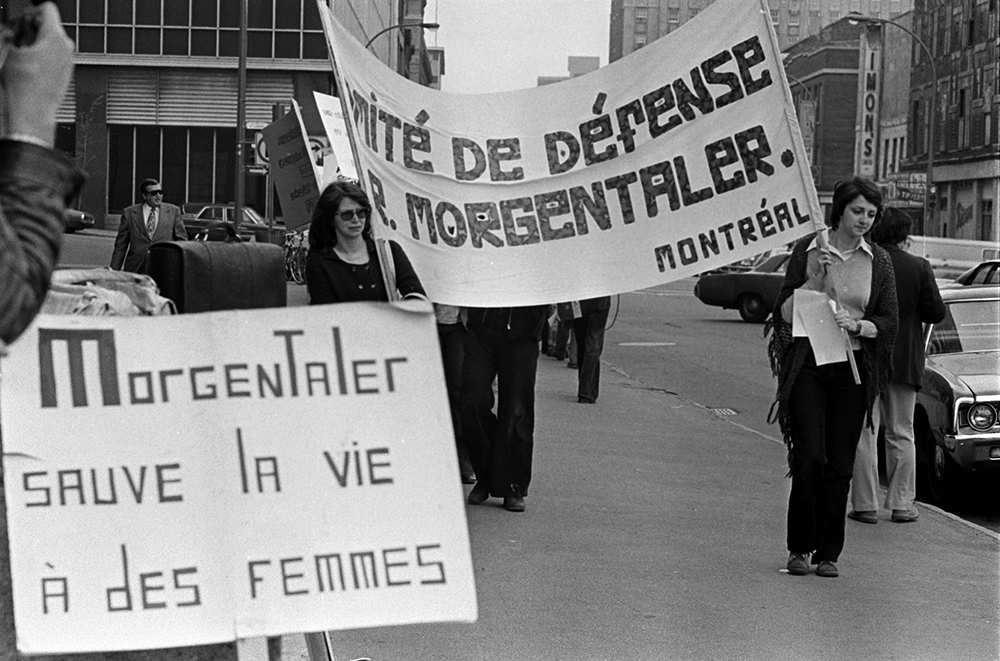
-
Article
Henry Scadding
Henry Scadding, clergyman, scholar (b at Dunkeswell, Eng 29 July 1813; d at Toronto 6 May 1901). Educated at Upper Canada College and St John's College, Cambridge, Scadding became a Church of England clergyman in 1838.
"https://thecanadianencyclopedia.ca/images/tce_placeholder.jpg?v=e9dca980c9bdb3aa11e832e7ea94f5d9" // resources/views/front/categories/view.blade.php
https://thecanadianencyclopedia.ca/images/tce_placeholder.jpg?v=e9dca980c9bdb3aa11e832e7ea94f5d9
-
Article
Hilda Ramacière
Hilda Ramacière (née Hildegard Weiland), community worker and volunteer (born 7 November 1927 in Zizenhausen, Germany; died 6 January 2010 in Montreal, Quebec). Mrs. Ramacière left her mark through her social commitment in the Plateau Mont-Royal neighbourhood. A strong-minded and determined woman, she exemplified the pride of Montreal's immigrant community.
"https://d3d0lqu00lnqvz.cloudfront.net/media/Twitter_Cards/Hilda Rananciere.jpg" // resources/views/front/categories/view.blade.php
https://d3d0lqu00lnqvz.cloudfront.net/media/Twitter_Cards/Hilda Rananciere.jpg
-
Article
Hippies in Canada
“Hippies” is a term used to describe young people who participated in the 1960s counterculture movement, which originated in the United States and spread throughout Canada in the second half of that decade. As a noun, “hippie” was a play on the adjective “hip,” which was used to describe young bohemians who lived in Greenwich Village in New York City, and in San Francisco, in the 1950s and early 1960s. Hippies were part of the “baby boom” generation, born immediately following the end of the Second World War (see Baby Boomers in Canada). This demographic wave was significant enough to transform Canadian society; by the mid-1960s more than half of Canada’s population of 20 million was under the age of 25.
"https://d3d0lqu00lnqvz.cloudfront.net/media/new_article_images/HippiesinCanada/VW_Van_Hippies_British_Columbia.jpg" // resources/views/front/categories/view.blade.php
https://d3d0lqu00lnqvz.cloudfront.net/media/new_article_images/HippiesinCanada/VW_Van_Hippies_British_Columbia.jpg
-
Article
History of Acadia
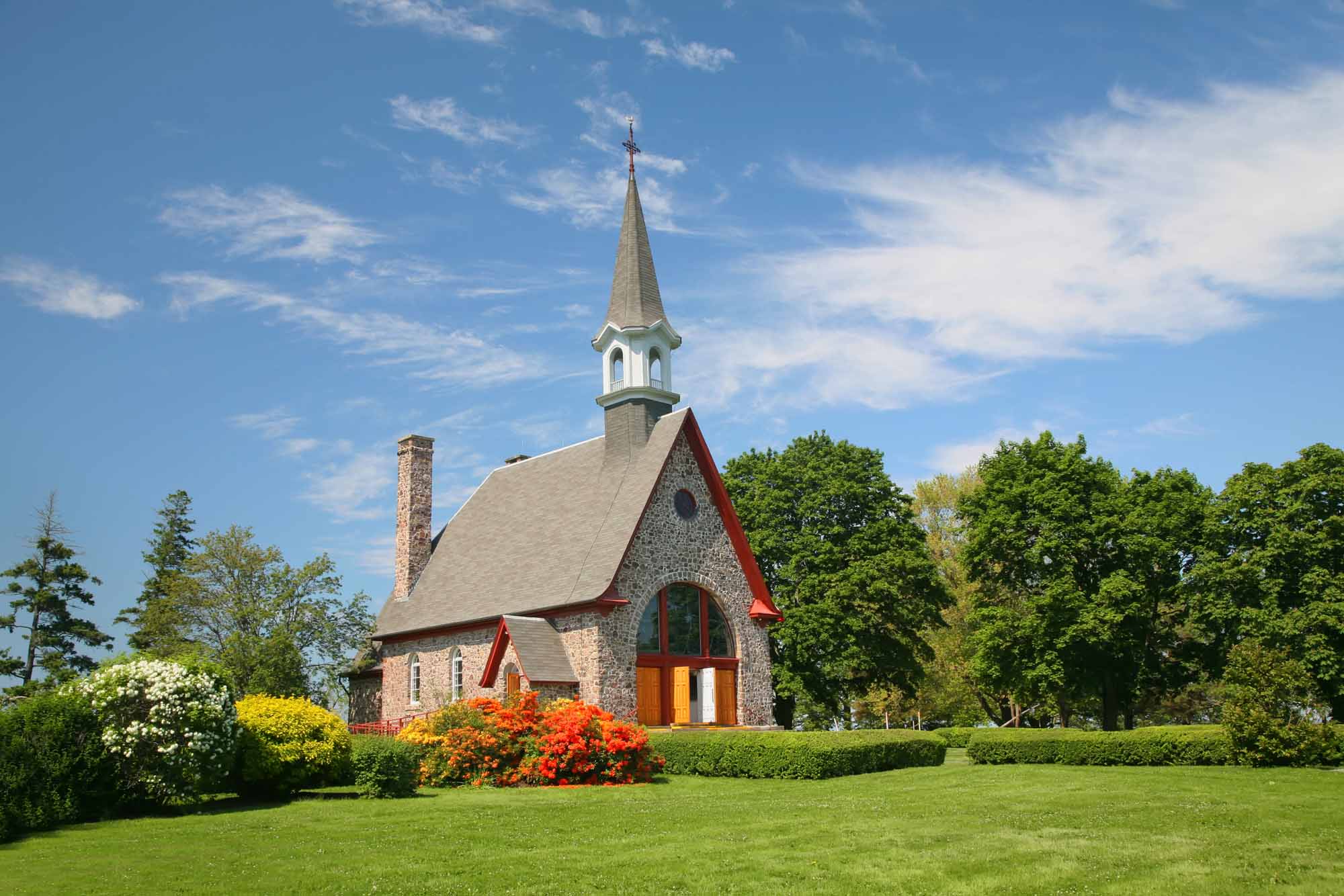
Acadia’s history as a French-speaking colony stretches as far back as the early 17th century. The French settlers who colonized the land and coexisted alongside Indigenous peoples became called Acadians. Acadia was also the target of numerous wars between the French and the English. Ultimately, the colony fell under British rule. Many Acadians were subsequently deported away from Acadia. Over time, as a British colony and then as part of Canada, Acadians increasingly became a linguistic minority. Nonetheless, Acadians have strived to protect their language and identity throughout time.
"https://d3d0lqu00lnqvz.cloudfront.net/media/media/66c056b0-bee3-47a2-9680-5d5a50b5e7eb.jpg" // resources/views/front/categories/view.blade.php
https://d3d0lqu00lnqvz.cloudfront.net/media/media/66c056b0-bee3-47a2-9680-5d5a50b5e7eb.jpg