
Browse "Communities & Sociology"
-
Article
Graham Fraser
Graham Fraser, industrialist, community leader (b at New Glasgow, NS 12 Aug 1846; d there 25 Dec 1915). Following training in the US, Fraser returned to New Glasgow in 1867 to work in J.W. Carmichael's shipyards.
"https://thecanadianencyclopedia.ca/images/tce_placeholder.jpg?v=e9dca980c9bdb3aa11e832e7ea94f5d9" // resources/views/front/categories/view.blade.php
https://thecanadianencyclopedia.ca/images/tce_placeholder.jpg?v=e9dca980c9bdb3aa11e832e7ea94f5d9
-
Article
Graham Spry
A political activist, he published the Farmers' Sun, renamed the New Commonwealth (1932-34); was coauthor of Social Planning for Canada, published by the LEAGUE FOR SOCIAL RECONSTRUCTION (1935); and was chairman of the Ontario Co-operative Commonwealth Federation (1934-36).
"https://d3d0lqu00lnqvz.cloudfront.net/media/media/61032a83-33d0-470d-8334-b2c974df02ed.jpg" // resources/views/front/categories/view.blade.php
https://d3d0lqu00lnqvz.cloudfront.net/media/media/61032a83-33d0-470d-8334-b2c974df02ed.jpg
-
Article
Grand Chantre
Grand Chantre (Precentor). In the 15th century this term was used to refer to a church dignitary in charge of the singing of the choir in cathedrals and collegiate churches. On special holidays he donned the cope and bore the cantor's rod as symbols of his authority.
"https://thecanadianencyclopedia.ca/images/tce_placeholder.jpg?v=e9dca980c9bdb3aa11e832e7ea94f5d9" // resources/views/front/categories/view.blade.php
https://thecanadianencyclopedia.ca/images/tce_placeholder.jpg?v=e9dca980c9bdb3aa11e832e7ea94f5d9
-
Article
Grande Société
Grande Société, contemporary name for war profiteers charged with providing food for Canada and the French troops stationed there during the SEVEN YEARS' WAR.
"https://thecanadianencyclopedia.ca/images/tce_placeholder.jpg?v=e9dca980c9bdb3aa11e832e7ea94f5d9" // resources/views/front/categories/view.blade.php
https://thecanadianencyclopedia.ca/images/tce_placeholder.jpg?v=e9dca980c9bdb3aa11e832e7ea94f5d9
-
Article
Great Coalition of 1864
The politics of the Province of Canada in the early 1860s were marked by instability and deadlock. The Great Coalition of 1864 proved to be a turning point in Canadian history. It proved remarkably successful in breaking the logjam of central Canadian politics and in helping to create a new country. The coalition united Reformers and Conservatives in the cause of constitutional reform. It paved the way for the Charlottetown Conference and Confederation.
"https://d3d0lqu00lnqvz.cloudfront.net/media/media/407f0fe6-9a89-4187-b3af-b6293f8c1155.jpg" // resources/views/front/categories/view.blade.php
https://d3d0lqu00lnqvz.cloudfront.net/media/media/407f0fe6-9a89-4187-b3af-b6293f8c1155.jpg
-
Article
Greenpeace
Greenpeace originated in Vancouver (1971) as a small group opposed to nuclear testing in the Pacific, and has blossomed into one of the largest and best-known environmental organizations in the world
"https://d3d0lqu00lnqvz.cloudfront.net/media/media/64feb677-242f-4d38-ab58-3f395ec78593.jpg" // resources/views/front/categories/view.blade.php
https://d3d0lqu00lnqvz.cloudfront.net/media/media/64feb677-242f-4d38-ab58-3f395ec78593.jpg
-
Article
Gurbax Singh Malhi
Gurbax Singh Malhi, PC, Member of Parliament, realtor (born 12 October 1949 in Punjab, India). Gurbax Singh Malhi is an Indian-born Canadian politician. He is a former Liberal member of Parliament, who was first elected to the House of Commons in 1993 and served until his defeat in 2011. He is notable for being the first turban-wearing Sikh elected to the House of Commons.
"https://d3d0lqu00lnqvz.cloudfront.net/Gurbax-Singh-Malhi_Jean-Chretien_1999_Sikhism.jpg" // resources/views/front/categories/view.blade.php
https://d3d0lqu00lnqvz.cloudfront.net/Gurbax-Singh-Malhi_Jean-Chretien_1999_Sikhism.jpg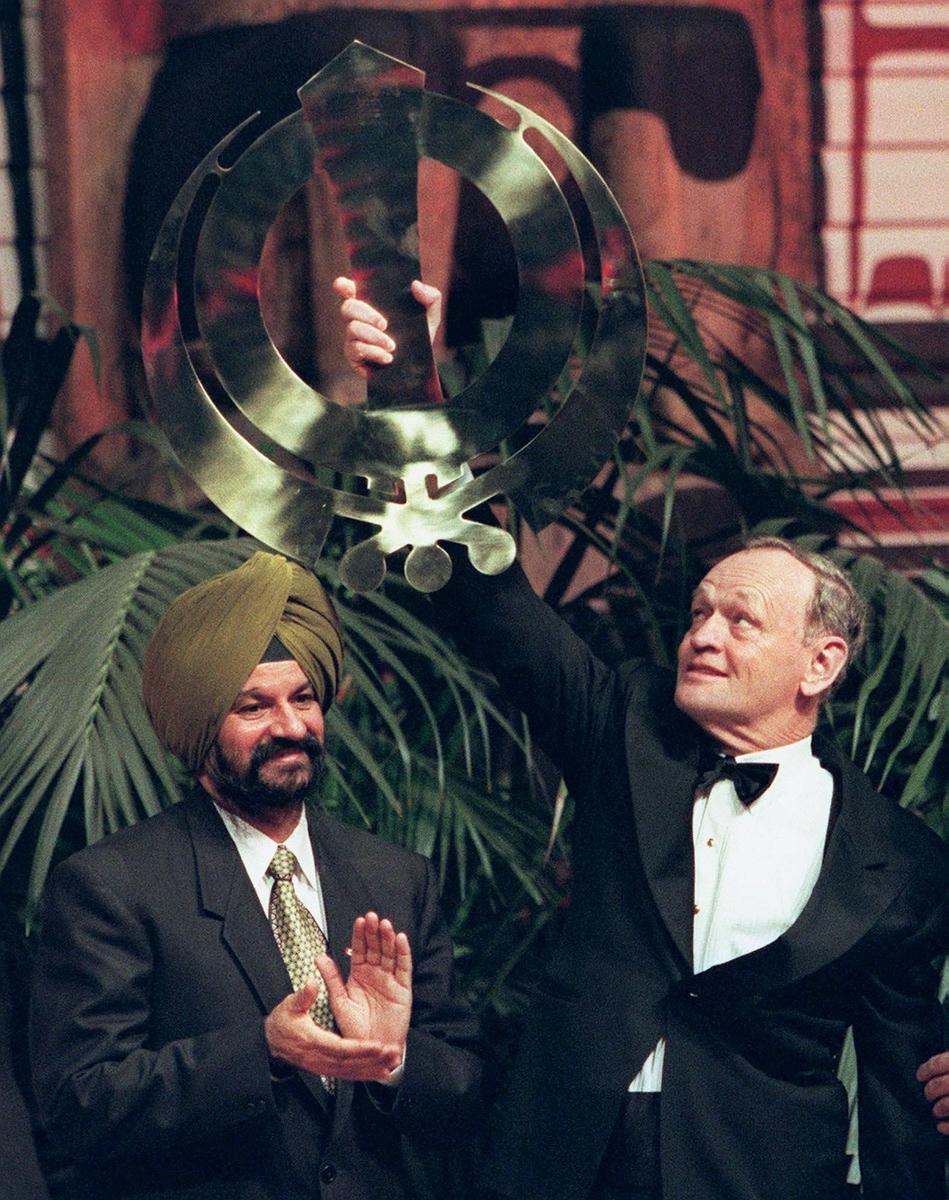
-
Article
Gustafsen Lake Standoff
The Gustafsen Lake Standoff was a month-long conflict (18 August–17 September 1995) between a small group of First Nations Sun Dancers and the Royal Canadian Mounted Police (RCMP). The standoff took place in central British Columbia, in Secwepemc (Shuswap) territory near 100 Mile House. Sparked by a dispute between a local rancher and a camp of Sun Dancers over access to private land for ceremonial purposes, the armed confrontation raised larger questions of Indigenous land rights in British Columbia. On 11 September 1995, in what was later called the largest paramilitary operation in the history of the province, RCMP surrounded the remote camp and a firefight erupted during which, remarkably, no one was seriously injured. The standoff at Gustafsen Lake is perhaps the least known in a series of localized armed conflicts involving Indigenous peoples in the 1990s that included the Oka and Ipperwash crises in Quebec and Ontario, respectively.
"https://d3d0lqu00lnqvz.cloudfront.net/media/media/a91c62c3-627d-4cbc-bc37-75fe1f9ee255.jpg" // resources/views/front/categories/view.blade.php
https://d3d0lqu00lnqvz.cloudfront.net/media/media/a91c62c3-627d-4cbc-bc37-75fe1f9ee255.jpg
-
Article
Gustave Francq
Gustave Francq, typographer, labour leader (b at Brussels, Belgium Mar 1871; d at Montréal 2 Jan 1952). Sometimes considered the father of international unionism in Québec, Francq immigrated to Québec City in 1889 and learned typography.
"https://thecanadianencyclopedia.ca/images/tce_placeholder.jpg?v=e9dca980c9bdb3aa11e832e7ea94f5d9" // resources/views/front/categories/view.blade.php
https://thecanadianencyclopedia.ca/images/tce_placeholder.jpg?v=e9dca980c9bdb3aa11e832e7ea94f5d9
-
Article
Gustave Lamarche
Gustave Lamarche, priest, dramatist (b at Montréal 17 July 1895; d 27 Aug 1987).
"https://thecanadianencyclopedia.ca/images/tce_placeholder.jpg?v=e9dca980c9bdb3aa11e832e7ea94f5d9" // resources/views/front/categories/view.blade.php
https://thecanadianencyclopedia.ca/images/tce_placeholder.jpg?v=e9dca980c9bdb3aa11e832e7ea94f5d9
-
Article
Dinjii Zhuh (Gwich'in)
Dinjii Zhuh (also Gwich’in, formerly Kutchin), meaning “one who dwells (in)” or “the inhabitant of,” are Dene (Athabaskan)-speaking Indigenous peoples who live in northwestern North America. These communities are often referred to collectively as Dinjii Zhuh, although some First Nations and the Gwich’in Tribal Council retain the Gwich’in name. The estimated population of the 15 Dinjii Zhuh communities in the Northwest Territories, Yukon and Alaska is between 6,000 and 9,000 people. In the 2021 census, 3,170 people claimed to be of Gwich’in ancestry.
"https://d3d0lqu00lnqvz.cloudfront.net/media/media/850202e1-ea95-4b88-83fb-b126572b0791.jpg" // resources/views/front/categories/view.blade.php
https://d3d0lqu00lnqvz.cloudfront.net/media/media/850202e1-ea95-4b88-83fb-b126572b0791.jpg
-
Article
Tr'ondëk Hwëch'in (Han)
Han territory traditionally straddled the Yukon-Alaska boundary, extending along the Yukon River from about 20 km south of Dawson northward to about 50 km south of Circle, Alaska.
"https://d3d0lqu00lnqvz.cloudfront.net/media/media/7d2699bc-260f-4b3e-b27a-f0d430e23030.jpg" // resources/views/front/categories/view.blade.php
https://d3d0lqu00lnqvz.cloudfront.net/media/media/7d2699bc-260f-4b3e-b27a-f0d430e23030.jpg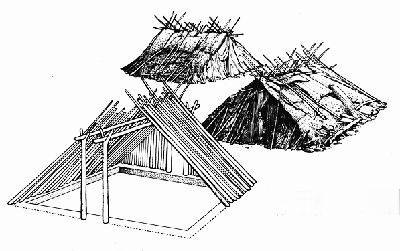
-
Article
Handsome Lake Religion
The Handsome Lake Religion is a religion practised by some Haudenosaunee communities in Canada and the US. Its members are known as "the Longhouse people" because ceremonies are held in a longhouse. Its beliefs and practices are a blend of Indigenous traditions and innovations introduced by the Seneca prophet Handsome Lake who preached from 1799 until his death in 1815.
"https://thecanadianencyclopedia.ca/images/tce_placeholder.jpg?v=e9dca980c9bdb3aa11e832e7ea94f5d9" // resources/views/front/categories/view.blade.php
https://thecanadianencyclopedia.ca/images/tce_placeholder.jpg?v=e9dca980c9bdb3aa11e832e7ea94f5d9
-
Article
Hannah Maria Norris
Hannah Maria Norris, Baptist missionary (b at Canso, NS 30 Nov 1842; d at Toronto 14 Sept 1919). Though baptized a Congregationalist as a child, Norris was raised in a strong Baptist community and eventually received adult baptism in that church.
"https://thecanadianencyclopedia.ca/images/tce_placeholder.jpg?v=e9dca980c9bdb3aa11e832e7ea94f5d9" // resources/views/front/categories/view.blade.php
https://thecanadianencyclopedia.ca/images/tce_placeholder.jpg?v=e9dca980c9bdb3aa11e832e7ea94f5d9
-
Article
K'asho Got'ine (Hare)
K’asho Got’ine are Dene traditionally occupying territory along the lower Mackenzie River valley of the Northwest Territories. Fort Good Hope and Déline (Fort Franklin) are now the major population centres of the K'asho Got'ine.
"https://d3d0lqu00lnqvz.cloudfront.net/media/media/7d34c6c1-db64-4b7f-81cd-4ec1f0e07b84.jpg" // resources/views/front/categories/view.blade.php
https://d3d0lqu00lnqvz.cloudfront.net/media/media/7d34c6c1-db64-4b7f-81cd-4ec1f0e07b84.jpg