


First Nations
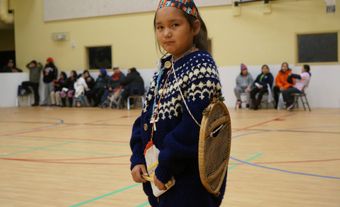
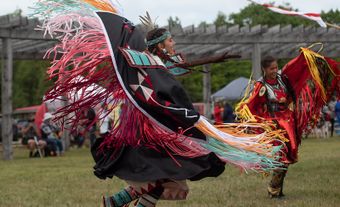
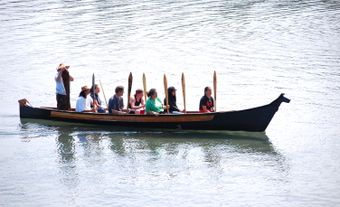
First Nation is one of three groupings of Indigenous people in Canada, the other two being Métis and Inuit . First Nation traditional territories stretch across what is now Canada, and their cultures and languages have existed since time immemorial. The term First Nation can refer to large cultural groups (e.g. Anishinaabe) or smaller communities (e.g. Roseau River Anishinabe First Nation). In the latter context, the term is synonymous with the federal government concept of a band. This collection brings together resources on The Canadian Encyclopedia related to First Nations in Canada, including articles, timelines, education guides, quizzes and videos. For other collections related to Indigenous peoples, see Métis, Inuit and Indigenous Treaties in Canada.

Featured Articles
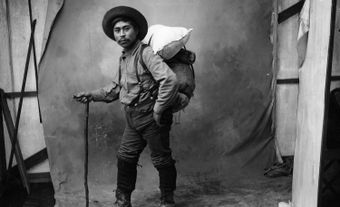

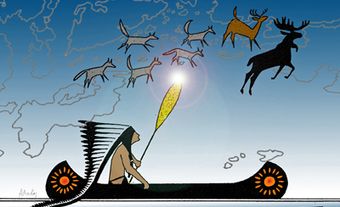
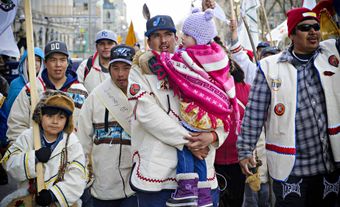
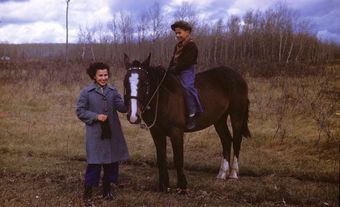
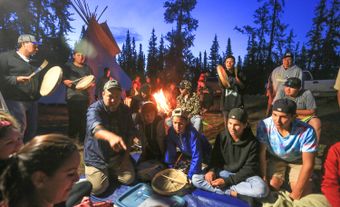
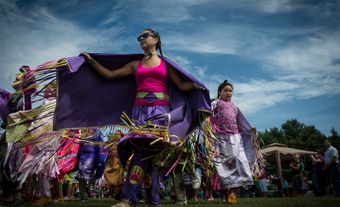
First Nations in Canada
Article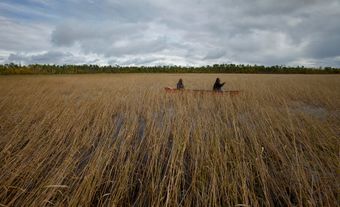
Timelines
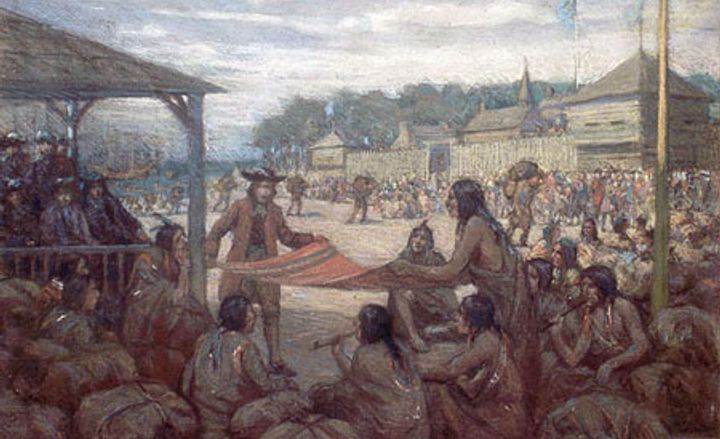
The Fur Trade
For nearly 250 years, from the early 17th to the mid-19th centuries, the fur trade was a vast commercial enterprise across the land we now call Canada.
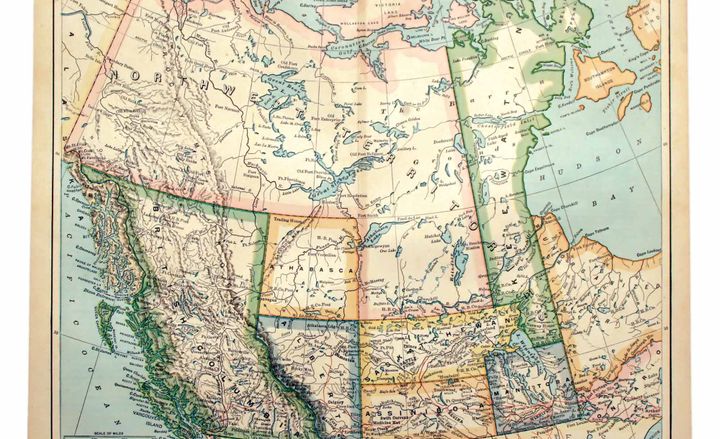
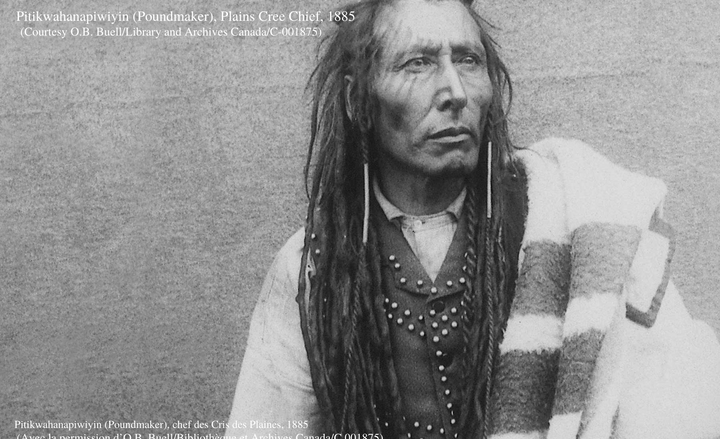
Indigenous Peoples
Indigenous nations tell their own stories about the origins of the world and their place in it; all claim their ancestry dates to time immemorial. At the same time, there is considerable archeological debate about when humans first came to North America, though broad assumptions suggest waves of migration from northeastern Asia, by both land bridge and boat, between 30,000 and 13,500 years ago.
Note: This timeline presents key events and developments in Indigenous history in what is now Canada, from time immemorial to present. While no timeline can be exhaustive in its coverage, it provides a broad chronological overview to support educators and students.
The Indian Act
The Indian Act is the principal law through which the federal government administers Indian status, local First Nations governments and the management of reserve land and communal monies. The Indian Act does not include Métis or Inuit peoples. The Act came into power on 12 April 1876. It consolidated a number of earlier colonial laws that sought to control and assimilate Indigenous peoples into Euro-Canadian culture. The Indian Act has been amended many times over the years to do away with restrictive and oppressive laws. However, the Act has had historic and ongoing impacts on First Nations cultures, economies, politics and communities. It has also caused inter-generational trauma, particularly with regards to residential schools.
Education Guides
Residential Schools in Canada Education Guide
Education Guide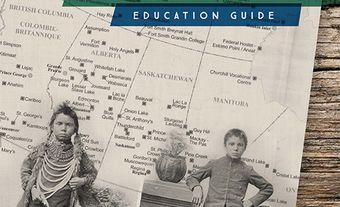
Indigenous Perspectives Education Guide
Education Guide
Canada History Week 2021: Indigenous History Learning Tool
Education Guide
Quizzes
Indigenous Peoples
Quiz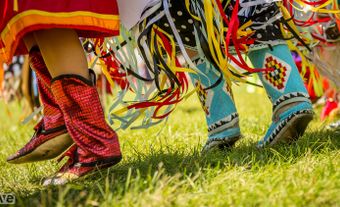
Gallery
","conversion_urls":{"original":"https:\/\/d3d0lqu00lnqvz.cloudfront.net\/media\/media\/f2bb9501-9f70-4f88-a8ba-5752be726ae4.jpg"},"url":"https:\/\/d3d0lqu00lnqvz.cloudfront.net\/media\/media\/f2bb9501-9f70-4f88-a8ba-5752be726ae4.jpg","credit":"(The Canadian Encyclopedia)","pivot":{"mediable_type":"App\\Models\\Collection","mediable_id":"34","media_id":"9415","tag":"gallery","order":1},"translations":[{"id":"e0a72095-7b87-4d4a-bcb5-d2ac12cb4de8","media_id":"9415","title":"Indigenous Cultural Regions in Canada: Plateau","alt":"Indigenous Cultural Regions in Canada: Plateau","caption":"","creator":"","source":"(The Canadian Encyclopedia)","locale":"en","credit":"(The Canadian Encyclopedia)"},{"id":"432dc685-2343-4037-b189-0351001275c2","media_id":"9415","title":"R\u00e9gions culturelles autochtones au Canada : le Plateau","alt":"R\u00e9gions culturelles autochtones au Canada : le Plateau","caption":"","creator":"","source":"","locale":"fr","credit":""}]} "Indigenous Cultural Regions in Canada: Plateau")