
Browse "Things"
-
Article
Canadian Corps of Guides
The Canadian Corps of Guides was a mounted Canadian military unit created in 1903; it was a forerunner to the current Canadian Armed Forces Intelligence Branch. While the unit itself was not deployed to Europe during the First World War, many of its members volunteered for active service and rose to prominence.
"https://d3d0lqu00lnqvz.cloudfront.net/Guides/Schwartz-Guides.jpg" // resources/views/front/categories/view.blade.php
https://d3d0lqu00lnqvz.cloudfront.net/Guides/Schwartz-Guides.jpg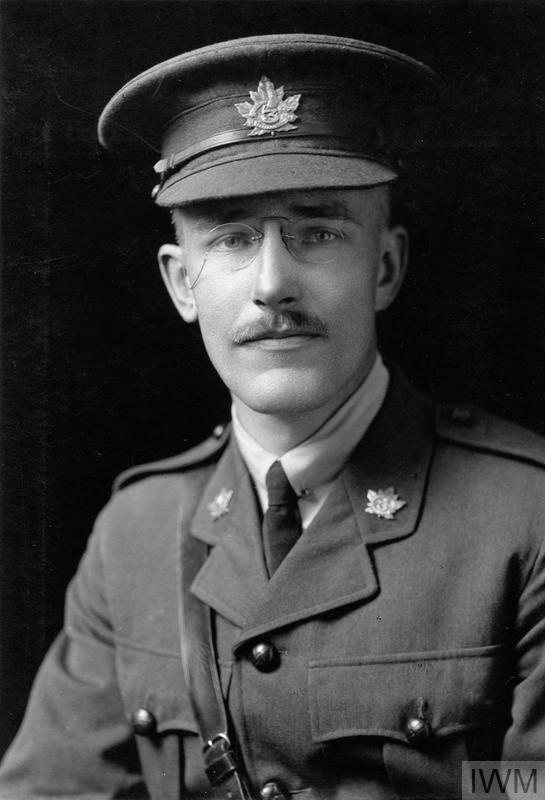
-
Article
Canadian Council of Churches
Canadian Council of Churches The Canadian Council of Churches, founded 1944, is the national ecumenical fellowship of Canadian churches: Anglican, Armenian Orthodox, Baptist, British Methodist Episcopal, Canadian Conference of Catholic Bishops, Christian Church (Disciples of Christ), Christian Reformed Churches in Canada, Coptic Orthodox, Ethiopian Orthodox, Evangelical Lutheran Church in Canada, Greek Orthodox, Orthodox Church in America, Polish National Catholic Church, Presbyterian, Reformed Church of America - Classis of Ontario, Religious Society of Friends, Salvation Army,...
"https://thecanadianencyclopedia.ca/images/tce_placeholder.jpg?v=e9dca980c9bdb3aa11e832e7ea94f5d9" // resources/views/front/categories/view.blade.php
https://thecanadianencyclopedia.ca/images/tce_placeholder.jpg?v=e9dca980c9bdb3aa11e832e7ea94f5d9
-
Article
Canadian Council of Professional Engineers
The Canadian Council of Professional Engineers (CCPE)/Conseil canadien des ingénieurs (CCI), established in 1936, is the national organization of the provincial and territorial associations that governs the practice of engineering in Canada.
"https://thecanadianencyclopedia.ca/images/tce_placeholder.jpg?v=e9dca980c9bdb3aa11e832e7ea94f5d9" // resources/views/front/categories/view.blade.php
https://thecanadianencyclopedia.ca/images/tce_placeholder.jpg?v=e9dca980c9bdb3aa11e832e7ea94f5d9
-
Article
Canadian Council on Social Development
Founded in 1920 by Charlotte Whitton, the organization was initially known as the Canadian Council on Child Welfare. Ten years later, when its mandate was broadened to include families, it became the Canadian Council on Child and Family Welfare.
"https://d3d0lqu00lnqvz.cloudfront.net/media/media/69a2b45f-76aa-45f4-9d0d-8c82cf991e39.jpg" // resources/views/front/categories/view.blade.php
https://d3d0lqu00lnqvz.cloudfront.net/media/media/69a2b45f-76aa-45f4-9d0d-8c82cf991e39.jpg
-
Article
Canadian Democracy and Corporate Accountability Commission
Created in 2000, the privately funded Canadian Democracy and Corporate Accountability Commission (CDCAC) was co-chaired by Canadian publisher Avie Bennett and ex-NDP leader Ed Broadbent.
"https://thecanadianencyclopedia.ca/images/tce_placeholder.jpg?v=e9dca980c9bdb3aa11e832e7ea94f5d9" // resources/views/front/categories/view.blade.php
https://thecanadianencyclopedia.ca/images/tce_placeholder.jpg?v=e9dca980c9bdb3aa11e832e7ea94f5d9
-
Article
Canadian English
English is one of Canada’s two official languages. According to the 2016 Canadian census, English is the mother tongue of approximately 19.5 million people, or 57 per cent of the population, and the first official language of about 26 million people, or 75 per cent of the Canadian population.
"https://d3d0lqu00lnqvz.cloudfront.net/media/media/11962043-f5fb-4db4-ab82-772a24200c20.png" // resources/views/front/categories/view.blade.php
https://d3d0lqu00lnqvz.cloudfront.net/media/media/11962043-f5fb-4db4-ab82-772a24200c20.png
-
Article
Canadian Expeditionary Force
The Canadian Expeditionary Force was the army raised by Canada for service overseas in the First World War. About 630,000 Canadians enlisted between 1914 and 1918—most of them volunteers—as soldiers, nurses, doctors, and forestry and railway crews. More than 234,000 were killed or wounded in the war.
"https://d3d0lqu00lnqvz.cloudfront.net/media/media/73ffb06f-627d-4c89-ba46-f99a9ca67524.jpg" // resources/views/front/categories/view.blade.php
https://d3d0lqu00lnqvz.cloudfront.net/media/media/73ffb06f-627d-4c89-ba46-f99a9ca67524.jpg
-
Article
Canadian Federation of Labour
The Canadian Federation of Labour (National Trades and Labor Congress until 1908) was founded in 1902 as a solely Canadian body dedicated to national organization.
"https://d3d0lqu00lnqvz.cloudfront.net/media/media/deaaaf0f-2d04-4ae8-8391-d6255fe2a78a.jpg" // resources/views/front/categories/view.blade.php
https://d3d0lqu00lnqvz.cloudfront.net/media/media/deaaaf0f-2d04-4ae8-8391-d6255fe2a78a.jpg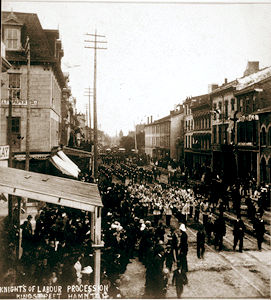
-
Article
Canadian Federation of University Women
The Canadian Federation of University Women was founded in 1919 as a Canadian counterpart to the International Federation of University Women, whose purpose was to emphasize women's role in social reconstruction and the prevention of war.
"https://thecanadianencyclopedia.ca/images/tce_placeholder.jpg?v=e9dca980c9bdb3aa11e832e7ea94f5d9" // resources/views/front/categories/view.blade.php
https://thecanadianencyclopedia.ca/images/tce_placeholder.jpg?v=e9dca980c9bdb3aa11e832e7ea94f5d9
-
Article
Canadian Film History: 1939 to 1973
Filmmaking is a powerful form of cultural and artistic expression, as well as a highly profitable commercial enterprise. From a practical standpoint, filmmaking is a business involving large sums of money and a complex division of labour. This labour is involved, roughly speaking, in three sectors: production, distribution and exhibition. The history of the Canadian film industry has been one of sporadic achievement accomplished in isolation against great odds. Canadian cinema has existed within an environment where access to capital for production, to the marketplace for distribution and to theatres for exhibition has been extremely difficult. The Canadian film industry, particularly in English Canada, has struggled against the Hollywood entertainment monopoly for the attention of an audience that remains largely indifferent toward the domestic industry. The major distribution and exhibition outlets in Canada have been owned and controlled by foreign interests. The lack of domestic production throughout much of the industry’s history can only be understood against this economic backdrop. This article is one of four that surveys the history of the film industry in Canada. The entire series includes: Canadian Film History: 1896 to 1938; Canadian Film History: 1939 to 1973; Canadian Film History: 1974 to Present; Canadian Film History: Regional Cinema and Auteurs, 1980 to Present.
"https://d3d0lqu00lnqvz.cloudfront.net/media/media/365bfdc3-53d4-4033-b13f-5a89a83a85d5.jpg" // resources/views/front/categories/view.blade.php
https://d3d0lqu00lnqvz.cloudfront.net/media/media/365bfdc3-53d4-4033-b13f-5a89a83a85d5.jpg
-
Article
Canadian Film History: 1974 to Present
Filmmaking is a powerful form of cultural and artistic expression, as well as a highly profitable commercial enterprise. From a practical standpoint, filmmaking is a business involving large sums of money and a complex division of labour. This labour is involved, roughly speaking, in three sectors: production, distribution and exhibition. The history of the Canadian film industry has been one of sporadic achievement accomplished in isolation against great odds. Canadian cinema has existed within an environment where access to capital for production, to the marketplace for distribution and to theatres for exhibition has been extremely difficult. The Canadian film industry, particularly in English Canada, has struggled against the Hollywood entertainment monopoly for the attention of an audience that remains largely indifferent toward the domestic industry. The major distribution and exhibition outlets in Canada have been owned and controlled by foreign interests. The lack of domestic production throughout much of the industry’s history can only be understood against this economic backdrop. This article is one of four that surveys the history of the film industry in Canada. The entire series includes: Canadian Film History: 1896 to 1938; Canadian Film History: 1939 to 1973; Canadian Film History: 1974 to Present; Canadian Film History: Notable Films and Filmmakers 1980 to Present.
"https://d3d0lqu00lnqvz.cloudfront.net/media/media/4fd4ee50-6f27-491b-aeb7-2f5cd3c95f9e.jpg" // resources/views/front/categories/view.blade.php
https://d3d0lqu00lnqvz.cloudfront.net/media/media/4fd4ee50-6f27-491b-aeb7-2f5cd3c95f9e.jpg
-
Article
Canadian Film History: Notable Films and Filmmakers 1980 to Present
Filmmaking is a powerful form of cultural and artistic expression, as well as a highly profitable commercial enterprise. From a practical standpoint, filmmaking is a business involving large sums of money and a complex division of labour. This labour is involved, roughly speaking, in three sectors: production, distribution and exhibition. The history of the Canadian film industry has been one of sporadic achievement accomplished in isolation against great odds. Canadian cinema has existed within an environment where access to capital for production, to the marketplace for distribution and to theatres for exhibition has been extremely difficult. The Canadian film industry, particularly in English Canada, has struggled against the Hollywood entertainment monopoly for the attention of an audience that remains largely indifferent toward the domestic industry. The major distribution and exhibition outlets in Canada have been owned and controlled by foreign interests. The lack of domestic production throughout much of the industry’s history can only be understood against this economic backdrop. This article is one of four that surveys the history of the film industry in Canada. The entire series includes: Canadian Film History: 1896 to 1938; Canadian Film History: 1939 to 1973; Canadian Film History: 1974 to Present; Canadian Film History: Notable Films and Filmmakers 1980 to Present.
"https://d3d0lqu00lnqvz.cloudfront.net/media/media/193cc1b9-24f9-4e96-a47d-4fc2142514ae.jpg" // resources/views/front/categories/view.blade.php
https://d3d0lqu00lnqvz.cloudfront.net/media/media/193cc1b9-24f9-4e96-a47d-4fc2142514ae.jpg
-
Article
Canadian Football Hall of Fame and Museum
The Canadian Football Hall of Fame and Museum is located in Hamilton, Ont. While its official opening took place 28 November 1972, discussions about the concept had been taking place since 1962.
"https://thecanadianencyclopedia.ca/images/tce_placeholder.jpg?v=e9dca980c9bdb3aa11e832e7ea94f5d9" // resources/views/front/categories/view.blade.php
https://thecanadianencyclopedia.ca/images/tce_placeholder.jpg?v=e9dca980c9bdb3aa11e832e7ea94f5d9
-
Article
Canadian Football League (CFL)
The Canadian Football League (CFL) began its formal existence in January 1958. It represented a merger of the Interprovincial Rugby Football Union (founded in 1907) and the Western Interprovincial Football Union (founded in 1936). Currently, the Ottawa Redblacks, Hamilton Tiger-Cats, Toronto Argonauts and Montreal Alouettes make up the East Division. The Winnipeg Blue Bombers, Saskatchewan Roughriders, Calgary Stampeders, Edmonton Elks and BC Lions play in the West Division. Each team plays 18 games in a 21-week season (June to October) to qualify for the playoffs and a chance to compete for the Grey Cup — the oldest professional football championship in North America. The CFL has had a long and colourful history. It includes many memorable Grey Cup games, repeated financial difficulties, the death and rebirth of two franchises and a failed expansion to the United States. Awards to players are given out during the Grey Cup Week festivities. League offices are in Toronto.
"https://d3d0lqu00lnqvz.cloudfront.net/CFL_Logo.svg.png" // resources/views/front/categories/view.blade.php
https://d3d0lqu00lnqvz.cloudfront.net/CFL_Logo.svg.png
-
Article
Canadian Forces Base Borden
Canadian Forces Base (CFB) Borden has always been primarily a training base for the Canadian Forces (CF). It is located 80 km northwest of Toronto, and was named after Sir Frederick Borden, Laurier's militia minister (1896-1911).
"https://d3d0lqu00lnqvz.cloudfront.net/The-Memory-Project/image/2016_original.jpg" // resources/views/front/categories/view.blade.php
https://d3d0lqu00lnqvz.cloudfront.net/The-Memory-Project/image/2016_original.jpg