
Browse "Things"
-
Article
Canadian Alliance
The Canadian Alliance party was created from the remains of the former Reform Party of Canada at a convention in Ottawa in January of 2000 in an attempt to merge conservative opposition to the Liberal Party.
"https://d3d0lqu00lnqvz.cloudfront.net/media/media/20f6095e-a519-4681-b8bf-3fb0f76d4136.png" // resources/views/front/categories/view.blade.php
https://d3d0lqu00lnqvz.cloudfront.net/media/media/20f6095e-a519-4681-b8bf-3fb0f76d4136.png
-
Article
Canadian-American Relations
Canada and the United States have a unique relationship. Two sovereign states, occupying the bulk of North America and sharing the world's longest undefended border, each reliant on the other for trade, continental security and prosperity. Despite radically different beginnings, as well as a history of war, conflict and cultural suspicion, the two countries stand as a modern example of inter-dependence and co-operation.
"https://d3d0lqu00lnqvz.cloudfront.net/media/media/3daadb5d-9c7d-4a2d-bc77-d08ed7f587d5.jpg" // resources/views/front/categories/view.blade.php
https://d3d0lqu00lnqvz.cloudfront.net/media/media/3daadb5d-9c7d-4a2d-bc77-d08ed7f587d5.jpg
-
Article
Canadian Armed Forces Programs for Indigenous Peoples
Indigenous peoples in Canada have a long history of service to the military, stretching back to French and British colonial days. Since Confederation in 1867, First Nations, Inuit and Métis members have continued the military tradition of their forebears and served in all branches of the armed forces. They have done this despite frequently facing exclusion and discrimination. Indigenous people account for approximately 5 per cent of Canada’s population. Figures from the Department of National Defence as of December 2024 note that 3 per cent of the Regular Force and Primary Reserve members of the Canadian Armed Forces (CAF) self-identified as Indigenous. This number does not include the Canadian Rangers, which report 27.2 per cent Indigenous members. However, some argue the actual number of Indigenous members of the CAF may be higher than reported, particularly in the Canadian Rangers.
"https://d3d0lqu00lnqvz.cloudfront.net/CAFIndigenousPrograms/CP211455_resized.jpg" // resources/views/front/categories/view.blade.php
https://d3d0lqu00lnqvz.cloudfront.net/CAFIndigenousPrograms/CP211455_resized.jpg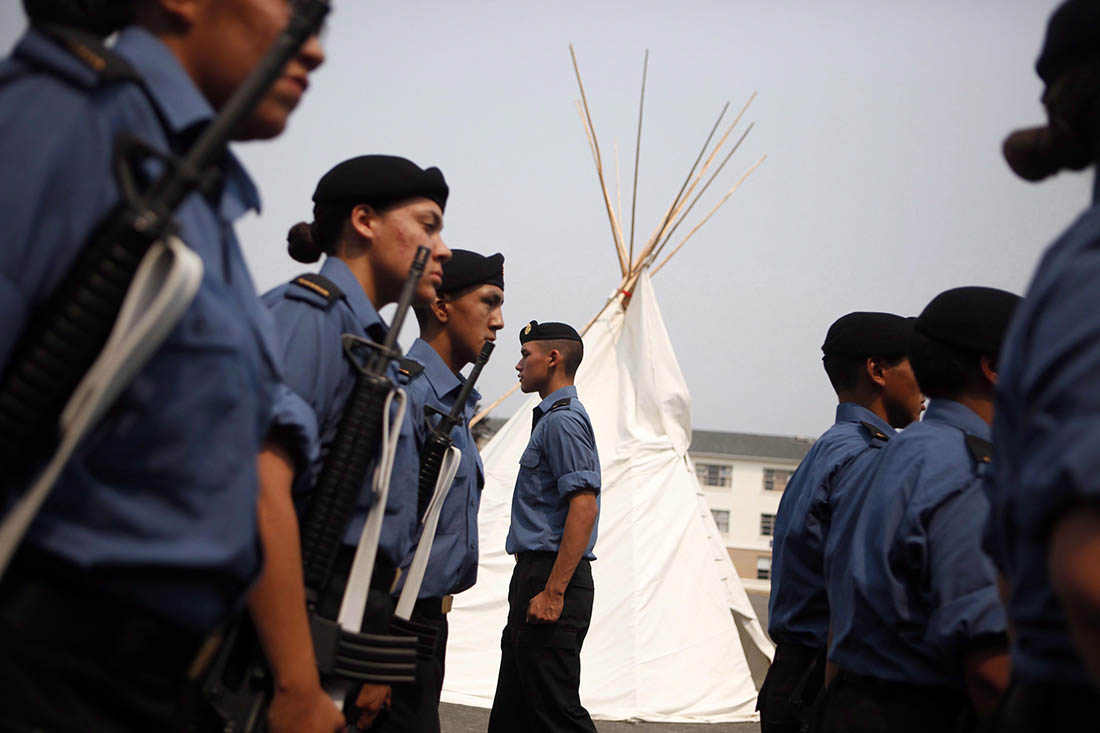
-
Article
Canadian Army
The history of the Canadian Army parallels that of Canada itself. What started as a small Confederation-era militia was built into a respected force of mostly citizen soldiers for the First and Second World Wars. From the Korean War to United Nations peacekeeping to Afghanistan and Latvia — despite limited resources and sometimes ill-defined missions — Canada's now largely professional army has served with distinction around the globe.
"https://d3d0lqu00lnqvz.cloudfront.net/media/media/a4d84cbe-1111-4723-a254-b38995831a6b.jpg" // resources/views/front/categories/view.blade.php
https://d3d0lqu00lnqvz.cloudfront.net/media/media/a4d84cbe-1111-4723-a254-b38995831a6b.jpg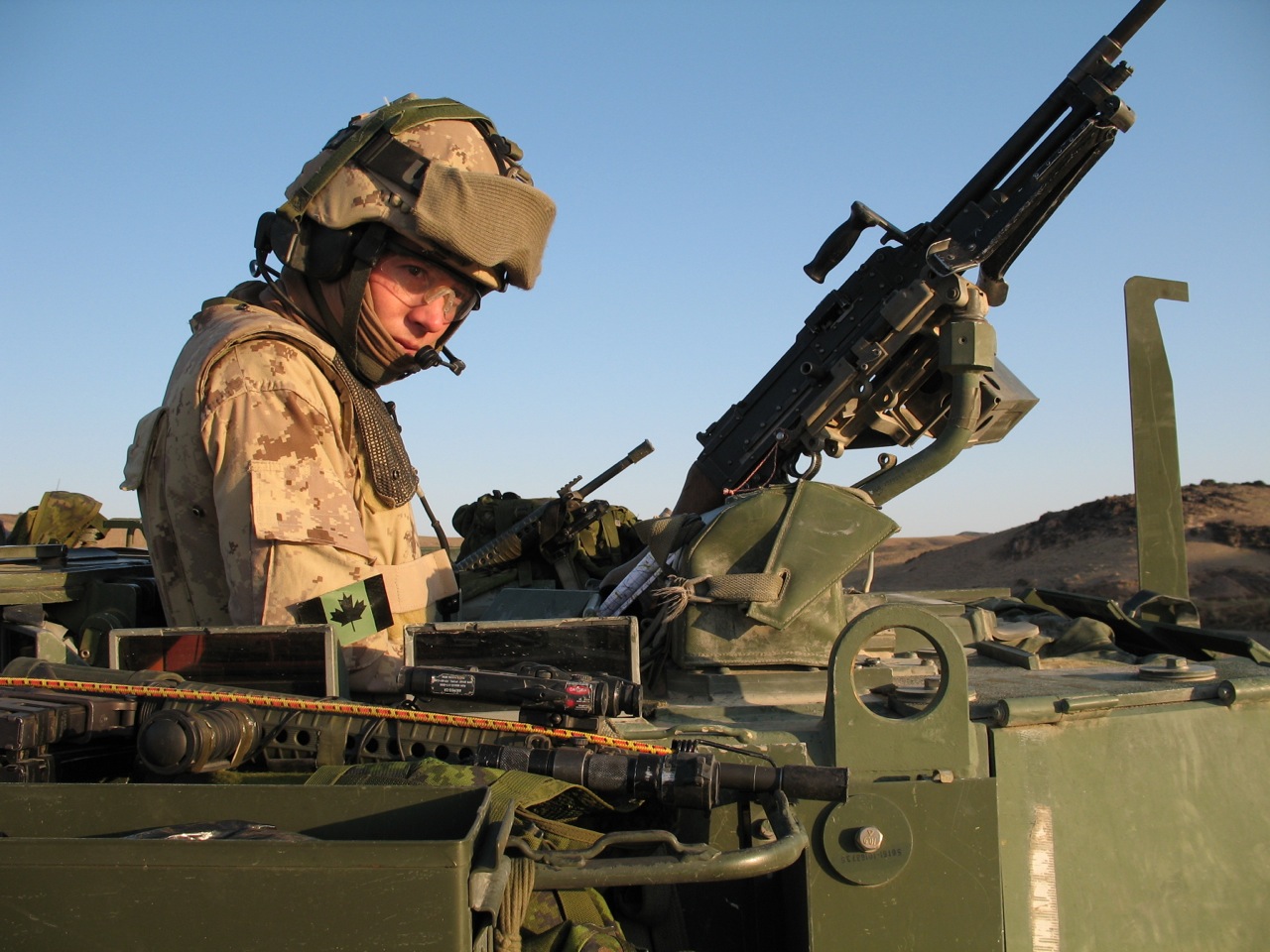
-
Article
Canadian Army Medical Corps Nursing Sisters
More than 2,800 trained civilian nurses enlisted with the Canadian army during the First World War, becoming the first women in the modern world to hold military commissions as officers. As members of the Canadian Army Medical Corps (CAMC), the nursing sisters treated and cared for wounded soldiers overseas and at home. At least 58 died from disease or enemy action during the war.
"https://d3d0lqu00lnqvz.cloudfront.net/media/media/271eb18d-51cb-46d8-b660-42a54e9557c5.jpg" // resources/views/front/categories/view.blade.php
https://d3d0lqu00lnqvz.cloudfront.net/media/media/271eb18d-51cb-46d8-b660-42a54e9557c5.jpg
-
Article
Canadian Army Meteorological Group
The Canadian Army Meteorological Group (CAMG) was a Second World War unit that provided meteorological data to artillery units. The CAMG was involved in key campaigns during the war in Italy and Northwest Europe. Meteorological information helped improve the accuracy of artillery fire, contributing to Allied victory in the war.
"https://d3d0lqu00lnqvz.cloudfront.net/CAMG/Meteorology-observer.jpg" // resources/views/front/categories/view.blade.php
https://d3d0lqu00lnqvz.cloudfront.net/CAMG/Meteorology-observer.jpg
-
Article
Canadian Army Organization
The Canadian Army is organized into four geographically based divisions, as well as a headquarters and a doctrine and training centre. The divisions include regular and reserve units. The head of the Canadian Army is a lieutenant-general; the current commander, Lieutenant-General Michael Wright, assumed that position on 12 July 2024. As of October 2025, the army comprised about 22,000 Regular Force soldiers, 20,000 Reservists, 5,000 Canadian Rangers and 3,500 civilian employees.
"https://d3d0lqu00lnqvz.cloudfront.net/CA-Organization-Chart-legend-rev-colours-1.png" // resources/views/front/categories/view.blade.php
https://d3d0lqu00lnqvz.cloudfront.net/CA-Organization-Chart-legend-rev-colours-1.png
-
Article
Canadian Association of College and University Libraries
Canadian Association of College and University Libraries, established 1963, is a division of the Canadian Library Association.
"https://thecanadianencyclopedia.ca/images/tce_placeholder.jpg?v=e9dca980c9bdb3aa11e832e7ea94f5d9" // resources/views/front/categories/view.blade.php
https://thecanadianencyclopedia.ca/images/tce_placeholder.jpg?v=e9dca980c9bdb3aa11e832e7ea94f5d9
-
Article
Canadian Association of Music Libraries/Association canadienne des bibliothèques musicales
Canadian Association of Music Libraries (CAML)/Association canadienne des bibliothèques musicales (ACBM). The Canadian branch of the International Association of Music Libraries, Archives and Documentation Centres (IAML).
"https://thecanadianencyclopedia.ca/images/tce_placeholder.jpg?v=e9dca980c9bdb3aa11e832e7ea94f5d9" // resources/views/front/categories/view.blade.php
https://thecanadianencyclopedia.ca/images/tce_placeholder.jpg?v=e9dca980c9bdb3aa11e832e7ea94f5d9
-
Article
Canadian Aviation Corps
The Canadian Aviation Corps was formed in September 1914, immediately after the start of the First World War. The three-person, one-plane unit sailed to Britain with the First Canadian Contingent in early October 1914 but never saw active service. The CAC was disbanded in May 1915. Canada would not have a permanent air force until 1924 (see Royal Canadian Air Force).
"https://d3d0lqu00lnqvz.cloudfront.net/Aviation/Burgess-Dunne-floatplane.jpg" // resources/views/front/categories/view.blade.php
https://d3d0lqu00lnqvz.cloudfront.net/Aviation/Burgess-Dunne-floatplane.jpg
-
Article
Canadian Bar Association
Canadian Bar Association represents over 35 000 lawyers, judges, notaries, law teachers, and law students from across Canada.
"https://thecanadianencyclopedia.ca/images/tce_placeholder.jpg?v=e9dca980c9bdb3aa11e832e7ea94f5d9" // resources/views/front/categories/view.blade.php
https://thecanadianencyclopedia.ca/images/tce_placeholder.jpg?v=e9dca980c9bdb3aa11e832e7ea94f5d9
-
Article
Canadian Baseball Hall of Fame and Museum
The Canadian Baseball Hall of Fame and Museum began as a non-profit, charitable foundation in 1983. While its original home was in Toronto, the Hall of Fame and Museum moved to its current location in St. Marys, in southwestern Ontario, in 1994, following the St. Marys Cement Company's donation of 32 acres of land to the Hall of Fame. In 1998 it finally opened its doors to the public.
"https://d3d0lqu00lnqvz.cloudfront.net/1024px-Canadian_Baseball_Hall_of_Fame_and_Museum-1.jpg" // resources/views/front/categories/view.blade.php
https://d3d0lqu00lnqvz.cloudfront.net/1024px-Canadian_Baseball_Hall_of_Fame_and_Museum-1.jpg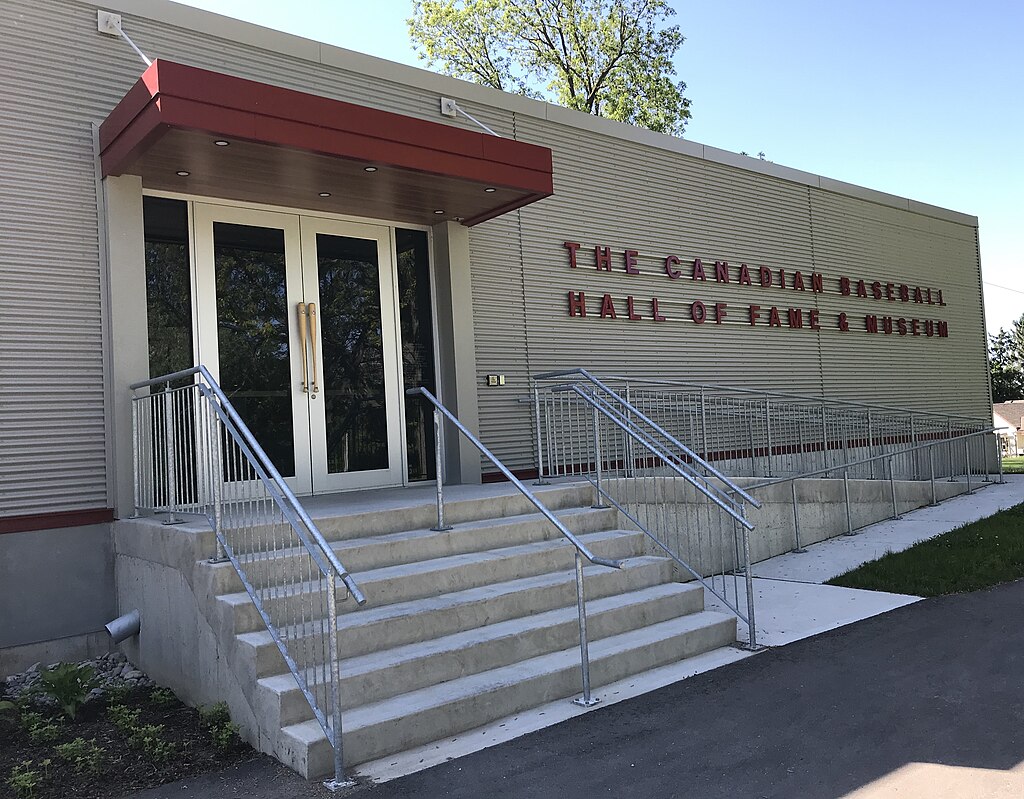
-
Article
Canadian Bible Society
Canadian Bible Society, was founded in 1904 to publish and distribute biblical scriptures and to make the bible available to all who could read it.
"https://thecanadianencyclopedia.ca/images/tce_placeholder.jpg?v=e9dca980c9bdb3aa11e832e7ea94f5d9" // resources/views/front/categories/view.blade.php
https://thecanadianencyclopedia.ca/images/tce_placeholder.jpg?v=e9dca980c9bdb3aa11e832e7ea94f5d9
-
Article
Canadian Bill of Rights
The Canadian Bill of Rights was the country’s first federal law to protect human rights and fundamental freedoms. It was considered groundbreaking when it was enacted by the government of John Diefenbaker in 1960. But it proved too limited and ineffective, mainly because it applies only to federal statutes and not provincial ones. Many judges regarded it as a mere interpretive aid. The bill was cited in 35 cases between 1960 and 1982; thirty were rejected by the courts. Though it is still in effect, the Bill of Rights was superseded by the Canadian Charter of Rights and Freedoms in 1982.
"https://d3d0lqu00lnqvz.cloudfront.net/media/media/eb737d9a-742e-418d-af4d-07440f789c20.jpg" // resources/views/front/categories/view.blade.php
https://d3d0lqu00lnqvz.cloudfront.net/media/media/eb737d9a-742e-418d-af4d-07440f789c20.jpg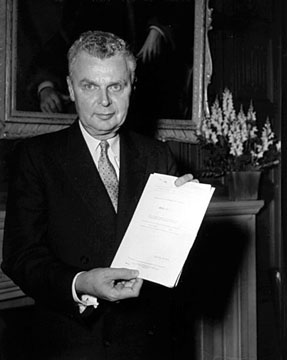
-
Article
Canadian Bill of Rights (Plain-Language Summary)
The Canadian Bill of Rights was the country’s first federal law to protect human rights and freedoms. It was groundbreaking when it was passed in 1960. But it proved too limited and ineffective. It applies only to federal statutes and not provincial ones. This is because the Bill did not receive provincial consent. The Bill is still in effect. But it was overridden by the Charter of Rights and Freedoms in 1982. Unlike the Charter, the Bill of Rights is not part of the Constitution. This article is a plain-language summary of the Canadian Bill of Rights. If you are interested in reading about this topic in more depth, please see our full-length entry, Canadian Bill of Rights.
"https://d3d0lqu00lnqvz.cloudfront.net/media/media/eb737d9a-742e-418d-af4d-07440f789c20.jpg" // resources/views/front/categories/view.blade.php
https://d3d0lqu00lnqvz.cloudfront.net/media/media/eb737d9a-742e-418d-af4d-07440f789c20.jpg