Browse "Things"
-
Article
Canada at the 2026 FIFA World Cup
In 2026, for the first time, Canada co-hosted the FIFA World Cup in men’s soccer. It took place in North America, with the United States and Mexico also hosting games. This was 11 years after Canada welcomed the world for the 2015 FIFA Women’s World Cup. In all, there were 13 games played in Canada, seven in Vancouver and six in Toronto. Team Canada made it as far as the round of 16 and won their first two games in the history of the tournament. The 2026 FIFA World Cup came at a time when Canada’s federal government committed $9.8 million to the Canada Soccer National Training Centre.
"https://d3d0lqu00lnqvz.cloudfront.net/media/media/644c74e6-845a-4f22-896f-3f29ea5205fb.jpg" // resources/views/front/categories/view.blade.php
https://d3d0lqu00lnqvz.cloudfront.net/media/media/644c74e6-845a-4f22-896f-3f29ea5205fb.jpg
-
Article
Canada at the 2026 Olympic Winter Games
The 2026 Olympic Winter Games were held in Milan and Cortina d’Ampezzo, Italy, from 4–22 February 2026. Canada was represented by 206 athletes (107 women and 99 men). It was the largest number of female athletes to compete for Canada at an Olympic Winter Games. It was also the first time Team Canada had more female athletes than male athletes at an Olympic Winter Games. Canada finished eighth in the overall medal standings with 21 (five gold, seven silver, nine bronze). Canada's gold medals came in speed skating, curling and freestyle skiing. Canada’s flag bearers in the opening ceremonies were freestyle skiers Mikaël Kingsbury and Marielle Thompson. Kingsbury won gold in men's dual moguls, which made its Olympic debut. The flag bearers for Canada in the closing ceremonies were speed skaters Steven Dubois and Valérie Maltais. Dubois won two medals (gold and silver) in short track speed skating, and Maltais won three medals (one gold and two bronze) in long track speed skating.
"https://d3d0lqu00lnqvz.cloudfront.net/Marjorie_Lajoie_and_Zachary_Lagha_of_Canada_at_the_2026_Winter_Olympics_by_YantsImages.jpg" // resources/views/front/categories/view.blade.php
https://d3d0lqu00lnqvz.cloudfront.net/Marjorie_Lajoie_and_Zachary_Lagha_of_Canada_at_the_2026_Winter_Olympics_by_YantsImages.jpg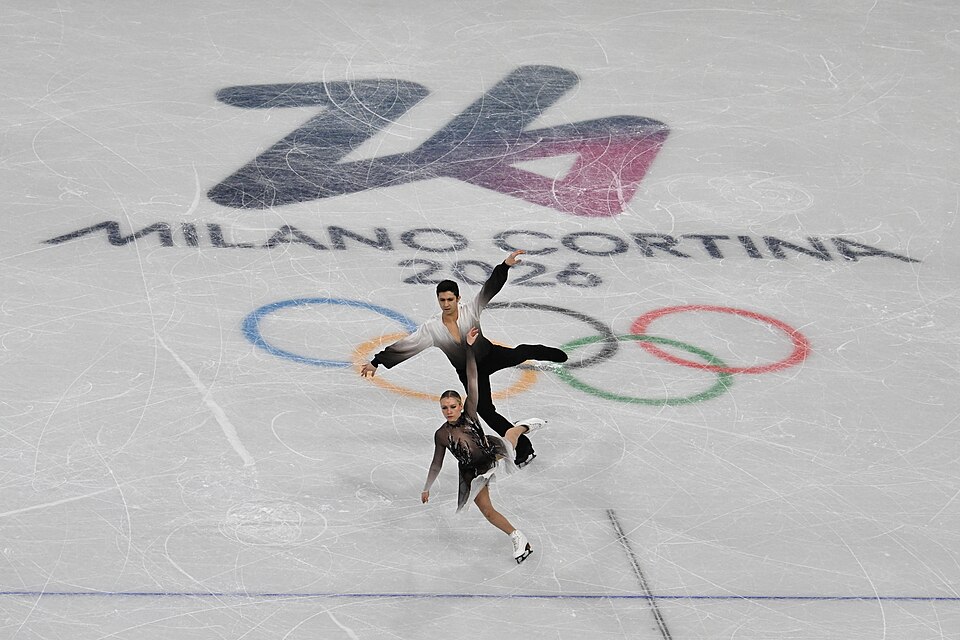
-
Article
Canada Aviation and Space Museum
The Canada Aviation and Space Museum has the most extensive aviation collection in Canada. Located in Ottawa, the museum focuses on the history of Canadian aviation in an international context. Its collection includes more than 130 aircraft and artifacts.
"https://d3d0lqu00lnqvz.cloudfront.net/media/media/8e9fd784-494b-45e6-8b61-9ddb0f1d563d.jpg" // resources/views/front/categories/view.blade.php
https://d3d0lqu00lnqvz.cloudfront.net/media/media/8e9fd784-494b-45e6-8b61-9ddb0f1d563d.jpg
-
Macleans
Canada Backsliding on Kyoto Pledges
IT'S A TRUE believer's kind of tale. The day after Canada officially ratified the Kyoto Protocol on CLIMATE CHANGE in December 2002, David Anderson was in New York City to deposit the freshly signed paper with the Treaty Section of the United Nations.This article was originally published in Maclean's Magazine on February 28, 2005
"https://thecanadianencyclopedia.ca/images/tce_placeholder.jpg?v=e9dca980c9bdb3aa11e832e7ea94f5d9" // resources/views/front/categories/view.blade.php
https://thecanadianencyclopedia.ca/images/tce_placeholder.jpg?v=e9dca980c9bdb3aa11e832e7ea94f5d9
-
Article
Canada Centre for Inland Waters
Canada Centre for Inland Waters One of the world's leading water-research complexes, the Canada Centre for Inland Waters (CCIW), is owned and managed by Environment Canada (EC).
"https://d3d0lqu00lnqvz.cloudfront.net/media/media/f9cc1cd4-e2e5-4290-a083-237e98f82dc9.jpg" // resources/views/front/categories/view.blade.php
https://d3d0lqu00lnqvz.cloudfront.net/media/media/f9cc1cd4-e2e5-4290-a083-237e98f82dc9.jpg
-
Article
Canada-China Relations
Chinese immigration to Canada began with the Fraser River Gold Rush in 1858. Between 1881 and 1885, more than 17,000 Chinese workers helped complete the Canadian Pacific Railway (CPR). Chinese immigrants had to pay an increasingly large “head tax” starting in 1885. Between 1923 and 1947, Chinese immigration to Canada was effectively banned. Canada’s presence in China began with Christian missionary work in the 1890s. Canada and China were allies during the Second World War and adversaries in the Korean War. Canada’s official recognition of the People’s Republic of China (PRC) in October 1970 helped open communist China to the West. Canada then aided China's entry into the United Nations, the World Bank and the International Monetary Fund (IMF). Economic ties and human rights concerns have been hallmarks of the bilateral relationship ever since. More recently, relations have been strained by the Meng Wanzhou Affair and allegations of Chinese interference in Canada’s elections.
"https://d3d0lqu00lnqvz.cloudfront.net/media/media/2ce7ad69-8419-41ff-aa1a-fa4fb45b3717.jpg" // resources/views/front/categories/view.blade.php
https://d3d0lqu00lnqvz.cloudfront.net/media/media/2ce7ad69-8419-41ff-aa1a-fa4fb45b3717.jpg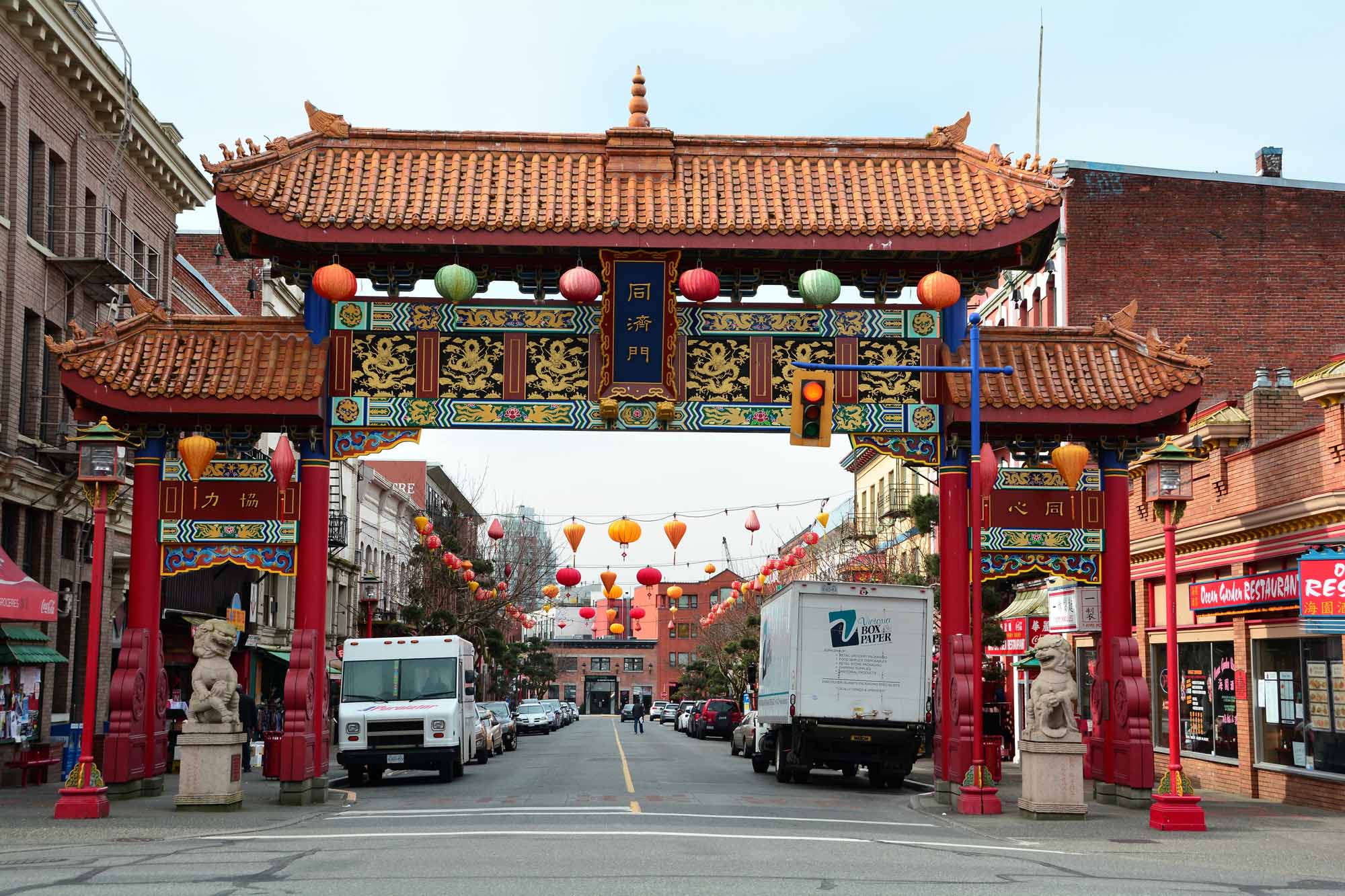
-
Article
Canada Committee
Canada Committee, a British parliamentary committee established 2 May 1828 to settle political disputes which were paralysing representative government in Lower Canada and creating difficulties in Upper Canada.
"https://thecanadianencyclopedia.ca/images/tce_placeholder.jpg?v=e9dca980c9bdb3aa11e832e7ea94f5d9" // resources/views/front/categories/view.blade.php
https://thecanadianencyclopedia.ca/images/tce_placeholder.jpg?v=e9dca980c9bdb3aa11e832e7ea94f5d9
-
Article
Canada Company
Canada Company, brainchild of John GALT, established in late 1824 and chartered in 1825 as a land and COLONIZATION COMPANY in Upper Canada. In 1826 the company purchased from the government about 2.5 million acres (1 million ha) of land for $295 000.
"https://d3d0lqu00lnqvz.cloudfront.net/media/media/a03fa073-a395-45c8-a7a3-8ae328595103.jpg" // resources/views/front/categories/view.blade.php
https://d3d0lqu00lnqvz.cloudfront.net/media/media/a03fa073-a395-45c8-a7a3-8ae328595103.jpg
-
Article
Canada Corn Act
Canada Corn Act, passed in 1843 by the British Parliament and applying to all grains, allowed Canadian wheat to enter the British market at a nominal duty, and flour manufactured in Canada at a proportionate rate.
"https://thecanadianencyclopedia.ca/images/tce_placeholder.jpg?v=e9dca980c9bdb3aa11e832e7ea94f5d9" // resources/views/front/categories/view.blade.php
https://thecanadianencyclopedia.ca/images/tce_placeholder.jpg?v=e9dca980c9bdb3aa11e832e7ea94f5d9
-
Article
Canada Cup (World Cup of Hockey)
Capitalizing on the public interest aroused by the Canada-Soviet Hockey Series of 1972, Douglas Fisher of Hockey Canada, and Alan Eagleson of the NHL Players' Association, arranged to bring national teams from Europe to compete against Canada and the US in tournaments which would be staged, every 3 or 4 years, in North American arenas.
"https://thecanadianencyclopedia.ca/images/tce_placeholder.jpg?v=e9dca980c9bdb3aa11e832e7ea94f5d9" // resources/views/front/categories/view.blade.php
https://thecanadianencyclopedia.ca/images/tce_placeholder.jpg?v=e9dca980c9bdb3aa11e832e7ea94f5d9
-
Article
Canada Day
Canada Day, observed on July 1st, is a national holiday marking the anniversary of Confederation in 1867, when the British North America Act came into effect. It was originally known as Dominion Day until it was renamed in 1982.
"https://d3d0lqu00lnqvz.cloudfront.net/media/media/d04ca091-7208-4ec8-bf56-1a91b5f73a2a.jpg" // resources/views/front/categories/view.blade.php
https://d3d0lqu00lnqvz.cloudfront.net/media/media/d04ca091-7208-4ec8-bf56-1a91b5f73a2a.jpg
-
Article
Canada Development Corporation
Canada Development Corporation, headquartered in Toronto, developed and maintained Canadian-controlled and -managed companies in the private sector. Created in 1971 through a special Act of Parliament, the CDC helped to widen the investment opportunities open to Canadians.
"https://thecanadianencyclopedia.ca/images/tce_placeholder.jpg?v=e9dca980c9bdb3aa11e832e7ea94f5d9" // resources/views/front/categories/view.blade.php
https://thecanadianencyclopedia.ca/images/tce_placeholder.jpg?v=e9dca980c9bdb3aa11e832e7ea94f5d9
-
Macleans
Canada Dumping Raw Sewage into Its Waterways
This article was originally published in Maclean’s magazine on October 17, 2005. Partner content is not updated. VICTORIA'S churning river of effluent does not look as awful as you'd think, considering the unholy reputation that precedes it.
"https://thecanadianencyclopedia.ca/images/tce_placeholder.jpg?v=e9dca980c9bdb3aa11e832e7ea94f5d9" // resources/views/front/categories/view.blade.php
https://thecanadianencyclopedia.ca/images/tce_placeholder.jpg?v=e9dca980c9bdb3aa11e832e7ea94f5d9
-
Collection
Canada During COVID-19
Countries, communities, and individuals around the world are grappling with the COVID-19 pandemic. How will historians remember this time in history? Canada During COVID-19: A Living Archive is meant to capture the experiences of everyday Canadians as they live through this challenging time.
"https://d3d0lqu00lnqvz.cloudfront.net/user_canada_during_covid_submissions_imported/101037588_640061359916207_6879182772136426658_n_17903881852466121.jpg" // resources/views/front/categories/view.blade.php
https://d3d0lqu00lnqvz.cloudfront.net/user_canada_during_covid_submissions_imported/101037588_640061359916207_6879182772136426658_n_17903881852466121.jpg
-
Article
Canada East
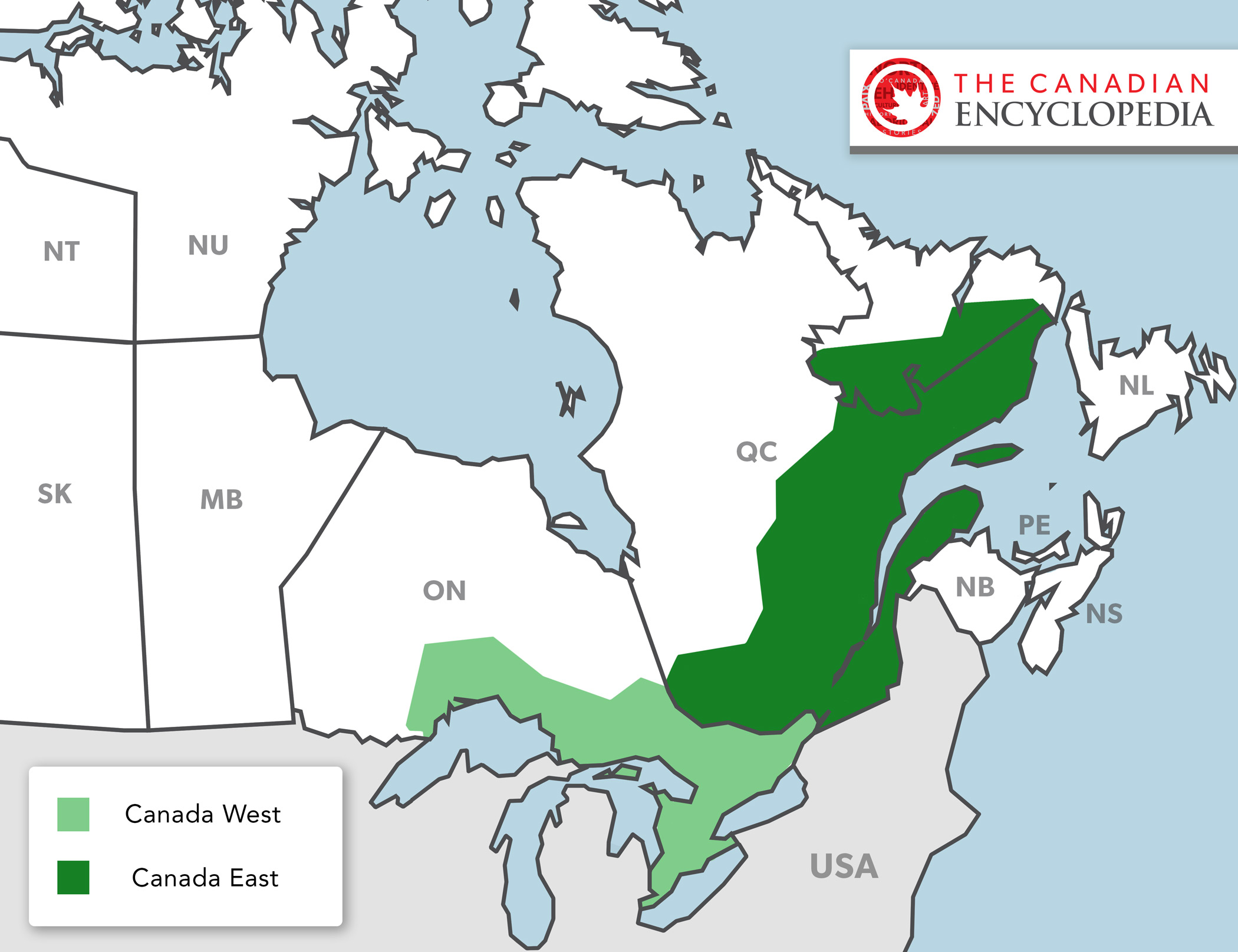
In 1841, Britain united the colonies of Upper and Lower Canada into the Province of Canada. This was in response to the violent rebellions of 1837–38. The Durham Report (1839) laid out the guidelines to create the new colony with the Act of Union in 1840. The Province of Canada was made up of Canada West (formerly Upper Canada) and Canada East (formerly Lower Canada). The two regions were governed jointly until Confederation in 1867. Canada West then became Ontario and Canada East became Quebec.
"https://d3d0lqu00lnqvz.cloudfront.net/media/new_article_images/PoliticsInOntario/Map_Canada_West_East.jpg" // resources/views/front/categories/view.blade.php
https://d3d0lqu00lnqvz.cloudfront.net/media/new_article_images/PoliticsInOntario/Map_Canada_West_East.jpg