Browse "Things"
-
Article
Social Insurance Number
Almost every Canadian who pays money to, or receives benefits from, the federal government has a 9-digit Social Insurance Number (SIN).
"https://thecanadianencyclopedia.ca/images/tce_placeholder.jpg?v=e9dca980c9bdb3aa11e832e7ea94f5d9" // resources/views/front/categories/view.blade.php
https://thecanadianencyclopedia.ca/images/tce_placeholder.jpg?v=e9dca980c9bdb3aa11e832e7ea94f5d9
-
Article
Social Justice
With the arrival of INDUSTRIALIZATION over the course of the nineteenth century, early attempts to aid the poor were linked with ideas of moral and social reform and were intertwined with religion.
"https://d3d0lqu00lnqvz.cloudfront.net/media/media/f7bc84ae-cde2-4414-9328-88f53f651d37.jpg" // resources/views/front/categories/view.blade.php
https://d3d0lqu00lnqvz.cloudfront.net/media/media/f7bc84ae-cde2-4414-9328-88f53f651d37.jpg
-
Article
Social Science
Social science, in general, has come to refer to the specialized teaching and research conducted in disciplines characterized by their concern with human beings, their culture and their economic, political and social relationship with the environment.
"https://d3d0lqu00lnqvz.cloudfront.net/4409201921_80929b3e8d_k.jpg" // resources/views/front/categories/view.blade.php
https://d3d0lqu00lnqvz.cloudfront.net/4409201921_80929b3e8d_k.jpg
-
Article
Social Science Federation of Canada
The Social Science Federation of Canada (SSFC) was established in 1940 as the Social Science Research Council of Canada. It and the Canadian Federation of the Humanities (CFH) were amalgamated into a new body, the HUMANITIES AND SOCIAL SCIENCE FEDERATION OF CANADA (HSSFC), in 1996.
"https://thecanadianencyclopedia.ca/images/tce_placeholder.jpg?v=e9dca980c9bdb3aa11e832e7ea94f5d9" // resources/views/front/categories/view.blade.php
https://thecanadianencyclopedia.ca/images/tce_placeholder.jpg?v=e9dca980c9bdb3aa11e832e7ea94f5d9
-
Article
Social Sciences and Humanities Research Council of Canada
The Social Sciences and Humanities Research Council of Canada (SSHRC) is Canada's federal funding agency for university-based research and graduate training in the social sciences and humanities. The council administers programs of fellowships for research training, grants for research, scholarly publications and exchanges, conferences, and other research-related activities.From 1 April 2023 to 31 March 2024, it received over 13,200 funding applications and awarded over 5,100 new grants and fellowships. 65% of Vanier Canada Graduate Scholarships are held by Canadian students, and 35% by international students. Its clientele consists of approximately 54% of the full-time professors and 55% of the full-time graduate students at Canadian universities.
"https://thecanadianencyclopedia.ca/images/tce_placeholder.jpg?v=e9dca980c9bdb3aa11e832e7ea94f5d9" // resources/views/front/categories/view.blade.php
https://thecanadianencyclopedia.ca/images/tce_placeholder.jpg?v=e9dca980c9bdb3aa11e832e7ea94f5d9
-
Article
Social Security
Social security refers to government programs that replace people's income lost due to pregnancy, illness, accident, disability, the death or absence of a family's breadwinner, unemployment, old age or retirement. A cornerstone of Canada’s social services, it is a subject of recurring political debate and discussion — and an increasingly important one, as Canada’s population ages.
"https://d3d0lqu00lnqvz.cloudfront.net/Social_Protection_Staircase.jpg" // resources/views/front/categories/view.blade.php
https://d3d0lqu00lnqvz.cloudfront.net/Social_Protection_Staircase.jpg
-
Macleans
Social Union Deal
Even Lucien Bouchard's glowering presence could not entirely sour the mood. In announcing a deal to overhaul the way Ottawa and the provinces work together on social programs, Prime Minister Jean Chrétien spoke proudly of "a new departure.This article was originally published in Maclean's Magazine on February 15, 1999
"https://thecanadianencyclopedia.ca/images/tce_placeholder.jpg?v=e9dca980c9bdb3aa11e832e7ea94f5d9" // resources/views/front/categories/view.blade.php
https://thecanadianencyclopedia.ca/images/tce_placeholder.jpg?v=e9dca980c9bdb3aa11e832e7ea94f5d9
-
Article
Socialism
Socialism is a political doctrine that criticizes the existence of social, economic and political inequality in society. Seeking to lessen class inequality, socialists call for a redistribution of power from the affluent owners to the working class.
"https://thecanadianencyclopedia.ca/images/tce_placeholder.jpg?v=e9dca980c9bdb3aa11e832e7ea94f5d9" // resources/views/front/categories/view.blade.php
https://thecanadianencyclopedia.ca/images/tce_placeholder.jpg?v=e9dca980c9bdb3aa11e832e7ea94f5d9
-
Article
Socialist Party of Canada
Socialist Party of Canada (SPC) emerged in 1904 when the Socialist Party of British Columbia, a group of Marxists influential in BC mining camps and among BC trade unionists, merged with the Canadian Socialist League. By 1910 it had spread from coast to coast.
"https://thecanadianencyclopedia.ca/images/tce_placeholder.jpg?v=e9dca980c9bdb3aa11e832e7ea94f5d9" // resources/views/front/categories/view.blade.php
https://thecanadianencyclopedia.ca/images/tce_placeholder.jpg?v=e9dca980c9bdb3aa11e832e7ea94f5d9
-
"https://thecanadianencyclopedia.ca/images/tce_placeholder.jpg?v=e9dca980c9bdb3aa11e832e7ea94f5d9" // resources/views/front/categories/view.blade.php
https://thecanadianencyclopedia.ca/images/tce_placeholder.jpg?v=e9dca980c9bdb3aa11e832e7ea94f5d9
-
Article
Société de Saint-Vincent de Paul
Société de Saint-Vincent de Paul, Catholic organization dedicated to works of charity. It was founded in 1833 by Frederic Ozanam, a 20-year-old Sorbonne student in Paris.
"https://thecanadianencyclopedia.ca/images/tce_placeholder.jpg?v=e9dca980c9bdb3aa11e832e7ea94f5d9" // resources/views/front/categories/view.blade.php
https://thecanadianencyclopedia.ca/images/tce_placeholder.jpg?v=e9dca980c9bdb3aa11e832e7ea94f5d9
-
Article
Sociology
Sociology is the study of human relationships, the rules and norms that guide them, and the development of institutions and movements that conserve and change society.
"https://thecanadianencyclopedia.ca/images/tce_placeholder.jpg?v=e9dca980c9bdb3aa11e832e7ea94f5d9" // resources/views/front/categories/view.blade.php
https://thecanadianencyclopedia.ca/images/tce_placeholder.jpg?v=e9dca980c9bdb3aa11e832e7ea94f5d9
-
Article
Sod Houses
Sod houses, or “soddies,” were a common style of dwelling built in the Prairies during the second half of the 19th century. Soddies were small structures cheaply built out of blocks of sod and rudimentary house fittings. Sod refers to grass and the soil beneath it that is held together by the grass’s roots. Although the term “sod house” is primarily associated with Canadian and American structures built during westward expansion, the structures found their architectural roots in Indigenous and Norse practices. Sod houses have come to symbolize the hardship of homestead life, despite shacks and log cabins being the primary form of housing.
"https://d3d0lqu00lnqvz.cloudfront.net/media/media/5c19f8b0-969e-4d19-b834-6ec2c4de6805.jpg" // resources/views/front/categories/view.blade.php
https://d3d0lqu00lnqvz.cloudfront.net/media/media/5c19f8b0-969e-4d19-b834-6ec2c4de6805.jpg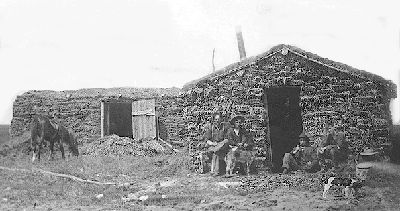
-
Article
Soft-Drink Industry
The soft-drink industry comprises companies that manufacture nonalcoholic beverages and carbonated mineral waters or concentrates and syrups for the manufacture of carbonated beverages.
"https://thecanadianencyclopedia.ca/images/tce_placeholder.jpg?v=e9dca980c9bdb3aa11e832e7ea94f5d9" // resources/views/front/categories/view.blade.php
https://thecanadianencyclopedia.ca/images/tce_placeholder.jpg?v=e9dca980c9bdb3aa11e832e7ea94f5d9
-
Article
Softwood Lumber Dispute
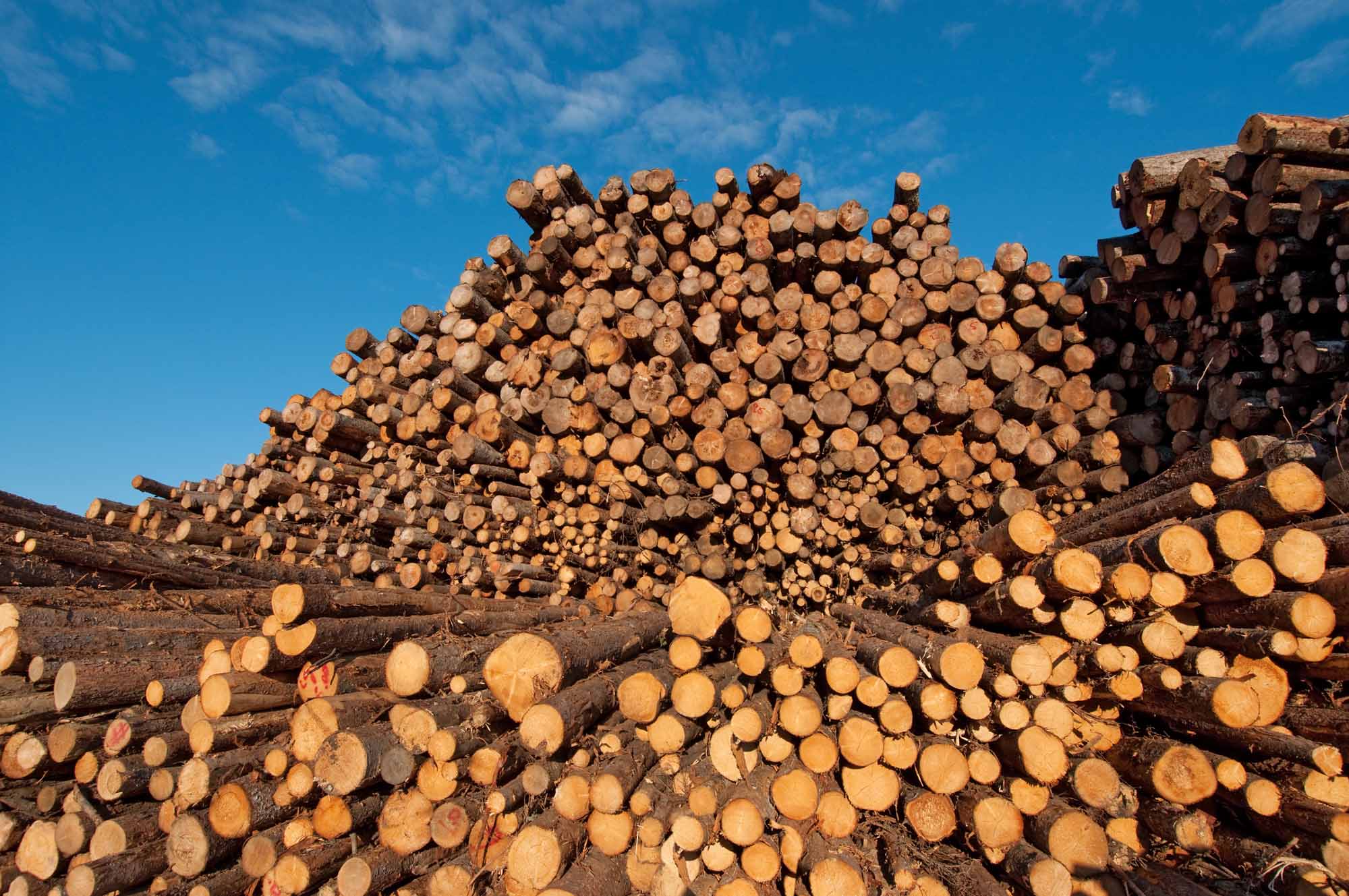
The softwood lumber dispute between Canada and the United States first arose in 1982. Members of the US lumber industry argued that low Canadian stumpage rates gave Canadian producers an unfair trade advantage. In the US, timber is harvested largely on private land. Prices are generally determined through auctions. But in Canada, timber is typically harvested on public (Crown) land. Individuals or companies pay “stumpage fees” to provincial governments for the right to cut and remove timber. US lumber producers have long argued that Canadian stumpage fees are low and constitute an unfair subsidy, which Canada denies. This dispute has lasted for decades and produced lawsuits, tariffs, trade agreements and many rounds of negotiations.
"https://d3d0lqu00lnqvz.cloudfront.net/media/media/c1513b07-b36d-4c5c-8ff0-1b063bb48745.jpg" // resources/views/front/categories/view.blade.php
https://d3d0lqu00lnqvz.cloudfront.net/media/media/c1513b07-b36d-4c5c-8ff0-1b063bb48745.jpg