
Browse "Things"
-
Article
Secularism in Quebec (Plain-Language Summary)
Quebec society has changed significantly since the 1960s, especially regarding religion. Before that, the Catholic Church was everywhere, including, for example, in schools and hospitals. Religion was also at the core of a village's identity. But in the 1960s, Quebec began to change. Society shifted away from the Church and towards a secular state. Secularism means being neutral toward religion. A secular state excludes religion from government and does not endorse or favor any religion in particular. (This article is a plain-language summary. If you want to learn more about this subject, see our full article called Secularism in Quebec).
"https://thecanadianencyclopedia.ca/images/tce_placeholder.jpg?v=e9dca980c9bdb3aa11e832e7ea94f5d9" // resources/views/front/categories/view.blade.php
https://thecanadianencyclopedia.ca/images/tce_placeholder.jpg?v=e9dca980c9bdb3aa11e832e7ea94f5d9
-
Macleans
Security High for G8 Summit
"A revolution is not a dinner party, or writing an essay, or painting a picture, or doing embroidery; it cannot be so refined, so leisurely and gentle.This article was originally published in Maclean's Magazine on June 17, 2002
"https://thecanadianencyclopedia.ca/images/tce_placeholder.jpg?v=e9dca980c9bdb3aa11e832e7ea94f5d9" // resources/views/front/categories/view.blade.php
https://thecanadianencyclopedia.ca/images/tce_placeholder.jpg?v=e9dca980c9bdb3aa11e832e7ea94f5d9
-
Macleans
Security Improved at 24 Sussex
Some things will have changed around the house by the time Prime Minister Jean Chrétien returns home to Ottawa on Nov. 19 from the Commonwealth heads of government meeting in New Zealand and his other travels in Asia.This article was originally published in Maclean's Magazine on November 20, 1995
"https://thecanadianencyclopedia.ca/images/tce_placeholder.jpg?v=e9dca980c9bdb3aa11e832e7ea94f5d9" // resources/views/front/categories/view.blade.php
https://thecanadianencyclopedia.ca/images/tce_placeholder.jpg?v=e9dca980c9bdb3aa11e832e7ea94f5d9
-
Article
Sedge
Sedge is a grasslike plant common throughout temperate and cold regions. The genus name, Carex (family Cyperaceae), is probably derived from keiro, referring to the sharp leaf margins.
"https://d3d0lqu00lnqvz.cloudfront.net/media/media/e54d9ac1-e557-4493-aa21-0155fa62dd38.jpg" // resources/views/front/categories/view.blade.php
https://d3d0lqu00lnqvz.cloudfront.net/media/media/e54d9ac1-e557-4493-aa21-0155fa62dd38.jpg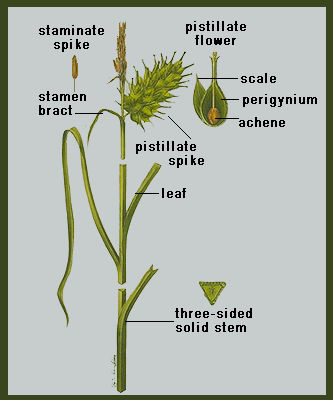
-
Article
Sedimentary Rock
Only about 5% of the Earth's crust is composed of sedimentary rocks, but they cover 70-75% of the exposed surface and contain many economically important minerals, as well as coal and petroleum.
"https://d3d0lqu00lnqvz.cloudfront.net/media/media/233c4490-07ce-414e-b2d5-e30602befc75.jpg" // resources/views/front/categories/view.blade.php
https://d3d0lqu00lnqvz.cloudfront.net/media/media/233c4490-07ce-414e-b2d5-e30602befc75.jpg
-
Article
Seed Plants
Seed plants are the most abundant and familiar component of Earth's vegetation, comprising an estimated 250,000–300,000 species. They outnumber all other plant groups, dominate the land, thrive in bodies of fresh water and are found to a limited extent in the oceans. They include the largest (giant sequoia) and oldest (bristlecone pine) living things, and encompass tiny water-meal scarcely 1 mm long and ephemeral annuals that survive only a few weeks. Seed plants share with other vascular plants (plants with woody conducting systems) basic organs (root, stem and leaf), cell types and tissues. In response to different environments, they have evolved many forms.
"https://d3d0lqu00lnqvz.cloudfront.net/plant/1_The-Sky-Above.jpg" // resources/views/front/categories/view.blade.php
https://d3d0lqu00lnqvz.cloudfront.net/plant/1_The-Sky-Above.jpg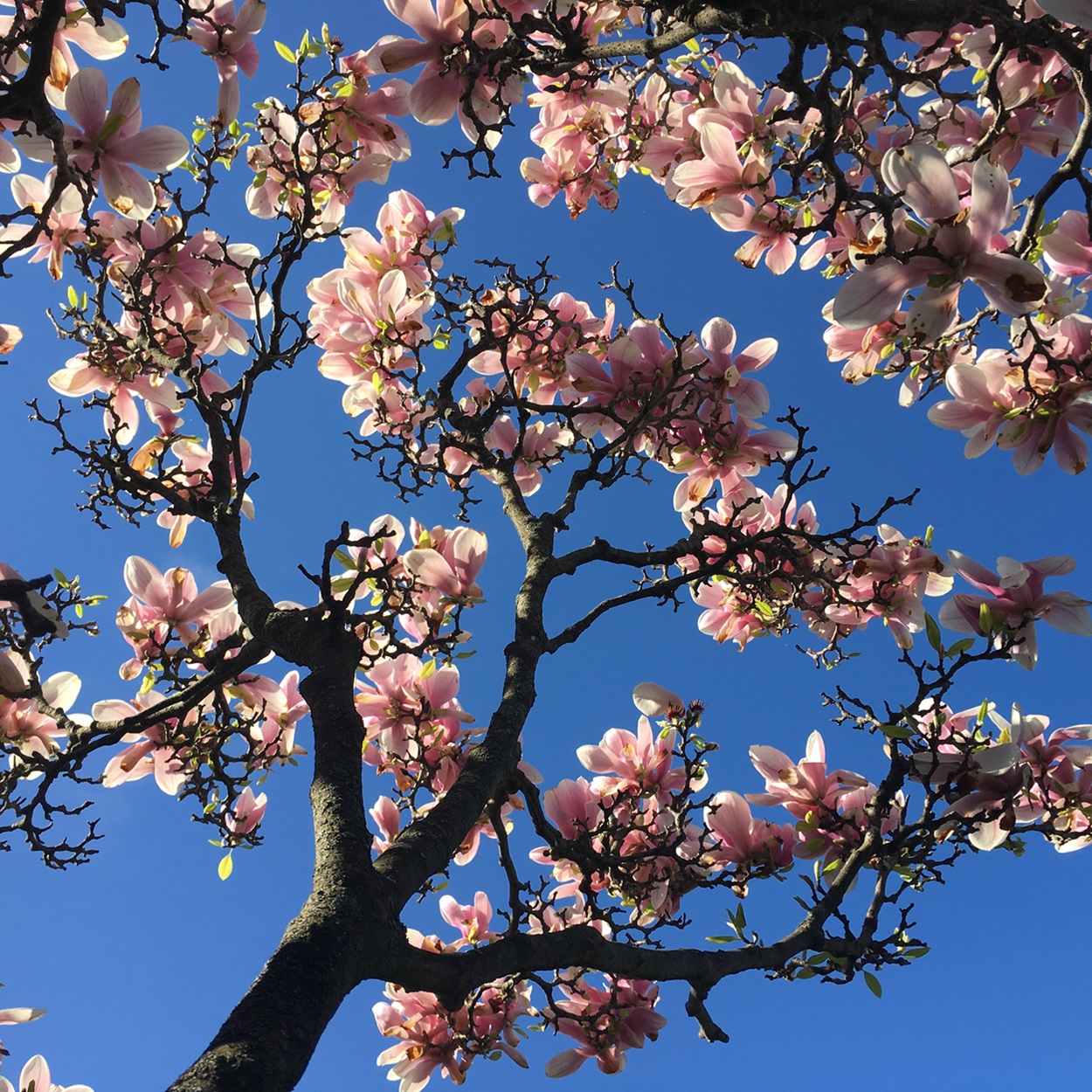
-
Macleans
Segal Enters Tory Leadership Race
The backroom boy is in. So is the dark horse. As expected, Hugh Segal, the consummate Tory fixer, announced his run for the federal party leadership last week, followed in short order by Brian Pallister, the former Manitoba cabinet minister.This article was originally published in Maclean's Magazine on June 22, 1998
"https://thecanadianencyclopedia.ca/images/tce_placeholder.jpg?v=e9dca980c9bdb3aa11e832e7ea94f5d9" // resources/views/front/categories/view.blade.php
https://thecanadianencyclopedia.ca/images/tce_placeholder.jpg?v=e9dca980c9bdb3aa11e832e7ea94f5d9
-
Article
Sei Whale
The sei whale (Balaenoptera borealis) is the third-largest baleen whale. These whales are found in Canada's Atlantic and Pacific oceans. Two subspecies of sei whales are recognized: a northern subspecies (Balaenoptera borealis borealis) and a southern subspecies (Balaenoptera borealis schlegelii). The sei whale is one of the fastest whales, reaching up to 55 km/h over short distances.
"https://d3d0lqu00lnqvz.cloudfront.net/seiwhale/Sei-Whale.jpg" // resources/views/front/categories/view.blade.php
https://d3d0lqu00lnqvz.cloudfront.net/seiwhale/Sei-Whale.jpg
-
Article
Seigneurial System
The seigneurial system was an institutional form of land distribution established in New France in 1627 and officially abolished in 1854. The Compagnie des Cent-Associés, which was granted ownership and legal and seigneurial rights over New France, from the Arctic to Florida, also obtained the right to allocate the land to its best advantage. The seigneurial system was based on the feudal system, which involved the personal dependency of censitaires (tenants) on the seigneur (see also Habitant).
"https://d3d0lqu00lnqvz.cloudfront.net/media/media/03b970d8-8c04-4534-938f-0cf5738ec6c3.jpg" // resources/views/front/categories/view.blade.php
https://d3d0lqu00lnqvz.cloudfront.net/media/media/03b970d8-8c04-4534-938f-0cf5738ec6c3.jpg
-
Article
Semaines sociales du Canada
Semaines sociales du Canada, annual conferences started in 1920 by Jesuit Fr Joseph-Papin ARCHAMBAULT and organizers from the École sociale populaire. The goal was to train an elite who would spread a Christian spirit and the church's SOCIAL DOCTRINE throughout Québec's mores, institutions and laws.
"https://thecanadianencyclopedia.ca/images/tce_placeholder.jpg?v=e9dca980c9bdb3aa11e832e7ea94f5d9" // resources/views/front/categories/view.blade.php
https://thecanadianencyclopedia.ca/images/tce_placeholder.jpg?v=e9dca980c9bdb3aa11e832e7ea94f5d9
-
Article
Semiconductors and Transistors
Semiconductors, often called integrated circuits, chips or microchips, are essential components of all computers and are used in a wide variety of other devices including telecommunications equipment, consumer electronics, home appliances, and even automobiles.
"https://thecanadianencyclopedia.ca/images/tce_placeholder.jpg?v=e9dca980c9bdb3aa11e832e7ea94f5d9" // resources/views/front/categories/view.blade.php
https://thecanadianencyclopedia.ca/images/tce_placeholder.jpg?v=e9dca980c9bdb3aa11e832e7ea94f5d9
-
Article
Séminaire de Québec
Séminaire de Québec, an educational institution consisting of the Grand Séminaire and the Petit Séminaire. The former, fd 26 Mar 1663 by Mgr François de LAVAL, was to train priests and guarantee parish ministries and evangelization throughout the diocese. In 1665 it was affiliated with the Séminaire des Missions Étrangères de Paris.
"https://d3d0lqu00lnqvz.cloudfront.net/media/media/8b6b148e-044b-4ca9-a70a-2080d5773590.jpg" // resources/views/front/categories/view.blade.php
https://d3d0lqu00lnqvz.cloudfront.net/media/media/8b6b148e-044b-4ca9-a70a-2080d5773590.jpg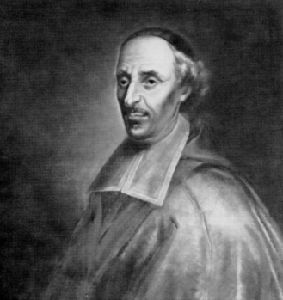
-
Article
Senate of Canada
The Senate is the Upper House of Canada’s Parliament. Its 105 members are appointed and hold their seats until age 75. The Senate’s purpose is to consider and revise legislation; investigate national issues; and most crucially according to the Constitution, give the regions of Canada an equal voice in Parliament. The Senate is a controversial institution. It has long been regarded by many Canadians as a place of unfair patronage and privilege. An unresolved debate continues about whether it should be reformed into an elected body accountable to the voters, or abolished.
"https://d3d0lqu00lnqvz.cloudfront.net/media/media/c19d86a2-25d9-49fa-b11e-f7544e8c71f2.jpg" // resources/views/front/categories/view.blade.php
https://d3d0lqu00lnqvz.cloudfront.net/media/media/c19d86a2-25d9-49fa-b11e-f7544e8c71f2.jpg
-
Editorial
Senate: Canada's Best Think Tank
The following article is an editorial written by The Canadian Encyclopedia staff. Editorials are not usually updated.
"https://d3d0lqu00lnqvz.cloudfront.net/media/media/c19d86a2-25d9-49fa-b11e-f7544e8c71f2.jpg" // resources/views/front/categories/view.blade.php
https://d3d0lqu00lnqvz.cloudfront.net/media/media/c19d86a2-25d9-49fa-b11e-f7544e8c71f2.jpg
-
Article
Sentencing Hate Crimes
For many offences, the Criminal Code prescribes only maximum sentences, giving judges wide latitude to determine fit penalties. Judges consider a broad array of aggravating and mitigating factors in sentencing. One aggravating factor is the motivation of racial or group hatred for an offence.
"https://thecanadianencyclopedia.ca/images/tce_placeholder.jpg?v=e9dca980c9bdb3aa11e832e7ea94f5d9" // resources/views/front/categories/view.blade.php
https://thecanadianencyclopedia.ca/images/tce_placeholder.jpg?v=e9dca980c9bdb3aa11e832e7ea94f5d9