
Browse "Things"
-
Article
S. Sabathil & Son Ltd.
S. Sabathil & Son Ltd. Vancouver harpsichord makers (whose workshop is on Bowen Island). The company was established in 1960 by Simon (b ca 1896 d Vancouver 1980) and Sigurd (b 1939) Sabathil, who had immigrated to Canada from Marianské Lázne, Czechoslovakia.
"https://thecanadianencyclopedia.ca/images/tce_placeholder.jpg?v=e9dca980c9bdb3aa11e832e7ea94f5d9" // resources/views/front/categories/view.blade.php
https://thecanadianencyclopedia.ca/images/tce_placeholder.jpg?v=e9dca980c9bdb3aa11e832e7ea94f5d9
-
Article
Sabian Ltd.
Sabian Ltd. Cymbal manufacturer, established in 1982 by Robert Zildjian at Meductic, near Fredericton, in a factory opened in 1968 by Azco Ltd, a subsidiary of the US-based Avedis Zildjian Co.
"https://thecanadianencyclopedia.ca/images/tce_placeholder.jpg?v=e9dca980c9bdb3aa11e832e7ea94f5d9" // resources/views/front/categories/view.blade.php
https://thecanadianencyclopedia.ca/images/tce_placeholder.jpg?v=e9dca980c9bdb3aa11e832e7ea94f5d9
-
Article
Sable Island Horses
The wild horses, named for the island they inhabit, are now the only terrestrial mammals on Sable Island aside from the few inhabitants. They exhibit great variability in size, conformation and colour and most closely resemble the Spanish barb, a small, tough horse that originated in North Africa, and the Acadian horse, the common working horse of the Atlantic provinces from the 17th to the 19th centuries. The stallions weigh 270–360 kg and stand about 14 hands (140 cm) at the withers (shoulders). Mares are a little smaller, averaging about 40 kg less. The Sable Island horse is the provincial horse of Nova Scotia.
"https://d3d0lqu00lnqvz.cloudfront.net/media/media/bb59d32a-9657-4d60-acab-db0e4608fe4f.jpg" // resources/views/front/categories/view.blade.php
https://d3d0lqu00lnqvz.cloudfront.net/media/media/bb59d32a-9657-4d60-acab-db0e4608fe4f.jpg
-
Macleans
Sabotage of Top Web Sites
How do you find out if your house is secure? One answer: try to bust in and see how hard it is. The cyberspace equivalent is what a northern Virginia company called Global Integrity was doing last week - paying half a dozen young computer whizzes to break into Web sites run by their clients.This article was originally published in Maclean's Magazine on February 21, 2000
"https://thecanadianencyclopedia.ca/images/tce_placeholder.jpg?v=e9dca980c9bdb3aa11e832e7ea94f5d9" // resources/views/front/categories/view.blade.php
https://thecanadianencyclopedia.ca/images/tce_placeholder.jpg?v=e9dca980c9bdb3aa11e832e7ea94f5d9
-
Article
Safety Standards
Safety Standards, documents or codes which describe characteristics or usage for products, materials and services, are intended to protect citizens from the hazards of technology.
"https://thecanadianencyclopedia.ca/images/tce_placeholder.jpg?v=e9dca980c9bdb3aa11e832e7ea94f5d9" // resources/views/front/categories/view.blade.php
https://thecanadianencyclopedia.ca/images/tce_placeholder.jpg?v=e9dca980c9bdb3aa11e832e7ea94f5d9
-
Article
Sagebrush
Sagebrush (genus Artemisia), bitter, aromatic plant or shrub of the family Compositae or Asteraceae. They include annual, biennial and perennial plants. More than 100 species are known, chiefly from arid regions of the Northern Hemisphere. Fifteen species are native to Canada; seven others are introduced (two European, four Eurasian and one from Aleutian Islands).
"https://thecanadianencyclopedia.ca/images/tce_placeholder.jpg?v=e9dca980c9bdb3aa11e832e7ea94f5d9" // resources/views/front/categories/view.blade.php
https://thecanadianencyclopedia.ca/images/tce_placeholder.jpg?v=e9dca980c9bdb3aa11e832e7ea94f5d9
-
Macleans
Saguenay Floods Kill 10
This article was originally published in Maclean’s magazine on August 5, 1996. Partner content is not updated. One soggy day late last April, Art Poirier found himself among thousands of people stacking sandbags against rising floodwaters from southern Manitoba's ancient and implacable nemesis, the Red River. Poirier flicked a cigarette butt into the brand new lake around his home.
"https://thecanadianencyclopedia.ca/images/tce_placeholder.jpg?v=e9dca980c9bdb3aa11e832e7ea94f5d9" // resources/views/front/categories/view.blade.php
https://thecanadianencyclopedia.ca/images/tce_placeholder.jpg?v=e9dca980c9bdb3aa11e832e7ea94f5d9
-
Article
Sailing Ships
In Canada's age of sail (1800-75) over 4000 ships, each exceeding 500 tons burthen, were built in Canada. In 1878 Canadian-registered ships numbered 7196 and totalled 1 333 015 tons. Among the nations, Canada stood fourth in seagoing tonnage.
"https://d3d0lqu00lnqvz.cloudfront.net/media/media/51e2696b-a413-49ec-95f7-5c8ae1e99b18.jpg" // resources/views/front/categories/view.blade.php
https://d3d0lqu00lnqvz.cloudfront.net/media/media/51e2696b-a413-49ec-95f7-5c8ae1e99b18.jpg
-
Editorial
Saint Mary’s Players Make Hockey History
The following article is an editorial written by The Canadian Encyclopedia staff. Editorials are not usually updated. In 1970, Bob Dawson, Darrell Maxwell and Percy Paris made history at Nova Scotia’s Saint Mary’s University by becoming what is believed to be the first and only all-black forward line in the history of Canadian university hockey.
"https://d3d0lqu00lnqvz.cloudfront.net/media/media/2e5bb043-e27d-45ca-8d6f-f432a0a36e3d.jpg" // resources/views/front/categories/view.blade.php
https://d3d0lqu00lnqvz.cloudfront.net/media/media/2e5bb043-e27d-45ca-8d6f-f432a0a36e3d.jpg
-
Article
Saint Mary's University
Saint Mary's University, Halifax, was founded in 1802 to provide higher learning to young Catholic men. It is the oldest English-speaking, Roman-Catholic university in Canada. The Nova Scotia House of Assembly granted Saint Mary's its charter in 1841.
"https://thecanadianencyclopedia.ca/images/tce_placeholder.jpg?v=e9dca980c9bdb3aa11e832e7ea94f5d9" // resources/views/front/categories/view.blade.php
https://thecanadianencyclopedia.ca/images/tce_placeholder.jpg?v=e9dca980c9bdb3aa11e832e7ea94f5d9
-
Article
Saint Patrick’s Basilica
Saint Patrick’s Basilica is a minor basilica located in Montreal. It was constructed between 1843–47 as a parish church for Montreal’s growing Irish Catholic population (see Irish Canadians; Catholicism in Canada). The church was elevated to the status of a minor basilica in 1989. In addition to playing a significant religious and cultural role for the city of Montreal’s Irish community, Saint Patrick’s Basilica is recognized as the mother church for English-speaking Catholics in the city (see Canadian English; Languages in use in Canada).
"https://d3d0lqu00lnqvz.cloudfront.net/stpatricksbasilica/stpatrickschurchbynotman-son.jpg" // resources/views/front/categories/view.blade.php
https://d3d0lqu00lnqvz.cloudfront.net/stpatricksbasilica/stpatrickschurchbynotman-son.jpg
-
Article
St. Thomas University
St. Thomas University, in Fredericton, NB, evolved from the Roman Catholic school system in the province and more directly from Saint Michael's Academy in Chatham.
"https://thecanadianencyclopedia.ca/images/tce_placeholder.jpg?v=e9dca980c9bdb3aa11e832e7ea94f5d9" // resources/views/front/categories/view.blade.php
https://thecanadianencyclopedia.ca/images/tce_placeholder.jpg?v=e9dca980c9bdb3aa11e832e7ea94f5d9
-
Article
Salamander Species in Canada
Salamanders are tailed amphibians belonging to the order Caudata. There are around 800 known species worldwide; 22 are found in Canada. In addition to these species, the unisexual Ambystoma, a unique lineage of salamanders that does not conform to the typical definition of a species, are also found in Canada. Salamanders mainly live in the temperate regions of the Northern Hemisphere and tropical South and Central America. North America is home to more species of salamanders than anywhere else in the world. In Canada, salamanders are found from the Maritimes to British Columbia, and as far north as central Labrador and northern British Columbia; none have been recorded on the island of Newfoundland.
"https://d3d0lqu00lnqvz.cloudfront.net/SalamanderSpecies/SpottedSalamander.jpg" // resources/views/front/categories/view.blade.php
https://d3d0lqu00lnqvz.cloudfront.net/SalamanderSpecies/SpottedSalamander.jpg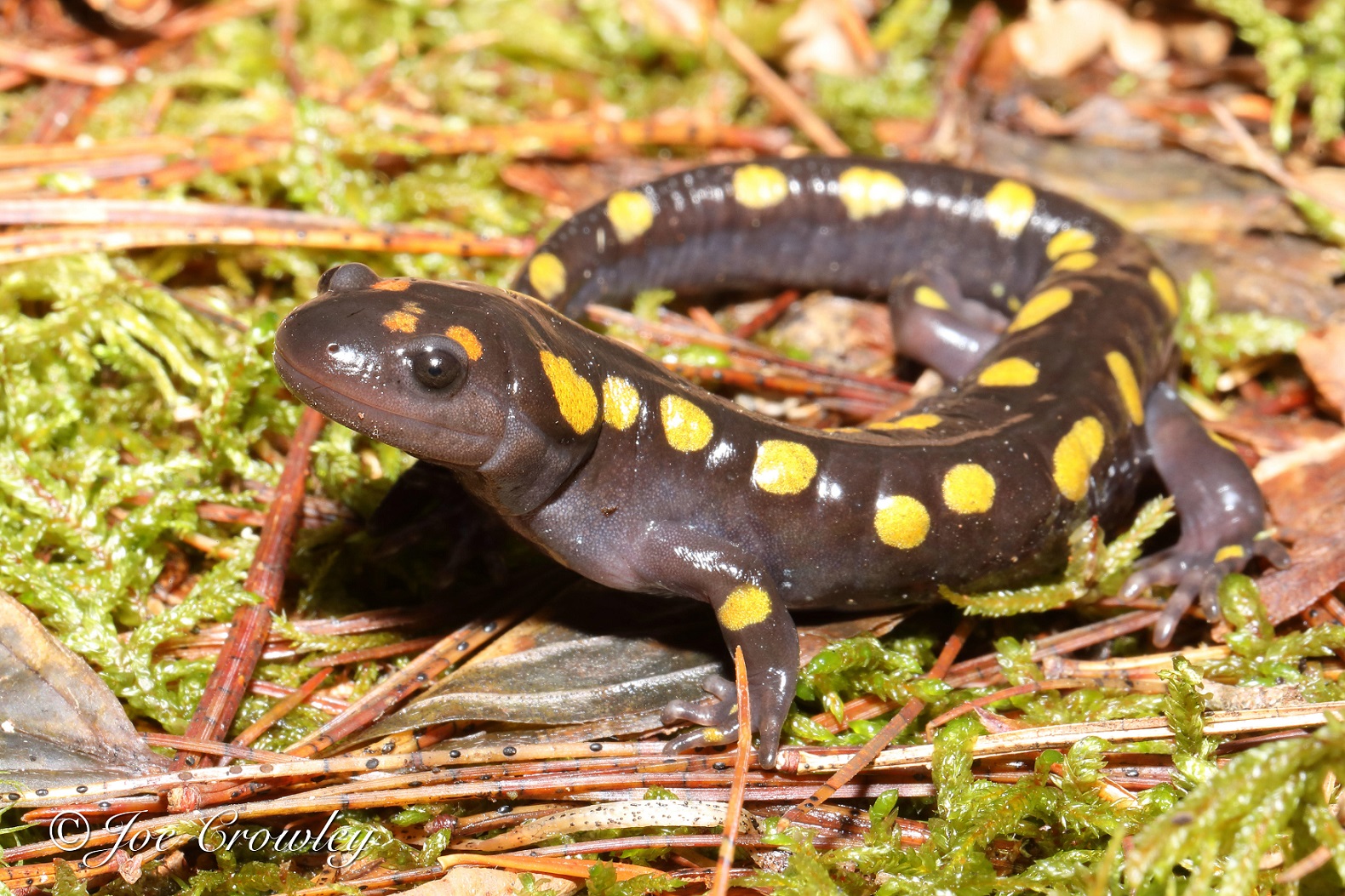
-
Article
Salish Woolly Dog
The Salish Woolly dog was an important part of Coast Salish life throughout southern Vancouver Island, the Strait of Georgia, and Washington State, as the dogs’ hair was used to weave clothing and blankets. Due to the increased presence of European settlers and their machine-spun sheep wool, the Salish Woolly dog population declined in the 1800s until its extinction around 1900.
"https://d3d0lqu00lnqvz.cloudfront.net/media/new_article_images/Salish-wooly-dog.jpg" // resources/views/front/categories/view.blade.php
https://d3d0lqu00lnqvz.cloudfront.net/media/new_article_images/Salish-wooly-dog.jpg
-
Article
Salmon
The salmon is a family of fish, Salmonidae [Lat salire, "to leap"], with soft fin rays, a short dorsal fin, an adipose (fatty) fin, and teeth in the jaws. The family includes salmon, trout and char of the subfamily Salmoninae, the graylings of the subfamily Thymallinae and the whitefishes of the subfamily Coregoninae. Salmonids are native to north temperate and subarctic waters. However, because of their tremendous sportfishing appeal, they have been introduced to all continents except Antarctica. Five genera of Salmoninae are recognized. Two are Eurasian, Brachymystax and Hucho. Three are found in both hemispheres, including Canada: Salmo, the trouts and the Atlantic salmon; Oncorhynchus, the Pacific salmon; and Salvelinus, the chars.
"https://d3d0lqu00lnqvz.cloudfront.net/media/media/e9b9b391-1dc4-48d3-bdb1-36e27a35cf6d.jpg" // resources/views/front/categories/view.blade.php
https://d3d0lqu00lnqvz.cloudfront.net/media/media/e9b9b391-1dc4-48d3-bdb1-36e27a35cf6d.jpg