
Browse "Things"
-
Article
Prairie Dry Belt Disaster
Five major investigations were commissioned, but to little avail. Between 1921 and 1926, 138 townships in southern Alberta, comprising nearly 3.2 million acres (1.3 million ha), lost at least 55% of their population; by 1926 80% of the Tilley-East country was permanently evacuated.
"https://d3d0lqu00lnqvz.cloudfront.net/media/media/ea2328a1-2ce9-4f2e-be69-d92cbfb2ae7a.jpg" // resources/views/front/categories/view.blade.php
https://d3d0lqu00lnqvz.cloudfront.net/media/media/ea2328a1-2ce9-4f2e-be69-d92cbfb2ae7a.jpg
-
Article
Prairie Farm Rehabilitation Administration (PFRA)
The Prairie Farm Rehabilitation Administration (PFRA) was a branch of Agriculture and Agri-Food Canada with a focus on Western Canada. It was headquartered in Regina, Saskatchewan. The PFRA also had 22 district offices throughout the Prairie provinces. The agency began in response to the drought crisis of the 1930s in the Prairies. However, for nearly eight decades, it continued to help farmers conserve soil, prevent erosion, develop water resources and manage pasture land.
"https://d3d0lqu00lnqvz.cloudfront.net/media/media/1feca1f5-6d62-4849-ada5-e7b61d404647.jpg" // resources/views/front/categories/view.blade.php
https://d3d0lqu00lnqvz.cloudfront.net/media/media/1feca1f5-6d62-4849-ada5-e7b61d404647.jpg
-
Article
History of Settlement in the Canadian Prairies
The Canadian Prairies were peopled in six great waves of migration, spanning from prehistory to the present. The migration from Asia, about 13,300 years ago, produced an Indigenous population of 20,000 to 50,000 by about 1640. Between 1640 and 1840, several thousand European and Canadian fur traders arrived, followed by several hundred British immigrants. They created dozens of small outposts and a settlement in the Red River Colony, where the Métis became the largest part of the population. The third wave, from the 1840s to the 1890s, consisted mainly but not solely of Canadians of British heritage. The fourth and by far the largest wave was drawn from many nations, mostly European. It occurred from 1897 to 1929, with a pause (1914–22) during and after the First World War. The fifth wave, drawn from other Canadian provinces and from Europe and elsewhere, commenced in the late 1940s. It lasted through the 1960s. The sixth wave, beginning in the 1970s, drew especially upon peoples of the southern hemisphere. It has continued, with fluctuations, to the present. Throughout the last century, the region has also steadily lost residents, as a result of migration to other parts of Canada, to the United States, and elsewhere.
"https://d3d0lqu00lnqvz.cloudfront.net/media/media/e1c671ab-3dcf-459c-b108-0bc6e4a86b99.jpg" // resources/views/front/categories/view.blade.php
https://d3d0lqu00lnqvz.cloudfront.net/media/media/e1c671ab-3dcf-459c-b108-0bc6e4a86b99.jpg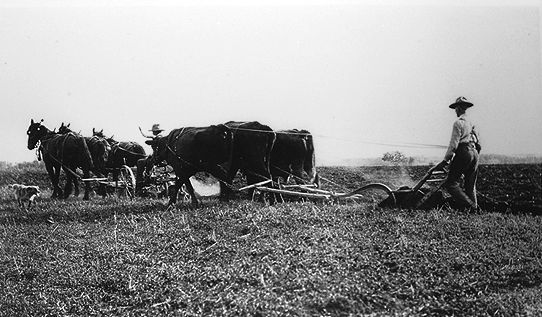
-
Article
Precious Blood Roman Catholic Church
The Église du Précieux Sang, built between 1967 and 1969 in St. Boniface, Manitoba, was designed by Étienne-Joseph Gaboury, of Gaboury, Lussier, Sigurdson Architects.
"https://thecanadianencyclopedia.ca/images/tce_placeholder.jpg?v=e9dca980c9bdb3aa11e832e7ea94f5d9" // resources/views/front/categories/view.blade.php
https://thecanadianencyclopedia.ca/images/tce_placeholder.jpg?v=e9dca980c9bdb3aa11e832e7ea94f5d9
-
Article
History of Early Indigenous Peoples in Canada
There are varying perspectives on when Indigenous peoples first arrived in what is now North and South America. Some Indigenous traditions state that Indigenous peoples have been here since time immemorial. Archaeological research ranges widely in arguments surrounding first arrival, including dates as far back as 130,000 years ago to as recently as 12,000 years ago.
"https://d3d0lqu00lnqvz.cloudfront.net/historyindigenouspeople/Fluted-Point.jpg" // resources/views/front/categories/view.blade.php
https://d3d0lqu00lnqvz.cloudfront.net/historyindigenouspeople/Fluted-Point.jpg
-
Article
Prejudice and Discrimination in Canada
Prejudice refers to an unsubstantiated, negative pre-judgment of individuals or groups, usually because of ethnicity, religion or race. Discrimination is the exclusion of individuals or groups from full participation in society because of prejudice.
"https://d3d0lqu00lnqvz.cloudfront.net/media/media/53fa1c39-873e-4b13-ad8f-64872464d594.jpg" // resources/views/front/categories/view.blade.php
https://d3d0lqu00lnqvz.cloudfront.net/media/media/53fa1c39-873e-4b13-ad8f-64872464d594.jpg
-
Article
Premier
A premier is the chief minister of a provincial government. Because of the shared framework of cabinet government, the office of provincial premier is similar to that held by Canada's Prime Minister.
"https://thecanadianencyclopedia.ca/images/tce_placeholder.jpg?v=e9dca980c9bdb3aa11e832e7ea94f5d9" // resources/views/front/categories/view.blade.php
https://thecanadianencyclopedia.ca/images/tce_placeholder.jpg?v=e9dca980c9bdb3aa11e832e7ea94f5d9
-
Macleans
Premier Danny Williams Gives Prominence to Newfoundland's Concerns
This article was originally published in Maclean’s magazine on December 20, 2004. Partner content is not updated. The suits are more conservative these days, the partying is toned down, but there's still plenty of mischief at the heart of Danny Williams.
"https://d3d0lqu00lnqvz.cloudfront.net/media/media/eee3ae29-ece8-4e05-8734-c9161cf6442f.jpg" // resources/views/front/categories/view.blade.php
https://d3d0lqu00lnqvz.cloudfront.net/media/media/eee3ae29-ece8-4e05-8734-c9161cf6442f.jpg
-
Macleans
Premiers and National Unity
This article was originally published in Maclean’s magazine on September 29, 1997. Partner content is not updated.
"https://thecanadianencyclopedia.ca/images/tce_placeholder.jpg?v=e9dca980c9bdb3aa11e832e7ea94f5d9" // resources/views/front/categories/view.blade.php
https://thecanadianencyclopedia.ca/images/tce_placeholder.jpg?v=e9dca980c9bdb3aa11e832e7ea94f5d9
-
Article
Prerogative Powers
Prerogative powers are defined as "the residue of discretionary or arbitrary authority which at any given time is legally left in the hands of the CROWN.
"https://thecanadianencyclopedia.ca/images/tce_placeholder.jpg?v=e9dca980c9bdb3aa11e832e7ea94f5d9" // resources/views/front/categories/view.blade.php
https://thecanadianencyclopedia.ca/images/tce_placeholder.jpg?v=e9dca980c9bdb3aa11e832e7ea94f5d9
-
Article
Presbyterian and Reformed Churches in Canada
All Christian churches of the "Reformed" tradition derive from the 16th-century Protestant Reformation and from Calvinism. Early Scottish settlers brought Presbyterianism to the Maritimes and central Canada in the late 18th century. In the 2011 National Household Survey (NHS), 472,385 Canadians identified as Presbyterian.
"https://d3d0lqu00lnqvz.cloudfront.net/media/media/a32c328a-2914-4151-88f8-78752391e954.jpg" // resources/views/front/categories/view.blade.php
https://d3d0lqu00lnqvz.cloudfront.net/media/media/a32c328a-2914-4151-88f8-78752391e954.jpg
-
Macleans
Preserving St. Roch
A small horde of second- and third-graders swarms down onto the blood-red deck like so many giggling pirates. But the "blood" on the deck is really red-oxide paint. And the children - from Parkcrest Elementary School in Burnaby, B.C.This article was originally published in Maclean's Magazine on May 11, 1998
"https://thecanadianencyclopedia.ca/images/tce_placeholder.jpg?v=e9dca980c9bdb3aa11e832e7ea94f5d9" // resources/views/front/categories/view.blade.php
https://thecanadianencyclopedia.ca/images/tce_placeholder.jpg?v=e9dca980c9bdb3aa11e832e7ea94f5d9
-
Article
Pressure Group
A pressure group, also known as an interest group or lobby, is an organization formed by like-minded people who seek to influence PUBLIC POLICY to promote an interest. Pressure groups exist in all modern pluralist democracies and have sprung up on all sides. Some defend producer interests.
"https://thecanadianencyclopedia.ca/images/tce_placeholder.jpg?v=e9dca980c9bdb3aa11e832e7ea94f5d9" // resources/views/front/categories/view.blade.php
https://thecanadianencyclopedia.ca/images/tce_placeholder.jpg?v=e9dca980c9bdb3aa11e832e7ea94f5d9
-
Article
Preston Rivulettes
During the hard years of the Depression, one team dominated women’s amateur ice hockey and captured the imagination of Canadians. Led by star right winger and captain Hilda Ranscombe — widely regarded as the best female hockey player in the world at the time — the Preston Rivulettes won provincial, regional and national championships. Of the estimated 350 games the Rivulettes played, they only lost between three and five (records vary). The Rivulettes were the most successful women’s ice hockey team in the history of Canadian sports. They have been inducted into the Cambridge Sports Hall of Fame and Canada’s Sports Hall of Fame.
"https://d3d0lqu00lnqvz.cloudfront.net/media/new_article_images/LadiesOntarioHockeyAssociation/Preston_Rivulettes_team_photo.jpg" // resources/views/front/categories/view.blade.php
https://d3d0lqu00lnqvz.cloudfront.net/media/new_article_images/LadiesOntarioHockeyAssociation/Preston_Rivulettes_team_photo.jpg
-
Article
Prestonian-class Frigates
The Prestonians were a group of 21 Second World War frigates reactivated by the Royal Canadian Navy (RCN) in the 1950s for antisubmarine warfare (ASW). This was a stopgap measure to meet Canada’s North Atlantic Treaty Organization (NATO) force goals until the purpose-built St Laurent-class destroyer escorts came into service. Although originally built as Anti-Submarine Warfare (ASW) vessels, the Prestonians had to be extensively modified to meet the more complex demands of Cold War ASW, which they performed until withdrawn in the mid-1960s.
"https://d3d0lqu00lnqvz.cloudfront.net/ASW/swansea-209.jpg" // resources/views/front/categories/view.blade.php
https://d3d0lqu00lnqvz.cloudfront.net/ASW/swansea-209.jpg