Browse "Things"
-
Article
Piano Playing and Teaching
The piano has maintained a position of prominence in many Canadian homes since the late 18th century. Canadians have thrived on this instrument, and Canada has produced some of the best pianists, piano instructors, and piano methods in the latter part of the 20th century.
"https://thecanadianencyclopedia.ca/images/tce_placeholder.jpg?v=e9dca980c9bdb3aa11e832e7ea94f5d9" // resources/views/front/categories/view.blade.php
https://thecanadianencyclopedia.ca/images/tce_placeholder.jpg?v=e9dca980c9bdb3aa11e832e7ea94f5d9
-
Article
Pickerel in Canada
Pickerel is the common name for three closely related carnivorous, soft-rayed freshwater fishes in the pike family (Esocidae). In parts of Canada, the name is applied, erroneously, to the walleye. The name is derived from an English diminutive of pike.
"https://d3d0lqu00lnqvz.cloudfront.net/media/media/a55af02e-e819-42d4-88f3-d4a0f6aecc15.jpg" // resources/views/front/categories/view.blade.php
https://d3d0lqu00lnqvz.cloudfront.net/media/media/a55af02e-e819-42d4-88f3-d4a0f6aecc15.jpg
-
Macleans
Pickton Preliminary Hearing
DAWN SANGRET, 19 years a resident of Port Coquitlam, B.C., arrives at the city's provincial court last week seeking answers. "I have my suspicions about a lot of things," she says.This article was originally published in Maclean's Magazine on January 27, 2003
"https://thecanadianencyclopedia.ca/images/tce_placeholder.jpg?v=e9dca980c9bdb3aa11e832e7ea94f5d9" // resources/views/front/categories/view.blade.php
https://thecanadianencyclopedia.ca/images/tce_placeholder.jpg?v=e9dca980c9bdb3aa11e832e7ea94f5d9
-
Article
Pictographs and Petroglyphs
Rock art is generally divided in two categories: carving sites (petroglyphs) and paintings sites (pictographs). Pictographs are paintings that were made by applying red ochre or, less commonly, black, white or yellow dye. Although the majority of the images were traced with the finger, some could be executed with brushes made of animal or vegetal fibres. Petroglyphs are carvings that are incised, abraded or ground by means of stone tools upon cliff walls, boulders and flat bedrock surfaces.
"https://d3d0lqu00lnqvz.cloudfront.net/media/media/a57744d3-7823-4f28-a552-232b42fcb08c.jpg" // resources/views/front/categories/view.blade.php
https://d3d0lqu00lnqvz.cloudfront.net/media/media/a57744d3-7823-4f28-a552-232b42fcb08c.jpg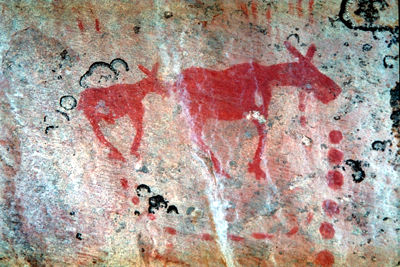
-
Article
Pictographs and Petroglyphs in Ontario
Pictographs and petroglyphs represent the First Peoples. They bridge the past and present through stone-carved and painted stories in what is known today as Ontario. These ancient artworks are found in locations like Petroglyphs Provincial Park, the largest known site of its kind in Canada. They offer invaluable insights into the spiritual, cultural and daily lives of their creators. They are not merely historical artifacts but are infused with cultural significance and spiritual relevance for Indigenous communities today. These sites are found throughout the province, especially along major rivers and waterbodies.
"https://d3d0lqu00lnqvz.cloudfront.net/PictographsandPetroglyphsinOntario/Peterborough-Petroglyphs_resized.jpg" // resources/views/front/categories/view.blade.php
https://d3d0lqu00lnqvz.cloudfront.net/PictographsandPetroglyphsinOntario/Peterborough-Petroglyphs_resized.jpg
-
Article
Pier 21
Pier 21 was an immigration depot on the Halifax harbourfront that operated from 1928 to 1971.
"https://d3d0lqu00lnqvz.cloudfront.net/media/media/fd704360-23a5-4333-9dc4-fed52fcc81b8.jpg" // resources/views/front/categories/view.blade.php
https://d3d0lqu00lnqvz.cloudfront.net/media/media/fd704360-23a5-4333-9dc4-fed52fcc81b8.jpg
-
Article
The Pig War
The “Pig War” of 1859 was a confrontation between the United States and Great Britain over the location of the international border in the San Juan Islands. The conflict began when an American settler killed a pig owned by an employee of the Hudson’s Bay Company; it quickly grew to involve British warships and hundreds of troops on both sides. The root of the conflict was an earlier compromise between the two nations that resulted in American and British settlers sharing the disputed islands. Though called a war, it never actually degenerated into an armed conflict, and there were no human casualties. In late 1859, the two sides agreed to a joint military occupation of the islands; this lasted until 1872, when the San Juan Islands became part of US territory.
"https://d3d0lqu00lnqvz.cloudfront.net/PigWar/Pig War.jpg" // resources/views/front/categories/view.blade.php
https://d3d0lqu00lnqvz.cloudfront.net/PigWar/Pig War.jpg
-
Article
Pigeon
The pigeon (Columbidae) is a large family (303 species) of birds, many of which are called doves, distributed throughout temperate and tropical areas worldwide.
"https://d3d0lqu00lnqvz.cloudfront.net/media/media/1270f168-86fc-4799-9149-ad91baa20d48.jpg" // resources/views/front/categories/view.blade.php
https://d3d0lqu00lnqvz.cloudfront.net/media/media/1270f168-86fc-4799-9149-ad91baa20d48.jpg
-
Article
Pika
Pika is a common name for the smallest members of the order Lagomorpha, which also includes rabbits and hares. Pikas are like guinea pigs in size and shape, have relatively short legs, no external tail and almost circular, prominent external ears.
"https://d3d0lqu00lnqvz.cloudfront.net/media/media/af98ba70-1113-45b4-b37d-a949a1275270.jpg" // resources/views/front/categories/view.blade.php
https://d3d0lqu00lnqvz.cloudfront.net/media/media/af98ba70-1113-45b4-b37d-a949a1275270.jpg
-
Article
Pike
Pike is the common name for the group of 5 species of predaceous freshwater fish with elongated snouts, sharp teeth, cylindrical bodies and forked tails, belonging to family Esocidae, order Esociformes, class Actinopterygii.
"https://d3d0lqu00lnqvz.cloudfront.net/media/media/b3274c7c-a583-453e-9df1-19e86cd30f1d.jpg" // resources/views/front/categories/view.blade.php
https://d3d0lqu00lnqvz.cloudfront.net/media/media/b3274c7c-a583-453e-9df1-19e86cd30f1d.jpg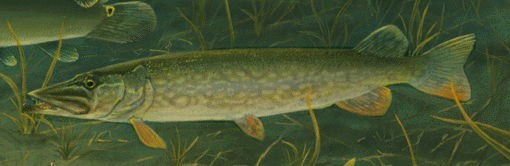
-
Article
Pine Trees in Canada
Canada is home to 10 species of pine trees. Distinguishable by their bundles of two, three or five needles, various species can be found throughout Canada’s provinces and the Yukon and Northwest Territories. These conifers can live for hundreds of years, with the oldest pine tree in the world being around 4,900 years old and located in Nevada. Two pine species are designated provincial trees in Canada: the lodgepole pine in Alberta and the eastern white pine in Ontario.
"https://d3d0lqu00lnqvz.cloudfront.net/pinetrees/The_Jack_Pine-_by_Tom_Thomson.jpg" // resources/views/front/categories/view.blade.php
https://d3d0lqu00lnqvz.cloudfront.net/pinetrees/The_Jack_Pine-_by_Tom_Thomson.jpg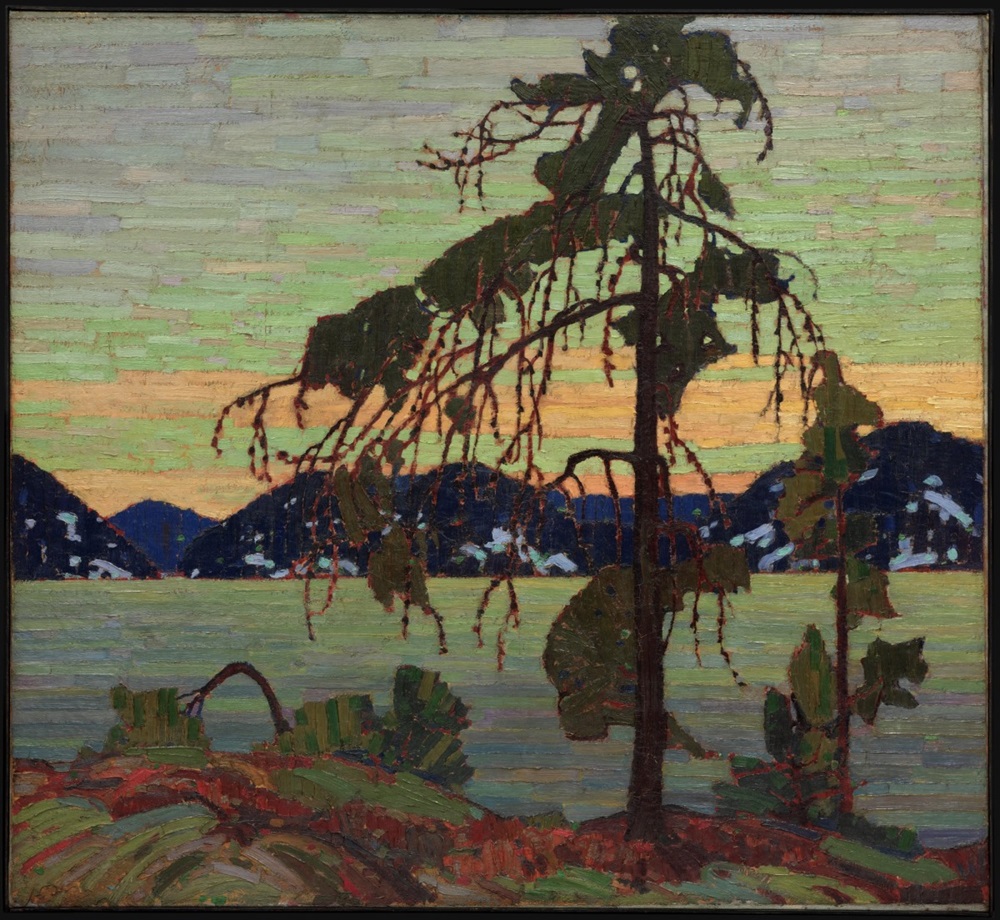
-
Article
Pingo
A pingo is an ice-cored hill typically conical in shape, growing and persisting only in PERMAFROST. The word "pingo" is of Inuit origin and was first used in the English-language literature by the botanist Alf E.
"https://d3d0lqu00lnqvz.cloudfront.net/media/media/5e658751-a56e-4535-9950-f641ec565a97.jpg" // resources/views/front/categories/view.blade.php
https://d3d0lqu00lnqvz.cloudfront.net/media/media/5e658751-a56e-4535-9950-f641ec565a97.jpg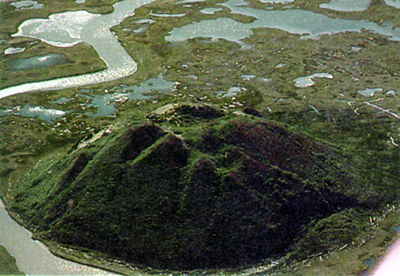
-
Article
Pink Triangle Press
In 1975, the informal collective that had founded Canada’s leading gay liberation newspaper, the Body Politic, in 1971 incorporated as Pink Triangle Press (PTP). Now one of the oldest producers of queer media content in the world, Pink Triangle Press is responsible for Xtra Magazine, the travel guide Pink Ticket Travel, multiple dating services and the 2021 documentary Small Town Pride.
"https://d3d0lqu00lnqvz.cloudfront.net/media/media/9983096905_bc6352ed8c_o.jpg" // resources/views/front/categories/view.blade.php
https://d3d0lqu00lnqvz.cloudfront.net/media/media/9983096905_bc6352ed8c_o.jpg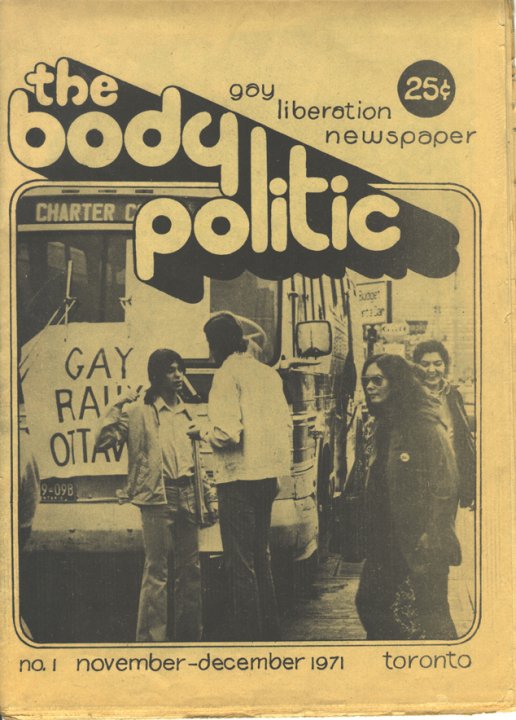
-
Article
Pinky Schooner
A Pinky Schooner was an ancient type of vessel adapted to a primitive sloop or schooner rig in the British North American colonies and widely used in the Maritime provinces until the early 1900s. Often less than 14 m long, they were cheap to build and ideally suited for fishing.
"https://thecanadianencyclopedia.ca/images/tce_placeholder.jpg?v=e9dca980c9bdb3aa11e832e7ea94f5d9" // resources/views/front/categories/view.blade.php
https://thecanadianencyclopedia.ca/images/tce_placeholder.jpg?v=e9dca980c9bdb3aa11e832e7ea94f5d9
-
Article
Pinsler Case
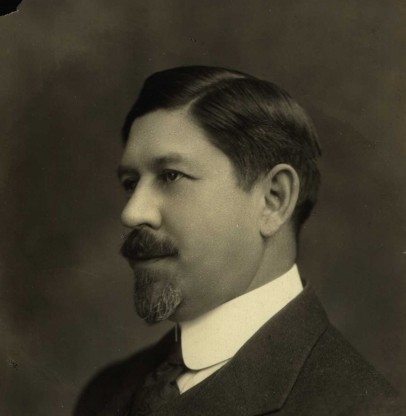
In the early 20th century, the Canadian school system was organized according to the two main Christian denominations. Since the schools were Catholic or Protestant, the enrolment of Jewish children gave rise to fierce debates, particularly in Montreal. In 1901, Jacob Pinsler was awarded a high school scholarship, but was ultimately denied on various grounds, including the fact that he was Jewish. In response, Pinsler’s parents, who were representatives of the Jewish community, filed an unsuccessful lawsuit. These events contributed to the amendment to the Public Education Act in 1903. (See Jewish School Question.)
"https://d3d0lqu00lnqvz.cloudfront.net/Samuel-William-Jacobs-cropped.jpg" // resources/views/front/categories/view.blade.php
https://d3d0lqu00lnqvz.cloudfront.net/Samuel-William-Jacobs-cropped.jpg