
Browse "Things"
-
Macleans
Narrow Win for Federalists
It took 128 years to make Canada into the country that it is today - and 10 hours of voting and a margin of only 53,498 votes to almost break with that past and reshape both the map and the country's future. No, 50.6 per cent, total votes: 2,361,526. Yes, 49.4 per cent, 2,308,028 votes.This article was originally published in Maclean's Magazine on November 6, 1995
"https://thecanadianencyclopedia.ca/images/tce_placeholder.jpg?v=e9dca980c9bdb3aa11e832e7ea94f5d9" // resources/views/front/categories/view.blade.php
https://thecanadianencyclopedia.ca/images/tce_placeholder.jpg?v=e9dca980c9bdb3aa11e832e7ea94f5d9
-
Article
Narwhal
Narwhal (Monodon monoceros) is a toothed whale of arctic seas. It is best known for its straight spiralled tusk, one of two teeth in the upper jaw that projects through the lip, reaching up to 3 m in length. This tusk, possessed by adult males and rarely females, may be used to establish and maintain dominance. Double-tusked narwhals occur occasionally. Narwhals grow to a maximum length of 5.8 m (excluding tusk). They have no dorsal fin. Body colour is grey at birth, almost black in juveniles, then white along the belly and mottled on the back in adults. Old individuals can be almost completely white, with dark spots largely confined to the dorsal surface.
"https://d3d0lqu00lnqvz.cloudfront.net/media/Twitter_Cards/narwhal.jpg" // resources/views/front/categories/view.blade.php
https://d3d0lqu00lnqvz.cloudfront.net/media/Twitter_Cards/narwhal.jpg
-
Macleans
Nasa's Columbia Shuttle Disaster
This article was originally published in Maclean’s magazine on February 10, 2003. Partner content is not updated. FOR LONG MINUTES, the crowd of family, friends, dignitaries and spectators stood at the end of the airstrip in Cape Canaveral, Fla., waiting and hoping for a familiar white speck in the distant blue sky. By the time the countdown clock reached zero, it was clear the reunion would never come.
"https://thecanadianencyclopedia.ca/images/tce_placeholder.jpg?v=e9dca980c9bdb3aa11e832e7ea94f5d9" // resources/views/front/categories/view.blade.php
https://thecanadianencyclopedia.ca/images/tce_placeholder.jpg?v=e9dca980c9bdb3aa11e832e7ea94f5d9
-
Article
National Indigenous Peoples Day
Celebrated in Canada every 21 June, National Indigenous Peoples Day is an official day of celebration to recognize and honour the heritage, cultures and valuable contributions to society by First Nations, Inuit and Métis peoples. National Indigenous Peoples Day is the same day as the summer solstice (the longest day of the year) and was chosen for its important symbolism to many Indigenous peoples (see Religion and Spirituality of Indigenous Peoples in Canada.) This day has been celebrated as a statutory territorial holiday in the Northwest Territories since 2001 and in the Yukon since 2017.
"https://d3d0lqu00lnqvz.cloudfront.net/media/media/877d8ab1-84a9-4ecd-8703-50661feef4e9.jpg" // resources/views/front/categories/view.blade.php
https://d3d0lqu00lnqvz.cloudfront.net/media/media/877d8ab1-84a9-4ecd-8703-50661feef4e9.jpg
-
Article
National Aboriginal Veterans Monument
The National Aboriginal Veterans Monument was unveiled in 2001 in Ottawa to commemorate the contributions made by Indigenous peoples in Canada during the First World War, Second World War and Korean War. The monument, a bronze statue with a granite base, was created by Indigenous artist Noel Lloyd Pinay of the Peepeekisis First Nation in Saskatchewan. It is situated in Confederation Park, directly across from the Lord Elgin Hotel. It is the first monument dedicated to Indigenous veterans in Canada.
"https://d3d0lqu00lnqvz.cloudfront.net/National-Aboriginal_Veterans-Monument.jpg" // resources/views/front/categories/view.blade.php
https://d3d0lqu00lnqvz.cloudfront.net/National-Aboriginal_Veterans-Monument.jpg
-
Article
National Action Committee on the Status of Women
The National Action Committee on the Status of Women (NAC) is a feminist, activist organization that was founded in 1971 to pressure the Canadian government to implement the recommendations of the Report of the Royal Commission on the Status of Women in Canada. The NAC ceased active operations in the late 2000s.
"https://d3d0lqu00lnqvz.cloudfront.net/media/media/be832524-f521-4200-b242-3c702ae0f3c4.jpg" // resources/views/front/categories/view.blade.php
https://d3d0lqu00lnqvz.cloudfront.net/media/media/be832524-f521-4200-b242-3c702ae0f3c4.jpg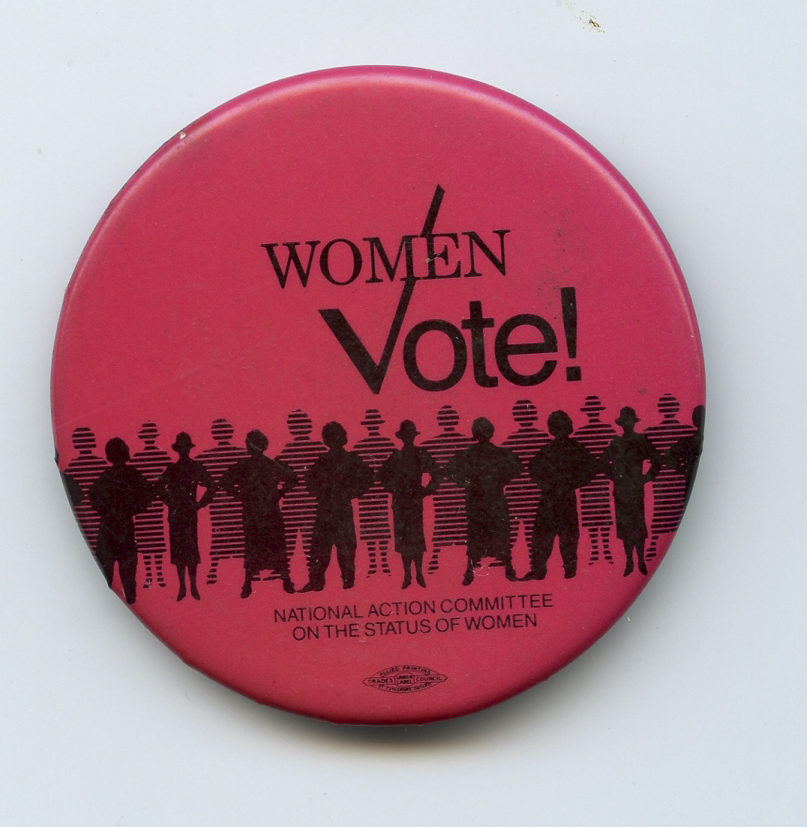
-
Article
National Assembly
The National Assembly (Assemblée Nationale) is the unicameral provincial legislature of Québec.
"https://d3d0lqu00lnqvz.cloudfront.net/media/media/f2856716-0ae7-436d-8286-d8fc3df5b4ca.jpg" // resources/views/front/categories/view.blade.php
https://d3d0lqu00lnqvz.cloudfront.net/media/media/f2856716-0ae7-436d-8286-d8fc3df5b4ca.jpg
-
Article
National Association of Women and Law
The National Association of Women and Law held its founding convention in Winnipeg in 1975. The present membership is composed of approximately 1000 women lawyers, law students and professionals in related fields.
"https://thecanadianencyclopedia.ca/images/tce_placeholder.jpg?v=e9dca980c9bdb3aa11e832e7ea94f5d9" // resources/views/front/categories/view.blade.php
https://thecanadianencyclopedia.ca/images/tce_placeholder.jpg?v=e9dca980c9bdb3aa11e832e7ea94f5d9
-
Article
National Ballet of Canada
The National Ballet of Canada, founded in 1951, is a classical ballet repertory company that presents a very wide range of choreography, from the 19th-century classics and masterworks by later choreographers to newly commissioned ballets. Although it remains Canada's largest and most influential ballet troupe, the scale of its operations has fluctuated historically according to its financial resources. It began with about 30 dancers and grew in the late 1980s to more than 70 dancers, downsizing to fewer than 50 by 1996. It slowly grew back its ranks to 76 dancers in 2026, along with 62 orchestra members and several guest artists.
"https://d3d0lqu00lnqvz.cloudfront.net/media/media/c8298f9a-b6fe-446d-9456-36f2284f0a48.jpg" // resources/views/front/categories/view.blade.php
https://d3d0lqu00lnqvz.cloudfront.net/media/media/c8298f9a-b6fe-446d-9456-36f2284f0a48.jpg
-
Article
Canada’s National Ballet School
Canada’s National Ballet School (NBS), based in Toronto, is an independent boarding and day school for students from Grades 6 through 12. Widely regarded as one of the world's leading institutes for dance education, it offers an integrated program of academic studies and dance instruction for about 150 students. Although separate institutions, the NBS has always been closely associated with its original parent organization, the National Ballet of Canada. Students have regularly appeared in National Ballet performances, and the school remains a major recruitment centre for the company. NBS graduates have provided the company with some of its finest artists, including Martine Van Hamel, Veronica Tennant, Karen Kain, Frank Augustyn, Kevin Pugh, Rex Harrington, Martine Lamy, John Alleyne and James Kudelka. The NBS remains a prestigious international training institute and an important player in Canada's arts community.
"https://d3d0lqu00lnqvz.cloudfront.net/1024px-National_Ballet_School.jpg" // resources/views/front/categories/view.blade.php
https://d3d0lqu00lnqvz.cloudfront.net/1024px-National_Ballet_School.jpg
-
Article
National Bank of Canada
National Bank of Canada The National Bank of Canada, with head offices in Montréal, is a Canadian chartered bank which commenced operations in 1979 as a result of the merger between the Banque Canadienne Nationale (founded in 1859 as the Banque National; merged 1924 with Banque d'Hochelaga and new name adopted 1925) and The Provincial Bank of Canada (founded in 1861). In 1981 it purchased Laurentide Mortgage Corporation, which specialized in mortgage loan operations, and...
"https://thecanadianencyclopedia.ca/images/tce_placeholder.jpg?v=e9dca980c9bdb3aa11e832e7ea94f5d9" // resources/views/front/categories/view.blade.php
https://thecanadianencyclopedia.ca/images/tce_placeholder.jpg?v=e9dca980c9bdb3aa11e832e7ea94f5d9
-
Article
National Capital Commission
The NCC is governed by a Commission (essentially a board of directors) composed of the chairman, vice-chairman and 13 other members appointed by the Governor in Council. Members come from across Canada and from the National Capital Region, an area of 4715 km2 located in Ontario and Québec.
"https://d3d0lqu00lnqvz.cloudfront.net/media/media/2b947338-f390-4eab-85b0-00adeb0911eb.jpg" // resources/views/front/categories/view.blade.php
https://d3d0lqu00lnqvz.cloudfront.net/media/media/2b947338-f390-4eab-85b0-00adeb0911eb.jpg
-
List
National Chiefs of the Assembly of First Nations
Assembly of First Nations The Assembly of First Nations (AFN) is a political advocacy organization that represents First Nations across Canada. In 1967, eight provincial Indigenous organizations formed the National Indian Brotherhood. This organization contributed to conversations surrounding the 1969 White Paper and other federal policies. In 1982, amid the Constitutional Conferences surrounding the rights of Indigenous peoples in Canada, the National Indian Brotherhood became the Assembly of First Nations. The AFN represents over 600...
"https://thecanadianencyclopedia.ca/images/tce_placeholder.jpg?v=e9dca980c9bdb3aa11e832e7ea94f5d9" // resources/views/front/categories/view.blade.php
https://thecanadianencyclopedia.ca/images/tce_placeholder.jpg?v=e9dca980c9bdb3aa11e832e7ea94f5d9
-
Article
National Council of Women of Canada
The National Council of Women of Canada (NCWC), founded in 1893, is one of Canada’s oldest advocacy groups. A non-partisan federation of voluntary women’s organizations, it is a member of the International Council of Women.
"https://d3d0lqu00lnqvz.cloudfront.net/media/media/bb905385-11f6-4c25-be47-9a13b360a6a4.jpg" // resources/views/front/categories/view.blade.php
https://d3d0lqu00lnqvz.cloudfront.net/media/media/bb905385-11f6-4c25-be47-9a13b360a6a4.jpg
-
Table
Canada National Curling Champions Men (Brier)
Prior to 1980 (when playoff format was introduced), the round robin champion won the Brier. Scores for tie-breaking final games are shown for this period (1927 to 1979). Due to the Second World War, there was no Brier from 1943 to 1945. Year Host Champion Team Team Members Record Gold Medal Game 1927 Toronto, ON Nova Scotia Murray MacNeill Al MacInnes Cliff Torey Jim Donahoe 6–1 N/A 1928 Toronto, ON Manitoba Gordon Hudson Sam Penwarden...
"https://thecanadianencyclopedia.ca/images/tce_placeholder.jpg?v=e9dca980c9bdb3aa11e832e7ea94f5d9" // resources/views/front/categories/view.blade.php
https://thecanadianencyclopedia.ca/images/tce_placeholder.jpg?v=e9dca980c9bdb3aa11e832e7ea94f5d9