
Browse "Things"
-
Macleans
Montreal Gazette Tries to Attract French Readers
This article was originally published in Maclean's Magazine on July 21, 2003
"https://thecanadianencyclopedia.ca/images/tce_placeholder.jpg?v=e9dca980c9bdb3aa11e832e7ea94f5d9" // resources/views/front/categories/view.blade.php
https://thecanadianencyclopedia.ca/images/tce_placeholder.jpg?v=e9dca980c9bdb3aa11e832e7ea94f5d9
-
Article
Montreal Metro
The Montreal metro opened on 14 October 1966. The second Canadian subway system after Toronto’s, which opened in 1954, the Montreal metro was the first subway in North America to run on rubber tires instead of metal wheels (see Toronto Subway). Extensions to the Montreal metro were built on Montreal Island over the two decades after it opened, and then to the city of Laval, on the island of Île Jésus, during the 2000s. The system runs entirely underground, and each station has a distinct architecture and design. The metro consists of four lines running a total of 71 km and serving 68 stations. The metro is managed by the Société de transport de Montréal (STM), the city’s transit agency.
"https://d3d0lqu00lnqvz.cloudfront.net/media/media/7cb43abc-85f5-4380-adb4-56f13bfebb41.jpg" // resources/views/front/categories/view.blade.php
https://d3d0lqu00lnqvz.cloudfront.net/media/media/7cb43abc-85f5-4380-adb4-56f13bfebb41.jpg
-
Article
Montréal Planetarium
Montréal’s Rio Tinto Alcan Planetarium is part of the Space for Life complex, which includes Montréal’s Biodome, Insectarium and Botanical Gardens. Space for Life is the largest natural science museum complex in Canada.
"https://d3d0lqu00lnqvz.cloudfront.net/media/media/ff14a3e3-5cf6-4523-84eb-f66716e9bb0c.JPG" // resources/views/front/categories/view.blade.php
https://d3d0lqu00lnqvz.cloudfront.net/media/media/ff14a3e3-5cf6-4523-84eb-f66716e9bb0c.JPG
-
Macleans
Montreal Police Convicted
This article was originally published in Maclean’s magazine on July 10, 1995. Partner content is not updated.
"https://thecanadianencyclopedia.ca/images/tce_placeholder.jpg?v=e9dca980c9bdb3aa11e832e7ea94f5d9" // resources/views/front/categories/view.blade.php
https://thecanadianencyclopedia.ca/images/tce_placeholder.jpg?v=e9dca980c9bdb3aa11e832e7ea94f5d9
-
Article
Montreal Protocol
The Montreal Protocol on Substances that Deplete the Ozone Layer, known simply as the Montreal Protocol, is an international environmental agreement. It regulates the consumption and production of approximately 100 man-made, ozone-depleting chemicals. The Montreal Protocol is so named because it was initially signed in Montreal on 16 September 1987. To date, the Montreal Protocol is the only United Nations treaty that every country in the world has ratified.
"https://d3d0lqu00lnqvz.cloudfront.net/media/media/423edb11-f93c-4ebd-9e90-f1f021236a09.jpg" // resources/views/front/categories/view.blade.php
https://d3d0lqu00lnqvz.cloudfront.net/media/media/423edb11-f93c-4ebd-9e90-f1f021236a09.jpg
-
Article
Montréal Riots
In February and March 1849 when the LaFontaine-Baldwin ministry passed the Rebellion Losses Bill, the opposition violently denounced the Act.
"https://thecanadianencyclopedia.ca/images/tce_placeholder.jpg?v=e9dca980c9bdb3aa11e832e7ea94f5d9" // resources/views/front/categories/view.blade.php
https://thecanadianencyclopedia.ca/images/tce_placeholder.jpg?v=e9dca980c9bdb3aa11e832e7ea94f5d9
-
Macleans
Montreal Symphony Orchestra Upheaval
It looks like an operatic finale to one of the most productive partnerships in classical music. After 25 years as artistic director of the MONTREAL SYMPHONY ORCHESTRA, Charles Dutoit abruptly resigned his position last week, in the midst of a nasty spat with his once loyal musicians.This article was originally published in Maclean's Magazine on April 22, 2002
"https://thecanadianencyclopedia.ca/images/tce_placeholder.jpg?v=e9dca980c9bdb3aa11e832e7ea94f5d9" // resources/views/front/categories/view.blade.php
https://thecanadianencyclopedia.ca/images/tce_placeholder.jpg?v=e9dca980c9bdb3aa11e832e7ea94f5d9
-
Macleans
Monty Quits as BCE CEO
This article was originally published in Maclean’s magazine on May 6, 2002. Partner content is not updated. In preparation for a meeting of the board on Friday, April 19 - five days before his surprise resignation shocked Canada's business community - Jean Monty spoke privately and individually with each of his 12 fellow directors. He wanted to talk through his strategy for beleaguered BCE INC.
"https://thecanadianencyclopedia.ca/images/tce_placeholder.jpg?v=e9dca980c9bdb3aa11e832e7ea94f5d9" // resources/views/front/categories/view.blade.php
https://thecanadianencyclopedia.ca/images/tce_placeholder.jpg?v=e9dca980c9bdb3aa11e832e7ea94f5d9
-
Article
Monuments of the First and Second World Wars
Since the end of the First World War, monuments commemorating the lives of Canadians who died in conflicts overseas have occupied a prominent place in our urban cultural landscape. Most were erected in the 1920s and 1930s and represent a commitment never to forget Canadian lives sacrificed in the First World War. The Second World War's claims on Canadian lives reinforced this commitment. In an era when few monuments to contemporary national heroes or great historical events are erected, war monuments retain their capacity to erase time and preserve a memory of those who died for their country.
"https://d3d0lqu00lnqvz.cloudfront.net/media/media/162485bf-95f4-4d5c-a699-2dec659d831e.jpg" // resources/views/front/categories/view.blade.php
https://d3d0lqu00lnqvz.cloudfront.net/media/media/162485bf-95f4-4d5c-a699-2dec659d831e.jpg
-
Article
Moon
The moon is a natural satellite of Earth, with a mean diameter of 3,476 km and a mass of 7.28 x 10²² kg (1.23 per cent of Earth's mass). Three moons of Jupiter and one of Saturn are larger; the dwarf planet Pluto is smaller. The moon's mean distance from Earth is 384,500 km, and its orbit takes 29.5306 days from one New Moon to the next. The moon shines only by reflected sunlight, appearing as a crescent when it is within 90° of the sun. Except near New Moon, it is second only to the sun in brightness. Tidal effects of Earth have forced the moon's rotation to match its orbital period; hence, one side of the moon always faces Earth, and only 59 per cent of its surface is visible. Because it is so close, the moon's influence exceeds the sun's as the cause of tides on Earth. The moon has been important in religion and art since the earliest records of human culture and has served as the basis for the lunar calendar.
"https://d3d0lqu00lnqvz.cloudfront.net/media/media/4bc37824-aa84-4a84-9b3c-b620f26bc350.jpg" // resources/views/front/categories/view.blade.php
https://d3d0lqu00lnqvz.cloudfront.net/media/media/4bc37824-aa84-4a84-9b3c-b620f26bc350.jpg
-
Article
Moose
Moose are the largest living member of the deer family (Cervidae). Four subspecies are found in Canada: the Alaska/Yukon moose (Alces alces gigas), the Shiras moose (Alces alces shirasi), the western Canada moose (Alces alces andersoni) and the eastern Canada moose (Alces alces americana). They live in every province and territory except Prince Edward Island. Often considered a symbol of Canada, the moose is featured on Ontario’s provincial coat of arms.
"https://d3d0lqu00lnqvz.cloudfront.net/media/media/82d06bf1-25ff-46ee-8ff5-93dd73cf05c4.jpg" // resources/views/front/categories/view.blade.php
https://d3d0lqu00lnqvz.cloudfront.net/media/media/82d06bf1-25ff-46ee-8ff5-93dd73cf05c4.jpg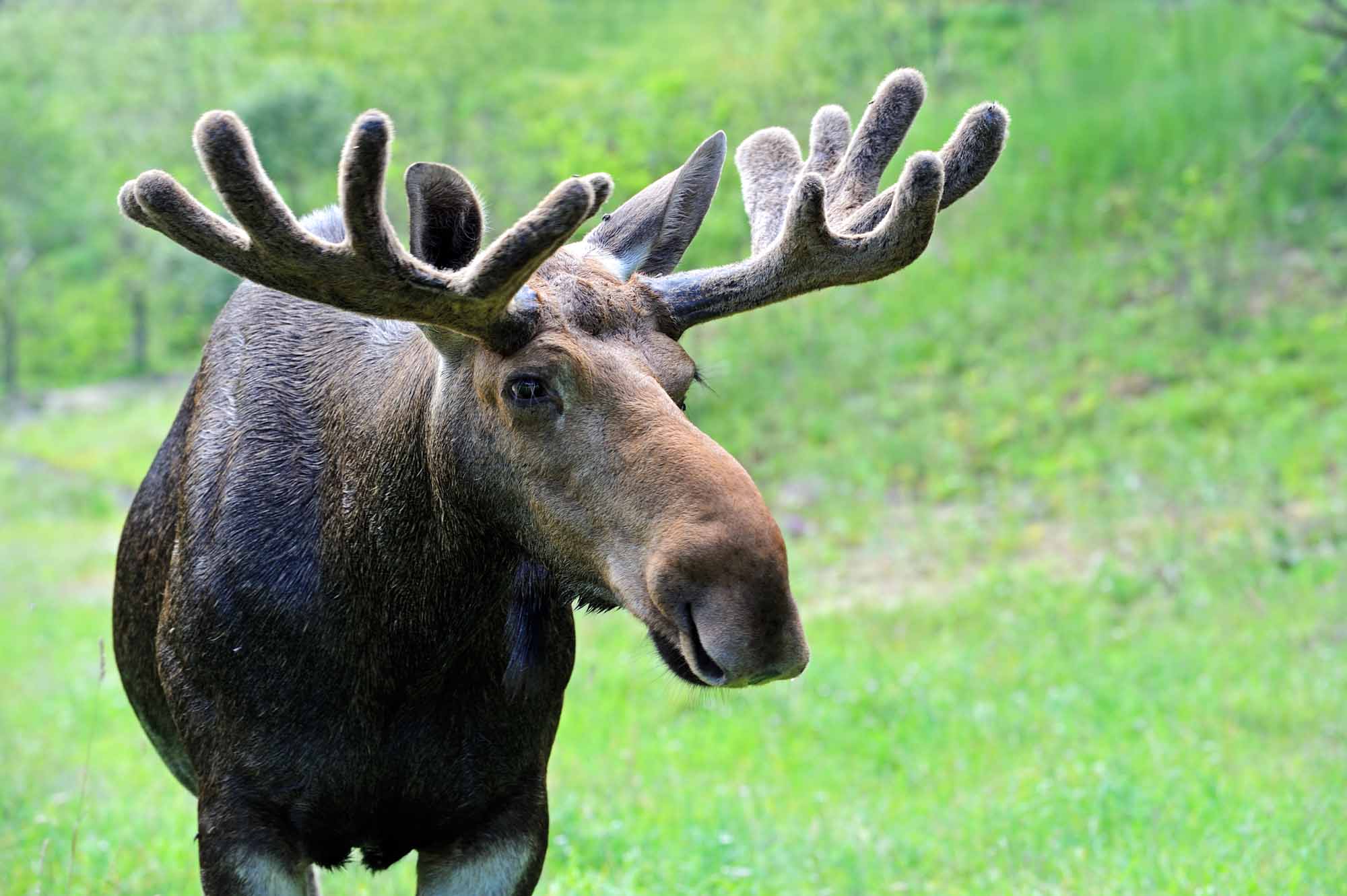
-
Article
Moosehead Breweries Ltd.
Moosehead Breweries Limited, the maker of Moosehead Canadian Lager, is the oldest family-owned brewing company in Canada. Located in Saint John, New Brunswick, the company has been family owned and controlled for six generations and is currently led by founders Susannah and John Oland’s great-great-great grandson, Andrew Oland. Moosehead is the fourth-largest brewing company in Canada — after Molson, Labatt and Sleeman — and the last major brewery to be owned by Canadians. Moosehead beer is sold throughout Canada, in many locations in the United States, and in 15 countries around the world. The company brews 19 beers under 10 brands, including its mainstay Moosehead Canadian Lager, as well as James Ready, Alpine and Hop City. It also contract brews for six companies, including Samuel Adams, from the United States, and Estrella Damm, from Spain. Moosehead is a privately owned company and does not disclose its financial information; however, in 2018, market researchers estimated the company held as high as 3.8 per cent of the Canadian beer market and would generate $247.1 million in revenue.
"https://d3d0lqu00lnqvz.cloudfront.net/media/media/9b66796e-6ca3-4392-b14a-22fc2ff372bb.jpg" // resources/views/front/categories/view.blade.php
https://d3d0lqu00lnqvz.cloudfront.net/media/media/9b66796e-6ca3-4392-b14a-22fc2ff372bb.jpg
-
Article
Moravian Missions in Labrador
In 1771, Moravian missionaries were the first Europeans to settle in Labrador. Over a 133-year period, they established a series of eight missions along the coast which became the focus of religious, social and economic activities for the Inuit who gradually came to settle near the communities. Moravians had a huge impact on the life and culture of Labrador Inuit. What emerged was a unique culture rooted in Inuit traditions with indigenized European practices. The last Moravian missionary left Labrador in 2005, but the Moravian church, its customs and traditions are still very much alive in Labrador.
"https://d3d0lqu00lnqvz.cloudfront.net/media/new_article_images/MoravianMissionsinCanada/Eine-Schulergrupper-in-Nain-Resized.jpg" // resources/views/front/categories/view.blade.php
https://d3d0lqu00lnqvz.cloudfront.net/media/new_article_images/MoravianMissionsinCanada/Eine-Schulergrupper-in-Nain-Resized.jpg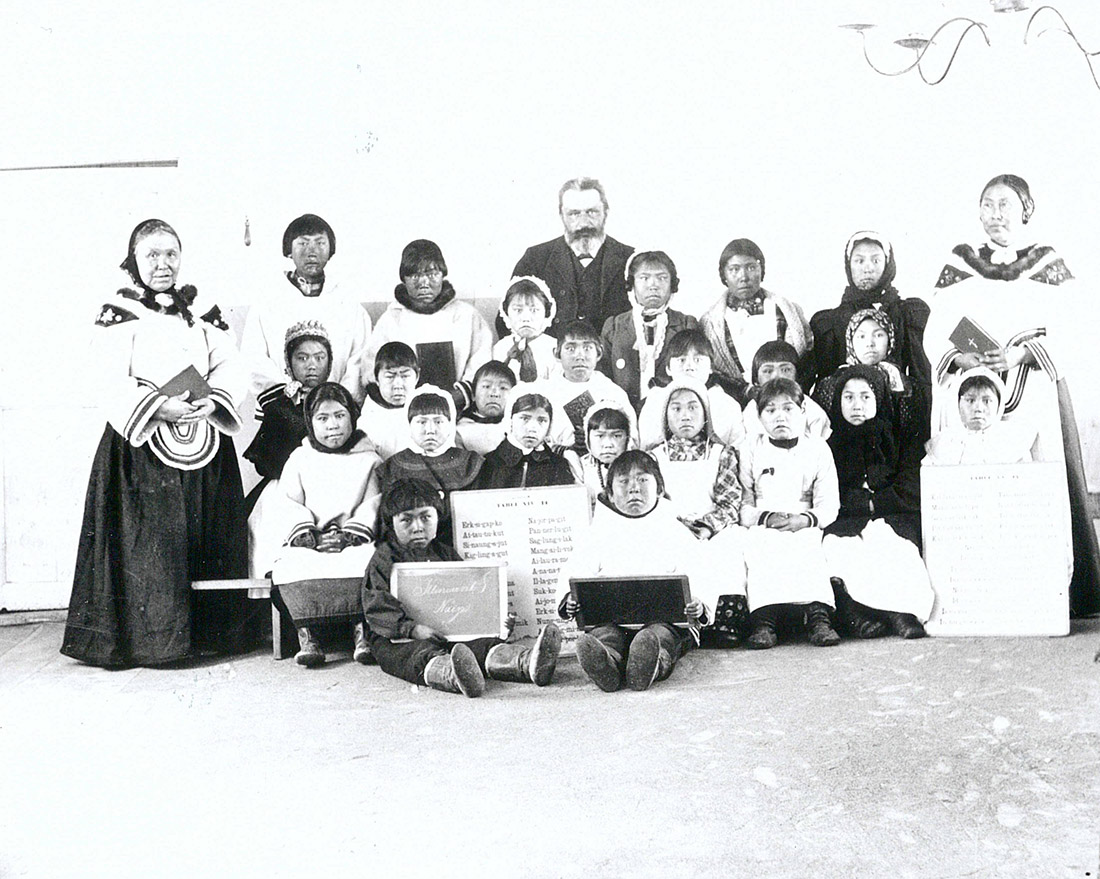
-
Macleans
More Calcium Needed
An old wives tale reminded Mary Oordt that calcium is essential for strong bones and teeth. "Theres a saying that for every baby, you lose a tooth," recalls the managing editor of Lethbridge Living magazine, who began to supplement her diet when she was pregnant.This article was originally published in Maclean's Magazine on August 25, 1997
"https://thecanadianencyclopedia.ca/images/tce_placeholder.jpg?v=e9dca980c9bdb3aa11e832e7ea94f5d9" // resources/views/front/categories/view.blade.php
https://thecanadianencyclopedia.ca/images/tce_placeholder.jpg?v=e9dca980c9bdb3aa11e832e7ea94f5d9
-
Macleans
More Rape in the Military
This article was originally published in Maclean’s magazine on June 1, 1998. Partner content is not updated. They ranged in rank from an ordinary seaman to a naval lieutenant, and had spent anywhere from 20 months to 26 years in the Canadian Forces. This article contains sensitive material that may not be suitable for all audiences.
"https://thecanadianencyclopedia.ca/images/tce_placeholder.jpg?v=e9dca980c9bdb3aa11e832e7ea94f5d9" // resources/views/front/categories/view.blade.php
https://thecanadianencyclopedia.ca/images/tce_placeholder.jpg?v=e9dca980c9bdb3aa11e832e7ea94f5d9