
Browse "Things"
-
Article
Mishipeshu
The most important underwater being for the Ojibwa is Mishipeshu, which means "the Great Lynx." This fantastic dragon-like animal resembles a feline with horns, symbols of his power.
"https://thecanadianencyclopedia.ca/images/tce_placeholder.jpg?v=e9dca980c9bdb3aa11e832e7ea94f5d9" // resources/views/front/categories/view.blade.php
https://thecanadianencyclopedia.ca/images/tce_placeholder.jpg?v=e9dca980c9bdb3aa11e832e7ea94f5d9
-
Article
Misinformation in Canada
The advance of computers into all aspects of our lives and the rising role of the Internet have led many people to call this the Information Age. But with news travelling fast, and often with few checks and balances to ensure accuracy, it can also be seen as the Misinformation Age. Learning how to separate facts from misinformation or so-called fake news has become a critical modern skill as people learn to evaluate information being shared with them, as well as to scrutinize information they may share themselves.
"https://d3d0lqu00lnqvz.cloudfront.net/media/new_article_images/FakeNews/640px-FAKE_NEWS.png" // resources/views/front/categories/view.blade.php
https://d3d0lqu00lnqvz.cloudfront.net/media/new_article_images/FakeNews/640px-FAKE_NEWS.png
-
Article
Miss Vickie’s
Miss Vickie’s is a brand of kettle-cooked potato chips created by Vickie Kerr in 1987. They come in a variety of flavours and are currently produced in Canada and the United States by Frito-Lay and distributed in Canada, the United States and the United Kingdom. Miss Vickie’s may hold the distinction of being the first mass-market snack food to be created and distributed in Canada by a woman-led enterprise. (See also Notable Women Entrepreneurs in Canada History.)
"https://d3d0lqu00lnqvz.cloudfront.net/canadiansnacksandflavours/missivickiesbag.jpg" // resources/views/front/categories/view.blade.php
https://d3d0lqu00lnqvz.cloudfront.net/canadiansnacksandflavours/missivickiesbag.jpg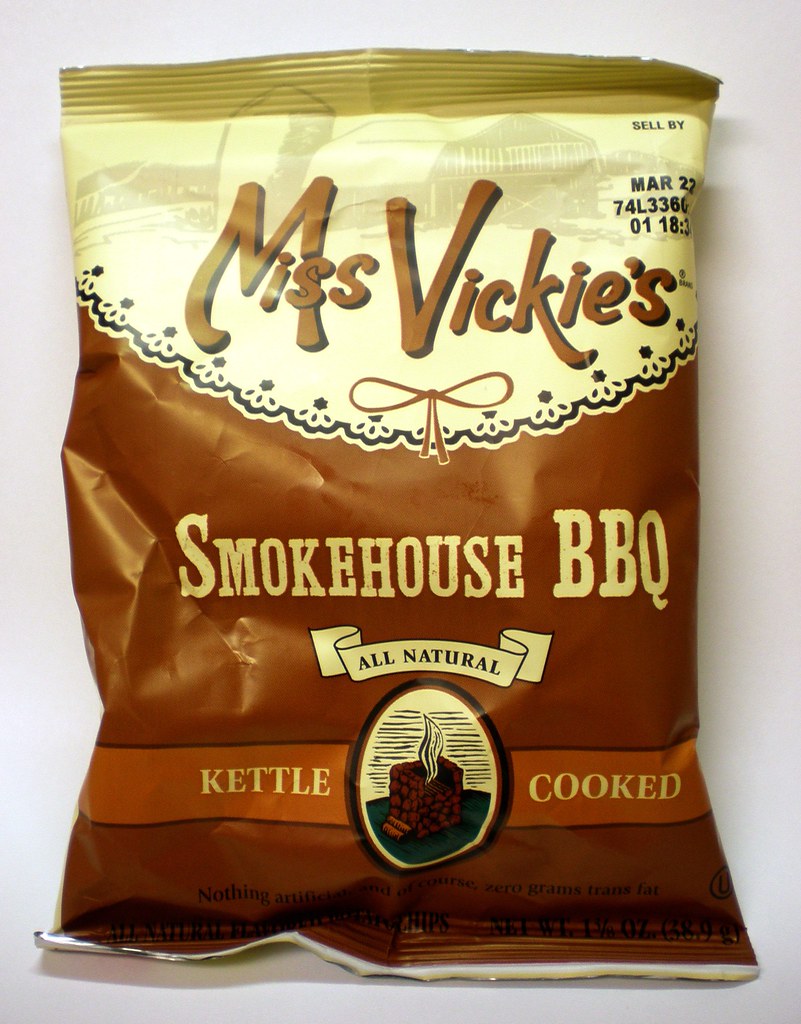
-
Article
Missing and Murdered Indigenous Women and Girls in Canada
Missing and murdered Indigenous women and girls in Canada (MMIWG) refers to a human rights crisis that has only recently become a topic of discussion within national media. Indigenous women and communities, women’s groups and international organizations have long called for action into the high and disproportionate rates of violence and the appalling numbers of missing and murdered Indigenous women and girls in Canada. Prior to the launch of the national public inquiry on 8 December 2015, these calls were continually ignored by the federal government. Described by some as a hidden crisis, Dawn Lavell-Harvard, former president of the Native Women’s Association of Canada, refers to MMIWG as a national tragedy and a national shame. In 2015, the Truth and Reconciliation Commission of Canada supported the call for a national public inquiry into the disproportionate victimization of Indigenous women and girls. The National Inquiry’s Final Report was completed and presented to the public on 3 June 2019.
"https://d3d0lqu00lnqvz.cloudfront.net/media/media/2a243145-5d5c-42f2-a98f-bcda497ab7dc.jpg" // resources/views/front/categories/view.blade.php
https://d3d0lqu00lnqvz.cloudfront.net/media/media/2a243145-5d5c-42f2-a98f-bcda497ab7dc.jpg
-
Article
Missionaries in the 17th Century
The presence of Roman Catholic priests, lay brothers, and nuns among the first settlers in New France was an important factor in the development of the colony. The prime object was to convert the Indigenous people but the missionaries also looked after the spiritual needs of the colonists.
"https://d3d0lqu00lnqvz.cloudfront.net/media/media/ac17518a-1788-42ab-9c72-0e9a64497c68.jpg" // resources/views/front/categories/view.blade.php
https://d3d0lqu00lnqvz.cloudfront.net/media/media/ac17518a-1788-42ab-9c72-0e9a64497c68.jpg
-
Article
Missions and Missionaries
In New France as elsewhere the christianization of the Indigenous population was an ostensible motive for European occupation, and trading companies and governors were under official pressure to provide it. The actual work was left largely to religious orders and societies.
"https://d3d0lqu00lnqvz.cloudfront.net/media/media/c5b4d6ed-9fa4-4675-b8de-1af6e5cc9567.jpg" // resources/views/front/categories/view.blade.php
https://d3d0lqu00lnqvz.cloudfront.net/media/media/c5b4d6ed-9fa4-4675-b8de-1af6e5cc9567.jpg
-
Article
Mistletoe
Mistletoe family, Loranthaceae, includes about 30 genera and over 1000 species. It is predominantly tropical but has members in temperate regions.
"https://thecanadianencyclopedia.ca/images/tce_placeholder.jpg?v=e9dca980c9bdb3aa11e832e7ea94f5d9" // resources/views/front/categories/view.blade.php
https://thecanadianencyclopedia.ca/images/tce_placeholder.jpg?v=e9dca980c9bdb3aa11e832e7ea94f5d9
-
Article
Mite
Mite is a common name for most members of the subclass Acari, a large, diverse group of tiny arachnids that also includes ticks.
"https://d3d0lqu00lnqvz.cloudfront.net/media/media/8eb04cf7-636d-460f-a5d4-bedd5bf6298d.jpg" // resources/views/front/categories/view.blade.php
https://d3d0lqu00lnqvz.cloudfront.net/media/media/8eb04cf7-636d-460f-a5d4-bedd5bf6298d.jpg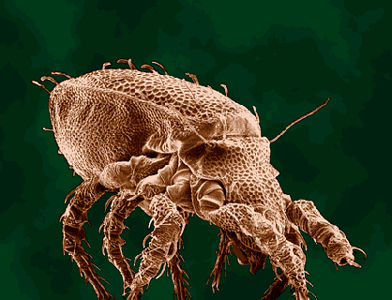
-
Article
Mixed Media Music
Mixed media (or multi-media) music. Music which incorporates one or more additional modes of expression, eg, speech, action, film, light effects, sculpture, dance.
"https://thecanadianencyclopedia.ca/images/tce_placeholder.jpg?v=e9dca980c9bdb3aa11e832e7ea94f5d9" // resources/views/front/categories/view.blade.php
https://thecanadianencyclopedia.ca/images/tce_placeholder.jpg?v=e9dca980c9bdb3aa11e832e7ea94f5d9
-
Macleans
Mobutu Flees Zaïre
In the end, he stole quietly away, not quite like a thief in the night but certainly without the noisy flourish that once trumpeted all the movements of Mobutu Sese Seko.This article was originally published in Maclean's Magazine on May 26, 1997
"https://thecanadianencyclopedia.ca/images/tce_placeholder.jpg?v=e9dca980c9bdb3aa11e832e7ea94f5d9" // resources/views/front/categories/view.blade.php
https://thecanadianencyclopedia.ca/images/tce_placeholder.jpg?v=e9dca980c9bdb3aa11e832e7ea94f5d9
-
Article
Moccasin
Moccasins are a type of footwear often made of animal hide and traditionally made and worn by various Indigenous peoples in Canada. During the fur trade, Europeans adopted these heelless, comfortable walking shoes to keep their feet warm and dry. Moccasins continue to serve as practical outerwear, as well as pieces of fine Indigenous handiwork and artistry.
"https://d3d0lqu00lnqvz.cloudfront.net/media/media/2041d144-2d6c-4775-af9a-796e6e662645.jpg" // resources/views/front/categories/view.blade.php
https://d3d0lqu00lnqvz.cloudfront.net/media/media/2041d144-2d6c-4775-af9a-796e6e662645.jpg
-
Article
Mock Parliament, 1914
The “mock parliament” was a type of agitprop — art with explicit political messaging — such productions were written to raise money and generate sympathy for women’s suffrage.
"https://d3d0lqu00lnqvz.cloudfront.net/TCEImages/ac22b9ff-dbfc-4ead-a5dc-23bd9a654d0e.jpg" // resources/views/front/categories/view.blade.php
https://d3d0lqu00lnqvz.cloudfront.net/TCEImages/ac22b9ff-dbfc-4ead-a5dc-23bd9a654d0e.jpg
-
"https://thecanadianencyclopedia.ca/images/tce_placeholder.jpg?v=e9dca980c9bdb3aa11e832e7ea94f5d9" // resources/views/front/categories/view.blade.php
https://thecanadianencyclopedia.ca/images/tce_placeholder.jpg?v=e9dca980c9bdb3aa11e832e7ea94f5d9
-
Article
Model Minority
The concept of a model minority is a myth and stereotype that was first identified by the discipline of Asian American studies in the 1970s. This academic field of study was developed as a response to the omission and marginalization of Asian Americans in the study of American history. This stereotype depicts Asians as hard working, successful at school and in the workplace, and as economically prosperous. This stereotype has many negative consequences. It divides Asian Canadian communities — which include East Asians, Southeast Asians, South Asians, and Central Asians — and other racialized groups. The model minority myth also overlooks a history of systemic racism towards Canadians of Asian descent and trivializes contemporary problems within Asian Canadian communities. (See also South Asian Canadians; Southeast Asian Canadians; Chinese Canadians; Japanese Canadians.)
"https://thecanadianencyclopedia.ca/images/tce_placeholder.jpg?v=e9dca980c9bdb3aa11e832e7ea94f5d9" // resources/views/front/categories/view.blade.php
https://thecanadianencyclopedia.ca/images/tce_placeholder.jpg?v=e9dca980c9bdb3aa11e832e7ea94f5d9
-
Article
Moffat Communications Limited
Moffat Communications Limited, controlled by Randall L. Moffat, owns CKY-TV, the CTV-network affiliate in Winnipeg which extends service to 97% of Manitoba's population. Through CKY Moffat owns 14% of CTV.
"https://thecanadianencyclopedia.ca/images/tce_placeholder.jpg?v=e9dca980c9bdb3aa11e832e7ea94f5d9" // resources/views/front/categories/view.blade.php
https://thecanadianencyclopedia.ca/images/tce_placeholder.jpg?v=e9dca980c9bdb3aa11e832e7ea94f5d9