
Browse "Things"
-
Article
Military Service Act
The Military Service Act became law on 29 August 1917. It was a politically explosive and controversial law that bitterly divided the country along French-English lines. It made all male citizens aged 20 to 45 subject to conscription for military service, through the end of the First World War. As such, the Act had significant political consequences. It led to the creation of Prime Minister Borden’s Union Government and drove most of his French-Canadian supporters into opposition.
"https://d3d0lqu00lnqvz.cloudfront.net/media/media/1a7b61ee-ed48-4f36-bedd-c816ea64a819.jpg" // resources/views/front/categories/view.blade.php
https://d3d0lqu00lnqvz.cloudfront.net/media/media/1a7b61ee-ed48-4f36-bedd-c816ea64a819.jpg
-
Macleans
Military to Investigate Illnesses
Everybody agrees it was a dirty job. When Canadian Peacekeepers arrived in Croatia in 1993, many had to work near abandoned industrial sites destroyed during the war that had torn apart the old Yugoslavia. Some got covered in reddish grit while filling sandbags.This article was originally published in Maclean's Magazine on August 9, 1999
"https://thecanadianencyclopedia.ca/images/tce_placeholder.jpg?v=e9dca980c9bdb3aa11e832e7ea94f5d9" // resources/views/front/categories/view.blade.php
https://thecanadianencyclopedia.ca/images/tce_placeholder.jpg?v=e9dca980c9bdb3aa11e832e7ea94f5d9
-
Article
Militia Acts
Militia Acts provided manpower for defence. Until the 1850s, such Acts in Upper and Lower Canada, Nova Scotia and New Brunswick usually imposed compulsory service on males between 16 and 50 or 60, with annual or more frequent enrolment musters.
"https://thecanadianencyclopedia.ca/images/tce_placeholder.jpg?v=e9dca980c9bdb3aa11e832e7ea94f5d9" // resources/views/front/categories/view.blade.php
https://thecanadianencyclopedia.ca/images/tce_placeholder.jpg?v=e9dca980c9bdb3aa11e832e7ea94f5d9
-
Article
Milk Bag
A milk bag is a soft plastic pouch used to package milk. It is a packaging method that is common in Canada. Milk bags are not exclusive to Canada, but the use of milk bags have become an emblematic aspect of Canadian culture. It is estimated that roughly half of Canadians purchase their milk from milk bags, and that rate rises to between 75 and 85 percent for Ontario residents. In parts of Canada—namely the Maritimes, Quebec, and Ontario—the largest volume of milk an individual can purchase at the grocery story is typically 4 litres, sold in a plastic bag that contains three 1 1/3-litre milk pouches. Milk bags are not the exclusive method by which milk is sold in Canada; as in other places, plastic jugs and cardboard cartons are also available. Moreover, milk bags are not common in Western Canada, the Northern territories, or in Newfoundland and Labrador. (See also Dairy Industry.)
"https://d3d0lqu00lnqvz.cloudfront.net/milkbag/dreamstime_304036371.jpg" // resources/views/front/categories/view.blade.php
https://d3d0lqu00lnqvz.cloudfront.net/milkbag/dreamstime_304036371.jpg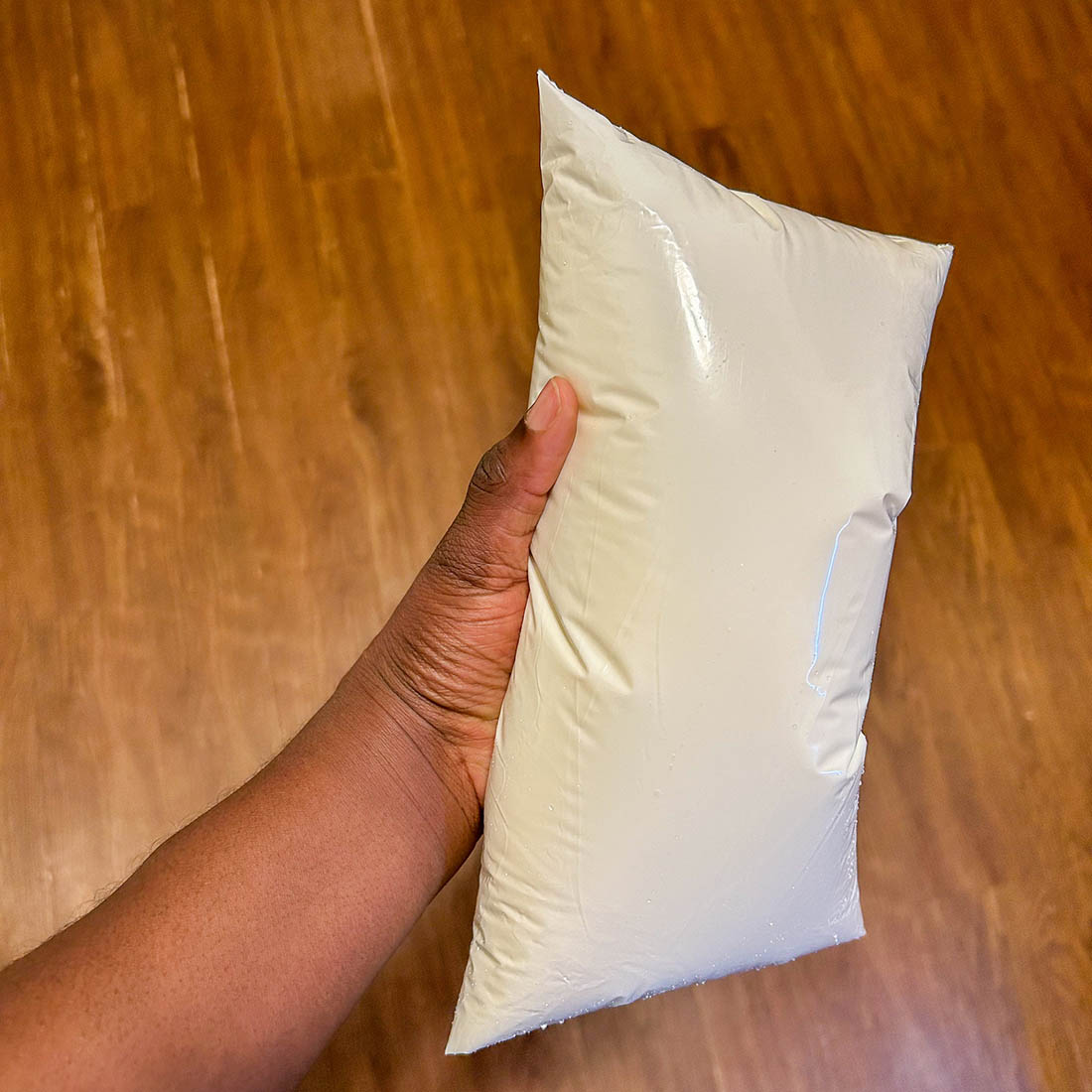
-
Article
Milkweed
Milkweed is the common name for perennial, herbaceous plants of genus Asclepias, family Asclepiadaceae (from Greek physician Asclepius).
"https://thecanadianencyclopedia.ca/images/tce_placeholder.jpg?v=e9dca980c9bdb3aa11e832e7ea94f5d9" // resources/views/front/categories/view.blade.php
https://thecanadianencyclopedia.ca/images/tce_placeholder.jpg?v=e9dca980c9bdb3aa11e832e7ea94f5d9
-
Article
Millenarianism
Millenarianism is the belief that a fundamental transformation of society is coming, one that will bring a golden age of peace and prosperity. Although millenarianism is a Judeo- Christian concept in origin, it has also been associated with other religious, political and social groups.
"https://d3d0lqu00lnqvz.cloudfront.net/media/media/69eb5724-3d71-4cca-857c-6656454c42d5.jpg" // resources/views/front/categories/view.blade.php
https://d3d0lqu00lnqvz.cloudfront.net/media/media/69eb5724-3d71-4cca-857c-6656454c42d5.jpg
-
Macleans
Millennium Preparations
Maj. Rod Babiuk picked up his brass abacus for a buck at a garage sale, while many of his colleagues at CFB Kingston hunted down wooden versions of the beaded counting machines. No, the army has not developed a sudden interest in ancient math.This article was originally published in Maclean's Magazine on December 20, 1999
"https://thecanadianencyclopedia.ca/images/tce_placeholder.jpg?v=e9dca980c9bdb3aa11e832e7ea94f5d9" // resources/views/front/categories/view.blade.php
https://thecanadianencyclopedia.ca/images/tce_placeholder.jpg?v=e9dca980c9bdb3aa11e832e7ea94f5d9
-
Article
Miller and Cockriell Case
In 1977, J.H. Miller and V.J.R. Cockriell, charged with the murder of a policeman, argued the incompatibility of the penalty imposed by law with the Canadian Bill of Rights 1960.
"https://thecanadianencyclopedia.ca/images/tce_placeholder.jpg?v=e9dca980c9bdb3aa11e832e7ea94f5d9" // resources/views/front/categories/view.blade.php
https://thecanadianencyclopedia.ca/images/tce_placeholder.jpg?v=e9dca980c9bdb3aa11e832e7ea94f5d9
-
Article
Millet
Millets are various, usually annual, grass (family Poaceae) crops that are often grown as cereals (ie, the seeds are harvested as grain for human consumption).
"https://d3d0lqu00lnqvz.cloudfront.net/media/media/551430a6-8d74-48fd-9f95-c75d3111ef4d.jpg" // resources/views/front/categories/view.blade.php
https://d3d0lqu00lnqvz.cloudfront.net/media/media/551430a6-8d74-48fd-9f95-c75d3111ef4d.jpg
-
Article
Millipede
Millipede (class Diplopoda), terrestrial, usually elongate arthropod with a small head and short antennae.
"https://thecanadianencyclopedia.ca/images/tce_placeholder.jpg?v=e9dca980c9bdb3aa11e832e7ea94f5d9" // resources/views/front/categories/view.blade.php
https://thecanadianencyclopedia.ca/images/tce_placeholder.jpg?v=e9dca980c9bdb3aa11e832e7ea94f5d9
-
Article
'Mimkwamlis Potlatch (Memkumlis Raid)
On 25 December 1921, a Potlatch ceremony was held in the Kwakwa̱ka̱’wakw village of ‘Mimkwamlis (also spelled Memkumlis, and also known as Village Island). The Potlatch ceremony was illegal at the time. Officers of the federal government’s Department of Indian Affairs (see Federal Departments of Indigenous and Northern Affairs), as well as the Royal Canadian Mounted Police and, according to some sources, the British Columbia provincial police learned of this Potlatch. They arrested 45 people for participating in the Potlatch. Approximately half of the people were sent to prison for periods ranging from two to three months. Hundreds of precious Kwakwa̱ka̱’wakw ceremonial objects were confiscated. Some of these items were sold to collectors and wound up in museums without the consent of the Kwakwa̱ka̱’wakw people. The arrests related to the ‘Mimkwamlis Potlatch of 1921 were an example of police and government abuse of Indigenous Peoples. It is a further example of the attempted cultural genocide of Indigenous Peoples in Canada (see Genocide and Indigenous Peoples in Canada).
"https://d3d0lqu00lnqvz.cloudfront.net/MimkwamlisPotlatch/umista_cultural_centre_web.jpg" // resources/views/front/categories/view.blade.php
https://d3d0lqu00lnqvz.cloudfront.net/MimkwamlisPotlatch/umista_cultural_centre_web.jpg
-
Article
Mineral
A mineral is an element or chemical compound formed in nature, usually by inorganic processes. Minerals may be composed of one element such as carbon (DIAMOND) or GOLD, or of several elements.
"https://d3d0lqu00lnqvz.cloudfront.net/media/media/c877e97e-4b7c-48c5-b937-a17b8f6fde9b.jpg" // resources/views/front/categories/view.blade.php
https://d3d0lqu00lnqvz.cloudfront.net/media/media/c877e97e-4b7c-48c5-b937-a17b8f6fde9b.jpg
-
Article
Mineral and Mining Engineering
Mineral engineering is that branch of ENGINEERING concerned with the application of scientific and technical knowledge to the search for and production of valuable MINERALS from naturally occurring surface, underground or below-water deposits.
"https://thecanadianencyclopedia.ca/images/tce_placeholder.jpg?v=e9dca980c9bdb3aa11e832e7ea94f5d9" // resources/views/front/categories/view.blade.php
https://thecanadianencyclopedia.ca/images/tce_placeholder.jpg?v=e9dca980c9bdb3aa11e832e7ea94f5d9
-
Article
Mineral Naming
Each mineral species is identified by its own appellation, and names have been assigned since antiquity. While there are only some 3000 valid mineral species, nearly 20 000 names occur in the literature. This is partly because researchers working independently have given different names to the same mineral, and partly because distinct names have been applied to minerals that later proved to be varieties or mixtures of already known species. Today a much better control is exercised by the Commission on New Minerals and New Mineral Names established in 1959 by the International Mineralogical Association.
"https://thecanadianencyclopedia.ca/images/tce_placeholder.jpg?v=e9dca980c9bdb3aa11e832e7ea94f5d9" // resources/views/front/categories/view.blade.php
https://thecanadianencyclopedia.ca/images/tce_placeholder.jpg?v=e9dca980c9bdb3aa11e832e7ea94f5d9
-
Article
Mineral Resources in Canada
Minerals are naturally occurring, homogeneous geological formations. Unlike fossil fuels, such as coal, oil and natural gas, minerals are inorganic compounds, meaning they are not formed of animal or plant matter. Canada is abundant in many mineral resources — mined in every province and territory — and a world leader in the production of potash, aluminum, cobalt, diamonds, gold platinum, uranium, among others. This article is a full-length entry about mineral resources in Canada. For a plain-language summary, please see Mineral Resources in Canada (Plain-Language Summary).
"https://d3d0lqu00lnqvz.cloudfront.net/minerals/norandamineworker.jpg" // resources/views/front/categories/view.blade.php
https://d3d0lqu00lnqvz.cloudfront.net/minerals/norandamineworker.jpg