
Browse "Things"
-
Article
Metallurgy
Metallurgy is the art, science and technology of turning metals and alloys (i.e., materials consisting of two or more metals) into forms suitable for practical use.
"https://d3d0lqu00lnqvz.cloudfront.net/media/media/3ed8d545-4edb-40bb-bc0e-6d7b68d6c22a.jpg" // resources/views/front/categories/view.blade.php
https://d3d0lqu00lnqvz.cloudfront.net/media/media/3ed8d545-4edb-40bb-bc0e-6d7b68d6c22a.jpg
-
Article
Metamorphic Rock
Metamorphic rock is one of the 3 major classes of rock comprising the Earth's crust, the others being SEDIMENTARY and IGNEOUS ROCKS. Metamorphic rock has been transformed, while in the solid state, by pressure, temperature and deformation.
"https://d3d0lqu00lnqvz.cloudfront.net/media/media/e0a546d9-bcaf-41e5-a7d4-076b178b5592.jpg" // resources/views/front/categories/view.blade.php
https://d3d0lqu00lnqvz.cloudfront.net/media/media/e0a546d9-bcaf-41e5-a7d4-076b178b5592.jpg
-
Article
Meteorology
Meteorology is the science that studies the atmosphere and atmospheric phenomena, using data about temperature, humidity, clouds, wind, etc. Its ultimate aim is to explain the structure and functioning of the atmosphere using the basic laws of physics. The major theoretical divisions are physical and dynamic meteorology (very closely related and often coupled under the title atmospheric physics) and synoptic meteorology. Climatology is the branch of meteorology most concerned with weather, climate and climate change.
"https://d3d0lqu00lnqvz.cloudfront.net/ice/icy-branch-in-spring.jpg" // resources/views/front/categories/view.blade.php
https://d3d0lqu00lnqvz.cloudfront.net/ice/icy-branch-in-spring.jpg
-
Article
Methodism
The movement was first represented in what is now Canada by one of Wesley's followers, Laurence COUGHLAN, who began to preach in Newfoundland in 1766. Yorkshire settlers around Chignecto, NS, in the 1770s were the first sizable group of Methodists in the Maritimes.
"https://d3d0lqu00lnqvz.cloudfront.net/media/media/15c7fc4e-83d2-495c-a288-da377bb62d06.jpg" // resources/views/front/categories/view.blade.php
https://d3d0lqu00lnqvz.cloudfront.net/media/media/15c7fc4e-83d2-495c-a288-da377bb62d06.jpg
-
Article
Music of the Métis
Métis music reflects their mixed ancestry and therefore comprises an amalgam of music styles, languages, and socio-cultural elements.
"https://d3d0lqu00lnqvz.cloudfront.net/media/media/c072de9d-96cf-43ef-9a30-484df15f79df.jpg" // resources/views/front/categories/view.blade.php
https://d3d0lqu00lnqvz.cloudfront.net/media/media/c072de9d-96cf-43ef-9a30-484df15f79df.jpg
-
Article
Métis Experiences at Residential School
Although the first residential schools in Canada were established with the intention of assimilating First Nations children into Euro-Canadian culture, Métis and Inuit children were also institutionalized in such facilities. Métis children experienced similar day-to-day conditions to those of other students in residential schools, but they were often considered “outsiders” by their peers and administrators. This perception affected their experiences within these institutions in particular ways.
"https://d3d0lqu00lnqvz.cloudfront.net/MetisExperiences/Webp.net-resizeimage.jpg" // resources/views/front/categories/view.blade.php
https://d3d0lqu00lnqvz.cloudfront.net/MetisExperiences/Webp.net-resizeimage.jpg
-
Article
Métis Nation-Saskatchewan
The Métis Nation-Saskatchewan (MN-S) is a self-governing Métis political organization, representing the interests of Métis citizens across Saskatchewan. Its governance structure includes a Provincial Métis Council, regional representatives and local community councils, all working to uphold Métis rights, culture and self-determination. The MN-S has over 34,000 registered citizens. While Métis rights were constitutionally recognized in 1982 under section 35 of the Canadian Constitution, the MN-S formally adopted its own constitution on 3 December 1993.
"https://thecanadianencyclopedia.ca/images/tce_placeholder.jpg?v=e9dca980c9bdb3aa11e832e7ea94f5d9" // resources/views/front/categories/view.blade.php
https://thecanadianencyclopedia.ca/images/tce_placeholder.jpg?v=e9dca980c9bdb3aa11e832e7ea94f5d9
-
Article
Métis National Council
The Métis National Council is a national Métis organization that includes representation from provincial organizations in Alberta and Ontario. It emerged during the intense constitutional debate over Aboriginal rights in the early 1980s. The Métis National Council continues to champion a culturally and politically distinct Métis Nation with roots in Western Canada, and with outstanding claims to self-government, land and other Aboriginal rights (see also Rights of Indigenous Peoples in Canada).
"https://d3d0lqu00lnqvz.cloudfront.net/media/media/4de10db1-6b8b-45ef-a60a-55998c7afca0.jpg" // resources/views/front/categories/view.blade.php
https://d3d0lqu00lnqvz.cloudfront.net/media/media/4de10db1-6b8b-45ef-a60a-55998c7afca0.jpg
-
Article
Métis Scrip in Canada
Scrip is any document used in place of legal tender, for example a certificate or voucher, where the bearer is entitled to certain rights. In 1870, the Canadian government devised a system of scrip — referred to as Métis scrip — that issued documents redeemable for land or money. Scrip was given to Métis people living in the West in exchange for their land rights. The scrip process was legally complex and disorganized; this made it difficult for Métis people to acquire land, yet simultaneously created room for fraud. In March 2013, the Supreme Court of Canada ruled that the federal government failed to provide the Métis with the land grant they were promised in the Manitoba Act of 1870. Negotiations between various levels of government and the Métis Nation concerning the reclamation of land rights continue.
"https://d3d0lqu00lnqvz.cloudfront.net/media/media/00019b96-4c2b-4fb8-9d1b-58ccf46ec3ae.jpg" // resources/views/front/categories/view.blade.php
https://d3d0lqu00lnqvz.cloudfront.net/media/media/00019b96-4c2b-4fb8-9d1b-58ccf46ec3ae.jpg
-
Article
History of Métis Settlements in Canada
Métis communities are found in many provinces and territories in Canada; however, the only legislated Métis land base is in Alberta. Eight Métis settlements are located across the northern and central-eastern part of the province: Paddle Prairie, Peavine, Gift Lake, East Prairie, Buffalo Lake, Kikino, Elizabeth and Fishing Lake. As of 2021, the settlements cover 1.25 million acres of land and are home to approximately 4,238 people. That year, 3,540 people reported that they were registered members of Métis Settlements in Alberta. The Métis Settlements are self-governing and provide for the protection of Métis culture and identity.
"https://d3d0lqu00lnqvz.cloudfront.net/MetisSettlementsFlag/Metis_Settlements_Flag.gif" // resources/views/front/categories/view.blade.php
https://d3d0lqu00lnqvz.cloudfront.net/MetisSettlementsFlag/Metis_Settlements_Flag.gif
-
Article
#MeToo Movement in Canada
The #MeToo movement protesting sexual violence against women began in the United States in October 2017 in the wake of accusations against Hollywood film producer Harvey Weinstein. Since then, it has rapidly expanded internationally through Facebook, Twitter and other social media platforms. In Canada, #MeToo and its French equivalent, #MoiAussi, have amplified the voices of victims and changed the conversation pertaining to rape, sexual abuse, sexual assault and other forms of sexual violence, harassment and misconduct.
"https://d3d0lqu00lnqvz.cloudfront.net/media/new_article_images/metoo/dreamstime_xl_114828812.jpg" // resources/views/front/categories/view.blade.php
https://d3d0lqu00lnqvz.cloudfront.net/media/new_article_images/metoo/dreamstime_xl_114828812.jpg
-
Article
Metric Conversion
Metric conversion was the process of making metric units — such as metre, kilogram and degree Celsius — the common units of measurement in Canada, leaving the British imperial system (with units such as yard, gallon and pound) behind. The process was fraught with political interference and public resistance, and took place incrementally between 1970 and the early 1980s. Despite the shift, many Canadians still express certain measurements in imperial units, such as height (feet and inches).
"https://d3d0lqu00lnqvz.cloudfront.net/Metre-etalon_Paris.jpeg" // resources/views/front/categories/view.blade.php
https://d3d0lqu00lnqvz.cloudfront.net/Metre-etalon_Paris.jpeg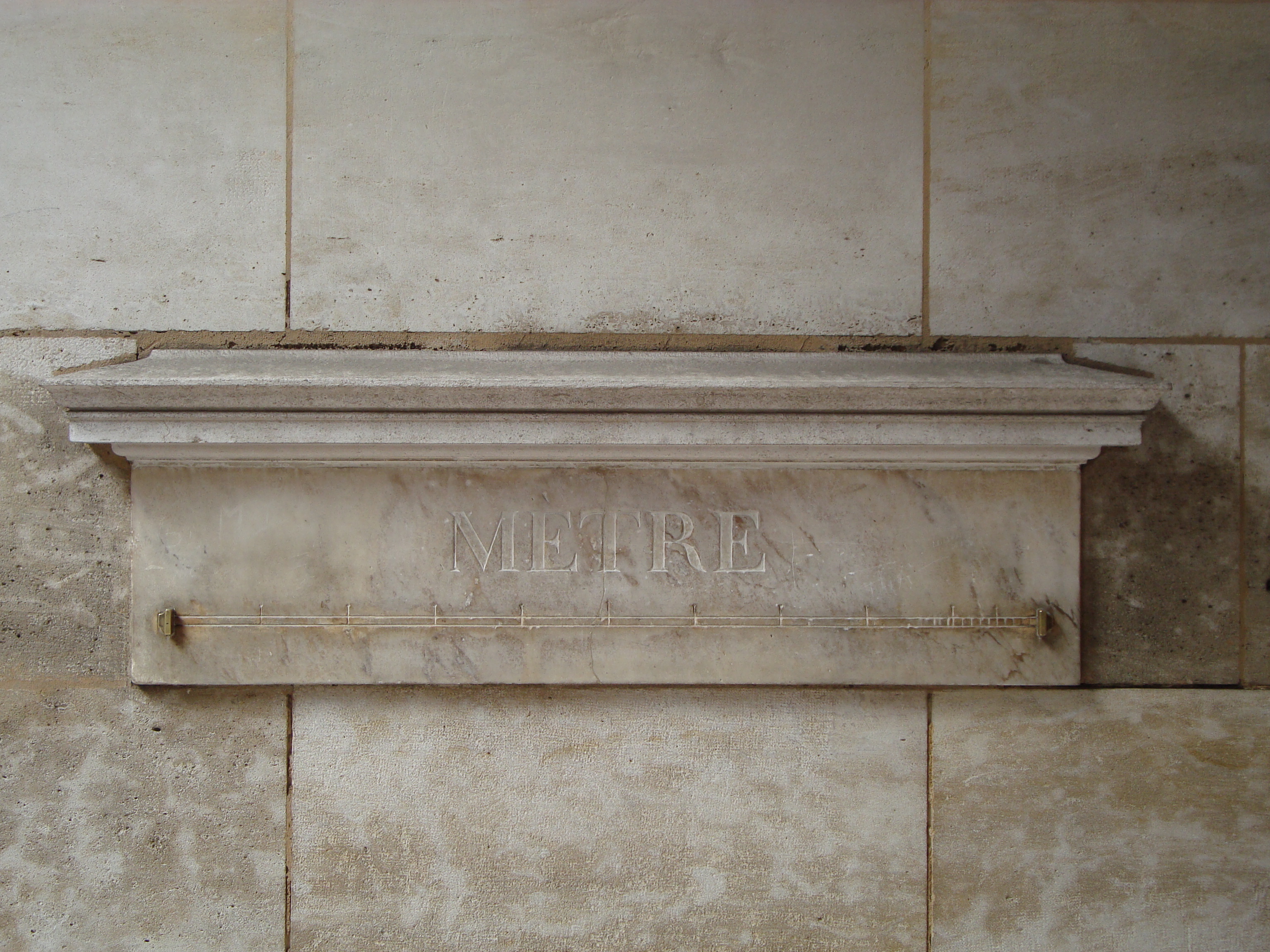
-
Article
Metropolitan Government
Metropolitan government is a form of regional government. It may be used in urban centres with a population over 100,000, known in Canada as Census Metropolitan Areas (CMAs). The modern concept of metropolitan government originated in the US in the early 20th century as an attempt to devise municipal institutions to cope with urban growth.
"https://thecanadianencyclopedia.ca/images/tce_placeholder.jpg?v=e9dca980c9bdb3aa11e832e7ea94f5d9" // resources/views/front/categories/view.blade.php
https://thecanadianencyclopedia.ca/images/tce_placeholder.jpg?v=e9dca980c9bdb3aa11e832e7ea94f5d9
-
Article
Metropolitan-Hinterland Thesis
The Metropolitan-Hinterland Thesis is a theory of historic relations between a large, powerful urban community (metropolis) and the surrounding territory (hinterland) which the metropolis dominates through mainly economic means. Formulated by economic historian N.S.B.
"https://thecanadianencyclopedia.ca/images/tce_placeholder.jpg?v=e9dca980c9bdb3aa11e832e7ea94f5d9" // resources/views/front/categories/view.blade.php
https://thecanadianencyclopedia.ca/images/tce_placeholder.jpg?v=e9dca980c9bdb3aa11e832e7ea94f5d9
-
Article
Metropolitan Methodist Church
Metropolitan Methodist Church, now called Metropolitan United Church, is located at 56 Queen Street East, Toronto. From the 1870s through the 1890s Toronto was proud to call itself a "city of churches."
"https://d3d0lqu00lnqvz.cloudfront.net/media/media/1d02daf3-12da-4733-99e1-930781ab1bc9.jpg" // resources/views/front/categories/view.blade.php
https://d3d0lqu00lnqvz.cloudfront.net/media/media/1d02daf3-12da-4733-99e1-930781ab1bc9.jpg