
Browse "Things"
-
Article
Lodgepole Blowout
The Lodgepole Blowout was an industrial disaster that occurred from October to December 1982 in Alberta. The sour gas well blew out and released an estimated 5.66 million cubic meters per day of poisonous and carcinogenic hydrogen sulfide sour gas, along with other toxins, for 68 days. Contamination spread as far as Saskatchewan. It is considered the worst sour gas blowout in Alberta’s history and one of the worst industrial accidents in Canadian history. The blowout was determined to be the consequence of poor regulation of the fossil fuel industry. Two people were killed trying to cap the blowout, 16 others were hospitalized and thousands more became ill.
"https://d3d0lqu00lnqvz.cloudfront.net/lodgepoleblowout/lodgepole-blowout-good.jpg" // resources/views/front/categories/view.blade.php
https://d3d0lqu00lnqvz.cloudfront.net/lodgepoleblowout/lodgepole-blowout-good.jpg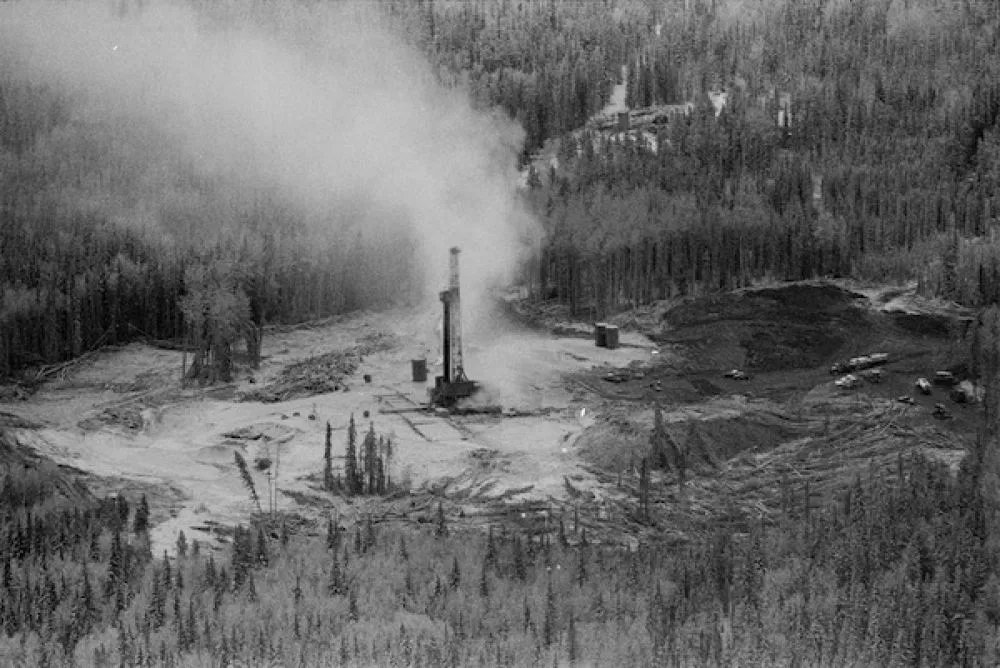
-
Article
Log Houses
Log Houses are a form of housing structure has been used in some forms by both Indigenous peoples and earlier settlers. While some Northwest Coast Indigenous peoples used log frames for their large plank houses before European settlers arrived, log houses have long been associated with pioneer settlement, past and present (see also Architectural History of Indigenous Peoples in Canada). Canada's forests provided ready building material.
"https://d3d0lqu00lnqvz.cloudfront.net/media/media/d722a2ab-c736-4842-b454-e665edd09d59.jpg" // resources/views/front/categories/view.blade.php
https://d3d0lqu00lnqvz.cloudfront.net/media/media/d722a2ab-c736-4842-b454-e665edd09d59.jpg
-
Article
Logic, Epistemology, Philosophy of Science
Philosophy: Logic, Epistemology, Philosophy of Science Logic, Epistemology, and Philosophy of Science cover a wide range of topics and issues including, epistemology, metaphysics, scientific method, science and values, and even the history of science, since there are inevitably many philosophical and conceptual issues present in the development of new ideas. The particular sciences included in this are everything from mathematics, to the natural sciences (biology, chemistry, and physics) to the social sciences (anthropology, economics, and...
"https://thecanadianencyclopedia.ca/images/tce_placeholder.jpg?v=e9dca980c9bdb3aa11e832e7ea94f5d9" // resources/views/front/categories/view.blade.php
https://thecanadianencyclopedia.ca/images/tce_placeholder.jpg?v=e9dca980c9bdb3aa11e832e7ea94f5d9
-
Article
Logo
Logo, a symbol, mark or word used by a corporation or other organization to distinguish its products, services or identity from those of anyone else. First used in 1937, the term was originally an abbreviation for "logogram" or "logotype" (both derived in part from Greek logos, "word"). It came into general use in Canada among marketers and designers in the 1960s, and by the mid-1970s it had become, to the layman, a synonym for "trademark."
"https://thecanadianencyclopedia.ca/images/tce_placeholder.jpg?v=e9dca980c9bdb3aa11e832e7ea94f5d9" // resources/views/front/categories/view.blade.php
https://thecanadianencyclopedia.ca/images/tce_placeholder.jpg?v=e9dca980c9bdb3aa11e832e7ea94f5d9
-
Article
London and Bristol Company
London and Bristol Company, est 1610, the first formal attempt to colonize NEWFOUNDLAND. A group of merchant "adventurers" from London and Bristol, Eng, obtained a royal charter giving them title to Newfoundland's east coast.
"https://thecanadianencyclopedia.ca/images/tce_placeholder.jpg?v=e9dca980c9bdb3aa11e832e7ea94f5d9" // resources/views/front/categories/view.blade.php
https://thecanadianencyclopedia.ca/images/tce_placeholder.jpg?v=e9dca980c9bdb3aa11e832e7ea94f5d9
-
Article
London Conference
From 4 December 1866 to March 1867, politicians from the Province of Canada, Nova Scotia and New Brunswick met with delegates of the British government in London. This was the last of three conferences — after the Charlottetown Conference and Quebec Conference in 1864 — that were held to determine the constitutional details of Confederation. The Quebec Resolutions — 72 points that had been agreed upon in Quebec City — were reviewed and amended. They formed the basis of the British North America Act (now the Constitution Act, 1867). It was passed by the British Parliament and received Queen Victoria’s Royal Assent on 29 March 1867.
"https://d3d0lqu00lnqvz.cloudfront.net/media/media/9a650dcd-e8ad-4685-8baf-c4bba9cae8e7.jpg" // resources/views/front/categories/view.blade.php
https://d3d0lqu00lnqvz.cloudfront.net/media/media/9a650dcd-e8ad-4685-8baf-c4bba9cae8e7.jpg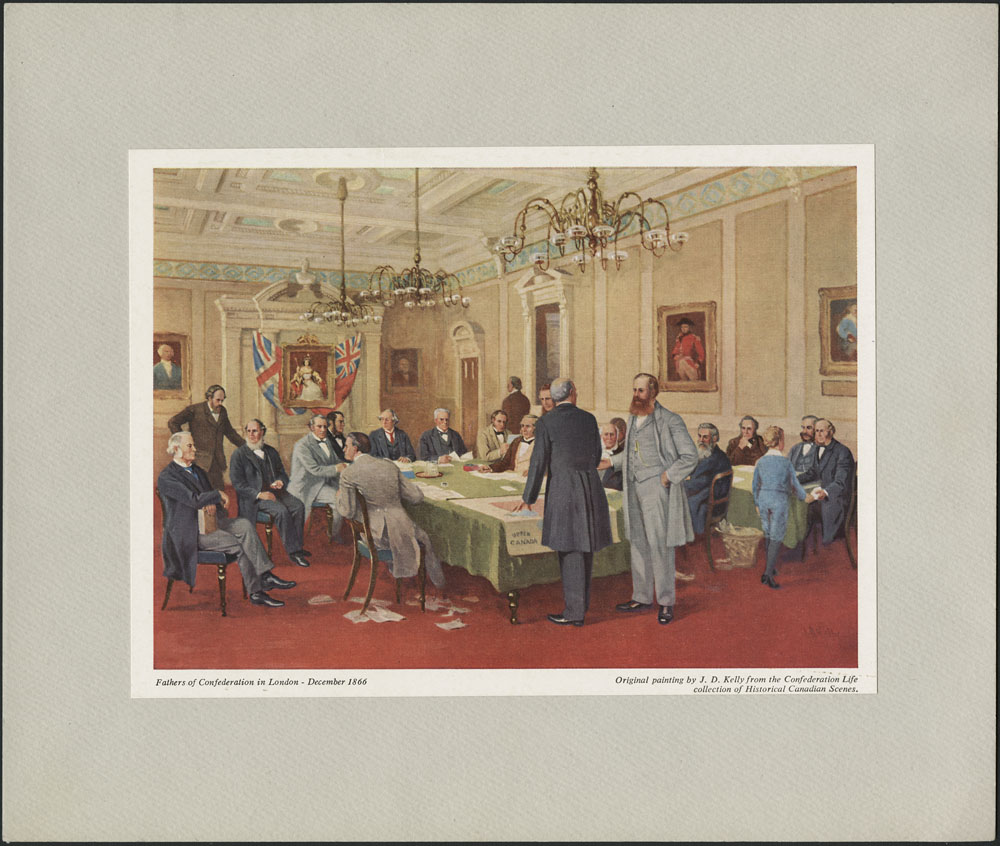
-
Article
London Conference (Plain-Language Summary)
The London Conference took place in London, England, from 4 December 1866 to March 1867. Politicians from British North America met with members of the British government. This was the last of three conferences that were held to work out the legal details of Confederation. The first two were the Charlottetown Conference and Quebec Conference. They were both held in 1864. The Quebec Resolutions were agreed upon in Quebec City. They were reviewed and updated in London. They formed the basis of the British North America Act (now the Constitution Act, 1867). It is the foundation of Canada’s Constitution. It was passed by the British Parliament. It received Queen Victoria’s Royal Assent on 29 March 1867. This article is a plain-language summary of the London Conference. If you would like to read about this topic in more depth, please see our full-length entry: London Conference.
"https://d3d0lqu00lnqvz.cloudfront.net/media/media/9a650dcd-e8ad-4685-8baf-c4bba9cae8e7.jpg" // resources/views/front/categories/view.blade.php
https://d3d0lqu00lnqvz.cloudfront.net/media/media/9a650dcd-e8ad-4685-8baf-c4bba9cae8e7.jpg
-
Article
London Township Treaty (No. 6)
The London Township Treaty of 1796 (also known as Treaty 6 in the Upper Canada treaties numbering system) was an early land agreement between First Nations and British authorities in Upper Canada (later Ontario). It was one of a series of Upper Canada Land Surrenders. The London Township Treaty encompassed a tract of land 12 miles square (about 31 kilometres square) in the southwestern part of the colony. The British originally purchased it as the location to establish the capital of the colony, but York (modern Toronto) became the capital instead. (See also Treaties with Indigenous Peoples in Canada.)
"https://d3d0lqu00lnqvz.cloudfront.net/DundasLondonON.jpg" // resources/views/front/categories/view.blade.php
https://d3d0lqu00lnqvz.cloudfront.net/DundasLondonON.jpg
-
Article
Long-Distance Running
The marathon commemorates an event in ancient Greece; Pheidippides' run from the battlefield at Marathon to Athens (c 35 km) to announce victory.
"https://d3d0lqu00lnqvz.cloudfront.net/media/media/16a4e9f7-d172-4886-a633-bfbc2b78864d.jpg" // resources/views/front/categories/view.blade.php
https://d3d0lqu00lnqvz.cloudfront.net/media/media/16a4e9f7-d172-4886-a633-bfbc2b78864d.jpg
-
List
Longest Rivers in Canada
Canada’s rivers have played a vital role in the country’s history and cultural heritage. As transportation routes for Indigenous people and early settlers, they connected the country before railways and other modes of transportation. They have also been a source of water, food and recreation for thousands of years. Below is a list of Canada’s 10 longest rivers. The list is ordered by the river’s total length, not just the portions within Canadian borders. Similarly, the length cited is the length of the river’s main stem and does not include tributaries.
"https://d3d0lqu00lnqvz.cloudfront.net/media/media/4f133fe0-0529-435c-859e-7fc144a682c6.jpg" // resources/views/front/categories/view.blade.php
https://d3d0lqu00lnqvz.cloudfront.net/media/media/4f133fe0-0529-435c-859e-7fc144a682c6.jpg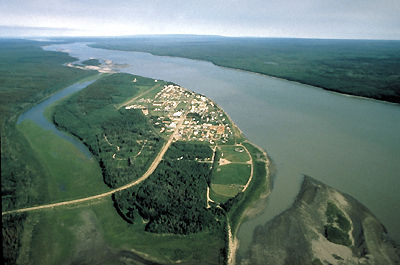
-
Article
Longhouse
A longhouse was the basic house type of pre-contact northern Iroquoian-speaking peoples, such as the Huron-Wendat, Haudenosaunee, Petun and Neutral. The longhouse sheltered a number of families related through the female line. In the 1700s, European-style single-family houses gradually replaced longhouses as primary residences. However, longhouses still function as important facilities in which some Indigenous peoples conduct ceremonies, political meetings and various community gatherings. (See also Architectural History of Indigenous Peoples in Canada.)
"https://d3d0lqu00lnqvz.cloudfront.net/media/media/c78ecb73-d7ac-4834-bc1e-a6d6bf206331.jpg" // resources/views/front/categories/view.blade.php
https://d3d0lqu00lnqvz.cloudfront.net/media/media/c78ecb73-d7ac-4834-bc1e-a6d6bf206331.jpg
-
Editorial
A Place to Happen
The following article is an editorial written by The Canadian Encyclopedia staff. Editorials are not usually updated.It has been said that Canadians don’t tell our own stories or celebrate our own myths. Our history is full of epics considered “too small to be tragic,” as The Tragically Hip’s Gord Downie once sang.
"https://d3d0lqu00lnqvz.cloudfront.net/media/Twitter_Cards/The hip 2.jpg" // resources/views/front/categories/view.blade.php
https://d3d0lqu00lnqvz.cloudfront.net/media/Twitter_Cards/The hip 2.jpg
-
Article
Loons in Canada
Loon (family Gaviidae) is a common name for a distinctive group of five large, swimming birds, all confined to the Northern Hemisphere and all occurring in North America. Loons nest on inland lakes and rivers, migrating to the sea for winter. The common loon is the provincial bird of Ontario.
"https://d3d0lqu00lnqvz.cloudfront.net/media/media/11b636e6-b2ad-4c58-bbfc-b7291fc0109f.jpg" // resources/views/front/categories/view.blade.php
https://d3d0lqu00lnqvz.cloudfront.net/media/media/11b636e6-b2ad-4c58-bbfc-b7291fc0109f.jpg
-
Macleans
Looted Art Controversy
This article was originally published in Maclean’s magazine on July 27, 1998. Partner content is not updated.
"https://thecanadianencyclopedia.ca/images/tce_placeholder.jpg?v=e9dca980c9bdb3aa11e832e7ea94f5d9" // resources/views/front/categories/view.blade.php
https://thecanadianencyclopedia.ca/images/tce_placeholder.jpg?v=e9dca980c9bdb3aa11e832e7ea94f5d9
-
Macleans
Lord Encouraged to Lead Tories
It takes a political animal to know one.This article was originally published in Maclean's Magazine on October 7, 2002
"https://thecanadianencyclopedia.ca/images/tce_placeholder.jpg?v=e9dca980c9bdb3aa11e832e7ea94f5d9" // resources/views/front/categories/view.blade.php
https://thecanadianencyclopedia.ca/images/tce_placeholder.jpg?v=e9dca980c9bdb3aa11e832e7ea94f5d9