
Browse "Things"
-
Article
Land
Land, in law, is an area of Earth's solid surface that is the property of an individual, group or state. Hence, the Canadian polity controls a total of 9,215,430 km2 of land and 755,180 km2 of freshwater, for a total territory of 9,970,610 km2, the second-largest national territory in the world after Russia.
"https://d3d0lqu00lnqvz.cloudfront.net/georgianbay/Beausoleil-Island-Coast.jpg" // resources/views/front/categories/view.blade.php
https://d3d0lqu00lnqvz.cloudfront.net/georgianbay/Beausoleil-Island-Coast.jpg
-
Article
Land Acknowledgment
Land acknowledgements, also known as territorial acknowledgements, are short statements that recognize both the land and the Indigenous people who lived — and in many situations continue to live — on the land prior to Canada’s colonial history. They offer a short story from the stand point of the Indigenous people who grew and evolved from the land. Since the 2015 release of the Truth and Reconciliation Commission’s final report, land acknowledgements have become ubiquitous. In Canada, they are now offered before events, are common place on institutional websites, and are often found in people’s public profiles, social media biographies, and email signatures. In line with their relative newness, land acknowledgements have been subject to much discussion and critique. However, Indigenous people are not asking for their demise. Rather, they are seeking to make them more personal, heartfelt, and historically accurate — namely, more meaningful. Some people are also suggesting that they provide greater practical value for Indigenous communities, for example, in the form of Canada meaningfully sharing the resources the land and water provide. More provocatively, some Indigenous people are advocating that Canada give them their land back.
"https://d3d0lqu00lnqvz.cloudfront.net/LandAcknowledgement/ChaudiereFalls.jpg" // resources/views/front/categories/view.blade.php
https://d3d0lqu00lnqvz.cloudfront.net/LandAcknowledgement/ChaudiereFalls.jpg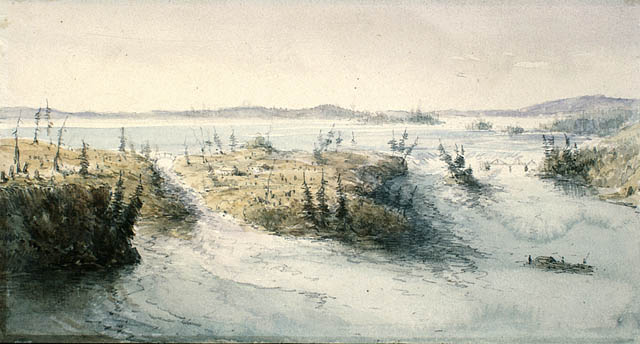
-
Article
Land Cession
A land cession is a transfer of land from one party to another through a deed of sale or surrender. Land cessions may also be referred to as land surrenders and land purchases. In Canada and the United States, Indigenous land cessions generally took place through negotiated treaties. There are cases, however, where Indigenous peoples claim that lands were taken unjustly. The Royal Proclamation of 1763 established the protocols for land cession in both Canada and the United States.
"https://d3d0lqu00lnqvz.cloudfront.net/Indigenous treaties across Canada.jpg" // resources/views/front/categories/view.blade.php
https://d3d0lqu00lnqvz.cloudfront.net/Indigenous treaties across Canada.jpg
-
Article
Indigenous Land Claims in Canada
Land claims seek to address wrongs made against Indigenous peoples, their rights and lands, by the federal and provincial or territorial governments. There are different types of land claims. Comprehensive claims (also known as modern treaties) deal with Indigenous rights, while specific claims concern the government’s outstanding obligations under historic treaties or the Indian Act. There are many ongoing comprehensive and specific claims negotiations in Canada.
"https://d3d0lqu00lnqvz.cloudfront.net/media/media/174cee51-4aca-4a67-ac60-f72697d35862.jpg" // resources/views/front/categories/view.blade.php
https://d3d0lqu00lnqvz.cloudfront.net/media/media/174cee51-4aca-4a67-ac60-f72697d35862.jpg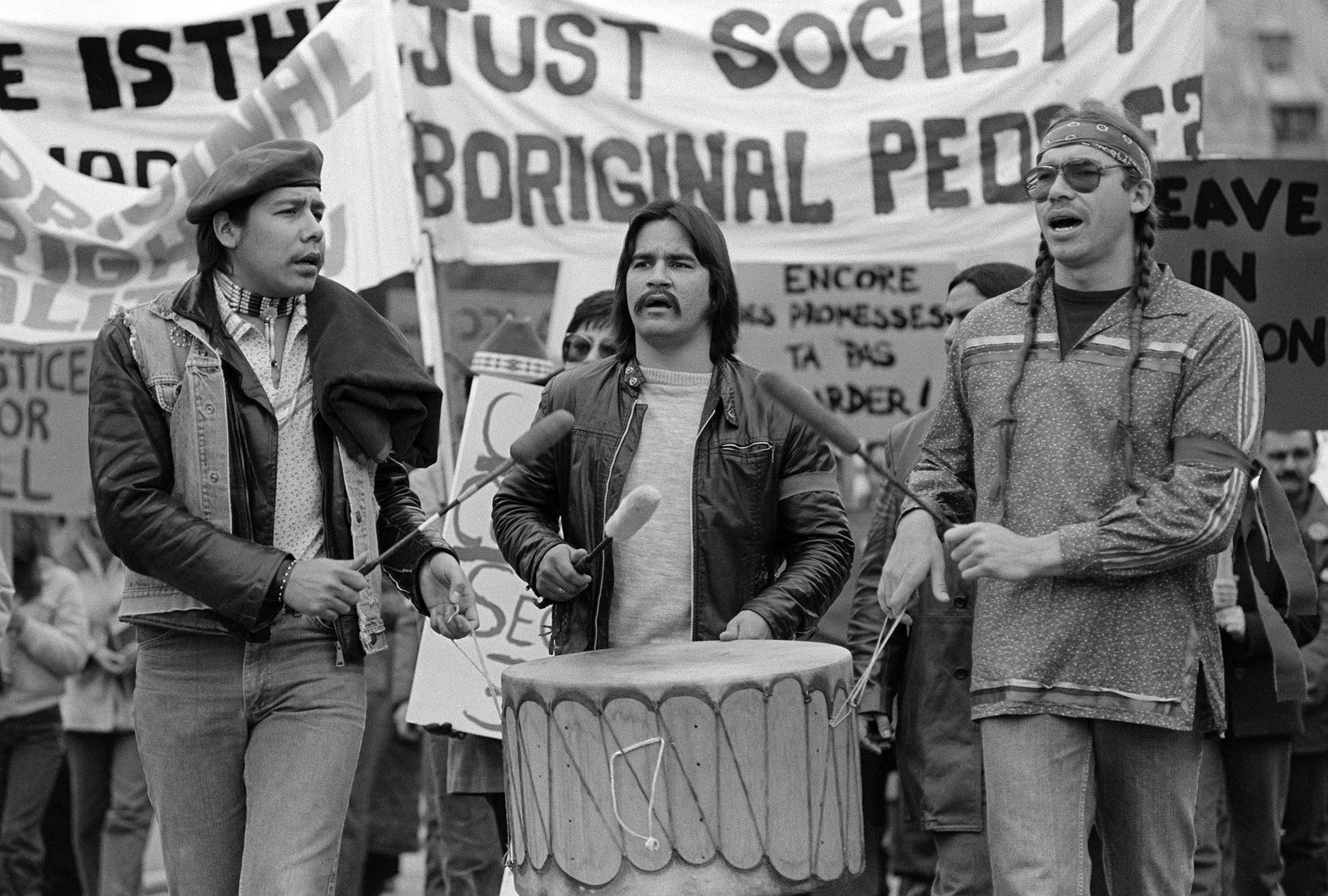
-
Article
Land God Gave to Cain
The Land God Gave to Cain, was Jacques CARTIER's description of the north shore of the Gulf of St Lawrence, which he first sighted in 1534. Cartier was presumably alluding to Genesis 4, in which Cain, having killed his brother, is condemned to till land that is barren.
"https://thecanadianencyclopedia.ca/images/tce_placeholder.jpg?v=e9dca980c9bdb3aa11e832e7ea94f5d9" // resources/views/front/categories/view.blade.php
https://thecanadianencyclopedia.ca/images/tce_placeholder.jpg?v=e9dca980c9bdb3aa11e832e7ea94f5d9
-
Article
Canada and the Movement to Ban Land Mines
In the mid-1990s, Canada became a global leader in the effort to eradicate land mines, which are explosive and deadly weapons. In December 1997, representatives from 122 countries assembled in Ottawa to sign the Mine Ban Treaty (or Ottawa Treaty), which came into force on 1 March 1999. With over 80 per cent of the countries in the world having signed the treaty, it is one of the most widely accepted. The Canadian government continues to support demining efforts globally by assisting in related United Nations operations, supporting organizations like the International Campaign to Ban Landmines, and providing training, education and funding for mine clearing.
"https://d3d0lqu00lnqvz.cloudfront.net/media/media/5ba6f6d1-a6f0-443d-82ea-5da36705544a.jpg" // resources/views/front/categories/view.blade.php
https://d3d0lqu00lnqvz.cloudfront.net/media/media/5ba6f6d1-a6f0-443d-82ea-5da36705544a.jpg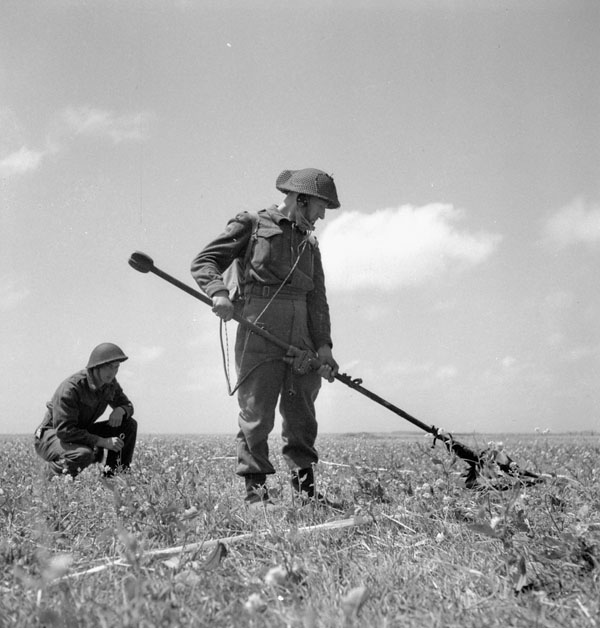
-
Article
Landlord and Tenant Law
Landlord and tenant law, governed by provincial statutes and judge-made law, varies considerably from province to province. Essentially, a landlord and tenant relationship is contractual (see CONTRACT LAW).
"https://thecanadianencyclopedia.ca/images/tce_placeholder.jpg?v=e9dca980c9bdb3aa11e832e7ea94f5d9" // resources/views/front/categories/view.blade.php
https://thecanadianencyclopedia.ca/images/tce_placeholder.jpg?v=e9dca980c9bdb3aa11e832e7ea94f5d9
-
Article
Landscape Architecture
Landscape architecture is the profession concerned with the design, planning, management, and conservation of the built environment. Landscape architects use their creative abilities in the arts and sciences to design outdoor places and systems of open spaces that are useful, imaginative, enjoyable, and environmentally appropriate. Whether working for groups or individuals, landscape architects seek ideas that generate better environments for living. They are concerned about the land's potentials and constraints, the heritage significance of the cultural landscape, the restoration and expansion of ecological communities, the character and function of vegetation, and the efficient and beautiful use of materials.
"https://d3d0lqu00lnqvz.cloudfront.net/media/media/d46f9696-5428-45a8-b9a7-c542c2ed1fc1.jpg" // resources/views/front/categories/view.blade.php
https://d3d0lqu00lnqvz.cloudfront.net/media/media/d46f9696-5428-45a8-b9a7-c542c2ed1fc1.jpg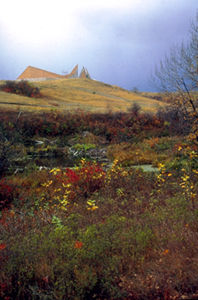
-
Article
Landslide
A landslide is a downward and outward movement of a soil mass that formed part of a slope.
"https://d3d0lqu00lnqvz.cloudfront.net/media/media/aa619f1e-89b3-414d-9f9c-3a5c9c0b0097.jpg" // resources/views/front/categories/view.blade.php
https://d3d0lqu00lnqvz.cloudfront.net/media/media/aa619f1e-89b3-414d-9f9c-3a5c9c0b0097.jpg
-
Article
Language
Language is a form of communication. More specifically, language is a communication system based on human sounds. There are, however, other forms of communication systems based on touch, scent, movement, colour, gesture and even the electrical impulses that pass through computers.
"https://d3d0lqu00lnqvz.cloudfront.net/media/new_article_images/LanguageLangue/Language_Langue.jpg" // resources/views/front/categories/view.blade.php
https://d3d0lqu00lnqvz.cloudfront.net/media/new_article_images/LanguageLangue/Language_Langue.jpg
-
Macleans
Language Law Decision in Quebec
It began with equal French and English lettering on a store sign, escalated with a $75 fine under Quebec's language laws - and ended with a court victory for Gwen Simpson and Wally Hoffmann.This article was originally published in Maclean's Magazine on November 1, 1999
"https://thecanadianencyclopedia.ca/images/tce_placeholder.jpg?v=e9dca980c9bdb3aa11e832e7ea94f5d9" // resources/views/front/categories/view.blade.php
https://thecanadianencyclopedia.ca/images/tce_placeholder.jpg?v=e9dca980c9bdb3aa11e832e7ea94f5d9
-
Article
Language Policy in Canada
Language policy is comprised of a body of theory, principles, laws, programs and measures designed to manage one or more languages in a country. In monolingual societies, language policy is usually concerned with promoting an approved, standardized grammar of the common language. In bilingual or multilingual societies, it is intended to manage situations in which two or more languages are in contact and/or conflict, and to enhance the use and status of certain languages over others. Language policy in Canada has been designed to manage historical relationships among multiple languages – notably French, English and Indigenous languages - and their various communities. While it has evolved over time, Canadian language policy has not always been marked by positive or just measures.
"https://d3d0lqu00lnqvz.cloudfront.net/media/media/40e047e3-6acc-474f-b2c6-76d673b789bc.jpg" // resources/views/front/categories/view.blade.php
https://d3d0lqu00lnqvz.cloudfront.net/media/media/40e047e3-6acc-474f-b2c6-76d673b789bc.jpg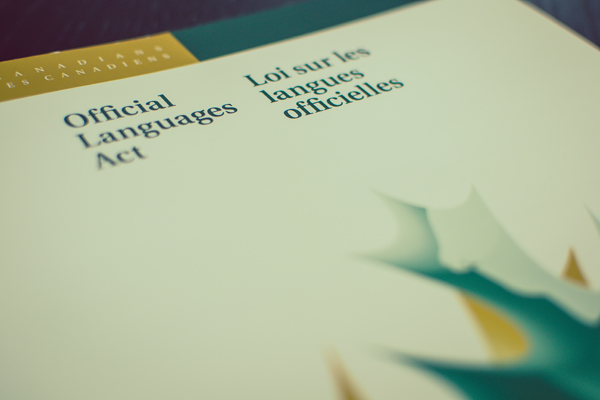
-
Timelines
Languages Policy
This timeline includes events and debates related languages policy in Canada.
"https://d3d0lqu00lnqvz.cloudfront.net/media/media/ec03c6b4-05de-4971-afa1-e6ef64df4fb9.jpg" // resources/views/front/categories/view.blade.php
https://d3d0lqu00lnqvz.cloudfront.net/media/media/ec03c6b4-05de-4971-afa1-e6ef64df4fb9.jpg
-
Article
L’Anse aux Meadows
L’Anse aux Meadows is the site of an 11th-century Norse outpost at the tip of Newfoundland’s Great Northern Peninsula. Arguably the location of Straumfjord of the Vinland sagas, it is believed to be the first European settlement in North America. L’Anse aux Meadows was designated a National Historic Site of Canada in 1968 and a UNESCO World Heritage Site in 1978. Today, it is the site of a popular interpretive centre and ongoing archeological research.
"https://d3d0lqu00lnqvz.cloudfront.net/media/media/ef56b649-2750-47b7-8402-422d71ee395e.jpg" // resources/views/front/categories/view.blade.php
https://d3d0lqu00lnqvz.cloudfront.net/media/media/ef56b649-2750-47b7-8402-422d71ee395e.jpg
-
Article
Larch Trees in Canada
Larch trees (genus Larix) are conifers in the family Pinaceae. There are 10–12 species of larch worldwide, all of which grow in the northern hemisphere. Three among these grow in Canada: subalpine larch, tamarack and western larch. They are Canada’s only deciduous conifers, meaning they shed their needles in the fall. Before shedding, their needles turn a vibrant golden yellow, making them easily identifiable and attracting visitors from around the world (see Autumn Colours). The Northwest Territories designated the tamarack as their territorial tree emblem in 1999.
"https://d3d0lqu00lnqvz.cloudfront.net/media/media/5839ea05-3d04-4ccb-804c-7b586fa33986.jpg" // resources/views/front/categories/view.blade.php
https://d3d0lqu00lnqvz.cloudfront.net/media/media/5839ea05-3d04-4ccb-804c-7b586fa33986.jpg