Browse "Things"
-
Article
Labyrinth
Labyrinth (1967) was a multi-chamber installation that was the undisputed hit of EXPO 67 and the crowning achievement of the NATIONAL FILM BOARD OF CANADA (NFB).
"https://thecanadianencyclopedia.ca/images/tce_placeholder.jpg?v=e9dca980c9bdb3aa11e832e7ea94f5d9" // resources/views/front/categories/view.blade.php
https://thecanadianencyclopedia.ca/images/tce_placeholder.jpg?v=e9dca980c9bdb3aa11e832e7ea94f5d9
-
Article
Lac La Croix Indigenous Pony
The Lac La Croix Indigenous pony, also known as the Lac La Croix Indian pony or the Ojibwa pony, is thought to be the only existing breed of horse developed by Indigenous people in Canada. It takes its name from Lac La Croix First Nation in northwestern Ontario, where it was last found in the wild. Known in the Ojibwa language as bebezhigooganzhii or mishdatim (meaning “one big toenail”), it is a small, semi-feral horse that once lived in the wild and worked as a service animal — but is also considered a spirit animal — for the Ojibwa people of northwestern Ontario and northern Minnesota. Today, this friendly, all-purpose breed is used in equine therapy, Indigenous heritage programs and tourism. Conservation efforts in Canada and the United States strive to protect the breed, which is critically endangered.
"https://d3d0lqu00lnqvz.cloudfront.net/media/media/1ef4a37a-9a7a-430d-bb76-270783327204.jpg" // resources/views/front/categories/view.blade.php
https://d3d0lqu00lnqvz.cloudfront.net/media/media/1ef4a37a-9a7a-430d-bb76-270783327204.jpg
-
Article
Lac-Mégantic Rail Disaster
In the early morning of 6 July 2013, a runaway train hauling 72 tankers filled with crude oil derailed as it approached the centre of the town of Lac-Mégantic, Quebec. The tanker cars exploded and the oil caught fire, killing 47 people and destroying many buildings and other infrastructure in the town centre. The fourth deadliest railway disaster in Canadian history, the derailment led to changes in rail transport safety rules as well as legal action against the company and employees involved in the incident. Years after the derailment, re-building was still ongoing and many of the town’s residents continued to suffer from post-traumatic stress.
"https://d3d0lqu00lnqvz.cloudfront.net/media/new_article_images/Lac-Mégantic_Rail_Disaster/First responders.jpg" // resources/views/front/categories/view.blade.php
https://d3d0lqu00lnqvz.cloudfront.net/media/new_article_images/Lac-Mégantic_Rail_Disaster/First responders.jpg
-
Article
Lacewing
Lacewing is the common name for small, fragile insects of the 2 most common families (Chrysopidae, green lacewings; Hemerobiidae, brown lacewings) of order Neuroptera.
"https://d3d0lqu00lnqvz.cloudfront.net/media/media/e8007af8-8d70-4067-8d62-17a758d4bdc9.jpg" // resources/views/front/categories/view.blade.php
https://d3d0lqu00lnqvz.cloudfront.net/media/media/e8007af8-8d70-4067-8d62-17a758d4bdc9.jpg
-
Article
Lachine Raid
The Lachine raid was an attack led by some 1,500 Haudenosaunee (Iroquois) warriors on the settlement of Lachine, west of Montreal on 5 August 1689. The raid claimed 24 lives, with over 60 Lachine settlers captured by the Haudenosaunee.
"https://thecanadianencyclopedia.ca/images/tce_placeholder.jpg?v=e9dca980c9bdb3aa11e832e7ea94f5d9" // resources/views/front/categories/view.blade.php
https://thecanadianencyclopedia.ca/images/tce_placeholder.jpg?v=e9dca980c9bdb3aa11e832e7ea94f5d9
-
Article
Lacrosse
Lacrosse is one of the oldest organized sports in North America. While at one point it was a field game or ritual played by First Nations, it became popular among non-Indigenous peoples in the mid-1800s. When the National Lacrosse Association of Canada was formed in 1867, it was the Dominion of Canada’s first governing body of sport. Lacrosse was confirmed as Canada’s official summer sport in 1994. The Canadian national lacrosse teams (men and women) rank highly in the world standings, both in field and box lacrosse.
"https://d3d0lqu00lnqvz.cloudfront.net/media/media/0385ec20-f89a-4555-a7c1-78c41bbdc220.jpg" // resources/views/front/categories/view.blade.php
https://d3d0lqu00lnqvz.cloudfront.net/media/media/0385ec20-f89a-4555-a7c1-78c41bbdc220.jpg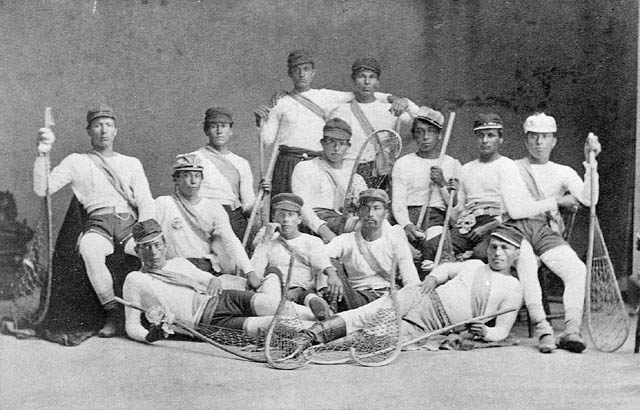
-
Article
Lacrosse: From Creator’s Game to Modern Sport
Lacrosse, the Creator’s Game, is known to various First Nations in North America by many different names, including baggataway (Algonquian), kabocha-toli (Choctaw) and tewaarathon (Mohawk).
"https://d3d0lqu00lnqvz.cloudfront.net/media/media/84b0321c-885e-4185-bb02-953cd0a2b81b.jpg" // resources/views/front/categories/view.blade.php
https://d3d0lqu00lnqvz.cloudfront.net/media/media/84b0321c-885e-4185-bb02-953cd0a2b81b.jpg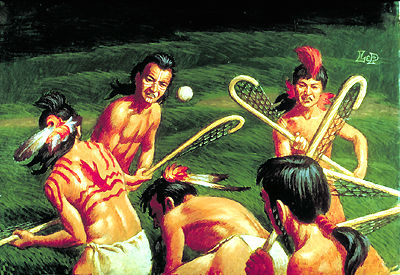
-
Article
Lacrosse Stick
Traditional lacrosse sticks are made of a single piece of wood, bent to form the head of the stick (the part used for catching, carrying, and throwing the ball). Traditionally, Indigenous stick makers wrapped pliable steamed hickory around a tree in order to bend it.
"https://d3d0lqu00lnqvz.cloudfront.net/media/media/0385ec20-f89a-4555-a7c1-78c41bbdc220.jpg" // resources/views/front/categories/view.blade.php
https://d3d0lqu00lnqvz.cloudfront.net/media/media/0385ec20-f89a-4555-a7c1-78c41bbdc220.jpg
-
Article
Ladies Ontario Hockey Association (LOHA)
The Ladies Ontario Hockey Association (LOHA) was the first governing body for community women’s ice hockey in Canada. It was formed in 1922 and disbanded in 1940. Initially, the league consisted of 18 senior teams from across Ontario, from bigger cities such as Toronto, London and Ottawa, to smaller centres such as Bowmanville, Huntsville and Owen Sound. The creation of the LOHA led to the 1925 founding of the Women’s Amateur Athletic Federation, which absorbed the LOHA when it disbanded.
"https://d3d0lqu00lnqvz.cloudfront.net/media/new_article_images/LadiesOntarioHockeyAssociation/Preston_Rivulettes_team_photo.jpg" // resources/views/front/categories/view.blade.php
https://d3d0lqu00lnqvz.cloudfront.net/media/new_article_images/LadiesOntarioHockeyAssociation/Preston_Rivulettes_team_photo.jpg
-
Article
Lady Byng Memorial Trophy
The Lady Byng Memorial Trophy is awarded annually to the National Hockey League (NHL) player “adjudged to have exhibited the best type of sportsmanship and gentlemanly conduct combined with a high standard of playing ability.” The trophy was donated to the NHL in 1925 by Lady Evelyn Byng, wife of Governor General Byng. It was known as the Lady Byng Trophy until her death in 1949, when it was renamed the Lady Byng Memorial Trophy. The winner is chosen through a poll of the Professional Hockey Writers’ Association at the end of the regular season and is usually awarded after the Stanley Cup playoffs. Notable winners include Frank Boucher, Wayne Gretzky, Red Kelly, Pavel Datsyuk, Mike Bossy, Ron Francis and Martin St. Louis.
"https://d3d0lqu00lnqvz.cloudfront.net/media/new_article_images/Lady_Byng,_née_Marie_Evelyn_Moreton,_by_Philip_Alexius_de_László.jpg" // resources/views/front/categories/view.blade.php
https://d3d0lqu00lnqvz.cloudfront.net/media/new_article_images/Lady_Byng,_née_Marie_Evelyn_Moreton,_by_Philip_Alexius_de_László.jpg
-
Article
Ladybugs in Canada
Ladybugs, otherwise known as lady beetles or ladybird beetles, are insects in the family Coccinellidae. Although “ladybug” is the most widely used term in Canada, these insects are not true bugs. They are beetles in the order Coleoptera, with hardened forewings called elytra that protect the more delicate hindwings used in flight. Ladybugs are among the most recognizable insects in Canada. Many people know the familiar red beetle with black spots, but that image represents only part of the country’s ladybug diversity.
"https://d3d0lqu00lnqvz.cloudfront.net/ladybugsincanada/Coleomegilla_maculata3_RSB.jpg" // resources/views/front/categories/view.blade.php
https://d3d0lqu00lnqvz.cloudfront.net/ladybugsincanada/Coleomegilla_maculata3_RSB.jpg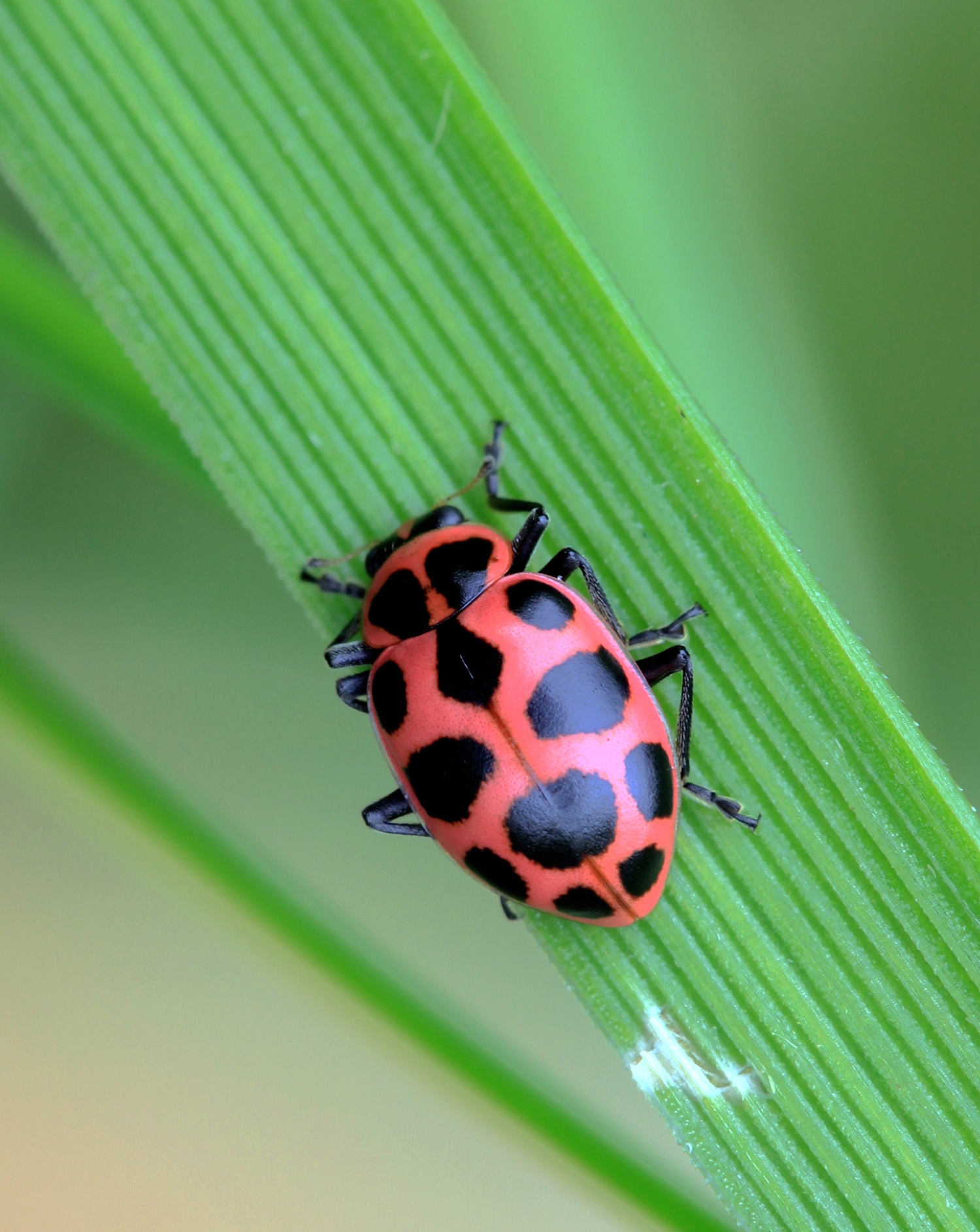
-
Article
Lady's Slipper
Lady's slipper is the common name for some members of the orchid family, in which modified petals (labella) fold inward to make the toe of the "slipper." Insects must pass through the structure to obtain nectar, thereby pollinating the plant. The lady's slipper was selected (1947) as the Provincial Floral Emblem of PEI. The showy lady's slipper (C. reginae) was chosen first, but because it is rare, it was replaced in 1965 by the pink lady's slipper.
"https://d3d0lqu00lnqvz.cloudfront.net/oldgrowthforests/lady-slippers.jpg" // resources/views/front/categories/view.blade.php
https://d3d0lqu00lnqvz.cloudfront.net/oldgrowthforests/lady-slippers.jpg
-
Article
Laforce & Bourdeau Laurent
Laurent, Laforce & Bourdeau (Laurent et Laforce, 1861-4; Laurent, Laforce & Cie, 1865-88). Montreal music and instrument dealers, publishers, and piano manufacturers.
"https://thecanadianencyclopedia.ca/images/tce_placeholder.jpg?v=e9dca980c9bdb3aa11e832e7ea94f5d9" // resources/views/front/categories/view.blade.php
https://thecanadianencyclopedia.ca/images/tce_placeholder.jpg?v=e9dca980c9bdb3aa11e832e7ea94f5d9
-
Article
Lagomorpha
Lagomorpha, order of mammals containing 2 families: the rabbits and hares (Leporidae), and the small, lesser-known pikas (Ochotonidae).
"https://d3d0lqu00lnqvz.cloudfront.net/media/media/8e71f9da-22dd-4449-bd01-06be2e3f6ddf.jpg" // resources/views/front/categories/view.blade.php
https://d3d0lqu00lnqvz.cloudfront.net/media/media/8e71f9da-22dd-4449-bd01-06be2e3f6ddf.jpg
-
Article
Lake Agassiz
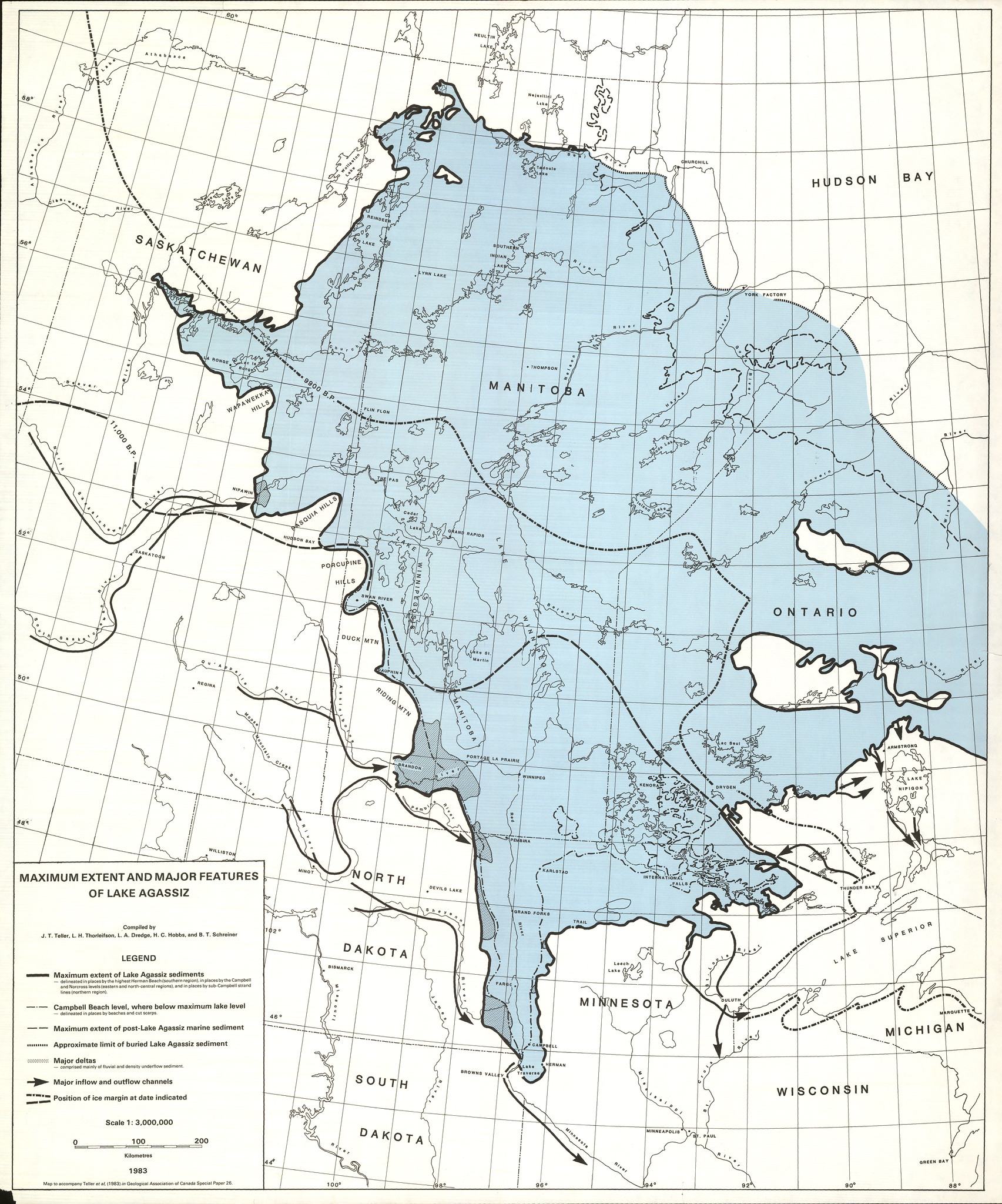
Formed 11,500 years ago, Lake Agassiz was the largest glacial lake in North America, at about 1,500 km long, over 1,100 km wide and 210 m deep. Its location covered parts of what is now Manitoba, Ontario, Saskatchewan, North Dakota and Minnesota.
"https://d3d0lqu00lnqvz.cloudfront.net/2091302531_8e5d16b234_k.jpg" // resources/views/front/categories/view.blade.php
https://d3d0lqu00lnqvz.cloudfront.net/2091302531_8e5d16b234_k.jpg