
Browse "Things"
-
Article
La Minerve
La Minerve was a weekly French-language newspaper published in Montréal from 1826 to 1837 and from 1842 to 1899. It was founded in 1826 by Augustin-Norbert Morin and was purchased by Ludger Duvernay in 1827. Prior to 1837, the newspaper endorsed Louis-Joseph Papineau and the Parti patriote, promoting the party’s more radical agenda. Shortly after the start of the Canadian Rebellion, the newspaper shut down for five years after Duvernay escaped to the United States. Following his return in 1842, Duvernay transformed his newspaper into a more moderate publication, endorsing Louis-Hippolyte La Fontaine’s Reformers. Following Duvernay’s death in 1852, the newspaper became a conservative organ.
"https://d3d0lqu00lnqvz.cloudfront.net/media/media/d2e99f3f-6fd4-4604-9c21-591e4840976d.jpg" // resources/views/front/categories/view.blade.php
https://d3d0lqu00lnqvz.cloudfront.net/media/media/d2e99f3f-6fd4-4604-9c21-591e4840976d.jpg
-
Article
La Musique du Royal 22e Regiment (Royal 22nd Regiment Band)
La Musique du Royal 22e Régiment. The regimental band of the Royal 22e Régiment. Originally named the Royal 22nd Regiment by King George V, the infantry unit was renamed in 1928 as the Royal 22e Régiment to reflect the language and culture of the unit.
"https://thecanadianencyclopedia.ca/images/tce_placeholder.jpg?v=e9dca980c9bdb3aa11e832e7ea94f5d9" // resources/views/front/categories/view.blade.php
https://thecanadianencyclopedia.ca/images/tce_placeholder.jpg?v=e9dca980c9bdb3aa11e832e7ea94f5d9
-
Article
La Niña
La Niña describes an extensive cooling of the waters in the tropical eastern Pacific Ocean. To qualify as a full-fledged La Niña, the cooling must persist for at least three seasons. La Niña events are cyclical, recurring every 3 to 5 years, but the interval can range from 2 to 10 years. Most episodes last about 9 to 12 months, though some events persist for up to two years.
"https://d3d0lqu00lnqvz.cloudfront.net/elninolanina/NOAA_Nina.jpg" // resources/views/front/categories/view.blade.php
https://d3d0lqu00lnqvz.cloudfront.net/elninolanina/NOAA_Nina.jpg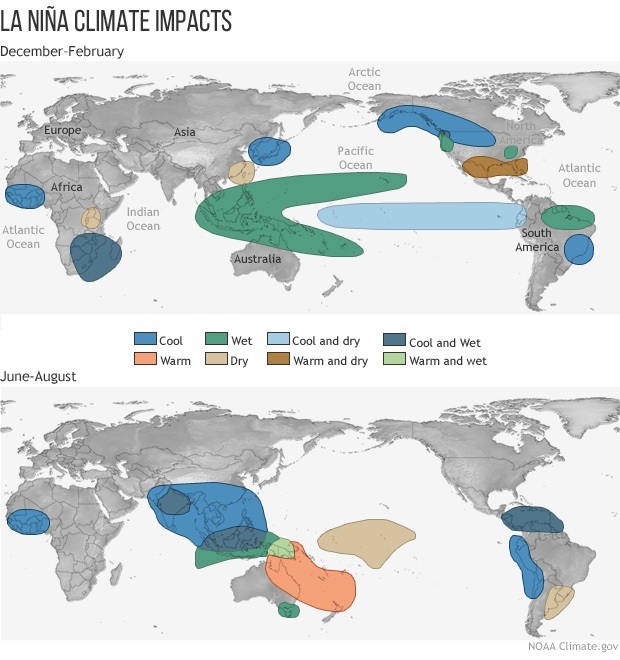
-
Article
Montreal's Little Italy
The product of two major Italian immigration cohorts to Canada (one from 1880 until the First World War, and the other from 1950 to 1970), Montreal’s Italian Canadian community has been gathering in the Madonna della Difesa (Notre-Dame-de-la-Défense) parish since 1910. This neighbourhood, nestled within the Rosemont-La Petite-Patrie borough, is located along Saint-Laurent Boulevard, with Saint-Zotique and Jean-Talon streets marking its limits. Always at the heart of Italian-Canadian community and cultural life in Montreal, Little Italy (Piccola Italia) is known for its buildings’ remarkable architecture and decor. It is also home to a true institution of Montreal’s cityscape: the Jean‑Talon Market.
"https://d3d0lqu00lnqvz.cloudfront.net/media/media/b11aa219-9b12-4d95-a4b5-29522e0bbbf8.JPG" // resources/views/front/categories/view.blade.php
https://d3d0lqu00lnqvz.cloudfront.net/media/media/b11aa219-9b12-4d95-a4b5-29522e0bbbf8.JPG
-
Article
La Plaine
In the mid-1600s the first of 3 seigneuries (Repentigny, 1647; Des Plaines, 1731; and Lachenaie, 1752) was granted in the area, but the first settlers did not arrive until 1760-65. In 1877 the Laurentian Railway between SAINTE-THÉRÈSE and Saint-Lin was completed but development remained slow.
"https://d3d0lqu00lnqvz.cloudfront.net/media/media/3376a443-4f74-46c4-b1cf-91b4fdf12911.jpg" // resources/views/front/categories/view.blade.php
https://d3d0lqu00lnqvz.cloudfront.net/media/media/3376a443-4f74-46c4-b1cf-91b4fdf12911.jpg
-
Article
La Presse Strike
Two days later, the 3 main UNION CENTRALS defied a municipal ban to organize a huge march in solidarity with the newspaper workers. More than 12 000 people clashed with 100 Montréal policemen. The outcome was some 50 arrests, several dozen injuries and one death from natural causes.
"https://d3d0lqu00lnqvz.cloudfront.net/media/media/c762eef7-88b7-40c9-afbe-91aa60ae56dd.jpg" // resources/views/front/categories/view.blade.php
https://d3d0lqu00lnqvz.cloudfront.net/media/media/c762eef7-88b7-40c9-afbe-91aa60ae56dd.jpg
-
Article
La Relève
La Relève was a monthly magazine founded in 1934 in Montréal by Paul Beaulieu, Robert CHARBONNEAU, Jean Le Moyne and Claude Hurtubise. The magazine published 103 issues before its demise in 1948, the first 48 as La Relève and the rest as La Nouvelle Relève.
"https://thecanadianencyclopedia.ca/images/tce_placeholder.jpg?v=e9dca980c9bdb3aa11e832e7ea94f5d9" // resources/views/front/categories/view.blade.php
https://thecanadianencyclopedia.ca/images/tce_placeholder.jpg?v=e9dca980c9bdb3aa11e832e7ea94f5d9
-
Editorial
Cavelier de La Salle: French Explorer
The following article is an editorial written by The Canadian Encyclopedia staff. Editorials are not usually updated.
"https://thecanadianencyclopedia.ca/images/tce_placeholder.jpg?v=e9dca980c9bdb3aa11e832e7ea94f5d9" // resources/views/front/categories/view.blade.php
https://thecanadianencyclopedia.ca/images/tce_placeholder.jpg?v=e9dca980c9bdb3aa11e832e7ea94f5d9
-
Article
La vraie nature de Bernadette
At a time when the once all-powerful Catholic Church had lost its grip on Québécois, director Gilles Carle made this sardonic fable about a woman’s quest to find spiritual harmony on her own terms. It won five Canadian Film Awards — including best director, screenplay, lead actress and supporting actor — and was also very popular in France, where it screened in competition at the Cannes Film Festival. Considered one of the best Canadian films ever made, it was named one of the Top 10 Canadian films of all time in a poll conducted by the Toronto International Film Festival (TIFF) in 1984, and one of 150 essential works in Canadian cinema history in a similar poll in 2016.
"https://d3d0lqu00lnqvz.cloudfront.net/media/media/521acaca-38dd-4521-9a06-7198e9c5079c.jpg" // resources/views/front/categories/view.blade.php
https://d3d0lqu00lnqvz.cloudfront.net/media/media/521acaca-38dd-4521-9a06-7198e9c5079c.jpg
-
Article
Labour Canada
Labour Canada, established 1900 as the Department of Labour under the Conciliation Act to "aid in the prevention and settlement of trade disputes." In 1994, it became a ministry within the newly created Department of Human Resources Development.
"https://thecanadianencyclopedia.ca/images/tce_placeholder.jpg?v=e9dca980c9bdb3aa11e832e7ea94f5d9" // resources/views/front/categories/view.blade.php
https://thecanadianencyclopedia.ca/images/tce_placeholder.jpg?v=e9dca980c9bdb3aa11e832e7ea94f5d9
-
Article
Labour Day in Canada
Labour Day, the first Monday in September, has been a statutory holiday in Canada since 1894. It originated in the first workers’ rallies of the Victorian era. Historically, workers marked the day with various activities. These included parades, speeches, games, amateur competitions and picnics. The holiday promoted working-class solidarity and belonging during a time of rapid industrialization. Since the Second World War, fewer and fewer people have participated in Labour Day activities. Nevertheless, it remains a statutory holiday. Many Canadians now devote the Labour Day holiday to leisure activity and family time.
"https://d3d0lqu00lnqvz.cloudfront.net/media/media/7b2117b9-3207-4bf8-905a-98c5fbe2f6c9.jpg" // resources/views/front/categories/view.blade.php
https://d3d0lqu00lnqvz.cloudfront.net/media/media/7b2117b9-3207-4bf8-905a-98c5fbe2f6c9.jpg
-
Article
Labour Force in Canada
The labour force refers to the total adult population available to the labour market at a specific time. Statistics Canada administers the Labour Force Survey (LFS), a monthly household survey, that provides estimates about employment and unemployment rates in Canada as well as labour market characteristics. Data about Canada’s labour force helps economists and other analysts understand the Canadian economy.
"https://d3d0lqu00lnqvz.cloudfront.net/TCE_placeholder.png" // resources/views/front/categories/view.blade.php
https://d3d0lqu00lnqvz.cloudfront.net/TCE_placeholder.png
-
Article
Labour Law
Labour law governs collective bargaining and industrial relations among employers, their unionized employees and trade unions. In Canada a distinction is commonly made between labour law narrowly defined in this way and employment law, the law of individual employment relationships, comprising the common law of master and servant and supervening statutory enactments governing the workplace. In England, labour law describes both, and of course a close relationship exists between them. In most provinces these matters are covered in separate statutes, but the Canada Labour Code is Parliament's major enactment governing the workplace for industries within federal jurisdiction, and regulates labour standards and occupational health and safety.
"https://d3d0lqu00lnqvz.cloudfront.net/labourhistoryquiz.jpg" // resources/views/front/categories/view.blade.php
https://d3d0lqu00lnqvz.cloudfront.net/labourhistoryquiz.jpg
-
Article
Labour Market
The labour market is a generalized concept denoting the interaction between the supply (number of persons available for work) and the demand (number of jobs available) and the wage rate.
"https://thecanadianencyclopedia.ca/images/tce_placeholder.jpg?v=e9dca980c9bdb3aa11e832e7ea94f5d9" // resources/views/front/categories/view.blade.php
https://thecanadianencyclopedia.ca/images/tce_placeholder.jpg?v=e9dca980c9bdb3aa11e832e7ea94f5d9
-
Article
Labour Mediation
Labour mediation embraces a variety of processes for resolving disputes between employers and trade unions in the organized sector of the labour market.
"https://thecanadianencyclopedia.ca/images/tce_placeholder.jpg?v=e9dca980c9bdb3aa11e832e7ea94f5d9" // resources/views/front/categories/view.blade.php
https://thecanadianencyclopedia.ca/images/tce_placeholder.jpg?v=e9dca980c9bdb3aa11e832e7ea94f5d9