
Browse "Things"
-
Editorial
Discovering Gold in the Klondike
The following article is an editorial written by The Canadian Encyclopedia staff. Editorials are not usually updated.
"https://d3d0lqu00lnqvz.cloudfront.net/media/media/d50c2c97-6f10-450d-a282-84e29ec3cf0f.jpg" // resources/views/front/categories/view.blade.php
https://d3d0lqu00lnqvz.cloudfront.net/media/media/d50c2c97-6f10-450d-a282-84e29ec3cf0f.jpg
-
Editorial
Klondikers Challenge for the Stanley Cup
The following article is an editorial written by The Canadian Encyclopedia staff. Editorials are not usually updated. With our national game now a multi-billion-dollar professional sport, it is perhaps comforting to look back to simpler times when hockey was closer to community, and was played for love and glory by amateurs. In the early days of Stanley Cup competition, any Canadian team with some success at the senior level could challenge the current champs. In 1905 one of the strangest challenges came from Dawson City, Yukon.
"https://d3d0lqu00lnqvz.cloudfront.net/media/media/8075ba2d-1fa1-47e3-bedc-30e2da0d6139.jpg" // resources/views/front/categories/view.blade.php
https://d3d0lqu00lnqvz.cloudfront.net/media/media/8075ba2d-1fa1-47e3-bedc-30e2da0d6139.jpg
-
Article
Knights of Columbus in Canada
Founded in the United States in 1882 and arriving in Canada in 1897, the Knights of Columbus are a lay Catholic fraternal service organization committed to charity, unity, fraternity and patriotism. They are devoted to mutual aid through an internal insurance system, to the promotion of the Catholic Church, and to social welfare through community voluntarism and charitable public works.
"https://d3d0lqu00lnqvz.cloudfront.net/media/media/fc50131c-a5a3-4650-94ad-e33e5b9a5de5.jpg" // resources/views/front/categories/view.blade.php
https://d3d0lqu00lnqvz.cloudfront.net/media/media/fc50131c-a5a3-4650-94ad-e33e5b9a5de5.jpg
-
Article
Knights of Labor in Canada
The Knights of Labor, the leading labour reform organization in the late 19th century, played a key role in the development of the working-class consciousness in Canada. It was also an important player in the development of the Trades and Labor Congress of Canada and interceded with authorities to improve living standards for the working class. The movement fell victim to internal conflict and the successes of other unions, and began fading out at the end of the 1890s.
"https://d3d0lqu00lnqvz.cloudfront.net/media/media/3e5cc2c6-a047-4fa0-8747-bca4459849dd.jpg" // resources/views/front/categories/view.blade.php
https://d3d0lqu00lnqvz.cloudfront.net/media/media/3e5cc2c6-a047-4fa0-8747-bca4459849dd.jpg
-
Macleans
Kobe Earthquake
Bridges, train trestles and elevated highways collapsed, sending hapless passengers plummeting to their deaths. Apartment buildings crumpled and fell, crushing terrified occupants still huddled in their beds.This article was originally published in Maclean's Magazine on January 30, 1995
"https://thecanadianencyclopedia.ca/images/tce_placeholder.jpg?v=e9dca980c9bdb3aa11e832e7ea94f5d9" // resources/views/front/categories/view.blade.php
https://thecanadianencyclopedia.ca/images/tce_placeholder.jpg?v=e9dca980c9bdb3aa11e832e7ea94f5d9
-
Article
Kohlrabi
Kohlrabi (Brassica oleracea, Gongylodes Group), sometimes called stem turnip or cabbage turnip, an important Canadian garden vegetable of the Cruciferae family.
"https://d3d0lqu00lnqvz.cloudfront.net/media/media/ef29012b-714b-4166-b09e-7a34416efcd3.jpg" // resources/views/front/categories/view.blade.php
https://d3d0lqu00lnqvz.cloudfront.net/media/media/ef29012b-714b-4166-b09e-7a34416efcd3.jpg
-
Article
Koje-Do
Koje-Do (now Geojedo), is an island 40 kilometers southwest of Busan, South Korea, where the United States operated a prisoner of war (POW) camp during the Korean War. North Korean and Chinese prisoners rebelled and seized the camp.
"https://thecanadianencyclopedia.ca/images/tce_placeholder.jpg?v=e9dca980c9bdb3aa11e832e7ea94f5d9" // resources/views/front/categories/view.blade.php
https://thecanadianencyclopedia.ca/images/tce_placeholder.jpg?v=e9dca980c9bdb3aa11e832e7ea94f5d9
-
Article
Komagata Maru (Guru Nanak Jahaz)
The SS Komagata Maru (also known as the Guru Nanak Jahaz) was a chartered ship featured in a dramatic challenge to Canada’s former practice of excluding immigrants from India. This challenge took place in the spring and summer of 1914, on the eve of the First World War. It proved to be a bitter and tragic experience for the passengers, first in an unsuccessful and eventually physical confrontation with officials, police and the military at the Port of Vancouver, and then in a deadly encounter with police and troops near Kolkata on the passengers’ return to India. The events in Vancouver illustrated the widespread assumption among white Canadians that Canada was “a white man’s country.” The whole story also exposed the fundamental unfairness of British rule in India, then the most prized colonial possession of the British Empire. It was one more proof for many South Asians of their second-class status within the Empire. From this perspective, the fall-out from the Komagata Maru/Guru Nanak Jahaz was a noteworthy chapter in the history of the independence struggle in India. In 1914–15, the immediate impact was to encourage a small band of nationalists in an abortive armed uprising against British rule. In the longer term, the Komagata Maru/Guru Nanak Jahaz was a factor in turning Indian public opinion against the British. (See also Immigration Policy; Prejudice and Discrimination.) This article is a full-length entry about the Komagata Maru. For a plain-language summary, please see Komagata Maru (Guru Nanak Jahaz) (Plain-Language Summary).
"https://d3d0lqu00lnqvz.cloudfront.net/media/media/20903286-d4e3-4ac2-b6ee-3f42da586b7f.jpg" // resources/views/front/categories/view.blade.php
https://d3d0lqu00lnqvz.cloudfront.net/media/media/20903286-d4e3-4ac2-b6ee-3f42da586b7f.jpg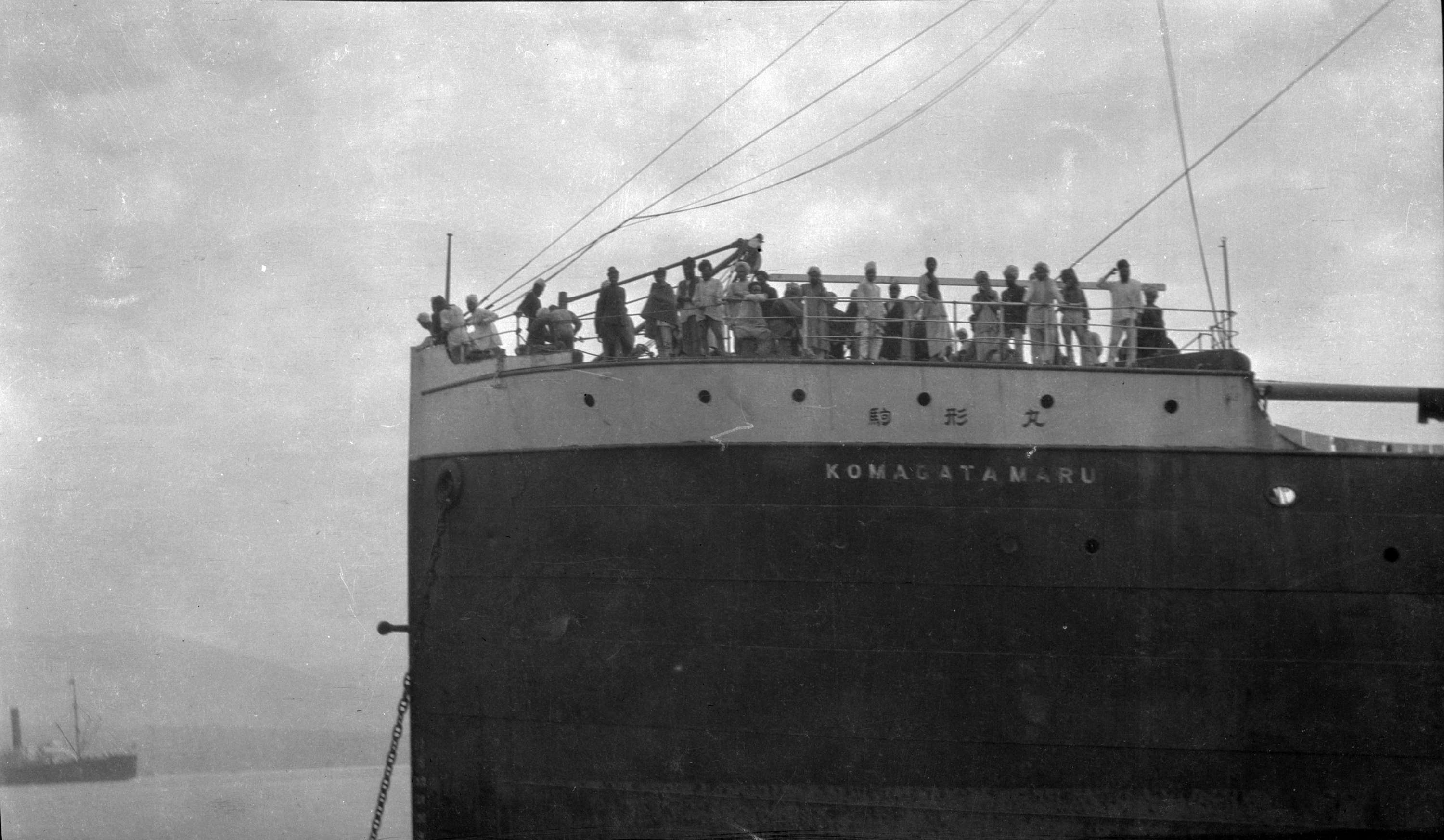
-
Article
Korean Music in Canada
In the 1986 Census of Canada, 29,705 listed Korean as their single or multiple ethnic origin. Half of these lived in the Metropolitan Toronto area.
"https://thecanadianencyclopedia.ca/images/tce_placeholder.jpg?v=e9dca980c9bdb3aa11e832e7ea94f5d9" // resources/views/front/categories/view.blade.php
https://thecanadianencyclopedia.ca/images/tce_placeholder.jpg?v=e9dca980c9bdb3aa11e832e7ea94f5d9
-
Article
Korean Music and Dance
The first significant wave of immigration to Canada from Korea began in the late 1960s and the early 1970s.
"https://thecanadianencyclopedia.ca/images/tce_placeholder.jpg?v=e9dca980c9bdb3aa11e832e7ea94f5d9" // resources/views/front/categories/view.blade.php
https://thecanadianencyclopedia.ca/images/tce_placeholder.jpg?v=e9dca980c9bdb3aa11e832e7ea94f5d9
-
Timelines
Korean War
The Korean War began 25 June 1950, when North Korean armed forces invaded South Korea. The war’s combat phase lasted until an armistice was signed 27 July 1953. As part of a United Nations (UN) force, 26,791 Canadian military personnel served in the Korean War, during both the combat phase and as peacekeepers afterward. After the two world wars, Korea remains Canada’s third-bloodiest overseas conflict, taking the lives of 516 Canadians and wounding more than...
"https://d3d0lqu00lnqvz.cloudfront.net/media/media/31d11a20-43ec-46fb-9894-4b9ee22bf140.jpg" // resources/views/front/categories/view.blade.php
https://d3d0lqu00lnqvz.cloudfront.net/media/media/31d11a20-43ec-46fb-9894-4b9ee22bf140.jpg
-
Article
Korean War
The Korean War began 25 June 1950, when North Korean armed forces invaded South Korea. The war’s combat phase lasted until an armistice was signed 27 July 1953. Canadian military personnel were part of a United Nations (UN) force consisting of 16 countries; 26,791 Canadians served during the combat phase and nearly 7,000 served as peacekeepers from 1953 to 1957. The last Canadian military personnel left Korea in 1957. After the two world wars, Korea remains Canada’s third-bloodiest overseas conflict, taking the lives of 516 Canadians and wounding more than 1,200. In total, an estimated three million people died during the war. More than half were civilians. The two Koreas remain technically at war today. This article is a full-length entry about the Korean War. For a plain-language summary, please see Canada and the Korean War (Plain-Language Summary).
"https://d3d0lqu00lnqvz.cloudfront.net/media/media/51271c17-62c2-4218-a3d3-55323d04a04e.jpg" // resources/views/front/categories/view.blade.php
https://d3d0lqu00lnqvz.cloudfront.net/media/media/51271c17-62c2-4218-a3d3-55323d04a04e.jpg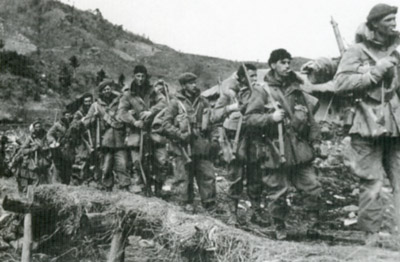
-
Article
Krever Inquiry
The Commission of Inquiry on the Blood System in Canada, also known as the Krever Inquiry, was a public investigation of the Canadian blood system, which had been contaminated with the human immunodeficiency virus (HIV) and hepatitis C virus during the 1980s. (See also Aids.) In 1993, a public inquiry into the Canadian blood system was established and Justice Horace Krever was named commissioner. The infection of thousands of Canadians with (HIV) and hepatitis C is Canada's worst- ever preventable public health disaster. It has also become one of its most prolonged legal sagas, featuring a high-profile public inquiry, almost $10 billion in legal claims and a criminal investigation.
"https://thecanadianencyclopedia.ca/images/tce_placeholder.jpg?v=e9dca980c9bdb3aa11e832e7ea94f5d9" // resources/views/front/categories/view.blade.php
https://thecanadianencyclopedia.ca/images/tce_placeholder.jpg?v=e9dca980c9bdb3aa11e832e7ea94f5d9
-
Macleans
Krever Report Released
This article was originally published in Maclean’s magazine on December 8, 1997. Partner content is not updated. They still serve up doughnuts and juice afterward. Otherwise, much has changed for anyone giving blood at a Red Cross clinic in Canada. The questions are chastening. Have you ever paid for sex, a nurse asks.
"https://thecanadianencyclopedia.ca/images/tce_placeholder.jpg?v=e9dca980c9bdb3aa11e832e7ea94f5d9" // resources/views/front/categories/view.blade.php
https://thecanadianencyclopedia.ca/images/tce_placeholder.jpg?v=e9dca980c9bdb3aa11e832e7ea94f5d9
-
Article
Kronborg: 1582
Kronborg: 1582 (other titles: Rockabye Hamlet, Something's Rockin' in Denmark, Hamlet - The Musical). Rock musical by Cliff Jones after Shakespeare's Hamlet.
"https://thecanadianencyclopedia.ca/images/tce_placeholder.jpg?v=e9dca980c9bdb3aa11e832e7ea94f5d9" // resources/views/front/categories/view.blade.php
https://thecanadianencyclopedia.ca/images/tce_placeholder.jpg?v=e9dca980c9bdb3aa11e832e7ea94f5d9