
Browse "Things"
-
Article
King-Byng Affair
The King-Byng Affair was a 1926 Canadian constitutional crisis that pitted the powers of a prime minister against the powers of a governor general. It began when Prime Minister William Lyon Mackenzie King asked Governor General Lord Julian Byng of Vimy to dissolve Parliament and call fresh elections. Byng refused. It ended with King winning an eventual election. No governor general since has publicly refused the advice of a prime minister.
"https://d3d0lqu00lnqvz.cloudfront.net/media/media/672a77ae-5fdf-4605-ac71-9078a13a1a65.jpg" // resources/views/front/categories/view.blade.php
https://d3d0lqu00lnqvz.cloudfront.net/media/media/672a77ae-5fdf-4605-ac71-9078a13a1a65.jpg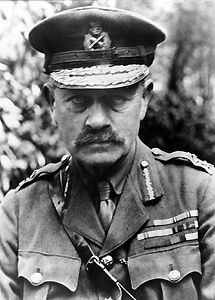
-
Article
King-Byng Affair (Plain-Language Summary)
The King-Byng Affair was a constitutional crisis that happened in 1926. It pitted the powers of a prime minister against the powers of a governor general. It began when Prime Minister William Lyon Mackenzie King asked Governor General Lord Julian Byng to dissolve Parliament and call a new election. Byng refused. It ended with King winning another election. Since then, no governor general has publicly refused the advice of a prime minister. This article is a plain-language summary of the King-Byng Affair. If you are interested in reading about this topic in more depth, please see our full-length entry: King-Byng Affair.
"https://d3d0lqu00lnqvz.cloudfront.net/media/media/bc101b95-90c9-4f86-b242-e84ad88599bf.jpg" // resources/views/front/categories/view.blade.php
https://d3d0lqu00lnqvz.cloudfront.net/media/media/bc101b95-90c9-4f86-b242-e84ad88599bf.jpg
-
Article
King George's Sound Company
King George's Sound Company (Richard Cadman Etches and Co), founded 1785 in London, England, to trade for furs on the Northwest Coast.
"https://thecanadianencyclopedia.ca/images/tce_placeholder.jpg?v=e9dca980c9bdb3aa11e832e7ea94f5d9" // resources/views/front/categories/view.blade.php
https://thecanadianencyclopedia.ca/images/tce_placeholder.jpg?v=e9dca980c9bdb3aa11e832e7ea94f5d9
-
Macleans
King Hussein (Obituary)
When the Qureish, King Hussein's private jet, touched down at Amman airport, the Jordanian monarch was not at his usual place in the pilot's seat. He lay instead on a bed in the back of the plane, racked by fever, exhausted by the long flight.This article was originally published in Maclean's Magazine on February 15, 1999
"https://thecanadianencyclopedia.ca/images/tce_placeholder.jpg?v=e9dca980c9bdb3aa11e832e7ea94f5d9" // resources/views/front/categories/view.blade.php
https://thecanadianencyclopedia.ca/images/tce_placeholder.jpg?v=e9dca980c9bdb3aa11e832e7ea94f5d9
-
Article
King of Kensington
King of Kensington was a CBC sitcom that ran for 111 episodes from 1975 to 1980. Actor Al Waxman played Larry King, the titular “king” of Toronto’s vibrant and multicultural Kensington Market neighbourhood. Created by Perry Rosemond, the series was a major success both in Canada and internationally. It regularly drew close to 2 million weekly viewers. Toronto Star TV critic Antonia Zerbisias called it “the single most important entertainment series ever produced in English-speaking Canada” because it represented the best of Canada to Canadian and international audiences.
"https://d3d0lqu00lnqvz.cloudfront.net/media/media/c3d5a936-ff2d-4ae9-93c3-313d4db0387e.jpg" // resources/views/front/categories/view.blade.php
https://d3d0lqu00lnqvz.cloudfront.net/media/media/c3d5a936-ff2d-4ae9-93c3-313d4db0387e.jpg
-
Article
Belted Kingfisher
The belted kingfisher (Ceryle alcyon) is the only species of kingfisher (Alcedinidae) found in Canada. Kingfishers are a family of robust birds, with large heads, strong, pointed bills, short tails and small feet. The middle and outer toes are joined together for over half their length. The family comprises 95 species worldwide. The belted kingfisher is 30–33 cm long, with a white underside and blue-gray on the back, with a large, ragged, double crest on its head. Generally, it breeds throughout Canada south of the treeline.
"https://d3d0lqu00lnqvz.cloudfront.net/birdclassification/belted-kingfisher.jpg" // resources/views/front/categories/view.blade.php
https://d3d0lqu00lnqvz.cloudfront.net/birdclassification/belted-kingfisher.jpg
-
Article
Kinglet
The kinglet is a tiny, highly active, insectivorous songbird, olive grey with brightly coloured crown, sharp, slender bill and short, stubby tail.
"https://thecanadianencyclopedia.ca/images/tce_placeholder.jpg?v=e9dca980c9bdb3aa11e832e7ea94f5d9" // resources/views/front/categories/view.blade.php
https://thecanadianencyclopedia.ca/images/tce_placeholder.jpg?v=e9dca980c9bdb3aa11e832e7ea94f5d9
-
Article
Kings Landing Historical Settlement
Kings Landing Historical Settlement is located 37 km west of Fredericton, NB. It was created in the late 1960s when the Mactaquac Dam threatened to flood many historic buildings in the Saint John River valley. Over 70 restored and reconstructed buildings and other structures are now located at Kings Landing to represent a New Brunswick settlement of the 19th and 20th centuries.
"https://d3d0lqu00lnqvz.cloudfront.net/media/media/dd14f8bd-899c-42d0-9d51-f5227c85a285.jpg" // resources/views/front/categories/view.blade.php
https://d3d0lqu00lnqvz.cloudfront.net/media/media/dd14f8bd-899c-42d0-9d51-f5227c85a285.jpg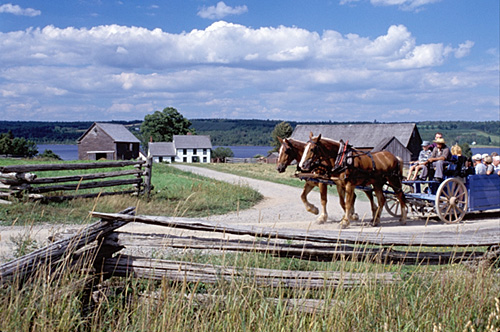
-
Article
King's Posts
King's Posts, a name applied during the French regime to fur trade and fishing posts in the King's Domain.
"https://thecanadianencyclopedia.ca/images/tce_placeholder.jpg?v=e9dca980c9bdb3aa11e832e7ea94f5d9" // resources/views/front/categories/view.blade.php
https://thecanadianencyclopedia.ca/images/tce_placeholder.jpg?v=e9dca980c9bdb3aa11e832e7ea94f5d9
-
Article
King's Presents
The practice of offering regular gifts to Indigenous trading partners and allies, begun by Governor Montmagny in 1648, was, by the end of the 17th century institutionalized as the "Présents du Roy" at the annual meeting with the governor-general of New France at Montréal.
"https://thecanadianencyclopedia.ca/images/tce_placeholder.jpg?v=e9dca980c9bdb3aa11e832e7ea94f5d9" // resources/views/front/categories/view.blade.php
https://thecanadianencyclopedia.ca/images/tce_placeholder.jpg?v=e9dca980c9bdb3aa11e832e7ea94f5d9
-
Article
Kinmel Park Riot
The Kinmel Park Riot (4–5 March 1919) was one of several demobilization riots at the end of the First World War. Five Canadian soldiers died during the riot, which happened at the Canadian Army camp at Kinmel Park near Rhyl in North Wales. It was the most serious of 13 riots or disturbances involving Canadian troops in the United Kingdom between November 1918 and June 1919.
"https://d3d0lqu00lnqvz.cloudfront.net/KinmelParkRiot/KinmelRiots.jpg" // resources/views/front/categories/view.blade.php
https://d3d0lqu00lnqvz.cloudfront.net/KinmelParkRiot/KinmelRiots.jpg
-
Macleans
Kirkland Lake Eyes Hazardous Waste Plant
BILL ENOUY IS PROUD of his town. Oh, the jolly looking mayor of KIRKLAND LAKE, Ont., knows the main street needs a facelift, and that something should be done about the shortage of family physicians.This article was originally published in Maclean's Magazine on November 18, 2002
"https://thecanadianencyclopedia.ca/images/tce_placeholder.jpg?v=e9dca980c9bdb3aa11e832e7ea94f5d9" // resources/views/front/categories/view.blade.php
https://thecanadianencyclopedia.ca/images/tce_placeholder.jpg?v=e9dca980c9bdb3aa11e832e7ea94f5d9
-
Article
Klee Wyck
Klee Wyck (1941) is a memoir by Emily Carr, consisting of a collection of literary sketches. It is an evocative work that describes in vivid detail the influence that the Indigenous people and culture of the Northwest Coast had on Carr. Klee Wyck (“Laughing One”) is the name the Nuu-chah-nulth (Nootka) people gave her. The book won a Governor General’s Literary Award for nonfiction in 1941 and has been translated into French.
"https://d3d0lqu00lnqvz.cloudfront.net/media/media/a470b336-21e0-40c4-a8a8-4118d56bb838.jpg" // resources/views/front/categories/view.blade.php
https://d3d0lqu00lnqvz.cloudfront.net/media/media/a470b336-21e0-40c4-a8a8-4118d56bb838.jpg
-
Macleans
Klein's Controversial Health-Care Reform
This article was originally published in Maclean’s magazine on April 3, 2000. Partner content is not updated. Sitting in his wood-panelled office at the Alberta legislature, Ralph Klein contemplates the political fire storm raging outside his door.
"https://thecanadianencyclopedia.ca/images/tce_placeholder.jpg?v=e9dca980c9bdb3aa11e832e7ea94f5d9" // resources/views/front/categories/view.blade.php
https://thecanadianencyclopedia.ca/images/tce_placeholder.jpg?v=e9dca980c9bdb3aa11e832e7ea94f5d9
-
Article
Klondike Gold Rush
The discovery of gold in the Yukon in 1896 led to a stampede to the Klondike region between 1897 and 1899. This led to the establishment of Dawson City (1896) and subsequently, the Yukon Territory (1898). The Klondike gold rush solidified the public’s image of the North as more than a barren wasteland and left a body of literature that has popularized and romanticized the Yukon. (See also Gold Rushes in Canada)
"https://d3d0lqu00lnqvz.cloudfront.net/media/media/f8badbbb-95b8-44cf-a053-5589845ee1ef.jpg" // resources/views/front/categories/view.blade.php
https://d3d0lqu00lnqvz.cloudfront.net/media/media/f8badbbb-95b8-44cf-a053-5589845ee1ef.jpg