
Browse "Things"
-
Article
Kanesatake Resistance (Oka Crisis) (Plain-Language Summary)
In the summer of 1990, a resistance occurred in Kanesatake, Quebec. Nearby is a town called Oka. This event has many names – the Oka Crisis, the Kanesatake Resistance, and the Mohawk Resistance. The main participants were Kanyen'kehà:ka (Mohawk) protesters, the Quebec police, the RCMP, and the Canadian Army. It started when members of the Kanyen'kehà:ka community started protesting the expansion of a golf course and the building of townhouses. An Indigenous burial ground was on this land. The situation quickly became violent. One police officer was killed. He was a corporal in the Sûreté du Quebec. After this, the Canadian Army went to Kanesatake. The expansion ultimately was stopped. The federal government bought the disputed land. The resistance ended in late September. However, the land was not transferred to the Kanyen'kehà:ka. The resistance had lasting repercussions. This article is a plain-language summary of the Kanesatake Resistance (Oka Crisis). If you are interested in reading about this topic more in depth, please see our full-length entry, Kanesatake Resistance (Oka Crisis).
"https://d3d0lqu00lnqvz.cloudfront.net/media/media/af36926e-717c-45ef-91cc-f00a20c1faeb.jpg" // resources/views/front/categories/view.blade.php
https://d3d0lqu00lnqvz.cloudfront.net/media/media/af36926e-717c-45ef-91cc-f00a20c1faeb.jpg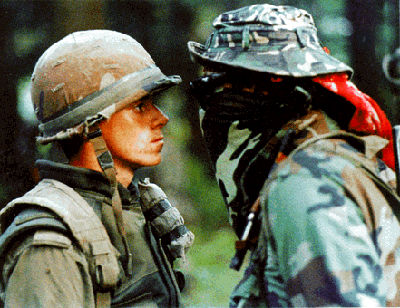
-
Article
Kangaroo APCs (Armoured Personnel Carriers)
“Kangaroo” is the nickname given to a series of military transport vehicles (APCs) designed by the Canadian army in 1944, during the Battle of Normandy. (See Second World War.) It was a modified version of existing armoured vehicles such as the M7 (Priest) self-propelled gun, the Ram tank and the Sherman tank. Major components of these vehicles, such as their turret, were removed, thus allowing them to be used to transport infantry soldiers, safe from enemy fire.
"https://d3d0lqu00lnqvz.cloudfront.net/media/media/a137744-v8.jpg" // resources/views/front/categories/view.blade.php
https://d3d0lqu00lnqvz.cloudfront.net/media/media/a137744-v8.jpg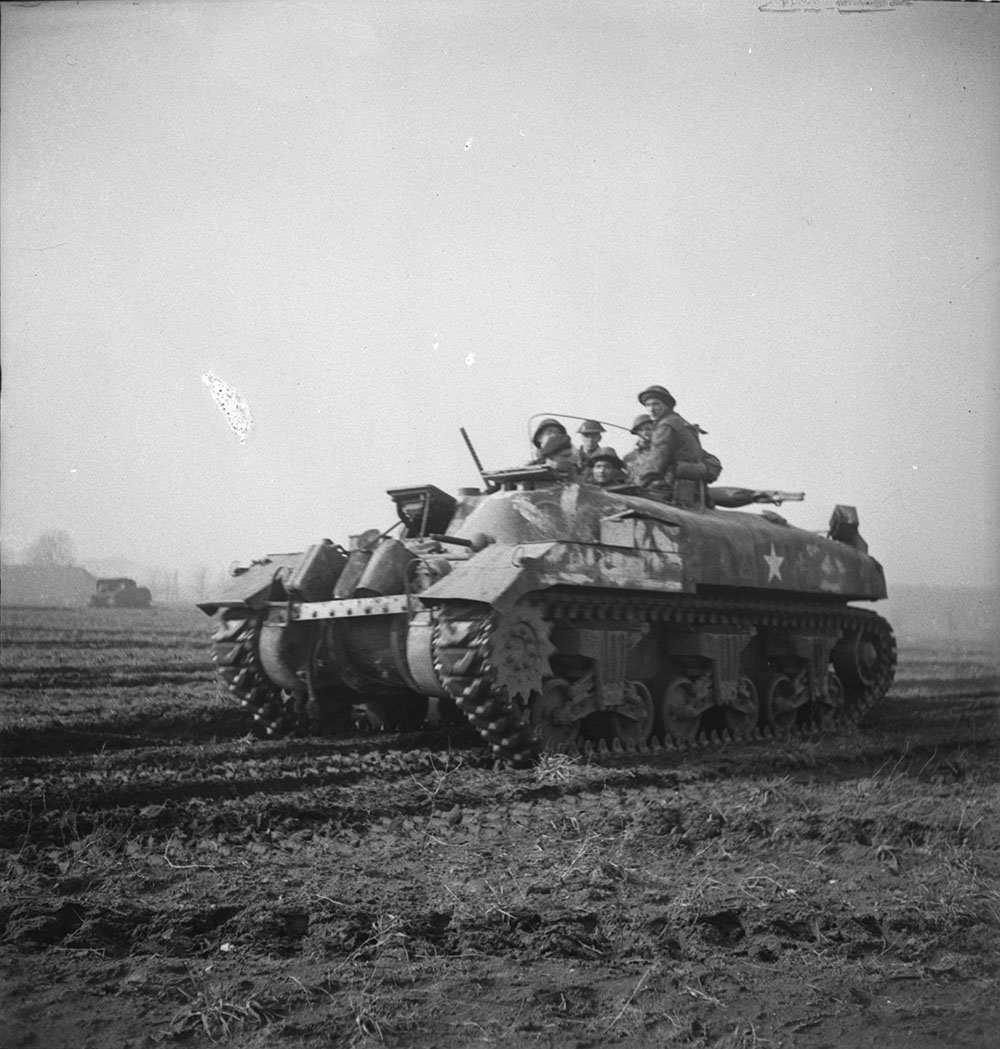
-
Article
Kangaroo Rat
Kangaroo rats are solitary, strictly nocturnal rodents of the North American family Heteromyidae. The family comprises 75 species (see Pocket Mouse). Of the 14 species of kangaroo rat, only one occurs in Canada. Ord's kangaroo rat (Dipodomys ordii) of the Great Sand Hills of south-west Saskatchewan and Alberta is one of Canada's rare desert-dwelling mammals.
"https://d3d0lqu00lnqvz.cloudfront.net/media/media/65db67a8-774d-4965-b9f4-1ff6d9b46d9f.jpg" // resources/views/front/categories/view.blade.php
https://d3d0lqu00lnqvz.cloudfront.net/media/media/65db67a8-774d-4965-b9f4-1ff6d9b46d9f.jpg
-
Article
Karate
Karate, which translates as "empty hands," is a form of unarmed combat employing a variety of punches, open-hand strikes, kicks and blocks.
"https://thecanadianencyclopedia.ca/images/tce_placeholder.jpg?v=e9dca980c9bdb3aa11e832e7ea94f5d9" // resources/views/front/categories/view.blade.php
https://thecanadianencyclopedia.ca/images/tce_placeholder.jpg?v=e9dca980c9bdb3aa11e832e7ea94f5d9
-
Article
Karluk
Karluk, whaling ship, 251 tons, 39 metres long, sunk in the Arctic Ocean 11 January 1914. Eleven of the 25 survivors died before rescue from Wrangel Island on 7 September 1914. The loss of these men and the ship caused a half-century of dispute about the leadership and technical skills of Vilhjalmur Stefansson, leader of the Canadian Arctic Expedition of 1913, and Robert Bartlett, captain of the Karluk.
"https://d3d0lqu00lnqvz.cloudfront.net/Karluk.jpg" // resources/views/front/categories/view.blade.php
https://d3d0lqu00lnqvz.cloudfront.net/Karluk.jpg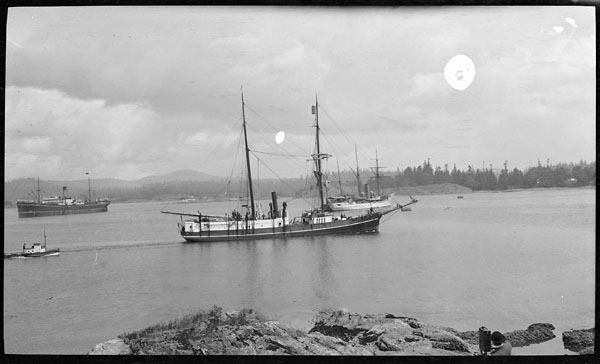
-
Article
Karst Landform
A karst landform is a geological feature created on the Earth's surface by the drainage of water into the ground. Typical karst forms include sinkholes, caves, natural bridges and sinking streams. They were first studied in detail in Kras, Slovenia, hence the name karst. There are 1.2 million km2 of karst rock outcroppings in Canada, found in all geological regions except the Canadian Shield.
"https://d3d0lqu00lnqvz.cloudfront.net/media/media/da6ae2ec-e05e-46fd-916c-6185a6a86215.jpg" // resources/views/front/categories/view.blade.php
https://d3d0lqu00lnqvz.cloudfront.net/media/media/da6ae2ec-e05e-46fd-916c-6185a6a86215.jpg
-
Article
Kateri Memorial Hospital Centre
Kateri Memorial Hospital Centre (KMHC) is a healthcare facility located in Kahnawà:ke, Quebec. Then known as Hôpital du Sacré-Cœur de Caughnawaga (Sacred Heart Hospital of Caughnawaga), it was established in 1905 by Adele Perronno. Initially, the funding to support the hospital came from the Jesuits, a private donor, the federal government, and later the Quebec government. The hospital is named after Saint Kateri Tekakwitha and has served the community for over 100 years. It is unique for a number of reasons. First, it is run by a Board established by the Mohawk Council of Kahnawà:ke. Secondly, it is a hospital located within a First Nations community. Finally, the new buildings were constructed following nation-to-nation discussions and agreements with the Quebec government. Beginning in 2015, the hospital underwent an estimated $31 million expansion and renovation. It provides various healthcare services, including clinics and a long-term care home. The community takes great pride in the hospital, viewing it as a symbol of their resilience.
"https://d3d0lqu00lnqvz.cloudfront.net/KateriMemorialHospitalCentre/CP115913047_resized.jpg" // resources/views/front/categories/view.blade.php
https://d3d0lqu00lnqvz.cloudfront.net/KateriMemorialHospitalCentre/CP115913047_resized.jpg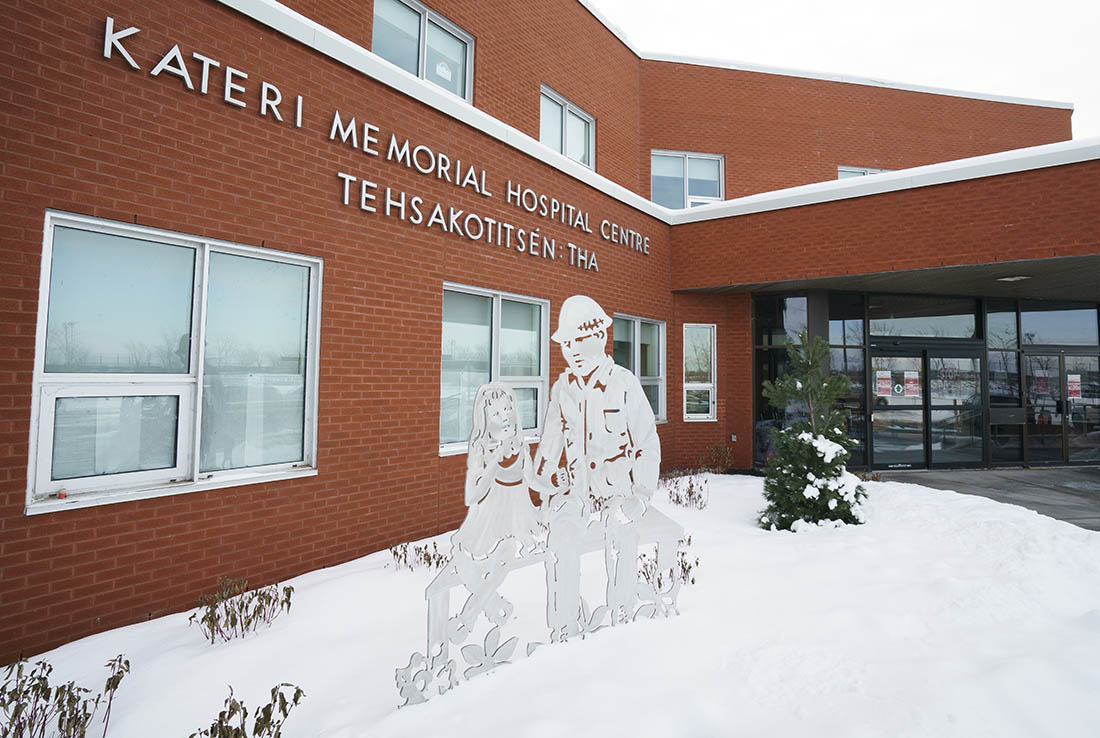
-
Article
Kayak
For over 2,000 years, the Inuit have used kayaks for traveling and hunting expeditions, except for the most northerly polar Inuit. Essentially a one-person, closed-deck hunting craft, it was employed occasionally for the transport of goods. Although kayaks are rarely used today for hunting, the kayak remains an important part of Inuit culture and heritage.
"https://d3d0lqu00lnqvz.cloudfront.net/media/media/cbb4d419-1b24-4855-83c1-531a98fb7874.jpg" // resources/views/front/categories/view.blade.php
https://d3d0lqu00lnqvz.cloudfront.net/media/media/cbb4d419-1b24-4855-83c1-531a98fb7874.jpg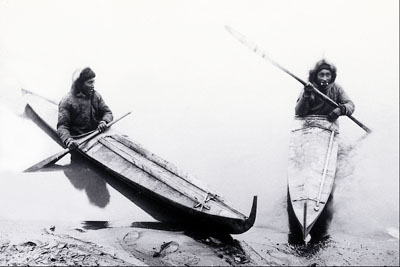
-
Article
Keates-Geissler Pipe Organs Ltd.
Keates-Geissler Pipe Organs Ltd (Keates Organ Company, Ltd until 1971). Established in 1945 in London, Ont, by Bert Keates (b 1909), to manufacture custom-built pipe organs. The company moved to Lucan, Ont, in 1950, became incorporated in 1951, and relocated in Acton, Ont, in 1961.
"https://thecanadianencyclopedia.ca/images/tce_placeholder.jpg?v=e9dca980c9bdb3aa11e832e7ea94f5d9" // resources/views/front/categories/view.blade.php
https://thecanadianencyclopedia.ca/images/tce_placeholder.jpg?v=e9dca980c9bdb3aa11e832e7ea94f5d9
-
Article
Kébec-Disc Inc
Kébec-Disc Inc. Recording company founded in Montreal in 1974. Guy Latraverse, its first president, was succeeded in 1976 by Gilles Talbot. After Talbot's accidental death in March 1982 the company ceased its activities, Latraverse having left Kébec-Disc a year earlier.
"https://thecanadianencyclopedia.ca/images/tce_placeholder.jpg?v=e9dca980c9bdb3aa11e832e7ea94f5d9" // resources/views/front/categories/view.blade.php
https://thecanadianencyclopedia.ca/images/tce_placeholder.jpg?v=e9dca980c9bdb3aa11e832e7ea94f5d9
-
Article
Keegstra Case
Jim Keegstra was a secondary school teacher in rural Alberta who taught anti-Semitic propaganda to his students. He was charged with a hate crime in 1984 and was found guilty in 1985. However, Keegstra launched repeated appeals arguing that the Criminal Code violated his constitutionally guaranteed freedom of expression. The landmark case (R. v. Keegstra) tested the balance between the right to freedom of speech outlined in the Canadian Charter of Rights and Freedoms and the law’s limits on hate speech stipulated in the Criminal Code. The case came before the Supreme Court of Canada in 1990 and 1996. The Court ultimately ruled against Keegstra by deciding that Canada’s hate laws imposed a “reasonable limit” on a person’s freedom of expression.
"https://d3d0lqu00lnqvz.cloudfront.net/media/media/c813762a-d4db-4a05-b769-18eb4e9b7957.jpg" // resources/views/front/categories/view.blade.php
https://d3d0lqu00lnqvz.cloudfront.net/media/media/c813762a-d4db-4a05-b769-18eb4e9b7957.jpg
-
Article
Keegstra Case (Plain-Language Summary)
Jim Keegstra was a secondary school teacher in rural Alberta. He was charged with a hate crime in 1984 after he taught antisemitic propaganda to his students. He was found guilty in 1985. But he launched repeated appeals. He argued that the Criminal Code violated his freedom of expression. The landmark case (R. v. Keegstra) set an important legal precedent. It tested the balance between the right to freedom of speech outlined in the Charter of Rights and Freedoms and the law’s limits on hate speech laid out in the Criminal Code. The case came before the Supreme Court of Canada in 1990 and 1996. The Court ruled against Keegstra. It ruled that Canada’s hate laws imposed a “reasonable limit” on a person’s freedom of expression. This article is a plain-language summary of the Keegstra Case. If you would like to read about this topic in more depth, please see our full-length entry: Keegstra Case.
"https://d3d0lqu00lnqvz.cloudfront.net/media/media/31f862c0-7a65-41c2-a522-44c57858f583.jpg" // resources/views/front/categories/view.blade.php
https://d3d0lqu00lnqvz.cloudfront.net/media/media/31f862c0-7a65-41c2-a522-44c57858f583.jpg
-
Macleans
Keegstra's Conviction Confirmed
This article was originally published in Maclean’s magazine on March 11, 1996. Partner content is not updated. "Moles only come out in the dark when no one is watching. Jews only do their deeds when no one is watching. A mole when mad, will strike back and have no mercy when disturbed. Jews strike at any time and have NO mercy." That excerpt from an examination answer penned by an Eckville, Alta.
"https://thecanadianencyclopedia.ca/images/tce_placeholder.jpg?v=e9dca980c9bdb3aa11e832e7ea94f5d9" // resources/views/front/categories/view.blade.php
https://thecanadianencyclopedia.ca/images/tce_placeholder.jpg?v=e9dca980c9bdb3aa11e832e7ea94f5d9
-
Article
Kelly Kirby Piano Method
Kelly Kirby Piano Method. Also known as the Kelly Kirby Kindergarten Method and the Kelly Kirby Introductory Piano Program, this method is a system of teaching piano, musical rudiments, and theory to young beginners ages 3 to 5.
"https://thecanadianencyclopedia.ca/images/tce_placeholder.jpg?v=e9dca980c9bdb3aa11e832e7ea94f5d9" // resources/views/front/categories/view.blade.php
https://thecanadianencyclopedia.ca/images/tce_placeholder.jpg?v=e9dca980c9bdb3aa11e832e7ea94f5d9
-
Macleans
Kelowna Residents Respond to Disaster
At times last week, the sky on Kelowna's southern flank seemed possessed by a malevolent force, as though the B.C. city were living under a volcano. Winds would fan the Okanagan Mountain Provincial Park fire, sending unsettling plumes of smoke high into the air.This article was originally published in Maclean's Magazine on September 8, 2003
"https://thecanadianencyclopedia.ca/images/tce_placeholder.jpg?v=e9dca980c9bdb3aa11e832e7ea94f5d9" // resources/views/front/categories/view.blade.php
https://thecanadianencyclopedia.ca/images/tce_placeholder.jpg?v=e9dca980c9bdb3aa11e832e7ea94f5d9