Browse "Things"
-
Article
The Invasion of Canada during the American Revolution
The invasion of Canada in 1775–76 was the first offensive campaign of the American Revolution. Although American rebels captured Montreal in November 1775, an attack on Quebec City in December failed. The Americans maintained a siege over the winter but were routed in the spring with the arrival of British reinforcements. Montreal was abandoned in May 1776 and, after a defeat at Trois-Rivières in June, the invaders retreated to New York. The rebel failure was the result of logistical problems, harsh conditions and illness, particularly smallpox. Although some habitants supported the invaders, most remained neutral. Both British and American forces were aided by Indigenous allies.
"https://d3d0lqu00lnqvz.cloudfront.net/American-Revolution/Death-of-Montgomery-1.jpeg" // resources/views/front/categories/view.blade.php
https://d3d0lqu00lnqvz.cloudfront.net/American-Revolution/Death-of-Montgomery-1.jpeg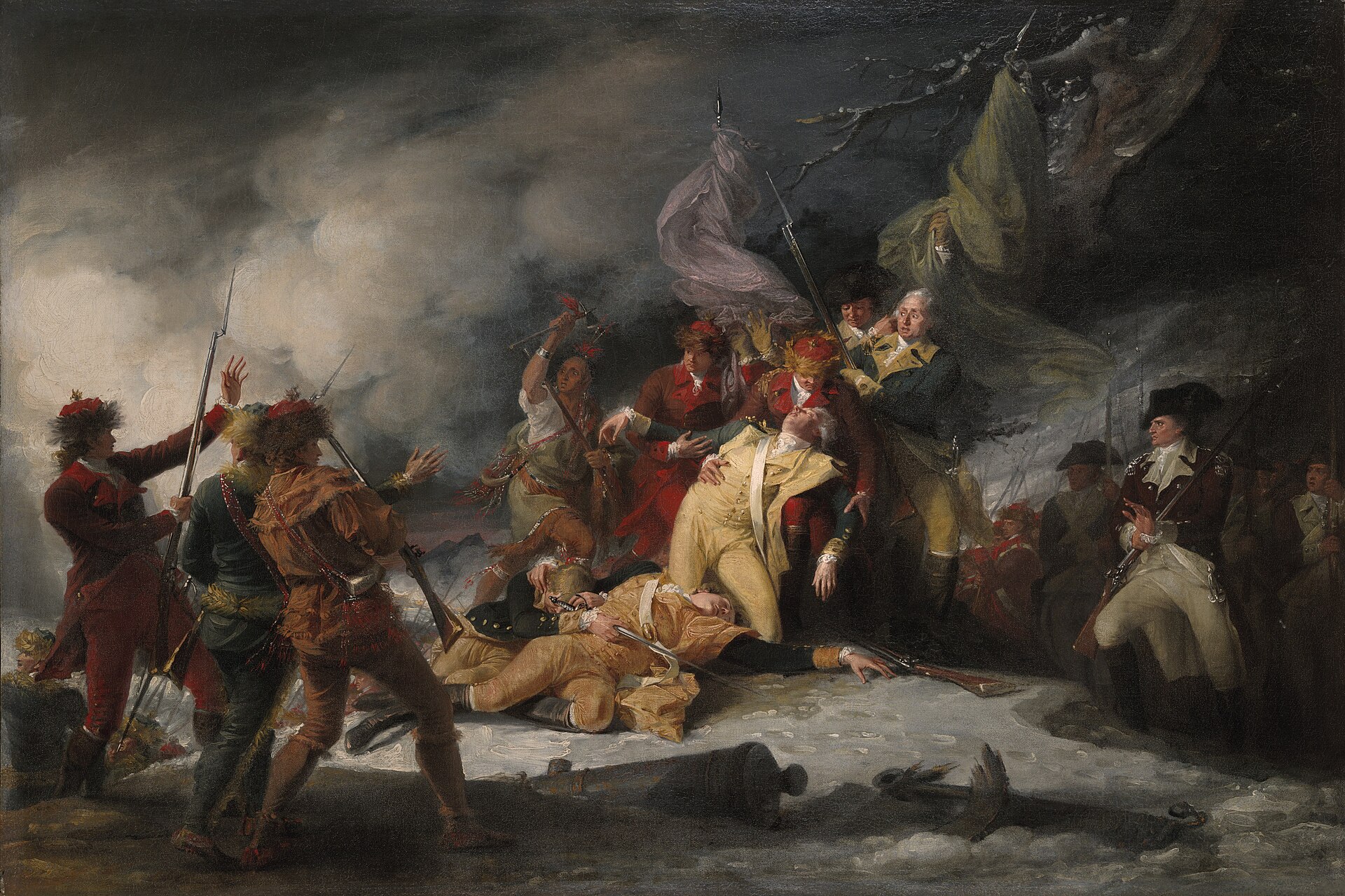
-
Article
Invasive Species in Canada: Animals
Invasive species are any species that have, primarily with human help, become established in a new ecosystem. While it’s impossible to say exactly how many invasive species live in Canada, in 2002, researchers estimated that at least 1,442 invasive species — including fish, plants, insects and invertebrates — now live in the country’s farmlands, forests and waterways. The complex environmental impacts of so many invasive species are unknown and, maybe, unknowable. Typically, non-native species are feared for their ability to reproduce much faster than native species and outcompete native species for food, habitat and other resources. Economically, invasive species are estimated to cost Canadians billions of dollars each year in lost revenue from natural resources and impacts on ecosystem services.
"https://d3d0lqu00lnqvz.cloudfront.net/media/new_article_images/InvasiveSpeciesAnimals/4076024710_e3109cc816_b.jpg" // resources/views/front/categories/view.blade.php
https://d3d0lqu00lnqvz.cloudfront.net/media/new_article_images/InvasiveSpeciesAnimals/4076024710_e3109cc816_b.jpg
-
Article
Invasive Species in Canada: Plants
Invasive species are any species that have, primarily with human help, become established in a new ecosystem. While it’s impossible to say exactly how many invasive species live in Canada, in 2002, researchers estimated that at least 1,442 invasive species — including fish, plants, insects and invertebrates — now live in the country’s farmlands, forests and waterways. The complex environmental impacts of so many invasive species are unknown and, maybe, unknowable. Typically, non-native species are feared for their ability to reproduce much faster than native species and outcompete natives for food, habitat and other resources. Economically, invasives are estimated to cost Canadians billions of dollars each year in lost revenue from natural resources and impacts on ecosystem services.
"https://d3d0lqu00lnqvz.cloudfront.net/media/new_article_images/InvasivePlantSpecies/8462455173_003015d04d_z.jpg" // resources/views/front/categories/view.blade.php
https://d3d0lqu00lnqvz.cloudfront.net/media/new_article_images/InvasivePlantSpecies/8462455173_003015d04d_z.jpg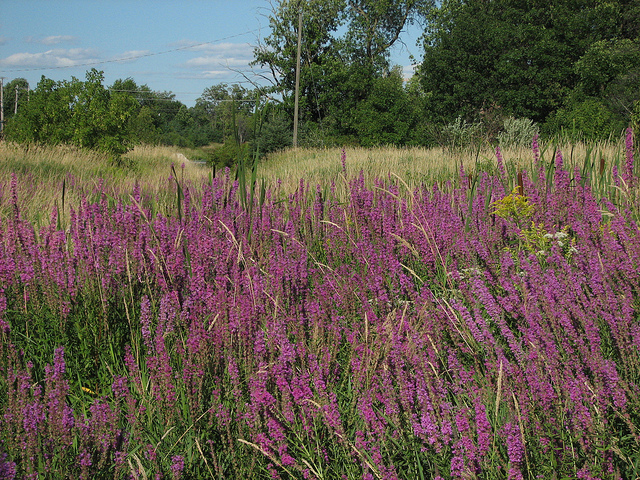
-
Collection
Invention and Innovation in Canada
This collection gathers together articles relating to invention and innovation in Canada. (photograph by Beth A. Robertson, courtesy Canadian Science and Technology Museum)
"https://d3d0lqu00lnqvz.cloudfront.net/media/new_article_images/RolandGalarneau/Convero-Braille.jpg" // resources/views/front/categories/view.blade.php
https://d3d0lqu00lnqvz.cloudfront.net/media/new_article_images/RolandGalarneau/Convero-Braille.jpg
-
Editorial
Invention of Standard Time
The following article is an editorial written by The Canadian Encyclopedia staff. Editorials are not usually updated.
"https://thecanadianencyclopedia.ca/images/tce_placeholder.jpg?v=e9dca980c9bdb3aa11e832e7ea94f5d9" // resources/views/front/categories/view.blade.php
https://thecanadianencyclopedia.ca/images/tce_placeholder.jpg?v=e9dca980c9bdb3aa11e832e7ea94f5d9
-
Article
Inventions and Devices
Instruments, Invented And ImprovedAmong 19th-century Canadian inventors were James P.
"https://thecanadianencyclopedia.ca/images/tce_placeholder.jpg?v=e9dca980c9bdb3aa11e832e7ea94f5d9" // resources/views/front/categories/view.blade.php
https://thecanadianencyclopedia.ca/images/tce_placeholder.jpg?v=e9dca980c9bdb3aa11e832e7ea94f5d9
-
Article
Inventors, Inventions and Innovations
Whether they remained in Canada or pursued careers abroad, Canadians have invented or innovated devices, products or processes in various fields, such as medicine, technology and agriculture. In some cases, the government and agencies, like the National Research Council Canada (NRC), have funded research and development. Economic investment and the promotion of science, technology, engineering and mathematics (STEM) skills have been identified as key factors for building Canada’s innovation future.
"https://d3d0lqu00lnqvz.cloudfront.net/inventorsandinnovations/Klien.jpg" // resources/views/front/categories/view.blade.php
https://d3d0lqu00lnqvz.cloudfront.net/inventorsandinnovations/Klien.jpg
-
Article
Invertebrate
Invertebrates are animals without a vertebral column (backbone). As a group, invertebrates are extremely diverse.
"https://d3d0lqu00lnqvz.cloudfront.net/media/media/4815042e-4596-4981-bf6f-7f7c000bdc53.jpg" // resources/views/front/categories/view.blade.php
https://d3d0lqu00lnqvz.cloudfront.net/media/media/4815042e-4596-4981-bf6f-7f7c000bdc53.jpg
-
Macleans
IOC Promises Reforms
The bar at the Palace Hotel in Lausanne breathes old money, of the sort expected in a sedate but five-star Swiss lodging where the price of a room starts at $400 a night and spirals upward. The walls are red velvet, the ceiling wood-panelled, the seats dark leather.This article was originally published in Maclean's Magazine on March 29, 1999
"https://thecanadianencyclopedia.ca/images/tce_placeholder.jpg?v=e9dca980c9bdb3aa11e832e7ea94f5d9" // resources/views/front/categories/view.blade.php
https://thecanadianencyclopedia.ca/images/tce_placeholder.jpg?v=e9dca980c9bdb3aa11e832e7ea94f5d9
-
Article
Ipperwash Crisis
The Ipperwash Crisis took place in 1995 on land in and around Ontario’s Ipperwash Provincial Park, which was claimed by the Kettle and Stony Point First Nation. The underlying cause of the crisis was the appropriation of the Stoney Point Reserve in 1942 by the federal government for use as a military camp. After repeated requests for the land to be returned, members of the Stony Point First Nation occupied the camp in 1993 and in 1995. On 4 September 1995 protesters also occupied Ipperwash Provincial Park nearby. Tension between the protesters and the OPP increased, resulting in a confrontation on 6 September 1995 during which Dudley George, an Ojibwa protestor, was killed.
"https://d3d0lqu00lnqvz.cloudfront.net/media/media/bcf04d96-a331-4532-bed5-98ee62f4034e.jpg" // resources/views/front/categories/view.blade.php
https://d3d0lqu00lnqvz.cloudfront.net/media/media/bcf04d96-a331-4532-bed5-98ee62f4034e.jpg
-
Macleans
IRA Bomb Shatters the Peace
The modernistic landscape that has sprouted over London's once-derelict Docklands since the 1980s is the kind of target the Irish Republican Army loved to hit. Its centrepiece is Canary Wharf, the sometimes-maligned 52-storey office tower that is the tallest building in Britain.This article was originally published in Maclean's Magazine on February 19, 1996
"https://thecanadianencyclopedia.ca/images/tce_placeholder.jpg?v=e9dca980c9bdb3aa11e832e7ea94f5d9" // resources/views/front/categories/view.blade.php
https://thecanadianencyclopedia.ca/images/tce_placeholder.jpg?v=e9dca980c9bdb3aa11e832e7ea94f5d9
-
Article
Irish Music in Canada
The Irish component in the population of Canada is the fourth largest (after English, French, and Scottish) and one of the oldest. Irish fishermen settled in Newfoundland in the early 17th century. By the mid-18th century that island had some 5000 Roman Catholic Irish inhabitants - about one-third of its population. There were Irish among those who founded Halifax in 1749. The United Empire Loyalists who moved to Nova Scotia and New Brunswick after 1776 included many of Irish descent. The famine in Ireland during the early 19th century sent thousands of Irish farmers to Upper Canada (Ontario). By 1871 the Irish were the second largest ethnic group in Canada (after the French); in 1950 there were 1,500,000 Irish, catholic and protestant. In the 1986 census there were 699,685 Canadians of single Irish descent and a further 2,922,605 with some Irish ancestry.
"https://d3d0lqu00lnqvz.cloudfront.net/dreamstime_xxl_22459850.jpg" // resources/views/front/categories/view.blade.php
https://d3d0lqu00lnqvz.cloudfront.net/dreamstime_xxl_22459850.jpg
-
Macleans
Ireland Votes for Peace
Even before the polls opened, the telltale signs of seismic change began to drift across Northern Ireland's rolling green hills.This article was originally published in Maclean's Magazine on June 1, 1998
"https://thecanadianencyclopedia.ca/images/tce_placeholder.jpg?v=e9dca980c9bdb3aa11e832e7ea94f5d9" // resources/views/front/categories/view.blade.php
https://thecanadianencyclopedia.ca/images/tce_placeholder.jpg?v=e9dca980c9bdb3aa11e832e7ea94f5d9
-
Article
Irish Famine Orphans in Canada
Thousands of children became orphans during the 1847 Irish famine migration to British North America. Public authorities, private charities and religious officials all played a part in addressing this crisis. Many orphans were placed with relatives or with Irish families. A considerable number were also taken in by Francophone Catholics in Canada East, and by English-speaking Protestants in New Brunswick. Although many families took in orphans for charitable reasons, most people were motivated by the pragmatic value of an extra pair of hands on the farm or in the household.
"https://d3d0lqu00lnqvz.cloudfront.net/media/media/fd704360-23a5-4333-9dc4-fed52fcc81b8.jpg" // resources/views/front/categories/view.blade.php
https://d3d0lqu00lnqvz.cloudfront.net/media/media/fd704360-23a5-4333-9dc4-fed52fcc81b8.jpg
-
Article
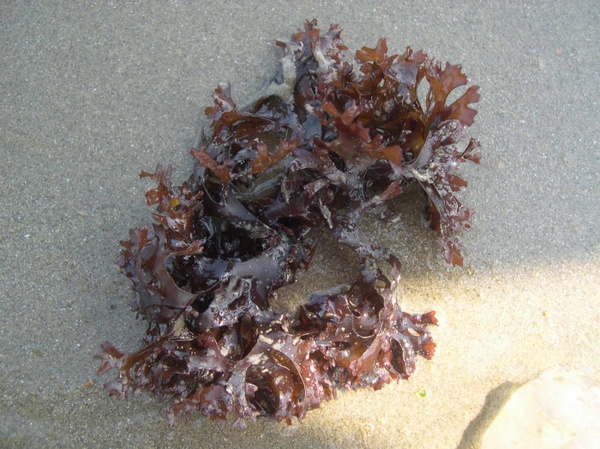
Irish Moss
Irish moss is a type of seaweed that is commercially harvested in Canada’s Maritime provinces. It is mainly composed of carrageenan, a gelatinous substance. Carrageenan extracted from Irish moss is used as a thickening and gelling agent in foods and other products. It is also used to clarify beverages such as beer.
"https://d3d0lqu00lnqvz.cloudfront.net/media/new_article_images/IrishMoss/Irish_moss.jpg" // resources/views/front/categories/view.blade.php
https://d3d0lqu00lnqvz.cloudfront.net/media/new_article_images/IrishMoss/Irish_moss.jpg