
Browse "Things"
-
Article
Indigenous Archaeology in Canada
Indigenous archaeology is a set of approaches to archaeology with, by and for Indigenous peoples. In particular, Indigenous archaeology is practised in colonial nations such as Canada, the United States, Australia and New Zealand. Indigenous archaeology emerged out of Indigenous peoples voicing their concerns about non-Indigenous archaeologists studying Indigenous pasts without engaging with Indigenous peoples in the present. Indigenous archaeology brings together Indigenous peoples and archaeologists through partnerships and collaborations. Together, they work to understand the past in ways that consider multiple perspectives and integrate Indigenous knowledge into archaeological interpretation.
"https://d3d0lqu00lnqvz.cloudfront.net/media/new_article_images/IndigenousArchaeology/MetisWinter.jpg" // resources/views/front/categories/view.blade.php
https://d3d0lqu00lnqvz.cloudfront.net/media/new_article_images/IndigenousArchaeology/MetisWinter.jpg
-
Article
Indigenous Cuisines in Canada
Indigenous cuisines in Canada encompass diverse food systems and practices rooted in reciprocity and sustainability. Colonization disrupted these systems through dispossession, residential schools and restrictive game laws (see also Colonialism in Canada). However, Indigenous cuisines endured as knowledge systems that carry ecological, cultural and spiritual teachings. Today, community-led food sovereignty and the work of Indigenous chefs are helping to restore access to ancestral foods and innovate in contemporary contexts. From wild rice and salmon to modern fusion dishes, Indigenous foodways demonstrate resilience, adaptability and cultural continuity.
"https://d3d0lqu00lnqvz.cloudfront.net/IndigenousCuisines/Pemmican_resized.jpg" // resources/views/front/categories/view.blade.php
https://d3d0lqu00lnqvz.cloudfront.net/IndigenousCuisines/Pemmican_resized.jpg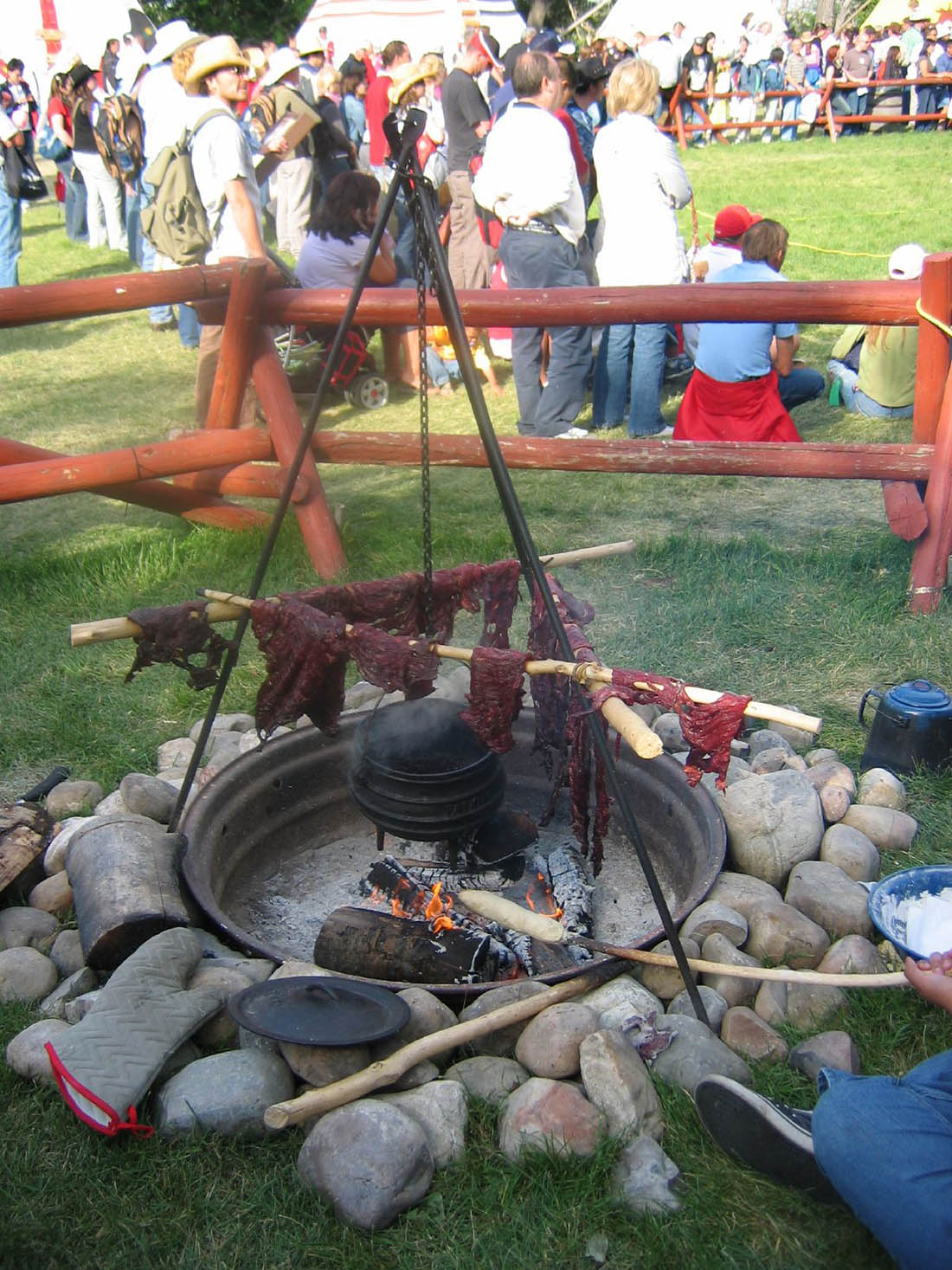
-
Article
Indigenous Feminisms in Canada
At their root, Indigenous feminisms examine how gender and conceptions of gender influence the lives of Indigenous peoples, historically and today. Indigenous feminist approaches challenge stereotypes about Indigenous peoples, gender and sexuality, for instance, as they appear in politics, society and the media. Indigenous feminisms offer frameworks for learning about and understanding these, and other issues, regardless of one’s gender or ethnicity.
"https://d3d0lqu00lnqvz.cloudfront.net/media/new_article_images/IndigenousFeminisms/MMIWG activists.jpg" // resources/views/front/categories/view.blade.php
https://d3d0lqu00lnqvz.cloudfront.net/media/new_article_images/IndigenousFeminisms/MMIWG activists.jpg
-
Article
Indigenous Language Revitalization in Canada
Before European settlement in Canada, Indigenous peoples spoke a wide variety of languages. As a means of assimilating Indigenous peoples, colonial policies like the Indian Act and residential schools forbade the speaking of Indigenous languages. These restrictions have led to the ongoing endangerment of Indigenous languages in Canada. Indigenous communities and various educational institutions have taken measures to prevent more language loss and to preserve Indigenous languages.
"https://d3d0lqu00lnqvz.cloudfront.net/media/media/b6607b22-8c55-4f10-86dd-a72dfcb1b740.jpg" // resources/views/front/categories/view.blade.php
https://d3d0lqu00lnqvz.cloudfront.net/media/media/b6607b22-8c55-4f10-86dd-a72dfcb1b740.jpg
-
Article
Indigenous Oral Histories and Primary Sources
Oral histories play an integral role in Indigenous cultures. They transmit important histories, stories and teachings to new generations. Oral histories — a type of primary source — let Indigenous peoples teach about their own cultures in their own words. Other types of primary sources, such as artifacts from historical Indigenous communities, also transmit knowledge about Indigenous histories and ways of life. Academics, researchers and museum curators use such sources to highlight Indigenous perspectives.
"https://d3d0lqu00lnqvz.cloudfront.net/Elder-sharing-a-storyWilliamEWeissArt-Archive.jpg" // resources/views/front/categories/view.blade.php
https://d3d0lqu00lnqvz.cloudfront.net/Elder-sharing-a-storyWilliamEWeissArt-Archive.jpg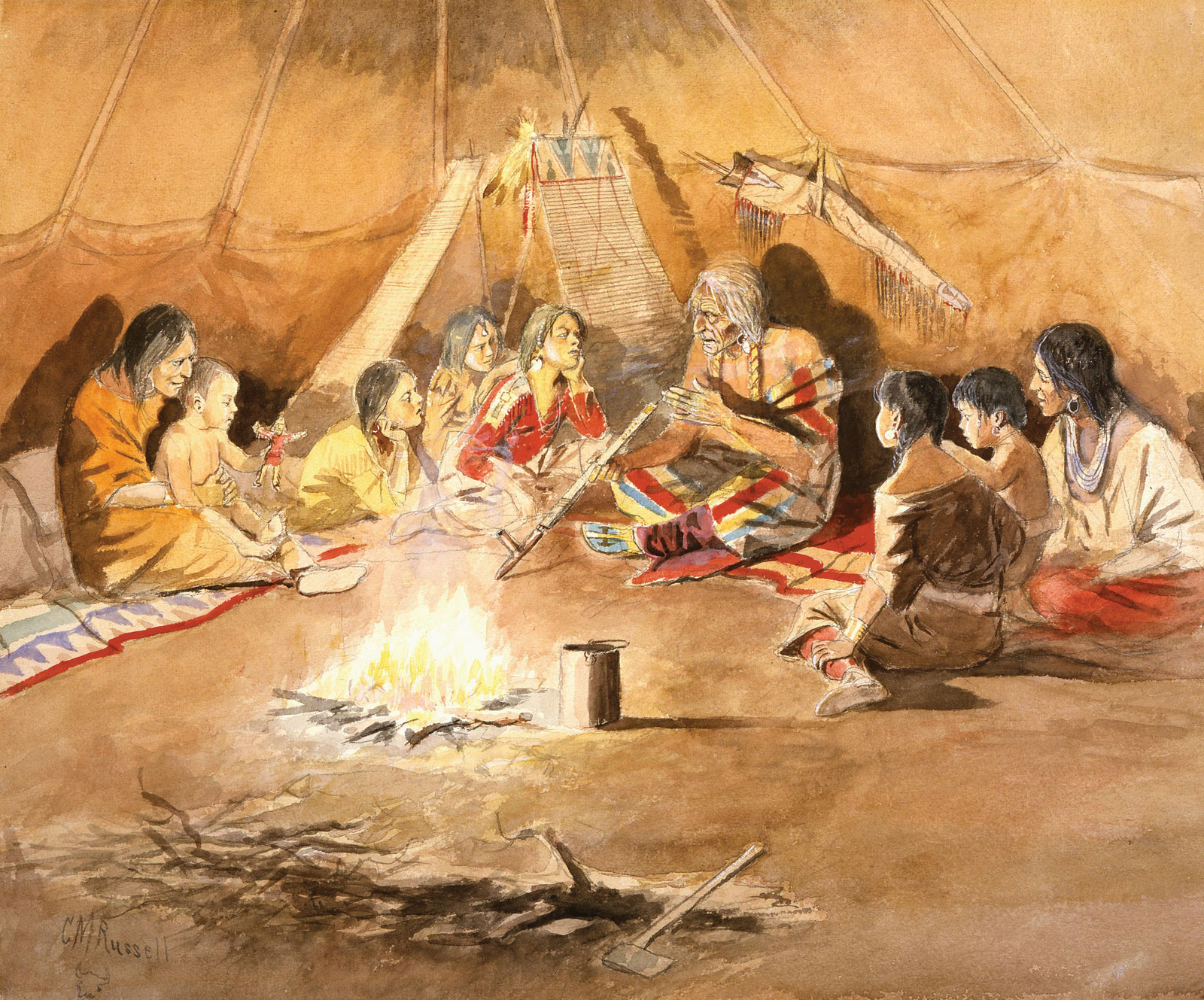
-
Article
Indigenous Peoples and the World Wars
Thousands of Indigenous peoples served in the Canadian military forces in the First World War and Second World War; most were volunteers. On the home front, most Indigenous communities participated in the national war effort in diverse ways. The world wars were dramatic events for Indigenous peoples in Canada (see Indigenous Peoples and the First World War and Indigenous Peoples and the Second World War). Conflict offered these marginalized populations opportunities to renew warrior cultural traditions, reaffirm sacred treaties, prove their worth to indifferent non-Indigenous Canadians, break down social barriers and find good jobs.
"https://d3d0lqu00lnqvz.cloudfront.net/media/media/807e5d85-0d60-4180-8400-b1badabf3486.jpg" // resources/views/front/categories/view.blade.php
https://d3d0lqu00lnqvz.cloudfront.net/media/media/807e5d85-0d60-4180-8400-b1badabf3486.jpg
-
Article
Indigenous Screen Office
The Indigenous Screen Office is an independent entity that advocates for the growth and development of First Nations, Inuit and Métis creators in Canadian film and television. It promotes Indigenous-led and owned productions across films, series, interactive works and podcasts. It also leads capacity building for Indigenous creatives in Canada’s screen sector.
"https://thecanadianencyclopedia.ca/images/tce_placeholder.jpg?v=e9dca980c9bdb3aa11e832e7ea94f5d9" // resources/views/front/categories/view.blade.php
https://thecanadianencyclopedia.ca/images/tce_placeholder.jpg?v=e9dca980c9bdb3aa11e832e7ea94f5d9
-
Article
Indigenous Services Canada
Indigenous Services Canada (part of the former Indigenous/Indian and Northern Affairs Canada or INAC) was created by the federal government in 2017 to provide and support the delivery of services such as health care, child care, education and infrastructure to First Nations, Métis and Inuit communities. The overarching vision of the department is to support self-determination as a means of providing Indigenous peoples with the power to deliver their own services.
"https://d3d0lqu00lnqvz.cloudfront.net/media/media/5fa84076-4dad-4e4d-b343-7d76fb4427b9.jpg" // resources/views/front/categories/view.blade.php
https://d3d0lqu00lnqvz.cloudfront.net/media/media/5fa84076-4dad-4e4d-b343-7d76fb4427b9.jpg
-
Article
Indigenous Suffrage
From the colonial era to the present, the Canadian electoral system has evolved in ways that have affected Indigenous suffrage (the right to vote in public elections). Voting is a hallmark of Canadian citizenship, but not all Indigenous groups (particularly status Indians) have been given this historic right due to political, socio-economic and ethnic restrictions. Today, Canada’s Indigenous peoples — defined in Section 35 (2) of the Constitution Act, 1982 as Indians (First Nations), Métis and Inuit — can vote in federal, provincial, territorial and local elections.
"https://d3d0lqu00lnqvz.cloudfront.net/media/media/bd7dcb30-05e5-4ba5-a9f7-9adea1ed9928.jpg" // resources/views/front/categories/view.blade.php
https://d3d0lqu00lnqvz.cloudfront.net/media/media/bd7dcb30-05e5-4ba5-a9f7-9adea1ed9928.jpg
-
Timelines
Indigenous Suffrage
"https://d3d0lqu00lnqvz.cloudfront.net/media/media/2617aa3c-9753-4851-b870-a29783e97387.jpg" // resources/views/front/categories/view.blade.php
https://d3d0lqu00lnqvz.cloudfront.net/media/media/2617aa3c-9753-4851-b870-a29783e97387.jpg
-
Collection
Indigenous Treaties in Canada
Indigenous treaties in Canada are constitutionally recognized agreements between the Crown and Indigenous peoples. Most of these agreements describe exchanges where Indigenous nations agree to share some of their interests in their ancestral lands in return for various payments and promises. On a deeper level, treaties are sometimes understood, particularly by Indigenous people, as sacred covenants between nations that establish a relationship between those for whom Canada is an ancient homeland and those whose family...
"https://d3d0lqu00lnqvz.cloudfront.net/media/media/4f1d71aa-8b25-417f-a88b-2a078f3b1768.jpg" // resources/views/front/categories/view.blade.php
https://d3d0lqu00lnqvz.cloudfront.net/media/media/4f1d71aa-8b25-417f-a88b-2a078f3b1768.jpg
-
Article
Indigenous Veterans Day
Indigenous Veterans Day is observed in Canada on 8 November. The day recognizes the contributions of First Nations, Inuit and Métis veterans of the Canadian armed forces.
"https://d3d0lqu00lnqvz.cloudfront.net/National-Aboriginal_Veterans-Monument.jpg" // resources/views/front/categories/view.blade.php
https://d3d0lqu00lnqvz.cloudfront.net/National-Aboriginal_Veterans-Monument.jpg
-
Article
Indigenous Women and the Franchise
The context for Indigenous women and the franchise has been framed by colonialism as much as by gender discrimination. Indigenous women (First Nations, Métis, and Inuit) have gained the right to vote at different times in Canadian history. The process has been connected to enfranchisement — both voluntary and involuntary — which means that Indigenous women were afforded political participation and Canadian citizenship rights at the cost of Indigenous rights (see Indigenous Suffrage).
"https://d3d0lqu00lnqvz.cloudfront.net/media/media/2617aa3c-9753-4851-b870-a29783e97387.jpg" // resources/views/front/categories/view.blade.php
https://d3d0lqu00lnqvz.cloudfront.net/media/media/2617aa3c-9753-4851-b870-a29783e97387.jpg
-
Article
Indoor Bowling
Bowling, indoor, game in which a player attempts to knock down pins by propelling a ball down a wooden lane. Similar games were played as early as 5000 BC in Egypt. The 10-pin version was developed in the US in the 19th century, and 5-pin bowling was invented in Canada in 1908 or 1909 by Thomas F.
"https://thecanadianencyclopedia.ca/images/tce_placeholder.jpg?v=e9dca980c9bdb3aa11e832e7ea94f5d9" // resources/views/front/categories/view.blade.php
https://thecanadianencyclopedia.ca/images/tce_placeholder.jpg?v=e9dca980c9bdb3aa11e832e7ea94f5d9
-
Article
Industrial Archaeology
Industrial ARCHAEOLOGY is a type of interdisciplinary history that promotes understanding of the industrial era by focusing on physical remains, whether above ground or below, and by combining the insights of fieldwork and historical research.
"https://thecanadianencyclopedia.ca/images/tce_placeholder.jpg?v=e9dca980c9bdb3aa11e832e7ea94f5d9" // resources/views/front/categories/view.blade.php
https://thecanadianencyclopedia.ca/images/tce_placeholder.jpg?v=e9dca980c9bdb3aa11e832e7ea94f5d9