
Browse "Things"
-
Collection
Indian Act
The Indian Act is the federal government’s primary law related to Indian Status, First Nations governance and control of reserve lands. It also outlines obligations the federal government has towards people registered as Status Indians. Though introduced in 1876, the Indian Act was a continuation of previous colonial policies, including the Gradual Civilization Act of 1857 and the Gradual Enfranchisement Act of 1869. The Indian Act has been amended and revised significantly since 1876, including...
"https://prod-front.thecanadianencyclopedia.ca/images/tce_placeholder.jpg?v=e9dca980c9bdb3aa11e832e7ea94f5d9" // resources/views/front/categories/view.blade.php
https://prod-front.thecanadianencyclopedia.ca/images/tce_placeholder.jpg?v=e9dca980c9bdb3aa11e832e7ea94f5d9
-
Article
Indian Act (Plain-Language Summary)
The Indian Act was first created in 1876. A new version was created in 1951. Since then, the Act has been revised several times. The main goal of the Act was to force First Nations peoples to lose their culture and become like Euro-Canadians. The Indian Act does not affect either the Métis or Inuit. This article is a plain-language summary of the Indian Act. If you are interested in reading about this topic more in depth, please see our full-length entry, Indian Act.
"https://d3d0lqu00lnqvz.cloudfront.net/!feature-img-thumbnails/ind-act-feat.png" // resources/views/front/categories/view.blade.php
https://d3d0lqu00lnqvz.cloudfront.net/!feature-img-thumbnails/ind-act-feat.png
-
Article
Indian Agents in Canada
Indian agents were the Canadian government’s representatives on First Nations reserves from the 1830s to the 1960s. Often working in isolated locations far from settler communities, Indian agents implemented government policy, enforced and administered the provisions of the Indian Act, and managed the day-to-day affairs of Status Indians. Today, the position of Indian agent no longer exists, as First Nations manage their own affairs through modern band councils or self-government.
"https://d3d0lqu00lnqvz.cloudfront.net/media/new_article_images/IndianAgent/indian agent3.jpg" // resources/views/front/categories/view.blade.php
https://d3d0lqu00lnqvz.cloudfront.net/media/new_article_images/IndianAgent/indian agent3.jpg
-
Article
Indian Boarding Homes Program in Canada
The Indian Boarding Homes Program was established by the Canadian federal government and operated from the early 1950s to the early 1990s. Its purpose was to relocate Indigenous children into non-Indigenous homes while they attended elementary and high schools, often far from their home communities. Relocation was compulsory; refusal was not permitted. The host families with whom they were placed were paid to provide care. Many children in this situation faced physical, sexual, verbal and psychological abuse (see also Child Abuse). The program was designed to assimilate Indigenous children into the mainstream Canadian society. As a result, children were often forbidden from speaking their native language or engaging in practices of their culture. This led, inevitably, to significant consequences that included loss of cultural identity and connection to their communities for the approximately 40,000 First Nations and Inuit children who were forced to relocate.
"https://d3d0lqu00lnqvz.cloudfront.net/TCE_placeholder.png" // resources/views/front/categories/view.blade.php
https://d3d0lqu00lnqvz.cloudfront.net/TCE_placeholder.png
-
Article
Classical Indian Dance
After long and persistent efforts on the part of Indian dancers living in Canada, Indian forms of dance came to be acknowledged as classical art by the arts councils and the Canadian dance audience at large.
"https://thecanadianencyclopedia.ca/images/tce_placeholder.jpg?v=e9dca980c9bdb3aa11e832e7ea94f5d9" // resources/views/front/categories/view.blade.php
https://thecanadianencyclopedia.ca/images/tce_placeholder.jpg?v=e9dca980c9bdb3aa11e832e7ea94f5d9
-
Article
Indian Day Schools in Canada
Indian Day Schools were racially segregated educational institutions that operated in Canada from the late 19th century until 2000 (see Racial Segregation of Indigenous Peoples in Canada). These schools were intended to assimilate Indigenous children into mainstream Canadian society by eradicating their cultural practices, languages and traditions. More than 150,000 Indigenous students attended these institutions. The Indian Day School system was closely linked to the larger residential school system. However, there are important distinctions between the two, namely that students were educated in their own communities and returned home to their families at the end of each day. The last federal recognized Indian Day School to close or be transferred was the Oka Country school in Kanesatake, Quebec on 1 September 2000. In 2019, a significant milestone was reached with a $1.47 billion class action settlement involving approximately 200,000 survivors. However, criticisms of the settlement process persist. Survivors have led efforts to support language revitalization, healing initiatives, commemoration efforts and truth-telling projects. Their efforts acknowledge the need for reconciliation and addressing the historical injustices inflicted upon Indigenous communities.
"https://d3d0lqu00lnqvz.cloudfront.net/IndianDaySchools/e011078111_s2-v8.jpg" // resources/views/front/categories/view.blade.php
https://d3d0lqu00lnqvz.cloudfront.net/IndianDaySchools/e011078111_s2-v8.jpg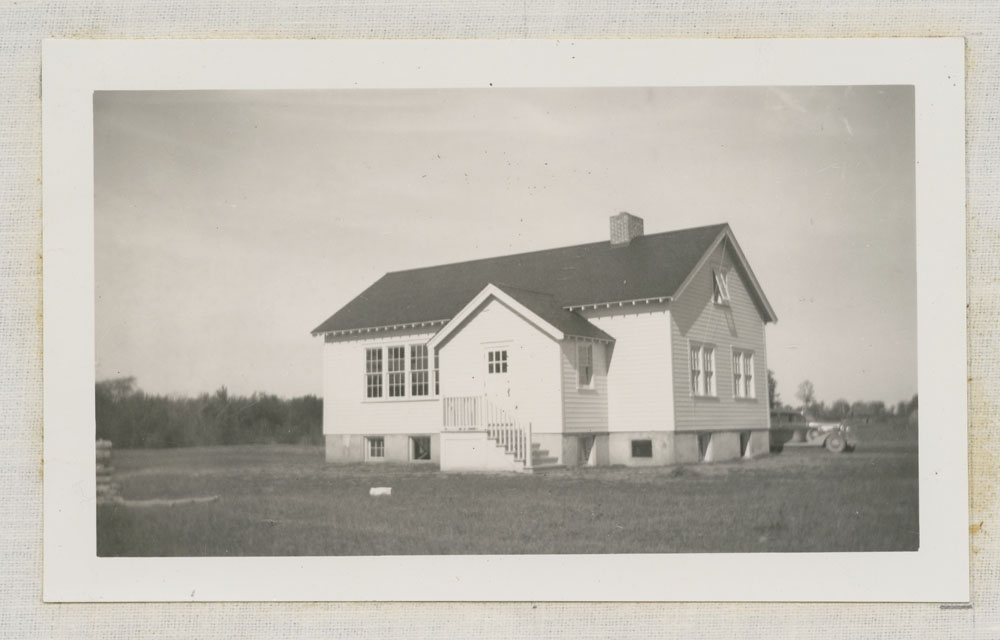
-
Article
Indian Food in Canada
Indian food is a more recent addition to the culinary scene in Canada, having gained prominence primarily in the post-1960s era of immigration. It is characterized mainly by the Northern Indian approach to cuisine, which features breads and warm curries and the use of yogurt and cream in meat-based dishes. But it also bears the influence of South Indian cooking, which frequently plays with the combination of sour and spicy and the use of tamarind and chilies. However, many typical Indo-Canadian dishes, such as kedgeree and some chutneys, are a product of Anglo-Indian cuisine stemming from Britain’s colonial rule of the Indian subcontinent.See also Popular Indian Dishes in Canada.
"https://d3d0lqu00lnqvz.cloudfront.net/media/media/76374c18-1a40-49ff-938a-c8dab85dacec.jpg" // resources/views/front/categories/view.blade.php
https://d3d0lqu00lnqvz.cloudfront.net/media/media/76374c18-1a40-49ff-938a-c8dab85dacec.jpg
-
Article
Indian Horse
Indian Horse (2012) is the sixth novel by Ojibwe author Richard Wagamese. Set in Northern Ontario in the late 1950s and early 1960s, it follows protagonist Saul Indian Horse as he uses his extraordinary talent for ice hockey to try and escape his traumatic residential school experience. He achieves moderate success as a hockey player but is unable to escape his “Indian” identity or the trauma from his past. Indian Horse was a finalist on CBC’s Canada Reads in 2013, where it won the People’s Choice award. It was also the winner of the 2013–14 First Nation Communities Read Selection and the Burt Award for First Nations, Inuit and Métis Literature from the Canadian Organization for Development through Education (CODE). In 2017, Indian Horse was adapted into an award-winning film by writer Dennis Foon and director Stephen S. Campanelli.
"https://d3d0lqu00lnqvz.cloudfront.net/media/media/4d3d2720-3ba1-468f-a6a3-db37fc2ad176.jpg" // resources/views/front/categories/view.blade.php
https://d3d0lqu00lnqvz.cloudfront.net/media/media/4d3d2720-3ba1-468f-a6a3-db37fc2ad176.jpg
-
Article
Ghost Pipe
Ghost Pipe (Monotropa uniflora), a perennial plant, is the only native species of genus Monotropa found in Canada.
"https://d3d0lqu00lnqvz.cloudfront.net/media/media/1c668a5b-8e14-48a5-b3f8-97d3ba77fa95.jpg" // resources/views/front/categories/view.blade.php
https://d3d0lqu00lnqvz.cloudfront.net/media/media/1c668a5b-8e14-48a5-b3f8-97d3ba77fa95.jpg
-
Article
Indian Residential Schools Settlement Agreement
The largest class action settlement in Canadian history to date, the Indian Residential Schools Settlement Agreement (IRSSA) recognized the damage inflicted on Indigenous peoples by residential schools, and established a multi-billion-dollar fund to help former students in their recovery. (See also Reconciliation in Canada.)
"https://d3d0lqu00lnqvz.cloudfront.net/media/media/2bd71aaf-ebc5-44e0-9f91-e4d07b16e81d.jpg" // resources/views/front/categories/view.blade.php
https://d3d0lqu00lnqvz.cloudfront.net/media/media/2bd71aaf-ebc5-44e0-9f91-e4d07b16e81d.jpg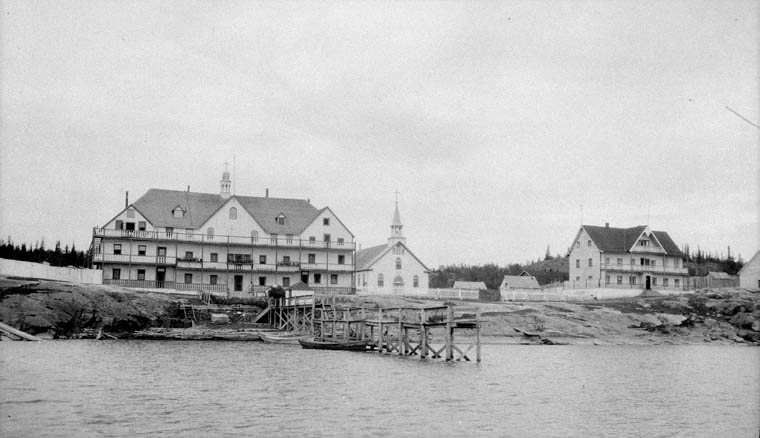
-
Article
Indian Summer
Indian Summer, popular expression for a period of mild, summerlike weather which occurs in the autumn, usually after the first frost. The origins of the name are obscure, but it was in use early in the 19th century in Canada and even earlier in the US.
"https://thecanadianencyclopedia.ca/images/tce_placeholder.jpg?v=e9dca980c9bdb3aa11e832e7ea94f5d9" // resources/views/front/categories/view.blade.php
https://thecanadianencyclopedia.ca/images/tce_placeholder.jpg?v=e9dca980c9bdb3aa11e832e7ea94f5d9
-
Article
Trade Goods of the Fur Trade
During the fur trade in Canada, items of European manufacture (historically referred to in the literature as Indian trade goods) were traded with Indigenous peoples for furs. These items include, for example, metal objects, weapons and glass beads. (See also Trade Silver.) In various ways, however, cultural exchanges went both ways. Some Europeans, namely the voyageurs, adopted various Indigenous technologies and clothing during the fur trade, including the use of moccasins, buckskin pants and hats, and snowshoes.
"https://d3d0lqu00lnqvz.cloudfront.net/media/media/e4ec1e55-01c2-4b77-a220-f05a84fd4c9c.jpg" // resources/views/front/categories/view.blade.php
https://d3d0lqu00lnqvz.cloudfront.net/media/media/e4ec1e55-01c2-4b77-a220-f05a84fd4c9c.jpg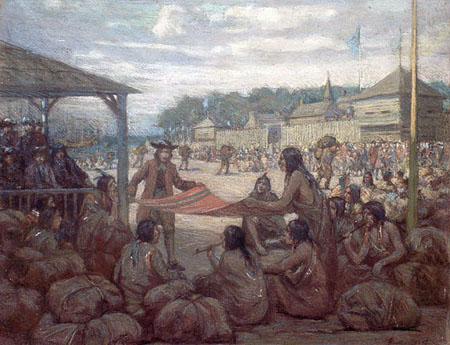
-
Article
Trade Silver
Gifts of silver were presented and traded to Indigenous peoples in Canada by European fur traders. Trade silver was made by silversmiths in Quebec City, Montreal, London and various American cities, including New York, Philadelphia and Detroit. (See also Fur Trade in Canada and Trade Goods of the Fur Trade.)
"https://d3d0lqu00lnqvz.cloudfront.net/TradeSilverHBC.jpg" // resources/views/front/categories/view.blade.php
https://d3d0lqu00lnqvz.cloudfront.net/TradeSilverHBC.jpg
-
Article
Indians of Canada Pavilion
The Indians of Canada Pavilion was a part of Expo 67 in Montreal, Quebec. It was created by First Nations peoples from across Canada. They took advantage of the opportunity to share with Canada and the world provocative histories of colonial resistance. The pavilion was separate from other provincial and national pavilions at Expo 67. It displayed contemporary Indigenous issues and showcased contemporary art (see Contemporary Indigenous Art in Canada). Few traces of the Indians of Canada Pavilion remain beyond archival sources and photographs. It was dismantled along with many of the other pavilions created for the exposition. Kwakwaka’wakw artists Tony Hunt and Henry Hunt carved a totem pole for the exterior of the pavilion site. While nearly all of the pavilion was destroyed, the totem pole still stands in Montreal on Île Notre-Dame. The pavilion’s impact resonates today as a significant step towards change.
"https://d3d0lqu00lnqvz.cloudfront.net/IndiansOfCanadaPavilion/pavilion_edifice_resized.jpg" // resources/views/front/categories/view.blade.php
https://d3d0lqu00lnqvz.cloudfront.net/IndiansOfCanadaPavilion/pavilion_edifice_resized.jpg
-
Macleans
India's Former PM Charged
For nearly a quarter of a century, their names have been inextricably linked. From Delhi's opulent salons to the bazaars of Madras, Indians of every political stripe have puzzled over the unswerving devotion of former prime minister P. V.This article was originally published in Maclean's Magazine on October 7, 1996
"https://thecanadianencyclopedia.ca/images/tce_placeholder.jpg?v=e9dca980c9bdb3aa11e832e7ea94f5d9" // resources/views/front/categories/view.blade.php
https://thecanadianencyclopedia.ca/images/tce_placeholder.jpg?v=e9dca980c9bdb3aa11e832e7ea94f5d9