
Browse "Things"
-
Article
Iceberg
An iceberg is a piece of ice that has become detached from its parent glacier by a process known as calving. In Canada, icebergs mainly originate from west Greenland glaciers and travel south along the country's eastern seaboard.
"https://d3d0lqu00lnqvz.cloudfront.net/media/media/0b282b25-029b-4fa5-85e1-aef4b1039571.jpg" // resources/views/front/categories/view.blade.php
https://d3d0lqu00lnqvz.cloudfront.net/media/media/0b282b25-029b-4fa5-85e1-aef4b1039571.jpg
-
Article
Icebreakers
Canada has the second-largest icebreaking fleet in the world; only Russia has more icebreakers. The Canadian Coast Guard’s fleet of heavy, medium and light icebreakers supports commercial shipping, scientific research and Arctic sovereignty.
"https://d3d0lqu00lnqvz.cloudfront.net/Icebreakers/CCGS_Louis_S._St-Laurent_in_St._John-s-_NL.jpg" // resources/views/front/categories/view.blade.php
https://d3d0lqu00lnqvz.cloudfront.net/Icebreakers/CCGS_Louis_S._St-Laurent_in_St._John-s-_NL.jpg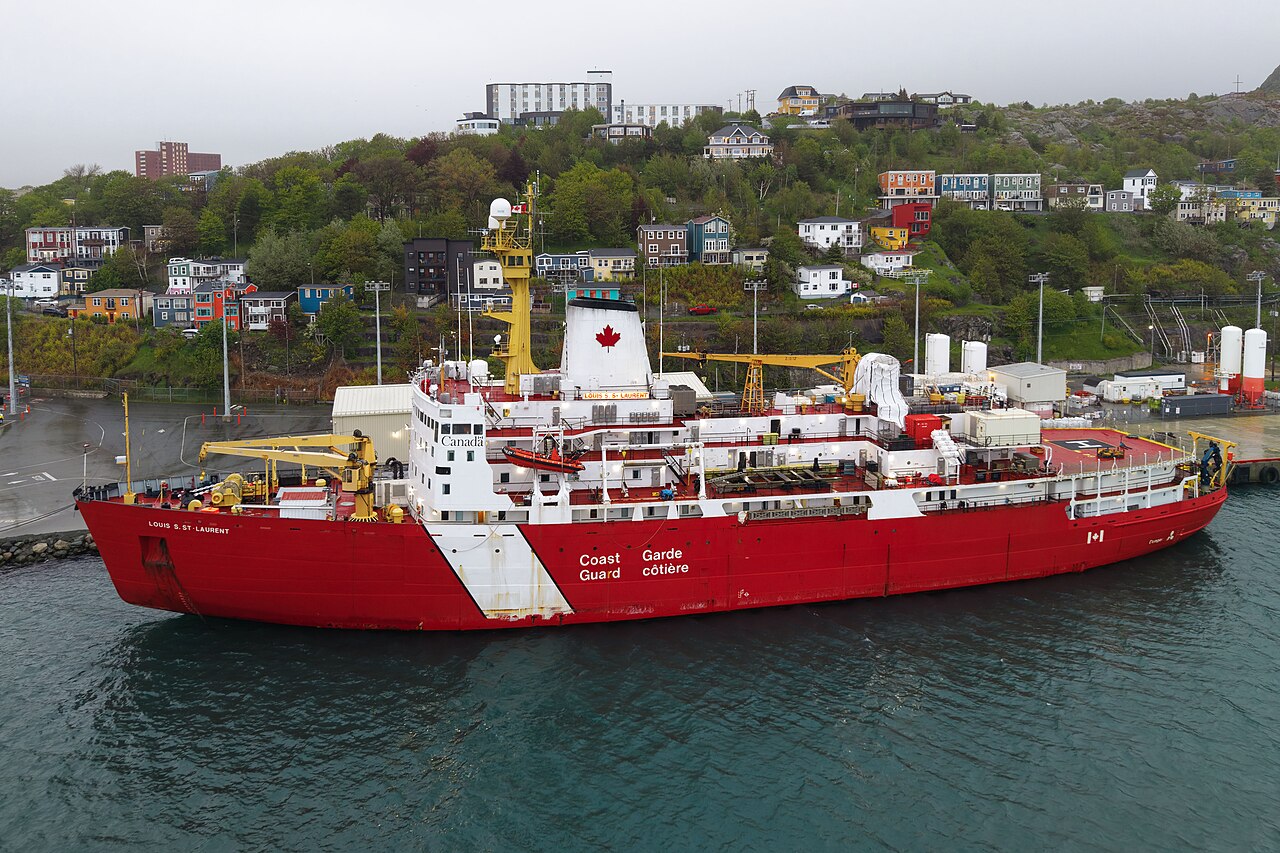
-
Article
Icelandic Music In Canada
The first large group of Icelanders arrived in Canada in 1873 and by 1875 had settled on the western shore of Lake Winnipeg. Their colony (which included present-day Gimli and Riverton, Man), was known as New Iceland, was self-governing, and had its own constitution.
"https://thecanadianencyclopedia.ca/images/tce_placeholder.jpg?v=e9dca980c9bdb3aa11e832e7ea94f5d9" // resources/views/front/categories/view.blade.php
https://thecanadianencyclopedia.ca/images/tce_placeholder.jpg?v=e9dca980c9bdb3aa11e832e7ea94f5d9
-
Article
Iconic Highways in Canada
Canada’s most iconic highways were all built in the 20th or 21st centuries. Before the car became popular, good roads were hard to find once you left a city. As simple as they seem, it’s expensive to build and maintain roads. Rural routes were often treacherous for travelers. Modern highways connect our massive country. A few of them stand out for their length, origins, or wondrous landscapes.
"https://d3d0lqu00lnqvz.cloudfront.net/media/new_article_images/IconicHighways/AlaskaHwy.jpg" // resources/views/front/categories/view.blade.php
https://d3d0lqu00lnqvz.cloudfront.net/media/new_article_images/IconicHighways/AlaskaHwy.jpg
-
Article
Idle No More
With roots in the Indigenous community, Idle No More began in November 2012 as a protest against the introduction of Bill C-45 by Stephen Harper’s Conservative government. Formally known as the Jobs and Growth Act, this omnibus legislation affected over 60 acts, including the Indian Act, Navigable Waters Protection Act and Environmental Assessment Act. Idle No More activists argued that the Act’s changes diminished the rights and authority of Indigenous communities while making it easier for governments and businesses to push through projects without strict environmental assessment. The movement quickly gained supporters from across Canada (and abroad), and grew to encompass environmental concerns and Indigenous rights more generally. This article is a full-length entry about Idle No More. For a plain-language summary, please see Idle No More (Plain-Language Summary).
"https://d3d0lqu00lnqvz.cloudfront.net/media/media/00339332-5ac9-4b3b-8578-b7200b7db6fc.jpg" // resources/views/front/categories/view.blade.php
https://d3d0lqu00lnqvz.cloudfront.net/media/media/00339332-5ac9-4b3b-8578-b7200b7db6fc.jpg
-
Article
If Day
If Day was a mock occupation of Winnipeg, Manitoba, on 19 February 1942 during the Second World War. The occupying Nazi force was portrayed by volunteers from the Young Men’s Section of the Winnipeg Board of Trade. If Day was intended to demonstrate what life under Nazi occupation might be like, and consequently, encourage people to buy war bonds (also called Victory Loans), which generated millions of dollars for the war effort. If Day was also a military exercise involving approximately 3,500 personnel, the largest in the city’s history to that date.
"https://d3d0lqu00lnqvz.cloudfront.net/If-Day/BondsorBondage_TweetOnly.jpg" // resources/views/front/categories/view.blade.php
https://d3d0lqu00lnqvz.cloudfront.net/If-Day/BondsorBondage_TweetOnly.jpg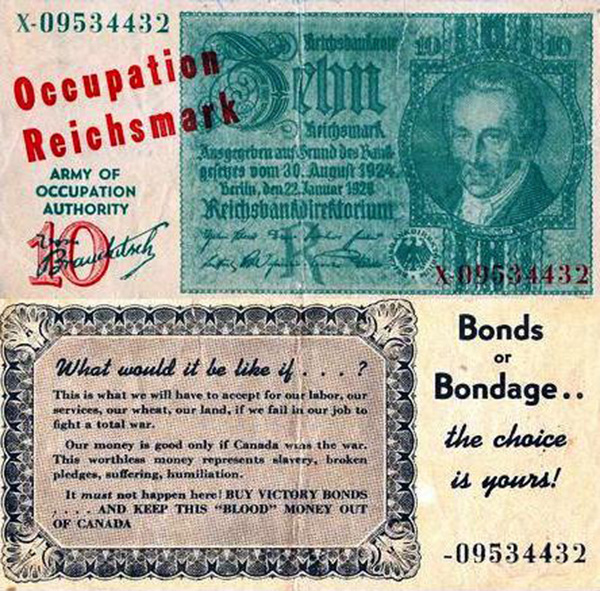
-
Article
Igloo
Igloo (iglu in Inuktitut, meaning “house”), is a winter dwelling made of snow. Historically, Inuit across the Arctic lived in igloos before the introduction of modern, European-style homes. While igloos are no longer the common type of housing used by the Inuit, they remain culturally significant in Arctic communities. Igloos also retain practical value: some hunters and those seeking emergency shelter still use them. (See also Architectural History of Indigenous Peoples in Canada.)
"https://d3d0lqu00lnqvz.cloudfront.net/media/media/c2d6c124-118d-48ab-8885-4339202966e8.jpg" // resources/views/front/categories/view.blade.php
https://d3d0lqu00lnqvz.cloudfront.net/media/media/c2d6c124-118d-48ab-8885-4339202966e8.jpg
-
Article
Igneous Rock
Early formed, dense crystals may separate from the magma, causing a change in the composition of the residual melt.
"https://thecanadianencyclopedia.ca/images/tce_placeholder.jpg?v=e9dca980c9bdb3aa11e832e7ea94f5d9" // resources/views/front/categories/view.blade.php
https://thecanadianencyclopedia.ca/images/tce_placeholder.jpg?v=e9dca980c9bdb3aa11e832e7ea94f5d9
-
Editorial
Editorial: Igor Gouzenko Defects to Canada
The following article is an editorial written by The Canadian Encyclopedia staff. Editorials are not usually updated. A knock on the apartment door froze him in his steps. Another knock, louder, more insistent. The knocking turned to pounding. A voice called his name several times. Finally, the pounding stopped, and he heard footsteps going down the stairs. He knew he needed help.
"https://d3d0lqu00lnqvz.cloudfront.net/media/media/ef877228-646a-42e0-8096-b939feb24100.jpg" // resources/views/front/categories/view.blade.php
https://d3d0lqu00lnqvz.cloudfront.net/media/media/ef877228-646a-42e0-8096-b939feb24100.jpg
-
Table
Canadian Men's Hockey Team at the World Championships
1920 to 1963 Note 1: Canada did not have a national hockey team until 1964. From 1920 to 1963, the winner of the Allan Cup usually represented the country at the Olympics and world championships. Note 2: From 1920 to 1968, the Olympic hockey tournament also counted as the world championship. Year Host Canadian Team Result Champion 1920 Antwerp, Belgium Winnipeg Falcons GOLD Canada 1924 Chamonix, France Toronto Granites GOLD Canada 1928 St. Moritz, Switzerland...
"https://thecanadianencyclopedia.ca/images/tce_placeholder.jpg?v=e9dca980c9bdb3aa11e832e7ea94f5d9" // resources/views/front/categories/view.blade.php
https://thecanadianencyclopedia.ca/images/tce_placeholder.jpg?v=e9dca980c9bdb3aa11e832e7ea94f5d9
-
Article
imagineNATIVE Film + Media Arts Festival
The imagineNATIVE Film + Media Arts Festival is one of the world’s largest film festivals devoted exclusively to screen-based works created by Indigenous artists. It is a registered charity under its legal entity, The Centre for Aboriginal Media. The Toronto-based festival has grown to attract tens of thousands of attendees annually and plays an active role in furthering representation for Indigenous cinema at festivals worldwide.
"https://d3d0lqu00lnqvz.cloudfront.net/imagineNATIVE/CP28157850_resized.jpg" // resources/views/front/categories/view.blade.php
https://d3d0lqu00lnqvz.cloudfront.net/imagineNATIVE/CP28157850_resized.jpg
-
Article
IMAX Systems Corporation
IMAX emerged from the Expo 67 cultural context. Corporation co- founders Graeme Ferguson, Roman Kroitor and Robert Kerr all participated in some of the popular large- and multiple-screen film experiments that were part of the Montréal Expo.
"https://d3d0lqu00lnqvz.cloudfront.net/media/media/3b5bc0e7-c20e-439a-8722-6e4d6bfe8856.jpg" // resources/views/front/categories/view.blade.php
https://d3d0lqu00lnqvz.cloudfront.net/media/media/3b5bc0e7-c20e-439a-8722-6e4d6bfe8856.jpg
-
Article
British Home Children in Canada
More than 100,000 boys and girls immigrated to Canada from the United Kingdom between the 1860s and the 1940s. Known as the “British Home Children,” these young people were orphans or came from poor families. Charitable organizations like The Salvation Army believed that these children would have greater opportunities in British dominions and colonies than in the United Kingdom. Many ended up working on farms or in domestic service. While some were treated well, others were abused or neglected. It is estimated that over 10 per cent of the Canadian population is descended from the British Home Children.
"https://d3d0lqu00lnqvz.cloudfront.net/media/media/3f5cab82-83b8-449c-a7f1-2bfff8549915.jpg" // resources/views/front/categories/view.blade.php
https://d3d0lqu00lnqvz.cloudfront.net/media/media/3f5cab82-83b8-449c-a7f1-2bfff8549915.jpg
-
Article
Economic Immigration to Canada
Canada’s current and future prosperity depends on recruiting immigrants. Newcomers fill gaps in the Canadian workforce, build or start businesses and invest in the Canadian economy. Economic immigrants include employees as well as employers. They mostly become permanent residents when they immigrate to Canada. Not included in this class are the many temporary foreign workers who contribute to Canada’s economy. (See also Immigration to Canada.) Economic immigrants bring talent, innovation, family members and financial investments to Canada. They also enrich the country’s culture, heritage and opportunities. Technological progress, productivity and economic growth all benefit from these newcomers. Studies show that they have little to no negative impacts on wages for other workers in the country. According to the 2021 census, 1.3 million immigrants settled in Canada between 2016 and 2021. The census identified 748,120 of the total 1.3 million living in Canada as economic immigrants.
"https://d3d0lqu00lnqvz.cloudfront.net/media/new_article_images/EconomicImmigration/permanent_residence.jpg" // resources/views/front/categories/view.blade.php
https://d3d0lqu00lnqvz.cloudfront.net/media/new_article_images/EconomicImmigration/permanent_residence.jpg
-
Article
Immigration to Canada
The movement of individuals of one country into another for the purpose of resettlement is central to Canadian history. The story of Canadian immigration is not one of orderly population growth; instead, it has been — and remains one — about economic development as well as Canadian attitudes and values. It has often been unashamedly economically self-serving and ethnically or racially discriminatory despite contributing to creating a multicultural society (see Immigration Policy in Canada; Refugees to Canada). Immigration has also contributed to dispossessing Indigenous peoples of their ancestral lands. This article is a full-length entry about immigration to Canada. For a plain-language summary, please see Immigration to Canada (Plain-Language Summary).
"https://d3d0lqu00lnqvz.cloudfront.net/media/media/f3255eef-1ce7-4d5e-a9b7-052f4e35aad9.jpg" // resources/views/front/categories/view.blade.php
https://d3d0lqu00lnqvz.cloudfront.net/media/media/f3255eef-1ce7-4d5e-a9b7-052f4e35aad9.jpg