
Browse "Things"
-
Article
I. Suckling & Sons
I. Suckling & Sons. Music publishers and retailers in Toronto ca 1875-ca 1894. Isaac Suckling was a retired English bandmaster and music teacher; his son George H.
"https://thecanadianencyclopedia.ca/images/tce_placeholder.jpg?v=e9dca980c9bdb3aa11e832e7ea94f5d9" // resources/views/front/categories/view.blade.php
https://thecanadianencyclopedia.ca/images/tce_placeholder.jpg?v=e9dca980c9bdb3aa11e832e7ea94f5d9
-
Article
Ice
Ice, including snow, is the solid phase of water. It is useful to think of it this way rather than as "frozen water" because water can achieve the solid phase through the freezing of liquid water or by direct deposition (sublimation) of water vapour, its gaseous phase. These different processes can produce distinct ice forms in the atmosphere or on or below the Earth's surface. The form taken by the solid phase of water is often important in determining its environmental and other roles. Snow is one distinctive form of ice; others include glacier ice, river ice, lake ice, sea ice, ground ice of various types, hail, cloud crystals, hoar and rime. Ice crystals are typically hexagonal, a direct result of an internal symmetry produced by the orderly packing of the 3-atom water molecules (H2O) of which each crystal is composed. This crystal form is found in cloud crystals of a size considerably under 1 mm in diameter to crystals of over 10 cm diameter found in some glaciers.
"https://d3d0lqu00lnqvz.cloudfront.net/ice/Ice-on-puddle-bridgewater-duck-pond.jpg" // resources/views/front/categories/view.blade.php
https://d3d0lqu00lnqvz.cloudfront.net/ice/Ice-on-puddle-bridgewater-duck-pond.jpg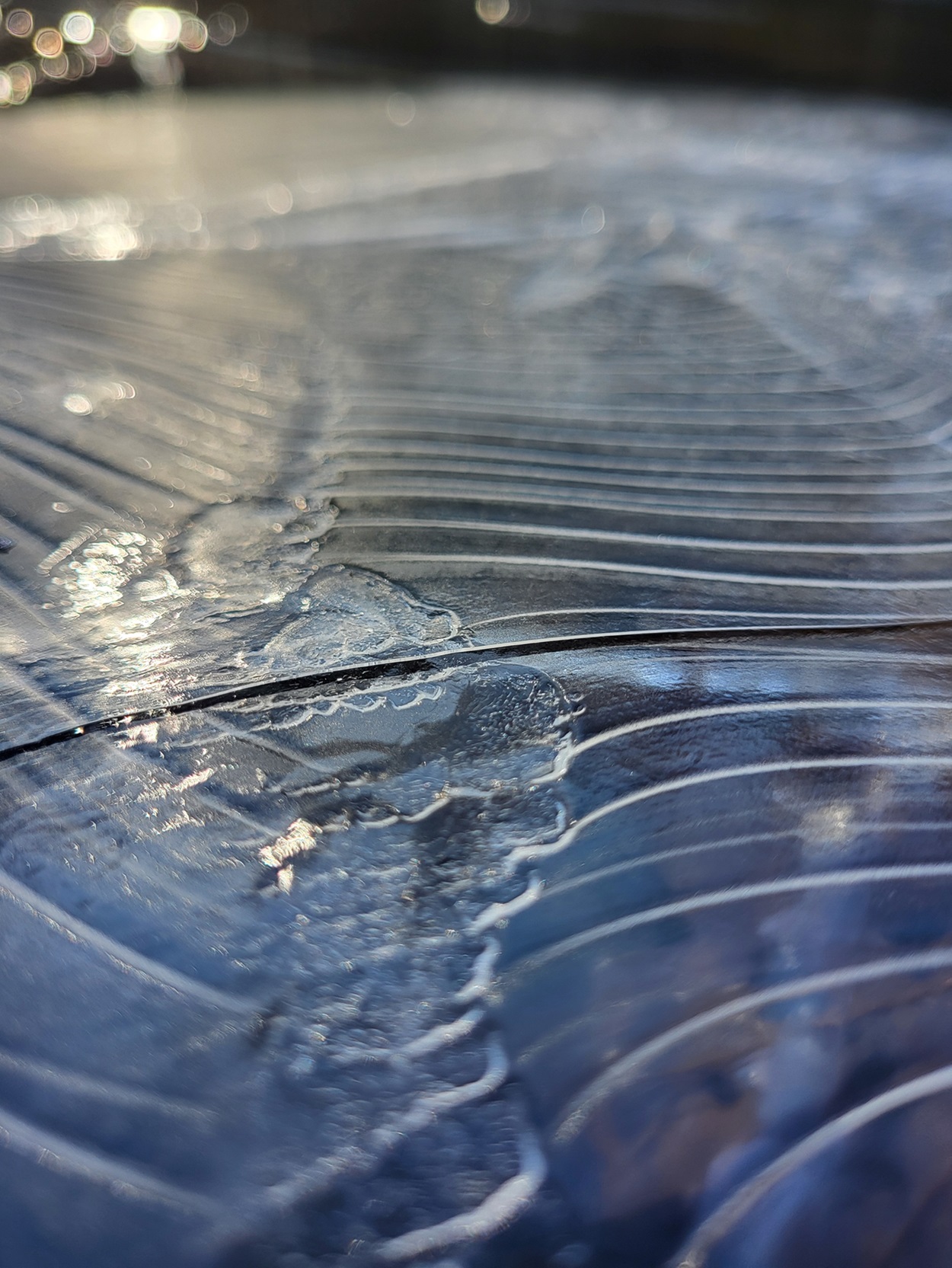
-
Article
Ice Age
Ice Age, the Pleistocene epoch of geologic time, during which periodic, extensive glacial activity occurred in many parts of the world.
"https://d3d0lqu00lnqvz.cloudfront.net/media/new_article_images/Mammoth/TwoMammothsFighting.jpg" // resources/views/front/categories/view.blade.php
https://d3d0lqu00lnqvz.cloudfront.net/media/new_article_images/Mammoth/TwoMammothsFighting.jpg
-
Article
Ice Cap
Ice caps are large masses of ice that rest on land and cover most of the underlying landscape. If bedrock appears in the central region of a large ice mass, then the region is instead called an icefield. When an ice cap is greater than 50,000 km 2 in size, it’s called an ice sheet. In Canada, the largest ice caps are found in the Arctic Archipelago ; the Agassiz Ice Cap on Ellesmere Island is an example. Ice caps are increasingly affected by climate change, as warmer temperatures are causing them to shrink at historically fast rates.
"https://d3d0lqu00lnqvz.cloudfront.net/media/media/fdbe5752-a4d0-4da9-be3e-9c5be7b6f625.jpg" // resources/views/front/categories/view.blade.php
https://d3d0lqu00lnqvz.cloudfront.net/media/media/fdbe5752-a4d0-4da9-be3e-9c5be7b6f625.jpg
-
Article
Ice Hockey in Canada
Hockey is Canada's official national winter sport and perhaps its greatest contribution to world sport. Canada is considered the birthplace of ice hockey, and Canadians generally regard the sport as their own.
"https://d3d0lqu00lnqvz.cloudfront.net/media/media/2c6ca9b6-8fde-48d1-9535-dca0795b7eda.jpg" // resources/views/front/categories/view.blade.php
https://d3d0lqu00lnqvz.cloudfront.net/media/media/2c6ca9b6-8fde-48d1-9535-dca0795b7eda.jpg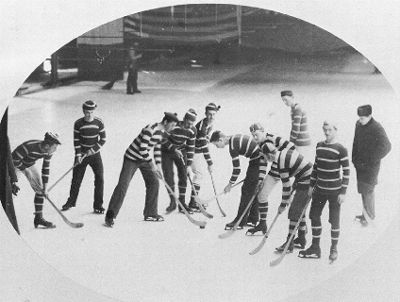
-
Article
Ice Skating
Ice skating probably originated in Scandinavia over 2000 years ago as a means of transportation.
"https://d3d0lqu00lnqvz.cloudfront.net/media/media/2b947338-f390-4eab-85b0-00adeb0911eb.jpg" // resources/views/front/categories/view.blade.php
https://d3d0lqu00lnqvz.cloudfront.net/media/media/2b947338-f390-4eab-85b0-00adeb0911eb.jpg
-
Article
Ice Storm of 1998
The ice storm of 1998 was one of the largest natural disasters in Canadian history. Between 4 and 10 January 1998, sections of the St. Lawrence Valley from Kingston to Quebec’s Eastern Townships received up to 100 mm of ice pellets and freezing rain — more than double the icy precipitation normally received in those areas in a whole year. The storm claimed as many as 35 lives, injured 945, and resulted in the temporary displacement of 600,000 people. Several roads were shut down and massive power outages occurred, cutting off electricity for nearly 1.4 million customers in Quebec and over 230,000 in eastern Ontario. The total financial cost of the storm is estimated at $5.4 billion.
"https://d3d0lqu00lnqvz.cloudfront.net/media/media/50883f65-a6e7-4f26-9c7b-ffd9ab7625ee.jpg" // resources/views/front/categories/view.blade.php
https://d3d0lqu00lnqvz.cloudfront.net/media/media/50883f65-a6e7-4f26-9c7b-ffd9ab7625ee.jpg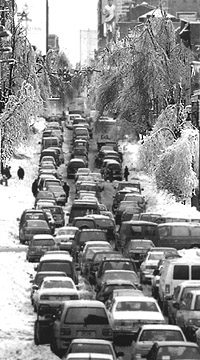
-
Article
Ice-Worm
Ice-worm is the common name for at least three species of invertebrates found in Canada: Mesenchytraeus solifugus, Gynaephora groenlandica and Grylloblatta campodeiformis.
"https://d3d0lqu00lnqvz.cloudfront.net/media/media/25bbe783-e94c-4888-aa84-74bdb154a390.jpg" // resources/views/front/categories/view.blade.php
https://d3d0lqu00lnqvz.cloudfront.net/media/media/25bbe783-e94c-4888-aa84-74bdb154a390.jpg
-
Article
Iceberg
An iceberg is a piece of ice that has become detached from its parent glacier by a process known as calving. In Canada, icebergs mainly originate from west Greenland glaciers and travel south along the country's eastern seaboard.
"https://d3d0lqu00lnqvz.cloudfront.net/media/media/0b282b25-029b-4fa5-85e1-aef4b1039571.jpg" // resources/views/front/categories/view.blade.php
https://d3d0lqu00lnqvz.cloudfront.net/media/media/0b282b25-029b-4fa5-85e1-aef4b1039571.jpg
-
Article
Icebreakers
Icebreakers were first used in the Canadian Arctic in the 1920s to deliver supplies and services to Native and isolated settlements during the short summer season, and to back up claims of Canadian sovereignty over the NORTHWEST PASSAGE and ARCTIC ARCHIPELAGO.
"https://d3d0lqu00lnqvz.cloudfront.net/media/media/737e507c-57e6-4b84-9ef9-d68151cd83af.jpg" // resources/views/front/categories/view.blade.php
https://d3d0lqu00lnqvz.cloudfront.net/media/media/737e507c-57e6-4b84-9ef9-d68151cd83af.jpg
-
Article
Icelandic Music In Canada
The first large group of Icelanders arrived in Canada in 1873 and by 1875 had settled on the western shore of Lake Winnipeg. Their colony (which included present-day Gimli and Riverton, Man), was known as New Iceland, was self-governing, and had its own constitution.
"https://thecanadianencyclopedia.ca/images/tce_placeholder.jpg?v=e9dca980c9bdb3aa11e832e7ea94f5d9" // resources/views/front/categories/view.blade.php
https://thecanadianencyclopedia.ca/images/tce_placeholder.jpg?v=e9dca980c9bdb3aa11e832e7ea94f5d9
-
Article
Iconic Highways in Canada
Canada’s most iconic highways were all built in the 20th or 21st centuries. Before the car became popular, good roads were hard to find once you left a city. As simple as they seem, it’s expensive to build and maintain roads. Rural routes were often treacherous for travelers. Modern highways connect our massive country. A few of them stand out for their length, origins, or wondrous landscapes.
"https://d3d0lqu00lnqvz.cloudfront.net/media/new_article_images/IconicHighways/AlaskaHwy.jpg" // resources/views/front/categories/view.blade.php
https://d3d0lqu00lnqvz.cloudfront.net/media/new_article_images/IconicHighways/AlaskaHwy.jpg
-
Article
Idle No More
With roots in the Indigenous community, Idle No More began in November 2012 as a protest against the introduction of Bill C-45 by Stephen Harper’s Conservative government. Formally known as the Jobs and Growth Act, this omnibus legislation affected over 60 acts, including the Indian Act, Navigable Waters Protection Act and Environmental Assessment Act. Idle No More activists argued that the Act’s changes diminished the rights and authority of Indigenous communities while making it easier for governments and businesses to push through projects without strict environmental assessment. The movement quickly gained supporters from across Canada (and abroad), and grew to encompass environmental concerns and Indigenous rights more generally. This article is a full-length entry about Idle No More. For a plain-language summary, please see Idle No More (Plain-Language Summary).
"https://d3d0lqu00lnqvz.cloudfront.net/media/media/00339332-5ac9-4b3b-8578-b7200b7db6fc.jpg" // resources/views/front/categories/view.blade.php
https://d3d0lqu00lnqvz.cloudfront.net/media/media/00339332-5ac9-4b3b-8578-b7200b7db6fc.jpg
-
Article
If Day
If Day was a mock occupation of Winnipeg, Manitoba, on 19 February 1942 during the Second World War. The occupying Nazi force was portrayed by volunteers from the Young Men’s Section of the Winnipeg Board of Trade. If Day was intended to demonstrate what life under Nazi occupation might be like, and consequently, encourage people to buy war bonds (also called Victory Loans), which generated millions of dollars for the war effort. If Day was also a military exercise involving approximately 3,500 personnel, the largest in the city’s history to that date.
"https://d3d0lqu00lnqvz.cloudfront.net/If-Day/BondsorBondage_TweetOnly.jpg" // resources/views/front/categories/view.blade.php
https://d3d0lqu00lnqvz.cloudfront.net/If-Day/BondsorBondage_TweetOnly.jpg
-
Article
Igloo
Igloo (iglu in Inuktitut, meaning “house”), is a winter dwelling made of snow. Historically, Inuit across the Arctic lived in igloos before the introduction of modern, European-style homes. While igloos are no longer the common type of housing used by the Inuit, they remain culturally significant in Arctic communities. Igloos also retain practical value: some hunters and those seeking emergency shelter still use them. (See also Architectural History of Indigenous Peoples in Canada.)
"https://d3d0lqu00lnqvz.cloudfront.net/media/media/c2d6c124-118d-48ab-8885-4339202966e8.jpg" // resources/views/front/categories/view.blade.php
https://d3d0lqu00lnqvz.cloudfront.net/media/media/c2d6c124-118d-48ab-8885-4339202966e8.jpg