
Browse "Things"
-
Article
H1N1 Flu of 2009 in Canada
From April to December 2009, Canada experienced an outbreak of influenza A (H1N1). The virus began in North America and spread to many other countries in a global pandemic. This new type of flu differed from the typical seasonal flu, and its effects were more severe. Worldwide, more than 18,000 people are confirmed to have died of H1N1, including 428 Canadians. Estimates based on statistical models have put global deaths much higher. Totals may have been in the hundreds of thousands. The H1N1 pandemic tested Canada’s improvements to its public health system after the SARS outbreak of 2003. On the whole, it revealed a more efficient, coordinated response. Click here for definitions of key terms used in this article.
"https://d3d0lqu00lnqvz.cloudfront.net/media/new_article_images/H1N1Fluof2009/H1N1_influenza_virus.jpg" // resources/views/front/categories/view.blade.php
https://d3d0lqu00lnqvz.cloudfront.net/media/new_article_images/H1N1Fluof2009/H1N1_influenza_virus.jpg
-
Article
Habitat 67
Habitat 67 is an experimental urban residential complex designed by Israeli-born architect Moshe Safdie and located in the Cité du Havre neighbourhood south of Montréal’s Old Port sector. Commissioned by the Canadian Corporation for Expo 67, the project derives its name from the theme of the fair, “Man and His World,” and became one of the major pavilions of the exhibition. It is the only remaining structure from Expo 67 to retain its original function. In 2015, the Guardian called Habitat “a functioning icon of 1960s utopianism, and one of that period’s most important buildings.”
"https://d3d0lqu00lnqvz.cloudfront.net/media/new_article_images/Habitat67/d378c1fa-9a6d-400c-aa2b-eb5b8351d306.jpg" // resources/views/front/categories/view.blade.php
https://d3d0lqu00lnqvz.cloudfront.net/media/new_article_images/Habitat67/d378c1fa-9a6d-400c-aa2b-eb5b8351d306.jpg
-
Article
Hagfish
Hagfish, group of primitive vertebrates which together with lampreys and various extinct forms comprise the fish class Agnatha.
"https://d3d0lqu00lnqvz.cloudfront.net/media/media/917408af-771b-4db4-bc1b-9a5098db913a.jpg" // resources/views/front/categories/view.blade.php
https://d3d0lqu00lnqvz.cloudfront.net/media/media/917408af-771b-4db4-bc1b-9a5098db913a.jpg
-
Article
HMCS Haida
The HMCS Haida is a “Tribal” Class destroyer that served in the Second World War and the Korean War. It is a National Historic Site operated by Parks Canada and is moored in Hamilton Harbour. The Haida is known as Canada’s “fightingest” warship.
"https://d3d0lqu00lnqvz.cloudfront.net/media/media/bdd8f002-5a0f-4adb-adc2-9afecd1e4bb1.jpg" // resources/views/front/categories/view.blade.php
https://d3d0lqu00lnqvz.cloudfront.net/media/media/bdd8f002-5a0f-4adb-adc2-9afecd1e4bb1.jpg
-
Article
Hail
Hail, precipitation consisting of lumps of ICE, about 5 mm to 10 cm in diameter and about 0.1 g to 1 kg in weight. A 290 g hailstone that fell near Cedoux, Sask, is one of the largest recorded in Canada. The authenticated world record belongs to a 770 g hailstone that fell in Coffeyville, Kansas.
"https://thecanadianencyclopedia.ca/images/tce_placeholder.jpg?v=e9dca980c9bdb3aa11e832e7ea94f5d9" // resources/views/front/categories/view.blade.php
https://thecanadianencyclopedia.ca/images/tce_placeholder.jpg?v=e9dca980c9bdb3aa11e832e7ea94f5d9
-
Article
Haldimand Proclamation
On 25 October 1784, Sir Frederick Haldimand, the governor of the province Quebec, signed a decree that granted a tract of land to the Haudenosaunee (Iroquois), also known as the Six Nations, in compensation for their alliance with British forces during the American Revolution (1775–83). This tract of land, known as the Haldimand Grant or Haldimand Tract, extended for 10 km on both sides of the Grand River (southwestern Ontario), from its source to Lake Erie. Throughout the late 1700s and 1800s, the Crown and Haudenosaunee disputed rights to the land title. Negotiations about title to the Haldimand Tract still continue between the Canadian government and the Six Nations Confederacy.
"https://d3d0lqu00lnqvz.cloudfront.net/media/media/4e9bdb40-6a17-4aed-8166-559a7b871ae7.jpg" // resources/views/front/categories/view.blade.php
https://d3d0lqu00lnqvz.cloudfront.net/media/media/4e9bdb40-6a17-4aed-8166-559a7b871ae7.jpg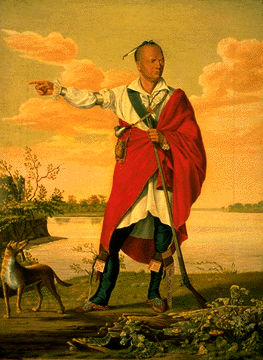
-
Article
Halibut Treaty
The Halibut Treaty of 1923 (formally the Convention for the Preservation of Halibut Fishery of the Northern Pacific Ocean) was an agreement between Canada and the United States on fishing rights in the Pacific Ocean. It was the first environmental treaty aimed at conserving an ocean fish stock. It was also the first treaty independently negotiated and signed by the Canadian government; one of several landmark events that transitioned Canada into an autonomous sovereign state. It also indicated a shift in Canada’s economic focus from Britain to the US during the 1920s, when the US passed Britain as Canada’s largest trading partner. The treaty created the International Pacific Halibut Commission, which continues in its role today.
"https://d3d0lqu00lnqvz.cloudfront.net/media/new_article_images/HalibutTreaty/Pacific_halibut_range_2.png" // resources/views/front/categories/view.blade.php
https://d3d0lqu00lnqvz.cloudfront.net/media/new_article_images/HalibutTreaty/Pacific_halibut_range_2.png
-
Article
Halifax and Titanic
The Royal Mail Ship Titanic sank on 15 April 1912, taking the lives of more than 1,500 passengers and crew. Many victims went down with the ship, but the bodies of others remained on the surface, kept afloat by their life jackets. Pressure from relatives, newspapers and the general public led the Titanic’s owners, the White Star Line, to charter four vessels to recover the victims’ bodies. In total, these ships recovered the bodies of 328 passengers and crew. The recovery effort was based in Halifax, Nova Scotia, where 150 of the victims were buried.
"https://d3d0lqu00lnqvz.cloudfront.net/Titanic/Macaky-Bennett-Lifeboat.jpg" // resources/views/front/categories/view.blade.php
https://d3d0lqu00lnqvz.cloudfront.net/Titanic/Macaky-Bennett-Lifeboat.jpg
-
Article
Halifax Citadel
The general introduction of rifled artillery (with greater range and accuracy than earlier guns) shortly after completion of the Citadel rendered the costly installation obsolescent. It was partially rearmed in the 1860s and 1870s, and continued in use as a barracks into the 20th century.
"https://d3d0lqu00lnqvz.cloudfront.net/media/media/2a4ab68a-776a-430a-9155-c6d6ae17697b.jpg" // resources/views/front/categories/view.blade.php
https://d3d0lqu00lnqvz.cloudfront.net/media/media/2a4ab68a-776a-430a-9155-c6d6ae17697b.jpg
-
Article
Halifax-class Frigates
The Halifax class of helicopter-carrying frigates (FFH) are multi-purpose warships of the Royal Canadian Navy (RCN). There are 12 ships in the class. They were conceived in the 1970s as a replacement of the St Laurent and related classes of destroyer escorts, to provide antisubmarine warfare (ASW) protection for the fleet. The Halifax class entered service in the early 1990s, just after the end of the Cold War, and proved instead to be highly versatile general-purpose warships. Due to a major class-wide modernization project completed in the 2010s, they remain the backbone of the RCN surface fleet. The Halifax class will be replaced in the 2030s by the Canadian Surface Combatant (CSC) ships announced in 2019.
"https://d3d0lqu00lnqvz.cloudfront.net/Navy/HMCSVancouver.jpg" // resources/views/front/categories/view.blade.php
https://d3d0lqu00lnqvz.cloudfront.net/Navy/HMCSVancouver.jpg
-
Article
Halifax Donair
The Halifax donair is a fast-food wrap-like dish popularized in Canada. A regional variant of the Turkish doner kebab, donair is believed to have originated in Halifax, Nova Scotia. It’s believed that Peter Gamoulakos, a Greek Canadian immigrant, invented it. Donair is made of ground beef with spices, which is served in a pita with a sweet sauce. In 2015, Halifax named the donair as the city’s official food. It has become an iconic symbol of Haligonian cuisine and has been adapted to local tastes in other parts of Canada.
"https://d3d0lqu00lnqvz.cloudfront.net/Donair/Single-Use/Donair.jpg" // resources/views/front/categories/view.blade.php
https://d3d0lqu00lnqvz.cloudfront.net/Donair/Single-Use/Donair.jpg
-
Article
Halifax Explosion
Halifax was devastated on 6 December 1917 when two ships collided in the city's harbour, one of them a munitions ship loaded with explosives bound for the battlefields of the First World War. What followed was one of the largest human-made explosions prior to the detonation of the first atomic bombs in 1945. The north end of Halifax was wiped out by the blast and subsequent tsunami. Nearly 2,000 people died, another 9,000 were maimed or blinded, and more than 25,000 were left without adequate shelter. This is the full-length entry about the Halifax Explosion. For a plain-language summary, please see Halifax Explosion (Plain-Language Summary).
"https://d3d0lqu00lnqvz.cloudfront.net/media/media/7d331967-7fdb-493d-a6b8-f509bee35749.jpg" // resources/views/front/categories/view.blade.php
https://d3d0lqu00lnqvz.cloudfront.net/media/media/7d331967-7fdb-493d-a6b8-f509bee35749.jpg
-
Article
Halifax Explosion (Plain-Language Summary)
The Halifax Explosion happened on 6 December 1917. Two ships ran into each other. One of the ships was carrying munitions (war supplies), including explosives. The munitions were being sent to Europe to use in the First World War. The explosion destroyed the north end of Halifax. About 2,000 people died and 9,000 were wounded. About 25,000 lost their homes. The Halifax explosion was the biggest human-made explosion until August 1945. That was when the United States dropped two atomic bombs on Japan. (This article is a plain-language summary of the Halifax Explosion. If you are interested in reading about this topic in more depth, please see the full-length entry, Halifax Explosion.)
"https://d3d0lqu00lnqvz.cloudfront.net/media/media/b0f5c9f5-5d2a-4e1e-b0d9-89b100a31916.jpg" // resources/views/front/categories/view.blade.php
https://d3d0lqu00lnqvz.cloudfront.net/media/media/b0f5c9f5-5d2a-4e1e-b0d9-89b100a31916.jpg
-
Macleans
Halifax on Eve of G-7 Summit
Go at daybreak, when the morning fog still cools the air.This article was originally published in Maclean's Magazine on June 19, 1995
"https://thecanadianencyclopedia.ca/images/tce_placeholder.jpg?v=e9dca980c9bdb3aa11e832e7ea94f5d9" // resources/views/front/categories/view.blade.php
https://thecanadianencyclopedia.ca/images/tce_placeholder.jpg?v=e9dca980c9bdb3aa11e832e7ea94f5d9
-
Article
Halifax Relief Commission
Halifax Relief Commission began 6 Dec 1917 as an emergency committee to provide immediate relief after the HALIFAX EXPLOSION. In Apr 1918, a 3-man commission was incorporated by provincial statute to administer a $30-million fund for medical care, social welfare, compensation and reconstruction.
"https://thecanadianencyclopedia.ca/images/tce_placeholder.jpg?v=e9dca980c9bdb3aa11e832e7ea94f5d9" // resources/views/front/categories/view.blade.php
https://thecanadianencyclopedia.ca/images/tce_placeholder.jpg?v=e9dca980c9bdb3aa11e832e7ea94f5d9